‘The Centrist Manifesto’: A Special Guest Book Review

new centrist party

A friend of mine who is currently blog-less has submitted a review of a book which he recently acquired for the sake of morbid curiosity, ‘The Centrist Manifesto’ by Charles Wheelan. I have not read this book myself but given the suitability of the topic to multiple previous entries when I have mocked the claims of rationality, impartiality, and political viability of centrist projects as well as excoriated the idea that centrism automatically or even often equates to pragmatism, I felt that his self-proclaimed ‘book report’ was an absolutely essential addition to the Geotrickster canon. What follows below are the words of Brandon Hensley entirely:

————————————————————————————-

Several weeks ago a friend’s Facebook post pointed me towards Charles Wheelan’s “The Centrist Manifesto”. An admixture of lolz and apprehension greeted me when faced with the choice of signing my name to a “moderate” hopeful in some other state’s election in exchange for a free copy of what promised to be a more thrilling political commentary on the current moment than Mr. Toad’s Wild Ride. After several weeks of waiting, the Manifesto of the Radical Center arrived. The fact that my suburban Ohio home was in the middle of yet another monsoon was oddly fitting.

The first thing you notice about Wheelan’s manifesto is that it is appropriately thin. The ability to wave one’s manifesto in the air like a little red book is supremely important if you want to be able to disseminate nuggets of wisdom at a moment’s notice, such as “We need an insurgency of the rational: a generation of Americans who are fed up with the current political system, who believe we can do better, and most important, who are ready to do something about it. Are you one of those people?”. We do need an insurgency of the rational in the current political climate, and gone are the days of Bismarkian realpolitik as well as the halcyon days of Kennedy-style bipartisanship, but my enthusiasm for Centrism giving this back to us is low. Exhibit A:

We open our discourse on this American moment five years ago (copyright 2013) with “Something has to change. Our country is on a dangerous trajectory. We are mired in serious policy challenges, in large part because the political process has moved beyond gridlock to complete paralysis.” Wheelan is appealing to the lowest-common denominator with this opener. It is effectively tautological at this point to accuse DC of being unable to do anything useful. I get it though, we need the hook, and the communists already cornered the market on catchy manifesto openings. “A spectre is haunting Europe” is sort of like the virgin birth: only one gets to happen and after that nobody will believe you. So we can be charitable to the Centrists and allow them the tautology. Wheelan continues in this chapter entitled “The Big Idea” by accusing Republicans and Democrats of being equally culpable in the paralysis of the democratic system. He hits all the traditional talking points—fiscal irresponsibility, personal sacrifice, even job creators, along with a litany of woes affecting the world. He even has a remarkable moment of clarity when he takes to task the political system for what it is:

“Our political institutions reward the most extreme views in each political party. Congress has grown increasingly polarized and dysfunctional because we have built a system that elects extremists. Each party nominates its candidates in a primary. Who votes in primaries? The most extreme elements of each party.”

After the litany of castigations against the Republican and Democratic Parties and this raking over the coals of the primary and electoral system, you can be forgiven if you forgot on page 12 that his answer to this problem is yet another political party playing in the same political arena. In case you did forget, Wheelan reminds us that he has no interest in dismantling the political system itself: “The Centrist Party will introduce a coherent governing philosophy around which Americans disenchanted with the traditional fare will naturally coalesce.” Ah, yes. Strength through Unity, Stronger Together, Make America Great Again. “[T]he Centrist Party will take the best ideas from each party, discard the nonsense, and build something new and better.” Because the anti-fasicsts are the real fascists, amirite?

In explaining the basis of a Centrist Party, Wheelan takes a 180 on his previous strategy of admonitions against the Republicans and Democrats and instead praises each for what they do best. Republicans have a decent brain but Democrats have a noble heart, for example. He even reminds us that “in normal times, these are the kinds of things that pragmatic Democrats and Republicans would agree to do together.” He takes an additional 180 in a subsequent chapter when he returns to railing against the Democrats and Republicans. This sort of back and forth is a staple of the manifesto. What is disappointing is the historical illiteracy of Wheelan. The “normal” times he is appealing to, roughly 1945-2000, was hardly emblematic of American political history. It was an anomaly. The American “norm” historically resembles more of Trump and less of Kennedy.

Wheelan says that only four or five Senate seats would be enough for the Centrists to hold the strings of legislative ability. He describes how electioneering in the middle is what attracts the widest amount of voters, and reminds us that only a few Senators are needed to effectively kneecap Congress forever. He even takes a cheap shot at the Greens for being too on the fringe to win elections in the process, ignoring the actual electoral history of the fringe. Taken altogether, it appears that the Centrist’s strategy to restore normalcy is to win only enough elections to make their presence in the Senate annoying to everyone else. Hardly a recipe for Leninist-style accelerationism designed to break the system in order to replace it with something new.

Relevant to his shortcomings when it comes to replacing the electoral system is the proposal later for electoral reform. He proposes in his section on “The Centrist Process” a series of electoral reforms that border on populism—heresy for the Centrist. But it is admirable in its own way. If we must keep the American electoral system, we should at least endeavor to amend it. Wheelan proposes ending gerrymandering, “open primaries in which the top two candidates in a single primary election advance to the general election, regardless of their political party,” reform the rules of Congress to prevent the filibuster (this seems a little counter to his idea of hamstringing the entire Senate using four or five Centrists, though), and “constrain the corrosive effect of money in politics.”

Before we get there, however, we have to endure a great deal of finger wagging. After chastising America for not being more political involved, Wheelan appeals to the emotional heartstrings about how hard public policy really is with a quaint hypothetical about running a home owner’s association and throwing a community party. While the metrics he presents (movie preference, food choices, whether or not we should even have a party) are all valid metrics in formulating public policy, one can’t help but get the sense at this point that the earlier failure to appeal to something new and better over the current system might be emblematic of a larger issue in the worldview of the Centrist Wheelan is appealing to, that of being out of touch with the very demographic the Centrist thinks they represent.

A key moment of this “out of touchness” is when he points out the platitudinous nature of the paean “do the right thing”. He is right to point out that platitudes aren’t helpful, but in contrasting the private sector, he goes on to claim “[t]he whole point of government is to do things that the private sector cannot or will not do.” Wheelan fails to admit that the list of things outside the private sector’s purview is not a comprehensive list of things that government should do, and that, based on ideological concerns, the government will always choose to do some things as “the right thing” over other things. In his hypothetical hamstringed-by-the-Centrists Senate, what are the ideological moral hills the Centrist bloc will choose to die on? After stating that there is no objective metric to determine any best decision—a statement which is only right insofar as it also accepts that “best” is by definition subjective, something Wheelan does not admit—he expounds upon a lack of objectivity by…defining objective trade-offs? Using a variety of examples from college to medical care, Wheelan adopts the utilitarian position that what promotes the greatest welfare for the greatest number of people is objectively the best decision to make, and, therefore, should be promoted in public policy. But, again, what the greatest welfare is is already subjective, let alone the subjectivity inherent in deciding which road to take to get there. Chapter three is the longest section of the entire book and it only contains two useful bits of information: a list of Centrist “principles” and “The Centrist Process”. The principles are paradoxical given what Wheelan has given us so far; a Centrist Party that appeals simply to what is commonly and widely upheld from a policy perspective is devoid of principles entirely. To stake ones position in principles or ideology means alienating a portion of the public by default. To avoid an ideological position, one must default to axioms to determine what is and is not “good”. The problem is that “good” and “not-good” are not axiomatic. Both assume certain things about the world and different issues. I suspect Wheelan is aware of the uncomfortable position he puts himself in by listing a series of principles, none of which are hills to die on, which is why he introduces the process.

The Centrist Process: 1) Be pragmatic. Solve problems. 2) Talk about trade-offs. 3) Improve the electoral system. 4) Ask always, Where are we trying to go? What is a reasonably good way to get there? Other than 3, he is essentially describing a board meeting. What is especially telling is that in all of this, in a section that makes up more than half the total weight of the book, Wheelan still does not understand that you cannot answer 1, 2, 3, or 4 without a firm ideological foundation. Good sense and pragmatism are meaningless without the ideological trade off necessary to identify what the pragmatic solution is. Wheelan touches on this concern in his discussion of point 2, but he doesn’t actually stake an ideological position other than “…there are lots of options that are better than what we are doing now, and those better policies begin with a more sophisticated discussion around the issues. The Centrist Party will facilitate those discussions.”

Wheelan attempts to illustrate “The Process” regarding moral and ideological questions surrounding abortion and gun control by simply looking at data analysis and trying to compromise the two positions (see his claim on page 23 where he says the Centrist Party will not do this). Unfortunately, I have to laugh at his claim that no-one is pro-abortion. Not only because I am personally pro-abortion, but because he immediately contradicts himself by quoting a statistic that one-fifth of Americans think abortion should be legal in all cases. That’s twenty percent of the American electorate. That is hardly a “nobody thinks this way” statistic. In fact, the actual poll he quotes for these numbers shows as of 2011, 26% of the American public thinks abortion should be legal in all cases, whereas only 20% of the American public thinks it should be illegal in all cases, a segment of the American public that he dismisses as “only a small minority”. For a Centrist, he really doesn’t even grapple with the raw data he’s fetishizing very honestly.

Overall, Wheelan is emblematic of Centrism: it simply isn’t an attractive narrative. Instead of looking inwardly to say “why has the Center failed?” he lashes out awkwardly and unexpectedly to everyone else in a vain attempt to make Centrism appealing. He attempts to stake Centrism in some sort of moral and ideological purity, but contradicts his own vision of Centrism in the process. He stakes the entire enterprise on being pragmatic and then disregards pragmatism for propaganda when he willfully misrepresents statistics in opposition to one another to prove a point—that the larger majority of Americans are more ambivalent than all or nothing (shocking!). The biggest fault of Centrism as a political philosophy is that it doesn’t offer anything to the public and doesn’t pretend to want to, which is probably the biggest meta-joke to come out of this “manifesto”. Typically, modern rhetoric warrants opening a piece with a quote to set the stage for what is to come. I think it’s far more appropriate to close with a quote, to reflect on what Wheelan has or has not accomplished.

“Manifesto: man·i·fes·to,  ˌmanəˈfestō/, noun: a public declaration of policy and aims, especially one issued before an election by a political party or candidate” -Google Dictionary

Alcibiades: Trickster and Folk Hero of the Classical Era

alcibiades-killed-by-assassins-818381308-5a57bffb0d327a003992e43f

Victorian death portraits, like those above, are always so full of melodrama. But in the case of the historical figure of Alcibiades he would surely have appreciated such portrayals.

One of my original objectives was to regularly have a historical figure who meets the description of the mythological trickster as an entry. Well, it hasn’t been quite regular at all…in fact I believe the last time I properly did this was in 2015, but there is no one more deserving of coming back to the theme than Alcibiades.

I just recently finished David Stuttard’s excellent ‘Nemesis: Alcibiades and the Fall of Athens’ , which is a book I have been waiting for years to be written by someone. The book is chock full of citations and facts as you might expect from a university publication, but reads like a page turning biography. What Stuttard doesn’t know he doesn’t tell us and he leaves the many ambiguities of this famously amorphous figure as they are. What is known though, or can be surmised, is written up in both an educational and accessible manner. You really do get a feel for both the strangeness and later fascination for this most mercurial Athenian. In his time it was said that ‘in youth he enticed husbands from their wives, as a young man wives from husbands.’ He still entices historians to this day, if in a different way.

For a full biography read the book, but in what follows I wish to touch upon Alcibiades trickster like attributes as illustrated by key themes in his career.

Born into a wealthy if declining family of the Athenian aristocracy , Alcibiades was hardly someone who scrapped up from nothing at first but with his many massive changes of fortune he would come to prove his immense ability (and immense flaws) time and time again. Meritorious service with his mentor Socrates in the Peloponesian War would cause his star to rise as many of Athens’ elected and older warriors stumbled into death or obscurity. The war itself was a time for all kinds of varied fates, as Athens and its allies and vassals struggled with Sparta and its allies and vassals for mastery over Greece. The common front posed by a Persian threat had long since departed (or so was thought), and Athens had benefited the most from their withdrawal from Europe, building its own wealthy commercial empire founded on a core of naval prowess. Eventually, Athens overreached, and the city states not wanting to bow her way looked to Sparta.

Most of the history of the war was a stalemate, but as the Greek city states in Sicily began to enter the periphery of the conflict (especially by supplying food to Sparta) many of the leaders came to imagine a knockout blow against the Spartans. An invasion of Sicily, a seizure of Sparta’s biggest trade partner, and the empowerment of Athenian allies. Sparta could then be starved and blockaded into submission and the groundwork for expansion into the western Mediterranean would be laid. Overly ambitious perhaps, but the only navy that could challenge Athens at this point was Carthage, who also hated Syracuse was was too far west to yet matter.

Alcibiades had proven himself a strongly divisive figure, a hateful hot head to his enemies and a great benefactor of his friends. He was known for stealing fancy silverware to pass as his own and then sneaking it back to the owners once an esteemed guest was gone. His bravery on the battlefield was matched by his legal and social perfidy. Not everyone wanted him in command of the attack on Syracuse, and furthermore, not everyone wanted a risky attack on Syracuse in the first place.

Before he left, various statues of Hermes were vandalized. People whispered he, as a notorious indifferentist to the gods, had done so. Most likely it was either someone trying to stop the invasion in general (be it Spartan agent or Athenian who feared the results) or trying to sabotage Alcibiades in particular. Of course, there really is no real known motive here. A bad omen is bad for him as well as the city, but the tongues flapped. Before more could be made of it, Alcibiades left Athens with fleet and invasion in tow, seized a coastal town in Sicily, and began to lay out a plan to take Syracuse and link up with her enemies on the island. That is when the news came that he was going to be recalled for trial. If found guilty he would be executed, if not he would still lose command and possibly never be given another one. He escaped.

He was an outlaw on the run now. And at this point when most might give up and disappear into obscurity, that he really began to shine. He defected to Sparta. He had, after all, intimate knowledge of the Athenian plans and dispositions in Sicily. The Spartans sent a general, armed with this information, to aid the Syracusians, and soon the entire Athenian force of troops and ships alike was killed or captured.

Alcibiades was a dashing presence at the rustic Spartan court and soon he seduced the Spartan King’s wife and fathered a son by her (not as bad a thing to have happen in Spartan culture as you might think, but Alcibiades rankled many nonetheless). He was able to recommend ways to best use Sparta’s fledgling navy to conduct raids on Athenian holdings that just so happened to belong to his wealthiest rivals back home.

This gave him Persian contacts with local satraps in Anatolia as Sparta and Persia were now growing closer as the war dragged on. Once the tide of ruling class opinion in Sparta turned against Alcibiades, he was able to escape once again to Persia, where he befriended the satrap Chiththarna. For over a year he tended gardens and lived in luxury while advising the Persians on how to drag out the war as long as possible to weaken both parties to the point that Persia could get its lost coastal and island provinces returned.

The Athenians, meanwhile, made moved from disaster to disaster. They had finally seen how effective Alcibiades was as a commander but mostly from the wrong side. Internal turmoil enabled some to put out feelers to him about returning. When the Athenian navy off the coast of Anatolia broke out in revolt against the government Alcibiades rode to take command of them and proceeded to defeat the Spartan navy and seize several ports from them. When the regime changed at home he could sail back, a hero. Naturally, he had waited to see which faction came out on top.

Back in Athens he would alternate between naval command (and taking back and securing the Bosporus to secure grain supplies) and living his decadent life back in the city. He campaigned with and secured an alliance from Thrace as well. All this made him more popular than ever before-and this bothered his enemies whom he had both humiliated and also directly attacked before with the Spartans. He was so popular people would beg him to the street to take charge of the city as a tyrant. The forces against him would surely act the second a chink in his armor was made. Finally, luck swung their way. Alcibiades’ led a campaign that deadlocked for him and ended in catastrophe for his subordinate. The war had swung back in the Spartan’s favor now that Persian gold flooded into their coffers. Alcibiades was banished-again.

He had come to hate the buzzkill Spartans and could not trust the Persians who were now firmly in their camp, but he still had one last trick up his sleeve. He now defected as a mercenary commander to Thrace, the one kingdom that still had love for him. He proceeded to expand the kingdom and take some fortresses for himself, amassing great wealth at the expense of conquered tribes there. The situation was ripe for a perfectly solid retirement. Many of his friends, lovers, and family had joined him and the government was friendly. He even got to see Athens final naval humiliation from one of his forts in a battle where he either rode down and offered to take command or just to give advice. He was jeered off and the Athenians would go on to lose.

But with the end of the war others turned to settling scores. The Athenian puppet government under Spartan command demanded the death of anyone who would rally opposition, and Sparta obliged by sending a request to the Persians as it had been learned he was traveling in their territory. He was set upon and killed in the night.

Later figures, especially in the future Roman Empire, would take quite a shine to this bizarre figure. The reasons I take a shine to him are as follows:

Balls of Steel: Trickster type figures are often stereotyped as cowards, but this is not always the case. Alcibiades personified this with his commended service as a hoplite and then as a cavalry commander who always led from the front. He developed a loyal following based of his ability to take personal risks, including diplomatically. Often, he would take a city by offering to negotiate solo within their walls and convince the place to surrender without a fight. One time he stormed a city with an inferior force. Realizing as the enemy bore down that they outnumbered him he pretended to issue orders to units in the dark which were not there and then called on the enemy to surrender for they were surrounded. It worked.

Loyalty to the Art First: Considering he only left Athens when he had to and was still willing to come back to it, one cannot consider him a straight out traitor per se. He was Athenian first but flexible. He followed his skills-the art of strategy-above regional loyalty. This was a practice common among many talented generals and diplomats all the way up to the 19th Century. It barely exists today. The trickster is always ‘moving along’ and retains few if any loyalties that get in the way of personal gain or getting one up on one’s enemies.

Undone by Appetite: Alcibiades was often undone, like most tricksters, by a voracious appetite. Be it sex, food, luxury goods, fame, revenge. He checked all the boxes.


The Modern Pandavas: 20th Century Leadership and the Mahabharata

kurukshetra

I recently completed a reading of a condensed English translation of the Indian epic The Mahabharata. This is not the first time I have engaged with a version of the text, but it does happen to coincide with a building desire to write a post on three interesting examples of leadership from the 20th Century.

This comes with the realization that three of my favorite state leaders and revolutionary cliques from the 20th Century-a century that more often than not resembles an utter breakdown of leadership and the most dramatic examples of state failure-all share a similar journey to the Pandava Brothers in the Mahabharata.

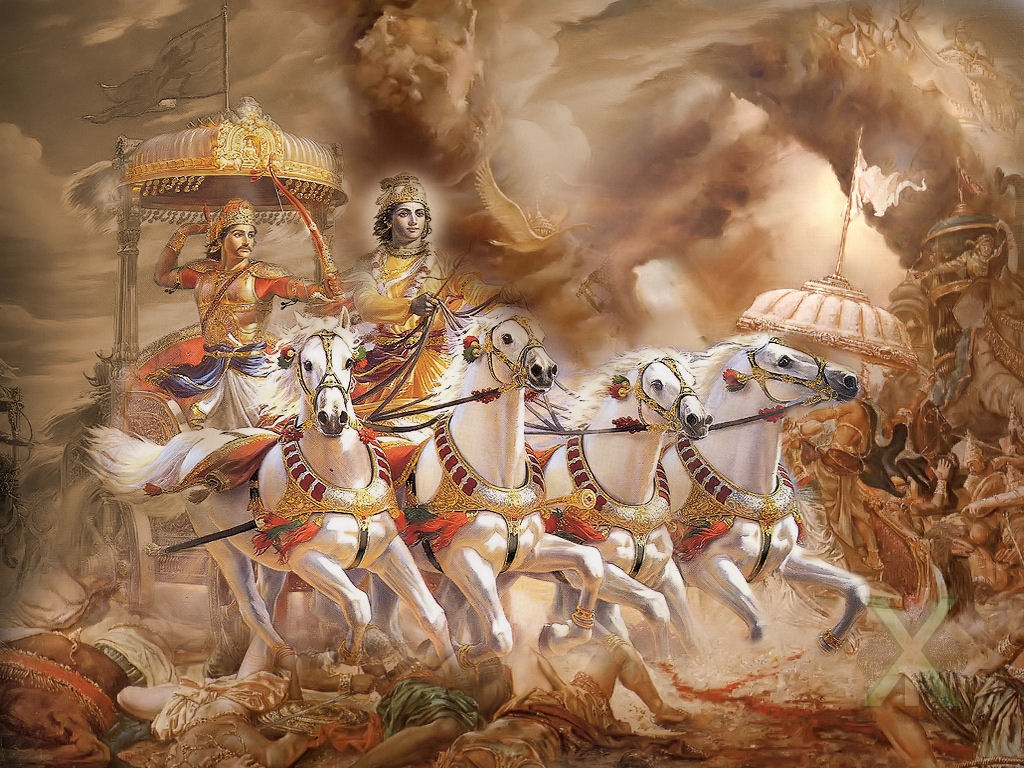
An incredibly brief summary of the political-military main story arc of the work follows. Two branches of a royal family reigning in the ancient state of Kuru begin to struggle for the future of the throne. The treacherous and decadent Kauravas use a variety of clever (but sometimes too-clever-by-half) schemes to attempt to murder, and then exile the Pandava branch. The Pandavas, humiliated, wander in the wilderness where they acquire numerous allies, weapons, and skills during multiple adventures. Most importantly, they acquire the patronage of the god Krishna. When the Pandava’s return to claim their kingdom, they begin with negotiations. The Kauravas refuse to give an inch, quite literally, and declare war. Given the greater levels of empathy and thinking the Pandavas have learned in their exile, they, especially Arjuna, have a crisis of conscience on the eve of the battle. Is it worth it to fight in this rotten world? But Krishna, serving as Arjuna’s charioteer, gives him a pep talk about duty and dharma (the Bhagavad Gita) about how he is involved in forces far greater than himself and his family connections (among other things) and has no choice but to act. He is here now with a job to do. You can always renunciate when the job is done. A massive battle is fought leading to immense slaughter and the eventual triumph of the Pandavas who claim back the kingdom entirely.

The implication is that the kingdom is now better and more justly governed. After several decades this golden age fades, it is the last gasp before the Kali Yuga, the age of degeneration which, by implication, recorded history belongs to. The heroes of old are gone, and they leave only their examples until the cycle begins anew.

If you want a more interesting summary see Wes Cecil’s excellent lecture on the philosopher’s view of the text.

The three state leadership cliques this most resembles in the 20th Century follow in chronological order:

1. The founding of the Turkish Republic:

ataturk secularistprop

At the end of the First World War the defunct Ottoman Empire became a puppet rump state with most of its territory going to be carved up between the victorious Allied powers. Though hardly bothered by the loss of the rebellious Arab provinces, the well educated clique of military officers that had been long advocating reforms of state saw even the chance for a Turkish state to survive start to vanish. Britain occupied Istanbul and the surrounding straits, France took Iskenderun, and Greece wholesale invaded hoping for massive territorial annexations in Anatolia and Thrace.

These officers, under the command of Mustafa Kemal, the best Ottoman general of the war, organized a rival government in Ankara to the puppetry of the Sultan in Istanbul. They hoped to gain at least a guaranteed territorial integrity for the Turkish homeland of the state. But when the Sultan declared them traitors they declared a rival republic from their new base. Kemal halted and then decisively crushed the Greeks, swept west to cause the British occupation to flee along with their puppet government, and moved to abolish the Sultanate-and soon after-the attached caliphate as well. What followed was a new reign that swept aside over a century of Ottoman decay for a state that prized development, education, and modernization. Anatolia and Turkey, about to be obliterated in 1919, had bought itself a new lease on life against the odds.

Then of course the Kemalists, Turkey’s Pandavas, left the stage and Erdogan eventually arrived, ushering in the Kali Yuga.

2. Communist Yugoslavia:


TitoHinduGod

Fortunately for everyone a few months ago I made this picture of Tito as a Hindu God for no particular reason and now its suddenly perfect.

The state of Yugoslavia was also formed in the aftermath of World War I, though it was originally a monarchy. The fragile new state was an attempt to unite all Southern Slavs who had been traditionally been divided by the Austrian and Ottoman Empires and their traditional sectarian divisions. When this state faced joint invasion and occupation by Axis Italy and Germany it was quite literally carved up and under German influence, the Croatian Ustasha embarked on a massive genocide of Serbs and Bosnians. Surely, such a young and weak state could never be reformed now?

Two dueling partisan bands formed, the more conservative Chetniks and the left wing Partisans. Josip Broz Tito’s Partisan’s turned out to be the far more clever and tough of the group and managed to eventually convince both western and eastern Allies to direct the lion’s share of aid to them. Once they had undermined the Chetniks enough to be secure, the Partisans began retaking the hills and outlying regions, leaving Axis forces increasingly in isolated urban areas. They had in fact liberated most of the country by the time the Soviets arrived, who helped clean up much of the remainder of forces around Belgrade. This success meant that Yugoslavia would not become a satellite Soviet state and retained a large degree of independence from the beginning.

Tito’s partisans became the new government of a socialist Yugoslavia, which rose like a phoenix from the ashes. The state made enormous, if unfortunately ephemeral, gains in reconciliation after thoroughly purging fascists from the war. Considering the context, this was no small matter in one of the most devastated states of World War 2. It made far more lasting gains in the realms of female empowerment, human development, and making a previously minor country a major diplomatic player on the world stage which held influential sway in the Non-Aligned Movement.

But just a bit over a decade after Tito’s death the old and ever-present tensions would tear the state apart again. With the coming of Slovene and Croatian separatism as well as Serb chauvanism, the Kali Yuga would descend upon the Southern Slavs.

3. Post Genocide Rwanda

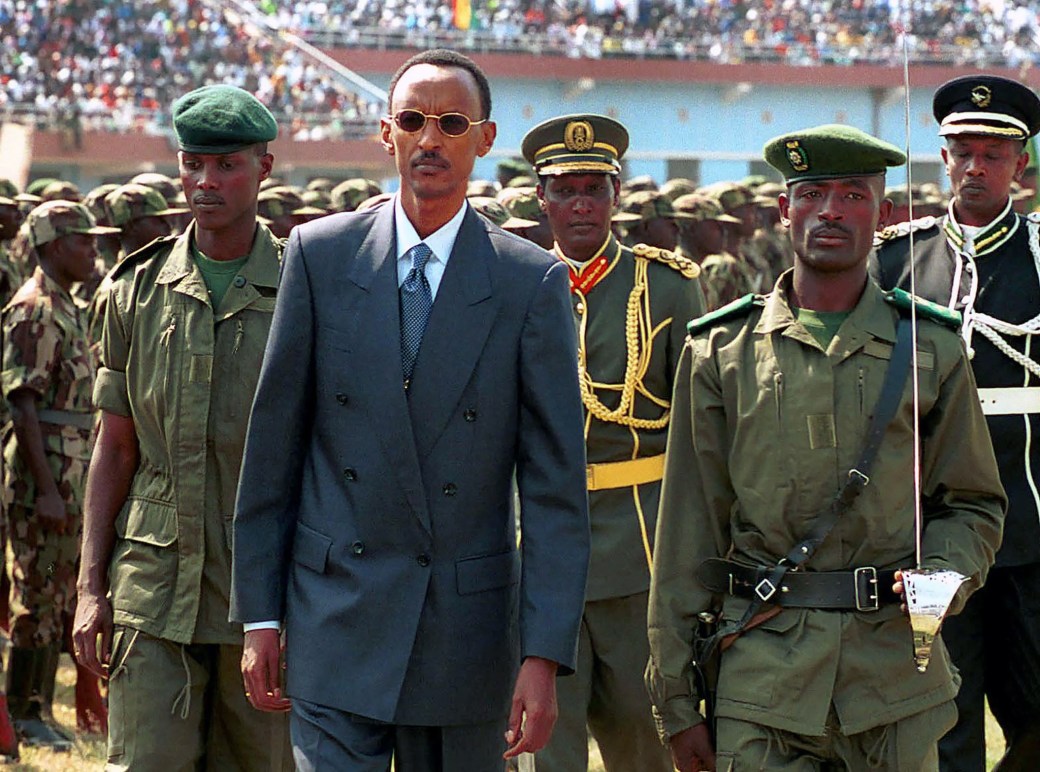
On the sixth anniversary of the Liberation of Kiga

To say that Rwanda spent most of the Twentieth Century as an incredibly troubled nation would be to barely scratch the surface. Colonization by Germany and then Belgium, who both propped up an unsustainable system of built in ethnic strife gave the nation an already bad hand after independence. The revolution in the 60s removed the Tutsi aristocracy from power but did little to remove still existing tensions. The new government made many enemies and the Rwandan Patriotic Front became an exile army and government which made allies with Uganda and served in the Ugandan Bush War.

Meanwhile, back home, the crumbling situation took the government in famously genocidal directions. Like the Croat Ustasha, the Hutu radicals took to ferreting out rumored weak links by waging a no-holds-barred campaign of extermination against the Tutsi minority and anyone opposed to their rule. But while they bloodied their machetes against the defenseless, the RPF, battle hardened and unified by their exile, swept in and against the odds disposed of the government.

Since that time tiny Rwanda has made enormous strides in recovery, development, and re-orienting its foreign relations. It has become arguably the most powerful state in Central Africa and one still working hard to abolish official ethnic division. Time will only tell what the real results will be, but the fact that they have made it here from the 90s is nothing less of a miracle.


What are the recurring themes of these (and more) examples and the journey of the Pandavas in the Mahabharata?

1. In-group solidarity (such as Ibn Khaldun’s assabiyya) is made in adversity and exile, and can be a more effective tool of revenge than numbers. All three of the above real life examples were against the odds and against entrenched power. When Krishna was approached by both sides of the coming Kurukshetra War he could not deny either, despite his preference for the Pandavas, for he can deny no one that seeks his aid. He offered himself to one side and his army to another. This makes him much like a symbol for the vagaries of fate and power. But Arjuna chose wisely, and chose Krishna himself over his armies. This would be the linchpin of victory in the coming war.

2. The only way to stave off political degeneracy and reactionary ossification, at least awhile longer, is to have a political upset in the form of a dramatic upheaval or bloodletting. The necessary reforms and re-organization of the ruling classes can only occur with the extermination of the miscreants, be it through exile, prison, or death. This may include fighting former friends and allies. No doubt, Kemal, Tito, and Kagame all had moments where they, like Arjuna, paused before taking the necessary action. But the balance of forces were moving in games more relevant than individual feelings and there was no choice but to see it through.

4. Women too will get their revenge. Much like Kaurava rule in Kuru, where they tried to humiliate and denigrate Draupadi only to have her enthroned and washing her hair in the blood of her enemies, the women of these three former reactionary regimes would go on to have an elevated position in the new governments. The Turkish government made enormous strides in female education and enfranchisement, as did socialist Yugoslavia (where women had fought with the partisans as equals of the men). Rwanda in turn has gone on to surpass all other nations of the present in percentage of female lawmakers.


All of these lessons and more are worth keeping in mind as we enter into an era of ecological catastrophe. After all, those of us who live in the Anglo-American sphere of things have been dwelling in the Kali Yuga for many decades now insofar as leadership is concerned.

tragedyfarce

O’Bagy and Boots: Spirit Totems of the Beltway Ghoul Class

You may not remember (or have ever heard of) Elizabeth O’Bagy. Basically, she was a fraudulent expert hired by the (neoconservative) Institute for the Study of War to serve as a Syria expert. Her expertise was largely in advocating for the ‘moderate rebels’, whose work she did on their behalf she failed to disclose, and in lying to people that she had a doctorate. See below:

In a denouement that will surprise exactly no one, she had the right opinions of cheerleading endless regime change policies to qualify for a failing upwards promotion to join the staff of Senator John McCain (of course) as a legislative assistant.

What this small potatoes lanyard has in microcosm is in fact emblematic of a greater problem with the Beltway. I have mentioned before how ideologues get signal boosted and actual scholars get sidelined, but its worth mentioning exactly why this is and what purpose such a system serves.

Amber A’Lee Frost, who as far as I know has no foreign policy experience, accurately diagnosed the problem with so many regional ‘experts’ in mainstream foreign policy commentary. To paraphrase from memory, ‘the point of regional experts is-90% of the time-to advocate for more U.S. intervention in their region of focus.’ As someone who has lived and worked in DC for a few years now, I can confirm the truth of this statement. Objective reporting and actual regional expertise for cost/benefit calculation is sidelined for new ways to make a case for various forms of intervention and increased defense spending and to dupe the middle class rubes who seek such high minded sounding justification. This is the name of the game.

While these types are common beyond belief, a certain few always rise to what passes for media influence from time to time. William Kristol, the hilariously named Power and Slaughter Axis (Samantha Power and Anne Marie Slaughter), and on the list goes. But none has quite taken the O’Bagy status of our times quite like Max Boot.

Boot’s career is far more ‘impressive’ than any of these, if we take impressive to mean consistently and often hilariously wrong. He is one of the rare military historians who has achieved fame, and the method of acquiring that fame is the one which is most detrimental to history: parroting the popular political mythologies of the ruling class of his time. Despite the fact that a thorough study of global history, and yes, military history, reveals a total lack of teleology in human affairs save for the triumph of power and cleverness over weakness and rote-thinking, Boot has churned out one book after another turning advocating for an understanding of American history that supports the largely disastrous post-Cold War trends of foreign policy-as well as increasing those failed policies in both scope and intensity. I suppose at this rate he should be loved by accelerationists who wish to see a collapse of American world power, since the acceptance of everything he wants would fatally cripple the long term sustainability of American power.

But rather than go on about his career I really wish to lament that these are the people called in for ‘expert analysis’ on much of the media. All that gives the public is self-affirmation of the policy wonk bubble-a bubble that has been clearly failing since 2003 if not before. See for yourself Max Boot in action:

And also here:

What I find fascinating about both of these clips is that Boot is up against opposition that is hardly unsurpassable. Tucker Carlson is often laughable rube on many issues that are not related to his welcome recent turn on foreign policy. Stephen Cohen is a real scholar but is certainly the most uniformly pro-Russian voice you could possibly find on American television anywhere. Yet despite being able to take any number of ins, Boot always gets flustered that other people simply don’t believe in an ‘American Exceptionalism’ where great power politics is cloaked in the language of morality and norms. On the very format of cable news where his audience is most likely going to be sympathetic he cannot even hold his own.

When the propaganda machine promotes the unworthy every time they make a terrible policy prediction that just so happens to flatter the already existing biases of a class of people it will inevitably lead to their own PR not being able to hold its own in the public arena.

Perhaps, in this way, O’Bagy and Boot are indeed performing a public service of sorts.

In Praise of Objectification

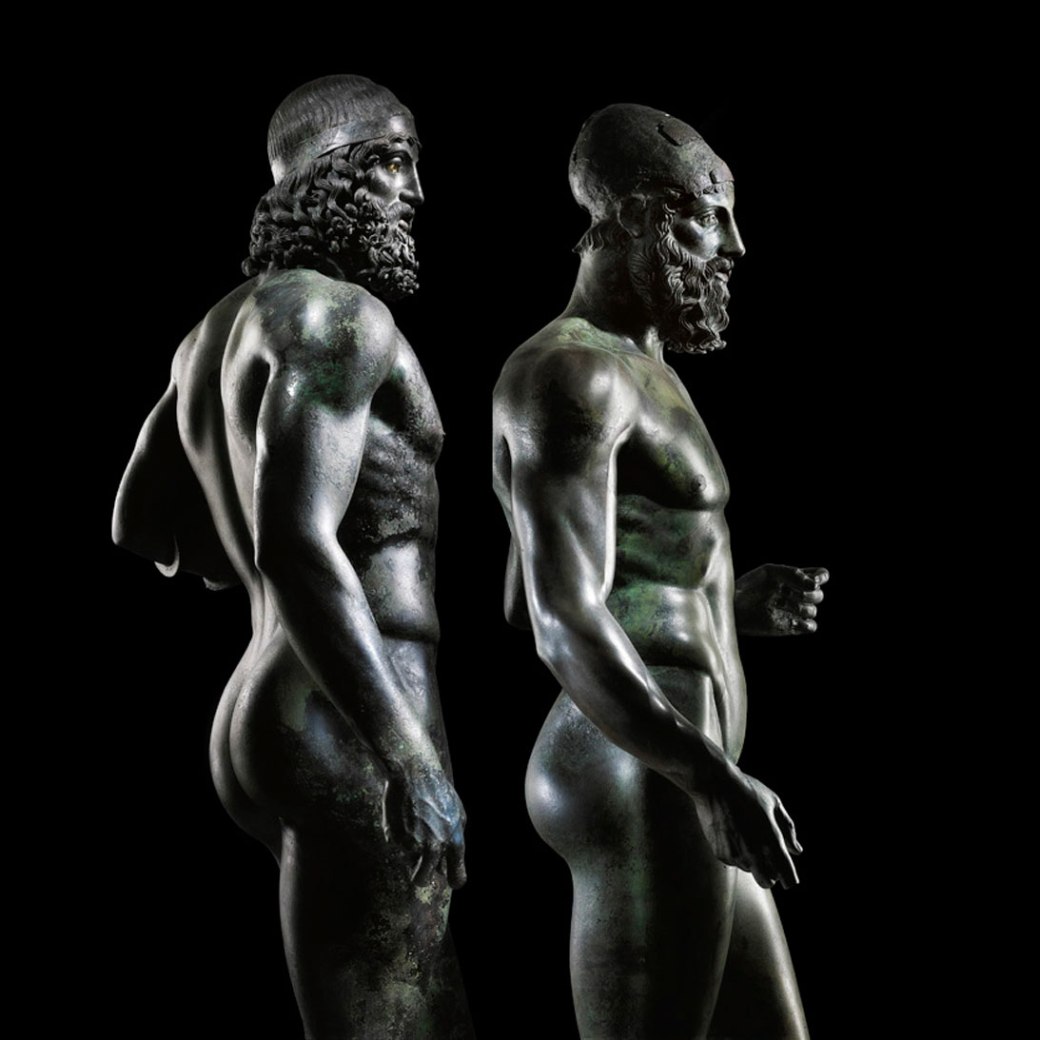
riaze bronzes

The Riace Bronzes, pictured above, were originally made around 450 BCE. Found in a shipwreck off the coast of Italy in the 1970s, they are a fantastic example of Greek sculptural talent that has survived in excellent condition.

If you look at them superficially they seem the pinnacle of lifelike form. Artistic realism from a time when it was rare in much of the world. But they are in fact not quite this. A closer look reveals that they are in fact aesthetic exaggerations. The proportion of the limbs is incorrect, the spinal divot is greatly accentuated, the torso too long. If they weren’t beautiful they would be grotesques-a perverse distortion of the human form. And yet it is this accentuation itself that makes them so striking, not for being horrifying, but for being captivating. They are proof of the power of objectification.

We live in a contemporary culture that seeks to deny this power and the positive role that objectification can play. Moralists across the political and social spectrum which have inherited the puritanical drives of monotheism and puritanism seek an artistic world that reflects a reality where nothing can be perfect. Being a (political) realist, I agree that the world can never be perfect and should never be idealized in thought. But being a (speculative) realist I also maintain that there is no harm doing so in the visual arts or in the abstract. So long as we maintain the the difference between ideal and real not only do I not see harm, I see a valuable lesson for rumination by the materialist.

The first and most simple point is entirely subjective, so I will dispense with it quickly. Non-objectified art can be made with less talent and often just leads to edgy pure-interpretative postmodern navel gazing. It is boring and its time is rapidly drawing to a close. Various cultures have created great works of art by not just idealizing the physical forms of people, but animals, plants, mythological creatures, you name it. The Fushimi-Inari Shrine in Kyoto, one of my favorite man made places I have ever been to, objectifies (if using the definition of moralist scolds of left and right) foxes for symbolism. Much of what is great and striking in classical art does something similar for more human like figures. Modern art such as Osprey which merely seeks to recreate historic clothes and armor often does much the same. Propaganda does the same in more abstract form, particularly in the earlier part of the Twentieth Century.

But more substantially and less subjectively as a second point, to the philosophical realist objectification is good in any context because objectification is true. The concern with the moralists of left, right, and center is always the fear that humanity will be reduced to an object. They wish to avoid embracing this, but I would prefer embracing it directly. Humanity is a collection of objects which in turn creates its own cohesive object as the human in turn (See Graham Harman’s Object Oriented Ontology and Levi Bryant’s Onto-Cartology in turn, mentioned a few entries ago on this blog in greater detail). Humanity is more than the sum of its parts, sure, but only because the addition of multiple objects creates new ways for assemblages to interact in physical space and thus to create new and larger objects. Your liver is an object, but in meeting with your other object-organs it creates a greater object-assemblage, which is yourself. And yourself, it reasons to assume, is itself a smaller object as part of the assemblage of humanity itself as a species, and Earth itself as an object-planet. Therefore, from a materialist standpoint, you really are an object. And all objects, depending on their use to others, become objectified by living beings in some way.

The third point is that objectification reminds us not to be suckered into anthropocentrism. As humans we constantly objectify everything around us because our relationship with the rest of the world is much more honest than the one we have within our own species. In the era of the anthropocene it is more and more important that we disavow with this artificial separation between how we perceive ourselves and the rest of the natural world. To reduce someone to an ‘object’ is not really an insult, but rather an honest admission as to how we view most people who we do not have a personal acquaintance with. This also overlaps with contemporary culture’s obsession that physical beauty matters more than everything else. If one believes that acknowledging (ever-changing) beauty ideals exist and will always exist in some form, this is viewed as morally bad. But really it is an admission of reality. The actual ideals will change, of course, but not that such ideals in some form will exist. What this means, ironically, is that the woke-burqa alliance is actually stating that they believe, deep down inside, that physical beauty is the only meaningful form of praise.

I disagree. I think a person can be objectified for their body, or for their brain, or for some useful or impressive talent (which most likely involves the manipulation of objects in turn) because it is both consistent and correct to do so. Society does not exist to have numerous atomized individuals all pretending they are all perfect wholes separate from the rest-nor does it exist to pretend that egalitarianism must mean different traits are not exceptional. It exists so that different specializations can be harnessed for a variety of communal outputs. The real objective should not be to ‘make everyone comfortable and modest’ or ‘make everyone beautiful’, which would only make everyone bland and indistinguishable even in the entirely unlikely scenario that it would succeed (not to mention create an underground and illegal beauty and horror market to fill the need being denied) but rather to increase the amount of things we are going to objectify so that more people can be objectified in more fields…and thus elevated.

The cultures that first dove into philosophy were the same ones who made works like the Riace Bronzes. This is not a coincidence. When Christian fanaticism came to power many of these so called idols were smashed. Islam did much the same. Daesh did this just a few years ago in Syria during the occupation of Palmyra.

Maybe its time to bring the idols back.


The Hip Old Fogeys and the Fear of Realism

pomothot

Back when I was firmly ensconced inside academia it seemed apparent to me that there was a certain cadre of social science professors-as well as their acolyte grad students-who were still under the delusion that they lived in 1990, and that 1990 was the future. They were, of course, postmodernists. Now, I know I have delved multiple times before into why I find that ideology anti-intellectual and useless for anyone taking the (correct) position of materialism so I am not going to go back into that here. But what I wish to deal with more specifically is the last gasp critiques of this dying old guard that refuses to admit it is yesterday’s fad.

I was sent, jokingly, a link to this which galvanized my idea to write a reaction. I am not interested in picking on these three academics specifically however, but rather the general trend of certain (usually boomer, or if younger, hipster) academics and their closest students to insist that they are still the cutting edge and critical observation. If you take a look through the list of positions held by Theory Revolt on how history is taught at the university level you can see in their own worlds what they are all about. Largely, they are opposed to a stodgy fusty old man and High Tory kind of historical instruction that defers to authority and source material and insists on universal truth. They wish for more theory to counteract a bland spreadsheet of dates and facts with little interpretation. Well, I agree with that.

The problem is that the widespread teaching of this kind of history is long since banished to the margins of most academia (outside of DC in polisci and economics in general, of course.  I am sure I have ranted about this before). The other problem is that to replace it with ‘critical theory’ (a nebulous term that implies critical thought but functionally and largely just means relativizing everything into subjectivity and attaching the milquetoast label of ‘problematic’ to everything) would be to update history courses from 1960 into the far off future of 1990. Theory Revolt is proposing nothing new as a solution to a problem that ceased being a problem around the time I was born. To be honest, this ‘revolt’ cannot be against the academic establishment: because for the most part these critical theorists *are* the academic establishment in the humanities.

Furthermore, this is reflective of a class of scholars who would rather ‘queer’ specific niche aspects of history than, say, write a large and comprehensive history of alternate sexualities. But I happen to know of a big-picture book that has done more for the subject that a million woke lit crits and film reviews about how things are portrayed in fiction. And that brings us to the other problem these academics have inflicted on us: fiction is now held as just as reliable a form of knowledge as nonfiction. Now as any cursory perusal through this blog can show, I do not write fiction off as a tool of analysis and fun for atypical nonfiction and theoretical topics. But it is no panacea on its own. I cannot help but think that the postmodern infiltration of all of the recent humanities topics has contributed to the unfortunate trend of many (usually) mainstream liberals and neoliberals to have meltdowns when real life does not conform to a Hollywood/Harry Potter/West Wing fantasy narrative about history as a progressive teleology where people like them are the heroes.

One of the habits of these types in the field is to become incredibly niche in their interests so that they are the only expert in an entire university or even country. That way they can all pretend they cannot speak with any authority on their colleagues’ research and thus that no one can be professionally challenged. A mutual non-aggression pact. Though stultifying, this hardly effects the students. It does, however, discourage the learning of big picture issues and cross-disciplinary topics. As a History undergrad/ International Relations postgrad crossover working on a doctoral thesis that was both of those majors at once, I made it a mission of mine to encourage cross disciplinary study and events as part of a group I was in. We successfully brought together scholars from History, Literature, Politics, Psychology, Anthropology, and the like from around the world to meet each other and think of joint projects. This is work that helped cross-pollinate ideas and contacts. It is also something I never saw the people on the deep end of critical/postmodern theory ever do…unless, that is, that it was around a topic that would guarantee that everyone in attendance was also of a similar ideological background. We had no such scruples in our group, and lively discussions that resulted from this were much more enlightening.

One of the positive things that postmodernism gave us, before it went off the rails, was a greater emphasis on scrutinizing the purpose and ideology behind primary sources. They did not invent this, of course, but helped to popularize it. The thing is that good historians already did this, and now there are more historians of all calibers who do. But they do it across the board. Marxist historians, realist historians, geopolitical historians like myself. We all do it. The foundational work of the Post Cold War era was not Derrida or Butler, but Diamond. It was the re-entry of physical space that jump-started humanities disciplines left moribund and uninteresting to most people by decades playing in the ashes of a postmodern apocalypse.

Lest you fear I am only now updating the curriculum to 1998 or 2005, let me assure you Diamond was only the start. Speculative Realism is a school of philosophy that has been doing its thing since 2008 and through the present. While still primordial, the normally dry but practical naivete of analytic philosophy and sterile introspection of continental philosophy have been both left in the dust by thinkers like Meillassoux, Harman, Brassier, and others who have taken the critical thinking of the continental and paired it with a commitment to removing the anthropocentrism of that school of thought by returning to a real world that (obviously) exists outside of our feelings about it. In other words, social science creationism is out, philosophy’s reconciliation with real life begins anew. This is the actual cutting edge of philosophy and hopefully soon theory as well in today’s world, not the stodgy old fogeyism of the Me Generation. After all, we live in a world of obvious and undeniable environmental deterioration. As if the greater world around us was not enough to wake us up from decades of prosperity induced solipsism, everything that has happened since the Great Recession has really just reminded the world around us that politics (and therefore useful theory) must be rooted in the physical as the core of all things political is the struggle for the allocation and distribution of resources. Full stop. Only the physical can confront the physical. The challenges of the anthropocene will either consume us or be alleviated by new technology.  Anything else is in effect theology, and that is a waste of time for issues of import in the here and now.

By all means let’s have a theory revolt. But let it be against all types of fogeyisms, Tory or Woke. Realism is necessary and coming back, but it won’t be doing so uncritically. And a vital part of that is making a world where academics are uncomfortable and can be wrong. Because that is how we grow.


Douglas MacArthur’s Ghost and the Bolton Democrats


Trumpkim.jpg

Image via the BBC

Today was a big day in diplomacy over there in Singapore. Trump met Kim and their advisers met each other. America has apparently committed to ending joint military exercises with South Korea (for now) and North Korea has started demolishing its weapons testing sites, though only a few so far.

The almost nonexistent relationship between the US and the DPRK is an artifact of the Cold War. One that became obsolete from an ideological point of view in 1992 but has lingered on anyway. This is, of course, because it (much like the Cold War itself in my opinion) was not primarily ideological but rather a contest of rival power poles and alliance networks. In reality, North Korea has remained an issue because it fears the United States and encirclement from their allies but also fears that this unenviable and de facto blockaded position on the world stage would force it to become so subordinate to their giant ally China that their sovereignty might also be indirectly compromised from that direction.  If you wondered why a government is so clamped down and beholden in all factors to security concerns this is why. China wants a compliant vassal state protecting its only land border with a US rival, South Korea and the US want to keep affirming their alliance, and Japan wants to stop being used as a testing ground for North Korean weapons demonstrations. North Korea, for all its oddness, really just wants to survive and avoid any kind of regime change operation, be it conducted from their south or, perhaps more indirectly, from their north. When it comes to security actions and goals abroad, Pyongyang is one of the most rational actors around today.

So why is there so much moaning that we are even talking to them directly now?

I have no interest in predicting whether these current talks will be successful or not. Trump is far too mercurial and there will be many established interests in many different countries who will not want these talks to produce good results. I *hope* they start a running dialogue that succeeds in their purposes, but I am not going to yet come out and say they will. They should, however, be given the chance. To increase the chance of them working, much of foreign policy in both major parties in the United States should be figuring out how to bring this about.

But here rises the ghost of Korean War General Douglas MacArthur.

MacArthur began his role in the Korean War with a massive amphibious flanking victory at Inchon, changing the fortunes of the war which up to that point had been largely one North Korean victory after another. His famous hubris led him to build off this victory by driving ever onward without regrouping or securing his position and in frank disregard (which he would convince an initially reluctant Truman to follow with) for China’s determination of keep America off its border. What resulted, in the Yalu Campaign, was one of the US armies’ biggest defeats, perhaps second only in scale to the loss of the Philippines in 1942-something MacArthur also played a role in. The war went from imminent US victory to grinding stalemate, with MacArthur having to be replaced by the more cautious and adaptive General Ridgeway. There would be a ceasefire in 1953, but in technical terms the conflict never would end.

MacArthur returned stateside to play the victim of Washington, the scapegoat of the President. Never mind he himself had advocated for expanding the war into China and the use of tactical nuclear weapons to facilitate this grandiose and mad counter-offensive. Never mind that he had inverted his WWII career by starting out winning and ending up losing. He blamed others and became an icon of the far right which was just then beginning to descend into the howling madness of McCarthyism.

If he were around today he would sound like John Bolton…or your average establishment Democrat. After all, the historic meeting in Singapore had barely made the press when notorious King of Corruption and Popularity, Senator Bob Menendez, said it was a ‘victory for North Korea’ that we had somehow blundered into to our loss. Meanwhile, the old guard of the Democrats (as well as the sociopathic hawk and daily birthday cake quaffing Tom Cotton and his types) have been constantly pushing America’s famously vain and media-obsessed President to take a more hawkish line on North Korea.

Do keep in mind these are the same people who constantly refer to him as a madman and unhinged. Yet they want more war like policies from him as they vote for more and more defense spending increases. Amazing.

These Bolton Democrats are in effect trying to push Trump to his right on foreign policy as well as position them as the ‘true patriots’ who ‘aren’t afraid of foreign countries’ and can say ‘see we told you so’ if something goes wrong. The problem is that policy issues of this size really shouldn’t be partisan footballs. There is no ideological clique driving this policy, such as there was in Iraq, but rather probably just two leaders both seeking a win to legitimize their standing. This seemingly petty reason should not turn us away from the many opportunities that improving relations between DC and Pyongyang could represent. And it should not blind us to the fact that America holds most of the cards in this bilateral relationship, from sanctions to diplomatic relations in the region, and therefore can afford to give a little here and there. North Korea will have little to give up at the opening stages, so I don’t really view it as a failure to diplomacy to scrap the exercises early on.

Furthermore, in a grand strategy perspective, taking bold moves towards ending rivalry with the DPRK might provide proper benefits to American Grand Strategy in the future. The US is far stronger at sea than on land in Asia, and a Korean peninsula working towards reunification peacefully would almost certainly be a de facto neutral nation, allaying both Chinese and American concerns there. The task would be Herculean enough that they would most likely want to stay out of more great power rivalry, giving the Chinese some breathing room on their border and the US the ability to avoid being sucked into a repeat of 1950-3’s land war. Any conflict that might break out would be at sea, where the much more strategically vital Indonesia waits. This would most likely be to American advantage should it happen.

In the inevitable barrage of Norms Nerd commentary which is to follow, who will wring their hands and clutch their pearls about ‘normalizing a regime’, I can say only this: The Kim family and the ruling party have run North Korea for significantly over half a century. Get over it. You will find when you come to accept reality as it is and not as you wish it to be, that it can be much easier to get things done in the field of diplomacy than otherwise.

Geopolitics in a World of Interlocked Machines

mt roraima

Mt Roraima, the closest thing to a true natural border, serving as the meeting point of the borders of Brazil, Guyana, and Venezuela

In previous posts I have mentioned in brief my fascination with speculative realism and object oriented ontology. I was always planning on making a post drawing the connections between it and the geopolitics which are the centerpiece of my writing here, but kept putting that off. Of course, now that I have read Levi Bryant’s (blog here) excellent book on ‘Onto-Cartography: An Ontology of Machines and Media’ I am now jump-started into finally getting around to this task. This post will also partially count as a book review for said work.

Also, as an aside, damn University of Edinburgh, you folks publish a lot in both speculative realism *and* China-Central Asia studies. I can’t believe I never realized this connection until after I moved out of the city. All my fields represented in my favorite place I ever lived. Missed opportunities and all that.

I got my start in grand historical narratives with Jared Diamond’s ‘Guns Germs and Steel’, and I feel that its influence and verifiability in my experience kept me always on the side of anti-idealism and pro-realist interpretations-one of the few views I have never changed in my adult life. The anthropocentrism of so much of philosophy is both silly and divorced from the big picture and largely seemed to make most of philosophy-especially since the postmodern turn-utterly divorced from anything interesting or practical. It was only with my discovery of John Gray and then speculative realism as a whole that I finally found like minded people who wanted to insert some materialist and/or pseudo Taoism into these trends and thus rescue philosophy from its own self-imposed irrelevance.

From what can be inferred by the writings of many of these new wave of thinkers, the breaking point is the anthropocene itself. Human-caused environmental destruction ironically shows both how unintentionally powerful we are as a species as well as how utterly enslaved we are by the forces of nature even as we effect them. Climate change and the like are very real material things that cannot be ‘socially constructed’ away. This really forces the issue: western philosophy must get its head out of its own ass. The world is real no matter what you want to think about it. And postmodernism, Kantian idealism, and all the rest have done nothing but effectively make the same case for philosophy that climate change denialists and young Earth creationists do for the hard sciences. By relaying everything through human interpretation (correlationism), we elevated ourselves to the status of godlings in ideal but deluded street preachers in the real. Here is the world, we are part of it and it is part of us. We are not special or have some separate destiny through our unique access to consciousness. We are where we come from and what we are made of. In turn we effect the rest not because we are apart of the world but because we are very much an integrated (if increasingly overly powerful) part of the process.

Thinkers like Quentin Meillassoux, Graham Harman, Ray Brassier, Steven Shaviro, and others have done much work on bringing the usefulness in realism back to metaphysics and I encourage you to check out their work. But I must say, none of them quite have pieced together all the elements I wanted to see in one place like Levi Bryant has. More importantly, he does so in a way that makes it easier to do what I wanted to do–connect these forms of philosophy to geopolitics and history.

To put it extremely succinctly but perhaps unjustly as a summary: Onto-Cartography is Bryant’s mode of viewing the reality of objects (both physical and functional, so from plants to states or companies) as machines made of component parts, which in turn are machines made of component parts. All machines can be modified, made irrelevant, or increased in power by the addition or subtraction of various sub-components. These are all real de facto objects in space, whose interactions with each other and space itself as a medium are the sum total of reality. There may also be hidden objects-which is to say things that exist but that we do not and might never know of due to our lack of ability to interact with them-or objects that me might infer the existence of but still cannot detect outside of the inference on objects we can see (such as dark matter and dark energy, or the ideology of an umfamiliar society which you cannot yet communicate with linguistically). The one connector between all of these machine-objects, whether seen or unseen or man made or organic, is nature itself. The only holism here is that all things are natural.

This is not to say that all things are monistic and equally intertwined (what I would call the hippie-spiritualist platitude of ‘we are all, like, one mannnnn’). Some machines only interact with some things and may be invisible to others. The internet interacts with me and you if you are reading this, but not a wild boar rummaging around in the bush. Nor are such bilateral relations equal. The machine-activity of plant life, evolving constantly and striving to extract energy from the sun is utterly dependent on the sun-but the sun is hardly dependent on those plants and would exist unchanged without them. So too does it follow that bi-laterals can be proportionally unequal when they do exist as a back-and-forth, with the Earth influencing the sun, but nowhere near as the sun influences the Earth. Our solar system in turn, while obviously influenced by the context of evolving in the Milky Way galaxy, would continue to exist if it was ejected from said galaxy until the death of the sun, and the Milky Way itself would be unaffected by its absence. Most relationships in physical space exist to some degree, as everything observable interacts with energy and gravity, but this is dead end. Functionally speaking, the relationship between machine-object assemblages that matter are context dependent and have to be broken down to strategic linkages of power and cause and effect. So too, with grand theories of the humanities, where being pro or anti-capitalist becomes an almost meaningless position from the perspective of actively seeking to create change through politics when instead one must use a targeted approach to attack or support policies through their interlinkages with direct results, geographic context, and the interplay of physical factors that social science theory may not account for. This brings us strongly into the need to re-engage with geography-long one of my main causes.

When you consider that agriculture first arose in parts of the world that had the easiest plants to domesticate, and animal husbandry arose where the easiest and most useful animals to domesticate still lived or evolved, it becomes a legitimate question: Who domesticated who? Are we not now as beholden to our wheat crops and herds as their spread and cultivation is beholden to us? Are we not one giant interlocked process of physical objects as machine processes whose relationships can change or be re-evaluated by the constant evolution, revolution, and modification of these relationships through nature-often unintentionally? I would lean in the direction of a strong yes. The factors cited above which are also those which most directly the anthropology and history at the center of the humanities are directly tied to this geographic understanding. Against this background there is also the understanding that Bryant, much like Ibn Khaldun, constantly reminds us of: entropy. Machines break down with time. Geography itself, long treated by pop-geostrategists as eternal, is in fact temporal-if not as much as human societies themselves (Bryant 120, 174). To function in such a world machines need to either repair themselves or be re-invented, so is the overlap of seeing states (or tribes or gangs or whatever) as machines interlocked with the fate of their physical and contextual environment. To quote Bryant directly from page 191: ‘The social is not a specific sort of stuff, but is another word for the ‘ecological’. A social assemblage is an ecology.’ So zoologists have treated the interactions of their various species but anthropologists often have difficulty meeting this standards when looking at people.

So too does Bryant’s concept of hidden objects matter for international relations. Something that effects nothing until it does is a surprise, and often disproportionately makes history precisely because no one was prepared for it. Daesh, or ISIS, was something that lurked from the De-Bathification and marginalization of Sunnis in occupation Iraq but did not come to have proper international sway as a new and utterly bizarre entity until the circumstances of conflict in the Post Arab-Spring world enabled it to move from an ideology of rejected and angry sunnis to one which held a territorial base and influenced a web of international alliances. It was an object that barely mattered, dark to most of the world, until it achieved the mass necessary to exert a much larger gravitational force on other actors, so to speak. One could also see this process on a much larger scale in the meteoric rise of previously nonexistent powers in a short period of time, From Macedon under Philip II and then Alexander to Mongolia under Chinggis Khaan. As Ibn Khaldun was fond of postulating, the next new vigorous dynastic founders are often the most marginalized and sometimes even irrelevant people in a given order. See also the French and Russian revolutions where ideas of disaffection merely simmered until the situation made it that they could co-opt entire societies once they had momentum and a territorial base. The territorial base is key, as it means direct resource acquisition and interaction, something discussions in a salon never could achieve on their own. Tellingly, those that think salon discussion alone can bring about change (these days, mainstream liberals and conservatives) are those who already identity with the ruling class and therefore whose priorities are already de facto supported by the arms, power, and consensus of the pre-existing state.

Geography both constrains and enables what those who rule a certain place can do. It also means, in my opinion, that even if all nations can (and should) come together on environmental points that clearly would benefit everyone that they will never be able to share other common causes. Nations dependent on rare Earth exporting are going to be different that nations dependent on tourism, just as a highly urbanized region is not going to see eye to eye with a mostly rural area and neither will agree with a wilderness frontier. As geography and culture are very interlinked in an explicitly materialist way, and Earth is replete with societies of different geographies, the political idea of a common humanity vanishes even as we acknowledge we need to downgrade humanity’s overall importance in the grand scheme of things. Resource security with different powers and maintaining the right diplomacy is a way of maximizing differences for mutual gain, rather than some quixotic quest for a world order of moralism. The only thing universal is the natural and material mediums through which all such interactions take place-and even those change with climate, altitude, arability, power relationships between assemblages, and the like.

Bryant offers those of us who are old school realists and geostrategy watchers to engage with contemporary philosophy and both put into place language outside of general policy-wonkery. Considering how many absolute quacks infest geopolitics this goes in a positive direction to establish a much maligned field as more legitimate philosophy in the materialist tradition. Seeing states as the entropy-affected machines that rise and fall in reaction to the various people in that interact with their physical places as well as the pressures of the natural world and those of other people is a neutral and realist way to ground the study of alliances, war, strategy, and the historical contexts which feed into the self-justifications of states and the policy traps they often make for themselves. The relationship with nature by societies are always (at least) two ways, we affect nature and it effects us, because we like our technology and our animals, are as much a part of it as the wilderness. If we can chart the territories of wolf packs relatively objectively and always keeping the environmental context in mind, there is no reason we cannot do it with the formations of people as well. And any attempt to effect change within these societies must keep this context in mind. It also, perhaps most importantly for the realist school of IR thought, gives us the means to engage in contemporary materialism when talking about the power imbalances between strong and weak states as well as how they constantly adapt and evolve to try to find better balances of power for their interests.


Ibn Khladun: An Intellectual Biography-a Review

Bust_of_Ibn_Khaldun_(Casbah_of_Bejaia,_Algeria)

I mention Khaldun enough so it is about time I review a book about him.

I have to admit, Robert Irwin’s ‘Ibn Khladun: An Intellectual Biography’ did not immediately meet with my approval. One of his earliest statements is that the great historian’s views of the cycles of nomadic Bedouins coming and going in power in North Africa is not applicable to many other places on Earth. I disagree entirely-with the added proviso that as long as one is aware of the local histories in detail-and I myself came to Ibn Khaldun through matching his thinking up with my first historic love: the Turko-Mongolian world. Though the author later quantifies that to some degree. But I would add also that Khaldun’s thought does in fact become more universally applicable to the cycles of history if one looks for the equivalent of nomads in these settings-potentially powerful outsider groups with strong in-group cohesion. A society with no nomads still has the underclass, highly traveled professional workers, diplomats and mercenary generals for hire as was common in Enlightenment Europe, privateers and upstart naval powers, and the like. One could, and in fact I feel like perhaps later I should, write the history of naval power from a Khaldunian perspective. All show the upstart but well organized outsider taking over the decadent wealth which often was not made by its present adherents but rather inherited by them, setting up their new, more youthful, and vibrant regime in its place or at its expense, and then succumbing, with the passing of generations, to the same maladies of their former foes and who are in turn replaced by new upstarts on their own periphery. So did it go with Venice, Spain and Portugal to the Dutch and then the British and then the Americans. So will it be again.

But this criticism aside, the overview Irwin gives us of both Khaldun’s career and the life his works have taken on since his death are both critical and laudatory, and put the man in context. As a thinker who is often projected by moderns to be one of them, it is important to see his historic context and actual views (including now laughable ones about sorcery and supernaturalism) restored to discussion of his record. Additionally, Irwin retains enough detachment to be able to postulate about the normal human foibles that Ibn Khaldun suffers from. He also retains a very even overview of later thinkers, both modern and not, who interpreted the thinker for their own ends. Most interestingly was his apparent growing popularity in the Ottoman governing and thinking classes that showed they were far more aware of the potential of their decline than most empires at their height are. I am very tempted to think that the nomadic Turkic background of the state contributed to this self-awareness and critical openness. It was also interesting having his time in the Mamluk Sultanate covered, as it was both a government that reflected some knowledge of the need to keep the ruling class recharged with fresh blood (Mamluks were imported Turko/Circassian/Balkan slaves who had been raised as nomadic cavalry who were then drawn into the military of Egypt under Sultans also descended from such stock) but also one which by Khaldun’s time was starting to degenerate even despite this caution.

Still, all things political being either in a state of rising and falling-with falling more commonplace-one can say that the Mamluks were in fact enormously successful compared to most of their contemporaries as well as a rare medieval state that could long term sustain being both an art patron and a vigorous military power. And its fall had more to do with the technological changes elsewhere invalidating the nomadic cavalry focused military than internal factors when the chips were down. Firearms matter and it was the Ottomans who jumped on that wagon first as a way to organize the core of their armies.

The best part of Irwin’s work, however, is in recognizing the pessimism of Ibn Khaldun. Here was a man born and raised in 14th Century North Africa who all around him saw signs of ruins of richer and more powerful civilizations long dead in the past. If Carthage and the Almohads could fall, why not the Hasfids who he worked for? Why not everyone else until the end of time? Though nomadic regime change could bring in fresh blood for a time, it would only be for a limited amount of it. Meanwhile, the Sahara grew and prestige of the region shrunk. This was the core of Ibn Khaldun’s work…work that would go on to influence such fiction greats as Asimov’s Foundation and Herbert’s Dune. And in a remarkable in-person meeting years after most of his writings, Ibn Khaldun would meet Emir Timur outside of Damascus during the very siege that the Turkic conqueror was conducting, and in so doing get to see the only example of rising in his lifetime and discuss theories of history with him-an academic case study made real in the flesh.

Would all us scholars be so lucky.

The Grand Alliance Future Predicted by Geotrickster is Here

On posts too numerous to mention (or bother going through to link directly to) on this blog I have often talked about the importance of the Eurasian landmass and the traditional fear of naval powers of grand land-power alliances locking up most of it. In contemporary terms this often means a China-Russia alliance of the sort from the early Cold War returning. I recommended to American strategists that this be avoided and that overly antagonizing Russia on all fronts would increase the likelihood of it happening. In the end great power rivalry was always more important than tiny peripheral gains (and over-expansion) at Russia’s expense.

Well, it has happened. Or more accurately, it now is definitely in the process of happening. This doesn’t mean that the numerous tensions in the relationship-especially over influence in Central Asia-won’t flare up or reverse the process, but its clearly time to start thinking about the US position of being sidelined in much of Eurasia actually is.

A true realist does not pine for the past (one the reasons I find the large presence of paleocon realists so baffling) but constantly adapts to changing circumstances. Rather than scream about how dumb American strategists are which I do enough anyway, here are some recommendations for them assuming present trends of the Moscow-Beijing bromance hold true:

  1. Neither Russia nor China could challenge America on its own yet. Together they actually do provide a challenge large enough to get America back on spending government dime on science, technology, the space race, infrastructure, and competing in green energy. The Cold War was one of the best things to ever happen to the United States, internally speaking, and its end with hindsight was one of the worst. We cut spending on so many of the things that made us great and competitive so we could pursue the phantom chimera of endless tax cuts, deregulation, voodoo economics, and yelling about social issues while both major parties gobble from the Wall Street trough.
  2. A mega-power blob of Russia and China will both attract new allies and alienate new enemies. In the re-alignment that occurs the US could in fact increase its influence in many new countries who fear a new Eurasian power bloc. I have said before that I see North America, not Eurasia, as the true ‘world-island’ in geopolitics, the ability to maintain and expand relationships with powerful nations like France, India, and the like in the long run counts more than losing much of the Middle East to Iran (which will no doubt go for Russia-China if present policies continue).
  3. Finally, a way to responsibly end Afghanistan. Being bogged down in Afghanistan is a drain on American grand strategy (if a boon for defense contractors, funny how that often happens), and can be jettisoned if Afghanistan is de facto ceded to a Eurasian bloc as a security concern. China’s close relationships with Pakistan increases the odds of more effective policies being adopted, and the inevitability of Islamabad-DC fallout and growing New Delhi-DC ties make this a natural development which should be accelerated rather than delayed.
  4. Potential access to resources, the real core of power politics, will be cut for US and allied nations, but what is lost in one place can be gained elsewhere, outside of conflict zones even, especially considering the most under-reported and extremely important news of centuries worth of rare earth materials being found in Japanese exclusive territory. This further stresses that the US-Japan Alliance is the most important in the world and should be the top priority of US diplomats.