The job of the trickster is not to passively lament negative trends, but to seek to exploit them for one’s own gain even if they are terrible. This is why historical figures like Nixon could spend decades lamenting the march of communism and then turn around and basically end the ideological-priorities-first phase of the Cold War.
Constructing the Black Longhouse was always meant to be a gradual and long term coming together of trends I have noticed. Many are discontent with the mainstream offerings and noticing an overall intellectual decline in greater civil society. As dark ages descend, the public sphere becomes more unbearable as it is divided between the most complacent status-quo defenders and the most fanatical cultists for their opposition. The two create between them a system of exclusion for all others. In order for one to keep both their curiosity and their sanity, it becomes apparent to stay engaged with like minded individuals and create alternative communities…but communities sufficiently divorced from schizophrenic mediocrity to enable actual inquiry and critical thought to survive long term and prepare for its return.
I don’t want to take attention away from how Neoliberal Boomers are primarily responsible for this mess, and that younger people certainly did not create these conditions, but its becoming increasingly undeniable that the Boomer’s true cultural and ideological successors are now the Zoomers. Their future in power will be just as bad if not worse as what came before. A true dark age really is coming as hypersensitive people with tiny attention spans and held to the lowest possible standards gain power over institutions. The bitter harvest of No Child Left Behind and Common Core are bearing rotting fruit. The cable news couch potato has found a recruitment pool just as deferential to authoritative propaganda as they are. One whose utterly enslavement into the norms of neoliberal bug-people is so complete it is lifelong and totalizing, though superficially covered up with performative radicalism and the postmodern-identity lapel-symbolism of various far right and far left loyalties.
At this point everyone knows the drill. Conflict adverse, intellectually incurious, and passive-aggressive, a generation of weaponized autism stands ready not to rebel against the mistakes of those who came before them, but to become the fundamentalist wing of perpetuating those very mistakes. A ready made snitch brigade obsessed with cultural conformity in the service of Silicon Valleys neofeudal church and social arrangement. The gateway demographic to a future of WALL-E People. Ready and willing to sell out their friends and family for updoots and cultural capital between media binging. A useful cohort for those who seek to keep the present socio-economic system intact is one which claims to challenge it but in fact upholds its structure. The Boomer elite truly has found a cohort they deem worthy to carry on their legacy of endless culture war in service of neoliberal-imperial maintenance. The full spectral dominance of the lumpens. Sounds incredibly bleak, right?
But keep some things in mind here:
Zoomers are the smallest age cohort in modern history.
They will likely be the poorest cohort in modern history, reducing their potential for political influence.
They will inherit/replicate a world where having long-term perspectives and the ability to read a book (especially a nonfiction book) cover to cover will be seen as superpowers.
You can literally communicate in code in public to avoid their snitching by simply writing in cursive or using non-literal metaphor in speech. Finally, a use for cursive!
Once the sheen of the usually not-neutral but claiming to be so Phact Checquers begins to rub off, inevitably people will come to distrust pop-knowledge, hot takes, and other mid-wit sources claiming to be authoritative. The default ‘Google Search to find the truth in 2 seconds’ trend will die because it will deliver less useful or trustworthy answers over time.
The expansion of AI and automation will negatively impact mid-wit commentariat and effectively ‘offshore’ thinking skills for the lumpenproles, but this will further increase the value of what the non-mid-wit observers bring to the table as their competition imposes self-obsolescence. There are things AI cannot do.
All of these trends argue towards a re-emergence of a new cultural aristocracy. Not (I hope) in the economic sense- in fact, the new economic aristocracy will almost certainly be part of this monolithic and trend chasing morass worth opposing. But rather a new intellectual aristocracy will arise made up of the minority of people still capable of critical thought. These people will not be popular or well-liked. In fact, they will be treated with great suspicion by the masses. But they will be necessary. And it is better to be needed than to be liked. This new aristocracy will even include (and perhaps even be dominated by) Zoomers, for none will be more motivated to go underground than those most awash in a groupthink they know to be false and futureless.
The opportunities to lurk in the shadows and emerge as advisors, leaders, and oppositional taste makers, to say nothing of the overtly creative pursuits, are enormous. Think of how Triple-A gaming has produced ever more terrible products and higher and higher costs while the indie scene has exploded into affordable quality by word-of-mouth. Think of how the old neoconservative establishment loses popularity and public cache constantly even as its power remains -for now- intact.
This unfolding era of brainrot can in fact be survived and even turned into an opportunity so long as the opposition is willing to take to the shadows and play the long game. Slowly, surely, with some behind the scenes coordination, oppositional ideas can be inserted back into the conversation as the Silicon Douche neofeudalism inevitably begins to collapse on itself due to its unsustainability and inability to see its own problems. While never lucrative, those who bothered to stay apart and aloof will end up wielding disproportionate influence over society if they only hold out long enough. Orders this stupid simply cannot last without either changing or falling.
The question remains, however, how long will that time take to arrive? Since this may not even occur in any of our lifetimes, we had best get to community building. Stay local and under the radar whenever possible.
In the meantime, the kidult minions of the Silicon Reich will be scouring the world for challenges to their complacency (and the interests of their older, richer masters). There are still shadows to hide in online, but not on public-facing social media. That is terrain that must be de facto ceded to the enemy. Anonymous forums and email lists are a better way to find contacts now. Perhaps more importantly, in a world where the former counter-cultural nature of the internet has become the monoculture, it becomes imperative to turn the real life offline into the new place of the counterculture. In cities this is easy, with word-of-mouth events not posted online. Outside of cities this is more difficult.
In a world where few read books, publishing them becomes a new way of communication. Information peasants are rarely even aware of books, especially nonfiction ones. And thus even online will likely not even know or care about those discussing them even publicly. This also serves as a screen to keep out those unwilling to do reading from diluting the Shadow Aristocracy.
These are just hypotheses. Practically speaking, things will work out their own way. But I have no doubt the increasing stupification of society will only lead to the demise of this current phase. I just don’t know the timing.
In the meantime, hold strong and build those connections. You are going to need them.
One of the most precious local resources you can have is a used bookstore. Especially one with a focus on things usually not held at other similar establishments. Even in the age of widespread Kindle access (which as a person who frequently relocates and likes to travel light is usually a good thing), e-books tend to come to people either by algorithmic recommendation or from specific search. But sometimes, what you need to complete the collection is something you don’t even know exists. Or that is too obscure to be well known enough to get an electronic adaptation.
So was it with me this month. I knew I had to write something on the utility and necessity of divergent governance, world views, and culture complexes. Specifically because there seems to be a kind of partial resurgence of Fukuyama-Friedmanism among a surly establishment. But I held off due to lacking a specific frame of reference worth writing about. And then there was the missing link right on the shelf in front of me in the used book store. A book I had never even heard of previously; Maruyama Masao’s ‘Studies in the Intellectual History of Tokugawa Japan.’
The uniqueness in shaking up a complacent world plagued by used bookstores overlaps with the themes of appreciating the uniqueness of divergent societies. It is interesting to think how the big panic among bibliophiles in the 90s and 00s was how giant bookstore chains were going to eat up all independent booksellers. There was even a terrible romantic comedy about it. But now we see that smaller bookshops are doing comparatively well to these former behemoths, specifically because of their uniqueness, while the neoliberal edifice of the giant chain is the one which struggles to survive in the internet age.
Ask any farmer, herder, or long term trend examiner if they think monoculture is a good idea and they will tell you it is not. The Irish Potato Famine, the Dust Bowl, the modern day Khat farming in certain parts of the world, and many more examples show this to be the most dangerous thing humanity can do on the macro-scale. The same principle applies to politics and economics, albeit in a less immediately quantifiable way. Too much of one thing, no matter how apparently successful it may appear to be, invites disaster the second this singular thing goes wrong. The degree of interconnected commerce the world was under at the turn of this century was viewed by most in the developed world as a good thing, but the worldwide collapse caused by the failure of the American housing bubble caused the Great Recession of 2008 and a series of violent economic disruptions we are still living under today. Present conditions of social homogenization in the internet era are similar in that an apparent triumph by present teleologists is not but hubris before an inevitable collapse. Those prepared to diverge and capable of learning from different examples will weather the storm better than those who simply follow trends. Not because they simply adopt a contrarian world view (reflexive contrarianism is simply a values inverted take on still being enslaved to present trends, after all), but because they show that alternatives are not just possible, but necessary. Such examples do not exist to be copied, since they are context dependent, but because they can be proportionally learned from in a way that cultivates critical thought and distance from mandatory trend chasing. This is why diversity, which, sorry DEI HR people, includes ideological diversity, is a critical value for the flourishing of the human experience. And it is especially critical for the scholar of the humanities-itself a discipline subjected to a forced conversion of sorts in the last decade.
The Tokougawa Shogunate was in many ways a conscious effort to diverge from what seemed like omnipresent trends then affecting Japan. Coming to power after generations of constant regional warfare, it was a thoroughly feudal but also self-consciously centralizing force of stability. The ruling elites had spent a thousand years being Sino-Weebs and nursing an inferiority complex towards China and blindly copying its philosophical and political debates. Meanwhile, in the south, enormous amounts of people under the influence of Portuguese and Spanish missionaries were converting to Christianity, a religion of mandatory monoculture with an expressly ‘globalist’ intent to culturally assimilate the planet into a teleological quest of seeing the human experience of a universal battle of good versus evil.
‘Greetinth Heathan. We hath come from Cathhtillia to sthpread the wordzth of Haythooth.’
Japan had always been a place of syncretic tolerance when it came to religion. Buddhism and Confucianism could exist in syncretism or modus vivendi with local Shintoism and so they could be tolerated. Christianity could not play well with others, and thus it was not tolerated. It was, in fact, thoroughly exterminated. A decision which might have saved Japan politically and certainly saved it culturally. A side effect of this was the closing of the country to all but regulated amounts of Chinese, Korean, and Dutch commerce.
The conventional narrative at this point is that the Tokugawa Shogunate sat in a state of pure stagnation for over 250 years. Peaceful, yes, but undynamic. This is not true. Or, more accurately, it was not true until the last half century of its existence. For while there were many onerous, unnecessary, and even farcical rules of the closed country such as related to travel and adoption of technology, overall this was a remarkably successful and dynamic government. Edo went from a tiny fishing village to one of the largest (and one of the cleanest, somehow) cities in the world. Peace became the norm for centuries. The population exploded initially and the government responded by instituting the first country-wide forest preservation program in history. The creative world took off, especially in arts like wood block printing. The country would eventually fall behind, as all orders do under the entropy of time, but not after a massive and impressive recovery from what came before.
This brings me to the book I just finished, ‘Studies in the Intellectual History of Tokugawa Japan.’ The above was something I already was quite familiar with, being a lifelong student of East Asian history. What I did *not* know, however, was the specific intellectual currents of high Tokugawa thought. And Maruyama’s book (first written in the 50s and reissued and updated in the 70s) filled this void. And within the story of this period of philosophy are many useful ideas for those concerned with resistance to monoculture and who value practical steps for how to develop alternatives.
At first, the Shogunate decided to get into Confucianism hard. Neo-Confucianism, specifically. This was because it filled a very specific niche in converting the potentially dangerous samurai class into good administrators and bureaucrats. This process was so successful that it was basically completed in less than two generations. Once that was the case, many intellectuals began to realize that Confucianism may not in fact be an ideal synthesis for the Japanese context. Neo-Confucianism, the then dominant strain, in particular was extremely moralistic and idealistic, demanding a kind of cultural uniformity from ruling to ruled based out of the Song Dynasty priorities it has first arisen from. Specifically the thought of Chu Hsi, who was a kind of Song Aaron Sorkin who held out that public policy would follow naturally from personal example and the ruling class’ commitment to principle above all else. A walk-and-talk of style with no substance but that of being desirable to emulate. Yamaga Soko, writing in the latter 17th Century, was himself a Confucian but found this Song world view alien and idealistic. He noted that the Song had preached these principles as they were humiliated by the Khitan and Jurchen and then wiped out by the Mongols in turn, so what actual use had this world view served? Song history was not more glorious than other Chinese Dynasties and its failure to secure its own stability made its moralistic traditions seem like compensatory coping. Surely, Japan needed something more grounded and less idealistic. Confucianism, according to Yamaga Soko, had to be recaptured from these Song revisionists and adjusted to be practical.
This began a growing rebellion against moral-idealism more generally and with greater degrees. Ogyu Sorai, also a Confucian, would end up unintentionally laying the groundwork for a full blown intellectual anti-Confucian reaction with his critique of being wedded to Chinese examples and practices when the reality that the Shogunate governed Japan, which had a different historical experience, beckoned. The core of this problem, according to him, was the commitment to universal principles that Neo-Confucianism espoused:
“All things in Heaven and Earth derive their forms from yin and yang and the five elements. They all originate from one and the same source. But once they have been transformed into Heaven and Earth and a myriad of things, they cannot be discussed in terms of principle alone. It is a great mistake to teach that human nature and Heaven are the same as principle.”
Sorai’s main focus was that history debunked rigid moralism. The more one looked at home and abroad, the more complex the story became, and thus the less relevant seeing the world through a single ideological prism became. Now that Japan had some stability and distance from the conflicts of the past (and raging abroad) it could reflect more on its own place, which was distinct but not exceptional. In another quote which sounds all too real today he says:
“The fact that even many men of good character become bad after the pursuit of learning is entirely due to the harmful effects of Chu Hsi rationalism. According to the Tung-chien kang-mu, there has never been a satisfactory person, past or present. Anyone who views the people of today with this kind of attitude becomes naturally becomes a man of bad character…Those who subscribe to the Sung scholars’ version of Confucianism insist on making a rigid distinction between right and wrong, good and evil. They like to have every aspect of all things thoroughly clarified, and in the end they become very proud and lose their tempers very easily.”
This was coupled with an awareness that not everything is interconnected. Creative pursuits need not reflect governing ideals or vice versa. The multiplicity of living was to be found in the division of human output into different fields, rather than trying to force them all together.
Coming later came thinkers like Motoori Norinaga, the real hero of this story, so far as I am concerned. For him, Sorai had not gone far enough. Human nature was part of the rest of nature, and thus beyond such quaint concepts of good and evil- as was the world itself. Confucianism had blinded people from simply adapting to their circumstances without a need for elaborate justifications. So too had Japan erred in trying to become Chinese when it was not part of China. It was the historical evolution of society that mattered in how it should behave, not some abstract non-historical ideal. The Shogunate, according to Motoori, was a highly successful government because it had allowed Japan to become something other than a Chinese pick-me or a Spanish colony despite being initially outclassed by both. Devoid of the imperial ambitions that would afflict later Japanese history, he spoke of a uniqueness without resorting to that other kind of moralism, chauvinism. Neither was he a nostalgic, despite his scorn for both Confucianism and Buddhism, stating:
“When I propound The Way I do not advise the people of today to behave like the ancients, unlike the Confucians and Buddhists. Any attempt to compel people to practice the ancient way of the gods in opposition to existing circumstances is contrary to the behavior of the gods. It is an attempt to outdo the gods.”
Within this thought, and that of its successors, came a litany of scholars who had unknowingly prepared the way for the dissolution of the very feudal order they were supposedly defending, with a general questioning even of the class system being teased just in time for the sudden crash into modernity that Japan would experience in the latter 19th Century.
Masao Maruyama’s book, needless to say, was a great find. And it cannot be ignored that the only reason I found this useful book on societal divergence and bucking moralistic trends in another time and place was because of a used bookstore that itself stood against the tide of monoculture in my own society.
To wish for a universal order in economics is to wish for monopoly. In politics it is to wish for monoculture. When monoculture fails it can drag everyone else down with it, so alternatives need to exist, even if only on the outskirts. Motoori Norinaga advocated for obeying the laws but understanding that the laws were temporary and people must always keep an open mind to governance. This becomes impossible if everyone, everywhere, is governed the same way. The more different people are, the easier it is to learn from them. When ensconced inside one moralist order, be it that of the Sorkinite libs, neoreactionaries, or the Neo-Confucian fanboys of Chu Hsi, we must treasure the opportunity to learn from divergence, both failures and successes, whenever possible. It is not thinking through received wisdom with no counter-examples that serves as our antibodies from the failures of the monoculture.
This is also why the ‘Tokugawa Option’ is superior to Rod Dreher’s ‘Benedict Option’ and other related examples of North American paleocon thought. They wish to wed their attempt at an alterative to the very first ideal of universalized moralism: Abrahamic monotheism. Missionary monotheism is the ultimate monoculture after all. It knows no limit on souls to harvest or geography to conquer. World views that seek to squash context and distinction for mass moralism behind a universal purpose are contrary to the necessity of upholding intellectual diversity. To opt out from the relentless groupthink cannot be done with a world view that sees all of Earth as its rightful dominion and sanctimony as its unifying principle. Neoliberalism, and especially its current evangelical incarnation of woke-progressivism, is nothing if not the direct intellectual descendant of Christianity. But the Benedict Option people are correct that alternative communities (plural, I would add) are needed. But to live in a modus vivendi with each other they must take divergence as the norm rather than unity. Communities that reject atomized liberal individualism can and should exist, but only as situational groups in time and space. This requires the rejection of universal moralism and the acceptance of a polydirectional world view. In theological terms the word is polytheism.
The Tokugawa Shogunate died when it became too old and obsolete. All things do. Furthermore, one should never seek to copy the past. But when it comes to thinking, in a future oriented way, of alternatives, divergent examples are more useful. The Shogunate is just one of these case studies. I have endeavored to mention others before on here and will continue to do so. But for now the most realistic way to get to the end goal of The Black Longhouse is by contemplating The Tokugawa Option and other such self-conscious societal outliers. We look at those who intentionally turned away from massive pressure to take another’s path in order gird ourselves for potential futures. How can we emulate their successes and avoid their failures to outlast the monocultural fads that seek to brainwash us into acquiescence?
The yokai and goblins parade through the night, terrifying but fascinating to look upon. Without them the night streets would be devoid not only of character but of originality. They remind us that there is more than the rote mundanities of the town in daytime.
I recently gave this exact lecture at a conference in Buenos Aires organized by Nueva Sociedad, the Fredrich Ebert Foundation, and Torqada Di Telli University. I am going to leave the text here.
The Ukraine War dominates the field of international relations and conflict analysis like no event since perhaps the fall of the Soviet Union. Its effects are truly global despite being extremely limited in the geographic scope of its combat. A combination of NATO’s relentless expansion ever eastward and Russian chauvinism towards its former satellite states and near abroad have plunged the world into once again worrying if a crisis in eastern Europe will drag powers from across the world into an ever spiraling situation outside of anyone’s control.
Here is where I diverge with the many analysts who comment on the danger of geographically fractured geopolitics. This present struggle is, and should remain, a European War as much as possible. Particularly now that it has devolved into a territorial dispute more than its likely original objectives- which was a full scale regime change operation planned in Moscow to be carried out in Kyiv. The worst case scenario feared at the outbreak has subsided, and now the worst case scenario has become further international escalation. Increased regionalization is in fact a good thing, as it presents an ability to keep conflicts local and compartmentalized rather than have them immediately reach the status of global crisis.
I would contend that this war has harmed Russia far more than it will ever help it, even if Russia emerges from the maelstrom with actual territorial gains. Its plans to dominate the European energy market are wounded, its military is shown to be badly in need of major logistical and tactical level performance reform, and many countries known for close relations with Moscow are more suspicious than ever before. Especially Kazakhstan, whose growing oil wealth contrasts with the sword of damocles that hangs over its decision making by a bellicose Moscow and a Russian-majority population in its northern territories. Meanwhile, countries like Turkey and China are making the most of the situation to act as interlocutors between disputing powers. This reflects the increased competitiveness of strategically located middle powers, of which the Eurasian landmass has many. This factor is as important as the rise of China, considering how Japan, Indonesia, India, Iran, Turkey, Germany, and France all exist in a shatterbelt of regional power projection.
But Russia’s blunder has not just adversely affected its own position in a multipolar world. It has also exposed the fragility of an increasingly elderly Postwar Order. Cold comfort on a grinding attritional battlefield perhaps, but a very real faultline between the United States and its European allies on one side and much of the rest of the world on the other has been clearly exposed. Much of this divide stems from an over-reliance on sanctions by Washington, ironically undermining the very global trade the United States claims to be vital in upholding. Despite alienating many potential partners in the Global South, the amount of U.S.-led sanctions imposed on trade in the world consistently doubles with every new Presidential Administration, despite the provable fact that sanctions have a higher failure rate than they do successes. Concerns from abroad at this destabilizing behavior go largely unheard in the halls of DC. This is largely due to the immense imperial hubris of the U.S. and the ideological indoctrination of many of its junior allies who have come to believe such self-comforting ideas as “the end of history” and an eternal march of linear progress towards market economics, democratic norms, and other culturally specific and historically contingent elements falsely marketed as universal to the human experience. Such a world view makes every international crisis a global battle of ideas and thus existential. But to most of the world, the only thing existential about various faraway wars are the damage it does to international stability, and the dangers of being strong-armed into various great power alliance networks.
Allow me to bring these themes to a more local context as befits our present location. I will start with a literary reference.
In Gene Wolfe’s quintet of novellas known as The Book of the New Sun, the majority of the events of the story take place in a far future state known as the Commonwealth. This declining South American-based adoptive monarchy was once a vast interstellar empire, but now is a besieged continent-sized political entity centered around a massive capital city known as Nessus…which is strongly implied to be the future Buenos Aires. This state has its own massive internal problems but generally seems less odious than the sea monsters that lurk in the ocean or the massive northern power known as Ascia, which is invading it.
A fascinating thing about the Ascians is how they speak a language no one can understand. This is because it is entirely based on political slogans and analogies related to their ideological worldview. For example, if you wanted to begin a story with the phrase “Once upon a time,” in Ascian, you would say “In times past, loyalty to the cause of the populace was to be found everywhere. The will of the Group of 17 was the will of everyone.” Being so committed to a utopian vision of how the world works, the Ascians can no longer communicate with anyone outside of their ideological bubble. Warfare seems to be the only form of international relations left to them.
This is what ‘The North Atlantic world’ (as well as some elements of Eurasianist Russia) seem to be increasingly becoming. Obsessed with false analogies over ‘Appeasement’ and ‘The New Cold War’, they have lost all contact with the local, regional, and national interests that still constitute survival for the countries of the Global South. But much like the Commonwealth in Book of the New Sun represents the potential for an alternative divergent from its ideologically maximalist neighbors, so too do parts of the Global South show us a way to handle faraway crises and keep them local.
The Non-Aligned League in the Cold War is an interesting example of trying to opt out of superpower-rivalry dominated politics, but it lacked any kind of geographic continuity and was really more of a statement of intent than something viable. But the future of the southern hemisphere in general looks better for such experiments in stability and peacebuilding than any other region, particularly South America.
While South America is in the Western Hemisphere and thus will always need to factor in (ideally positive) relations with the behemoth known as the United States, it also exists at a safe distance from most of the world’s conflict theaters, and has a unique history of comparative geopolitical stability when it comes to peer-to-peer diplomacy. Sure, events such as the War of the Triple Alliance, The War of the Pacific, and the Chaco War have all occurred here, but compared to any other significant landmass with multiple nations sharing borders, this is positively pacifistic. Considering that the general trend of the future seems to be towards a re-regionalization, and most of the revisionist powers are in Eurasia, this trend of relative international stability in South America is likely to continue in the near future. And perhaps even come into greater self-direction as the U.S. directs more and more of its efforts towards East Asia and Europe. Most competition, struggle, and therefore military effort in the world will be in Eurasia, giving places further out a time to breath and find their own way forward.
Personally, as a citizen of the United States, I look forward to more Western Hemisphere cooperation, which builds off of a mutual desire to keep the stability of the region and prevent outside powers from dividing it. North and South America, taken together, represent an immense supercontinent which is eminently defensible by sea, and which contains three major global chokepoints on maritime activity, the high Arctic, the Tierra del Fuego, and the Panama Canal. It cannot be bypassed, something that cannot even be said for Eurasia. I believe there is a more realistic possibility for mutual security and prosperity here than there ever could be in either Eurasia or Africa. Indeed, this overlooking of the immense geopolitical potential of the Western Hemisphere is a subject I would like to research to a much deeper level in the future. (Anyone also interested in this, please feel free to contact me directly).
However, for obvious historical reasons, countries south of the United States cannot exactly trust its good graces. For now, no matter what future the hemisphere as a whole holds, South America must plan for itself. And the dangers of the present global moment of multipolarity offers opportunities to those far from the core regions of global rivalry, so long as the continent continues the trends begun in the 1990s by pursuing constructive mutual relations with each other. In fact, these should be deepened precisely because remaining reliant on faraway imports, globe-spanning supply chain networks, and the like risks turning a position of distance into one of isolation. But, building upon a legacy of self reliance, I believe that South America, collectively, can continue serving as an example of what geopolitical maturity and regional stability looks like.
The long term prospects I feel bullish about are that South America has many countries with clearly defined maritime interests and large port facilities, enabling participation in what has been a centuries long turn towards oceanic commerce being the most efficient form of economic activity across the globe. This is coupled with productive yet sometimes remote interiors. Most of the problems faced by South America have to do with these often coastal-facing countries having ill-defined borders in geographically challenging frontiers and seeking to manage demarcation of resources and land with neighbors. But with much of the population far from these potential clashing points, there exists less fuel to treat disputes as existential or ideological in nature. This has enabled a level of sober statecraft in diplomacy to take root that has prevented a major war from breaking out here for a much longer time here than happens elsewhere. Should South American governments continue the trend of pursuing regional cooperation outside of alien and globally-maximizing alliances, it is they, and not the ‘North Atlantic,’ Beijing, or Moscow that will serve as the most instructive example of responsible statecraft for smaller powers in the near future.
In his book ‘Imagined Communities’, Benedict Anderson postulates that despite most historians ignoring the trend, it was the wars of liberation in the Americas, and in particular in South America, that really invented the modern concept of a nation-state as we know it today. Not founded so much on unified ideology or romantic ethno-centrism as the common Eurocentric narrative goes, this first modern nationalism was a result of newspaper print runs and collective arrangements being limited by often forbidding geography, and people realizing that their experiences had diverged from that of the sprawling empires that they were birthed from and their inevitable global wars.
As the various revisionist regional powers gear up for a new round of competition, and the previously hegemonic United States struggles to adapt to multipolarity, it is precisely this confluence of localism and stable regionalism that will come to delineate the more successful regions from the ones consumed by struggle. As too much dependence on the far abroad is replaced by more regional and secure connections less likely to be disrupted by a cascade of distant wars, other parts of the world might take note in turn, reducing the ability for regional wars to go global and enabling more nations to choose their battles judiciously, away from the requests to partake in economic or even military crusades far away from their interests.
If I may end with a quote from Argentina’s most famous founding father, Jose de San Martin, ‘You will be what you must be, or else will be nothing.’
‘If the ideology of democratism continues to replace the older understanding of democracy as rule by the people, then we can expect the concentration of greater and greater power in the ruling classes. That may include elected or unelected political officials or more nebulous but arguably more powerful interests, such as those who control our media and forms of communication- the so called tech giants and corporate media. The proclaimed need for these bodies to have greater control, including over ideas, will invariably be couched in the language of protecting democracy.’ ~Emily Finley, ‘The Ideology of Democratism’
I once had a fun drunken conversation with some friends. What is the worst profession for every generational cohort? In which life direction does the lowest form of scum from a particular age group drip and congeal in the largest proportional numbers? It was surprisingly easy to answer this question. Boomer: Small business owner. Gen X: Silicon Valley. Zoomer: Streamer. And of course, most relevant for this post, Millennial: Journalist.
Culturally speaking, there is little to say that differs from what I once said all the way back in 2015. These types fly between Eurozone and North American mega-cities interacting with the same people from the same class and professional backgrounds endlessly and, no matter all of their accrued flight miles, never learn a damn thing about the beautiful cultural and ideological diversity of planet Earth. They are mostly mediocre English literature majors whose experience of difficulty and challenge comes from ‘needing mental health breaks’ when someone makes fun of them. They value access to prestige over even their own salaries and especially the truth of the ‘scoop’ they pursue, selling their services to trends in pursuit of an ultimately empty and vacuous currency which is paid through social media clout and ‘influence.’
It wasn’t always like this. Social media has compromised this profession. And it is a necessary profession. Back in the 90s, jokes about lawyers being the scum of the Earth were common, but few doubted they had a utility in the functioning of society. Likewise, in present day discourse those of us in the U.S. who have had any experience with the police here know how awful they can be, but most of us do not doubt the necessity of law enforcement to exist. The debate is merely how it conducts itself towards the public. So too is this the case with the journalist. Or journoid. Perhaps journoscum? We need them. But for them to function we need them to have certain attributes. Much as a sense of civic responsibility makes the lawyer and police officer more bearable, so too might a sense of intellectual curiosity salvage the journoid and return them to their pre-millennial roots as challenging asshole muckrakers.
Something happened around 2010. A certain coffee house loving, smooth jazz listening, insufferable twat had to grow up and did so by proportionally infiltrating one particular profession. Think the hipster is dead? No. The hipster is still alive…and dominates the mainstream media in English speaking countries. This song was memetic in 2010. You might think it dates poorly given its age, but give it another listen. You know who this is about, and where those people are today professionally. You know they will still chase clout until they die of old age, buried in a tomb covered in corporate Memphis bas-reliefs, even though chasing clout is normally just a thing for people under 25 and Hollywood types.
If I was willing to put in the effort, I would do a full study on how this profession became so proportionally obsequious and pathetic. I am not willing to put in that effort right now because I have more interesting things to deal with. The reality is undeniable though and I can give a quick theory: Social media. That thing so many journoids believe to be the end all and be all of influence, impact, and substance. It is none of those things. Additionally, sources now look at an entirety of output rather than a personal relationship. There has been an elite overproduction in the humanities so any unpopular opinion can be punished with termination. So desperate over-educated mid-wits clamber over each other, devouring the corpses of their kind in order to make it to that point they all crave: The Garden Party.
The Garden Party, perhaps hosted by The Guardian, perhaps by The New Yorker, is the Bohemian Grove of the journoid. Unable or unwilling to do proper reporting on anything larger than the local level (lest they be fired for rocking the boat) the average journoid’s only recourse is to rub elbows with the very people they should be viewing critically. This would be understandable, were it not for the fact that if anyone else does this for any reason it is inherently ‘problematic’ in the declarations of that own class’ mores. Especially since the Millennial Journoid’s mission in life is to stalk random non-powerful people and try to get them fired for minor transgressions against Current Year, but never to do this to CEOs or politicians. The journoid will judge you for making the necessary compromises to achieve results, but cannot be judged for doing the same in turn. Possibly because they almost never actually achieve the results they are supposedly seeking. Partly also because they will be the first to deny they are seeking results aside from objectivity. A claim that has been turned into farce long before the particular crop of professional activists.
Overly attached to their image in the public eye, the journoid often finds that they have no inner self whatsoever. No anchor but a desperate seeking of fame. No direction but that of being recognized. These are people who, in my experience, cite twitter threads as if they are equivalent to peer reviewed articles or books. Because it is ‘The Discourse’ that matters to them, not actionable policy goals or outcomes. And especially not the truth. God forbid, the truth is dangerous to this new type that rules the profession, as any concept of factual truth would call into question their failure to critically interrogate the Iraq, Libya, Syria wars before it was too late-to say nothing of the financial system that makes even their lives precarious. You see a current version of this playing out about the reticence to even have the temerity to ask questions about all the various suspicious narratives coming out around the Nord Stream pipeline bombing. If you want a totemic image to crystalize this in the mind, just picture Chuck Todd’s face looking smug and baffled at hearing anything that would never be said out loud at The Garden Party, on loop, across every media platform, forever. Needless to say, this is not the behavior of intellectuals. Yet they insist on being treated as such. Let us consult the words of Machiavelli for a riposte:
‘There are three classes of intellects: one which comprehends by itself; another which appreciates what others comprehend; and a third which neither comprehends by itself nor by the showing of others; the first is the most excellent, the second is good, the third is useless.’
And if this critique is put to them, I can tell you from experience how they would respond. ‘Its still better than in a country with a state run press.’ In terms of the practice of the profession, this is usually true. But in terms of the character of the people in that profession, it is actually worse. I know an RT journalist is a propogandist. And I suspect they know it too. The Anglo-Journoid, however, is deeply convinced that believing in a state sanctioned narrative voluntarily and perpetuating falsehoods as a matter of ‘defending democracy’ or some such nonsense is superior to having one mandated to them. I disagree. Self delusion is in fact more damnable in a person to me than mercenary work ever could be. The mercenary knows they want money and gets it. They might have to lie to others but not to themselves. The true believer, however, is a cultist used as tissue paper to wipe the ass of the cult leader, all while believing it is the right thing to do and castigating you for not doing the same. This is far worse. The dignity of the mercenary is heroic compared to the cowardly clergy of stenographers that presently dominate the journalistic profession. And no amount of maudlin refugee memoirs and Kite Runner tier cultural commentary is going to close that gap.
As a member of the realism and restraint community, I have long held that before being able to badger politicians to do what we want, we first must break through the consensus building of a professional class based around narrative shaping. My radical position, which is not yet remotely popular but is getting increasingly acknowledged privately, is that we must also wage a public struggle against much of the press. Not because they are the press, but because we deserve a better press. There are individuals who represent the craft of journalism well even today (some are even Millennials, believe it or not) but individuals matter little without coordination and communities. When non-mid-wit journalists are found, they should be supported. When those willing to question monolithic narratives arise, give them credit. Because, as I said before, we need this profession in society. But what we don’t need is people who believe they are critical thinking and investigatory when they are in fact a preaching priesthood interested only in imparting their (subjective) values onto morally neutral information, and even hiding other information that contradicts a teleological narrative uncritically inherited by the sheer osmosis of being an Anglo.
To come so directly against this in my profession is uncommon, but the sentiment behind this is not. Those who desire personal ambition and prestigious appointments simply cannot state how they really feel. And since I want more restrainers in power, I can’t fault them here. But for me, personally its the art of strategy I’m interested in. My personal professional outcome is a far lesser investment to me than being good at seeing the bigger patterns. If it becomes more expedient to switch paths once again I am more than happy to do so.
No matter the issue or professional field, if you are of a similar disposition you might enjoy this sentiment. Its the only thing we have in an era where social media clout takes over and consumes so many professions. Lets just hope this trend need not advance much further into even more careers.
Sean Fleming has a fascinating book titled Leviathan on a Leash about how to conceptualize state responsibility by updating Hobbes’ versatile theory of state representation and collective responsibility for the modern era. He (like John Gray in Two Faces of Liberalism) correctly sees that Hobbes-for all the reasonable disagreements one can have with his thought- especially in regard to absolute loyalty to authority- offers a superior framework for the multi-faceted society than the more popular Kantian interpretations so common today.
The most important aspect of this is that while the state has many attributes of personhood, it lacks independent agency. Like a mentally disabled person or child, it cannot represent itself and must require a parent, legal guardian, or lawyer to represent them. This guardian is then invested with full powers to act as the dynamic force on behalf of its charges. Understanding this allows us to tackle questions of state responsibility for debt, war, and other policies.
There was one issue I diverged from the author on worth mentioning. Though it does not assist his case to do so, Fleming makes a point of writing at no small length on how this Hobbesian contract between people and state is invalidated by a society where the majority of people are too indoctrinated/lack access to alternative sources of information to make informed decisions. Since the Hobbesian bargain is always on some level security and stability in exchange for loyalty, I fail to see why this distinction should be made. Brainwashed people can and do authorize representatives and are just as capable of collective loyalty. All successful societies also engage in some level of indoctrination (if anything the illusion of choice given by US and UK news media is every bit as affective as state monopolized news in forcing public consensus on key issues), meaning that by introducing this point Fleming does not help his overall argument and opens up the question of where exactly the line is between fully, partially, and not at all indoctrinated really is.
Towards the end of the book, Fleming talks about how the concept of representatives of state-and the distinction between personhood and tool-use are going to become increasingly blurred as artificial intelligence becomes a larger part of statecraft. Given that these homunculi will be programed by humans and thus inevitably inherit some of their pathos, we might have to seriously consider questions of state responsibility when the actions, most likely unintentional, of some kind of store brand Skynet open up a whole new can of worms between nations. We cannot simply assume we will get the more trustworthy(?) AIs of Deus Ex, after all. This is a serious problem geostrategists should be preparing to grapple with.
But whether or not we see increasingly automated states, a less real but more symbolically apt comparison of the Leviathan of modern statehood came to me: that of the Lovecraftian Eldritch Abomination. Since about the time of the subterfuge and nuclear deterrence of the Cold War, large and successful states have reached a complexity which is often quite literally unfathomable. Multiple sometimes separate and sometimes overlapping intelligence agencies conduct business that is often even unknown to the sovereign representatives of the people. The phrase ‘Deep State’, so castigated by the bien pensant media because a few low-information voters use it, is a real phenomenon and has been academically studied for generations at this point. Bizarrely, these types of organizations are assumed by right-thinking western technocrats to only exist in different countries, but not in countries like the United States with far greater amounts of technological prowess and funding. You are either in the cult or you are not. What is going on deep within the bowels is still obscured regardless of proximity.
Within the confines of this beast the social contract itself seems to be with something beyond comprehension. The beast’s thoughts are so removed from personhood that you are really only dealing with an approximate representative via the person or persons who hold the most power. Like cultists of Yog Sothoth, not even they can truly fathom what it is they are representing. They only know that they bask in the immensity of its presence. Its weighty psychic gravity is unpredictable and implacable, its power over mere humans incalculable. But lest this seem all-terrifying, there is another aspect of this which perhaps reflects the philosophical materialism of both Hobbes and Lovecraft: this god-like being (or series of beings under conditions of multipolarity) can do something more traditional gods cannot- prove its own existence. And-potentially-die as well.
The question still remains, however: Will its unfathomable web of idiosyncratic goals be capable of aligning with its own subjects needs? Or, like a proper eldritch abomination, will it see us simply as toys for amusement or even irrelevant insects? If this is what happens, the Hobbesian contract is gone as security of subject is no longer taken into consideration. But perhaps even weirder would be what if this monstrosity *does* uphold the bargain? And if so for how long? We might be even less prepared to deal with the ramifications of that.
The Old Man at the Head of the Nass River hoarded the sun, moon, and stars in boxes within his home. Raven, living in a dark and primordial world, was curious as to what such things looked like. He slipped into the Old Man’s daughter as a seed, and then was born to her as a child. He would then cry in the presence of his new ‘family’ to see what was in the boxes. Being shown by his exasperated grandfather, he would then ‘accidentally’ spill their contents. This gave us the first the night and then the daytime sky. Finally caught, he transformed back into his raven-form and escaped up the Old Man’s chimney, being stained black in the process of egress by either the burning of the sun in his beak or the ashes of the firepit (depending on which version is told).
George Santos is no Raven, of course. But while he lacks the true long term cleverness of a proper trickster figure (an archetype I often enjoy covering here for obvious thematic reasons) he is currently playing a very similar role.
The litany of lies this man-now hilariously serving as a Congressman from New York- has told is too lengthy to even bother listing out here. Some are still ambiguous as to what extent the claim is false, though all are at least partly lies. The way this is presented by actors in Congress and the media, however, is as a scandal of a pathological liar that looks bad on Santos himself. But the problem with this narrative is that Santos’ lies are precisely why this desperate Howdy-Doody-looking nobody got a seat in the most powerful legislature in the world. The lies, at least temporarily, worked. It was republican party candidate vetting, democratic party opposition research, and national level media that failed. Santos is a fool, yes, but a fool who exposes the foolishness of those who pretend they are not also fools. The fact that Kevin McCarthy had to entertain this man for weeks just to get his vote to be confirmed speaker, is the pinnacle of farce. Forget your airport bookstore political thrillers, this is real life written by Jack Vance.
In this way, George Santos has (unintentionally) rendered a civic service to the country, even if not his particular congressional district. He has proven that local media is the front line of vetting, and how an over-nationalized and corporatized news industry has undercut and sidelined this vital role. He has shown how many people, especially political elites, rely on this hollowed out media apparatus for their own world view, failing even the most basic of operations in an electorally competitive district. Santos has even shown the folly of choosing candidates based around identity politics style checklists when the lines between Jewish and ‘Jew-ish’, gay and married to a woman, waging GOP culture war on drag queens while being a drag queen, and having ones family die in every tragic event of the last 80 years multiple times over effectively mean nothing. In a world were presentation is all that matters it becomes an inevitability that public personas will arise that only tell others what they want to hear.
But Santos, being so over the top, so positively clownpilled, makes a mockery of this unstated process. It is now so obvious that it cannot be denied or ignored any longer. The house of lies creates its own parodies. The execrable late night news-comedy shows, whose last gasp of relevancy was ten years ago, never could have made a politician parody so on point as this even at their former heights. When our comedians drop the ball on parodic delivery, the people who they are supposed to be observing must stand up to the task.
You could make the case that right now, at this exact moment, George Santos is the single most illuminating figure in Congress. Much like how Raven, breaking out from the Old Man’s house with the sun in his beak, once lit up the sky of the Pacific Northwest. From that point onwards there was no going back to the willful ignorance of the murky world.
Annoyed by changes in Dungeons and Dragons corporate policy and the Open Gaming License? Need ideas for alternative systems? This is a post for you.
Inspired by Neckbeardia’s James going on an impassioned and dare I say moving plea (go to the 36 minute mark here) for the relevancy of the tabletop roleplaying hobby in an increasingly socially alienating and extremist era, plus the seemingly contradictory need to gatekeep hobbies to prevent them from going the same way as DnD currently is, I am going to continue my now three year annual trend of writing about roleplaying games in January. Specifically, I wish to lay out the opportunities for alternative (non-DnD) systems to soak up defecting players from the increasingly corporatized and monocultural direction of the largest and oldest of the hobbies. I have never liked DnD as much as some other games-especially since the rise of Wizards of the Coast and the modern 3, 4, and 5 editions- and the near monopoly that the game holds on the hobby is not a good thing. Especially when it seems media organizations are parroting the narrative of these companies that anyone who defects might be some kind of reactionary or racist for preferring a different mechanical system. This is an attempt to weaponize trendy (amongst the professional managerial class) politics in order to quash creative diversity. It will fail, but it is part of a trend where tabletop roleplaying is blamed on societal ills which it actually combats. In the 1980s the shoe was on the other cultural foot and it was a Satanic Panic. These days the language has changed but not the invasive and media driven hysteria. This type of culture is directly related to the corporatization of the most popular franchise in the hobby-and it is used to make itself look cutting edge and cast doubt on the legitimacy of its competitors while assimilating itself to the world view of a human resources department. Following in the footsteps of Marvel, Disney, etc, an awkward attempt is made by a franchise to look superficially diverse without changing any of the suburb-safe Anglo-Protestantism that fuels increasingly stale intellectual properties. The true purpose of this turn to progressive marketing for corporate is to be able to imply any criticism of their product is not about the product’s quality but rather the moral foibles of a misguided and pRoBlEmAtIc fanbase.
But now the alternative games can grow their numbers and the hobby can remain strong as it lets a thousand games go their own way from a stifling shared origin. Like the worlds of Jack Vance’s Gaian Reach, there are now enough of tabletop gaming alternatives with their own distinctive culture that they can diverge and hopefully avoid the gray sludge effect of post-TSR DnD’s trying to appeal to everyone and therefore not really appealing to any particular core group. The point is that there should be no hegemonic replacement because there shouldn’t be a catch all game in the first place. There should be different tones, systems, and playstyles. This encourages creative production and small business while also discouraging the missionary drive for mass assimilation and formulaic and predictable experiences or a company trying to please too many people at once and robbing its products of their original appeal.
With all that in mind I would now like to list some alternatives I either have experience running myself or have heard enough about from people I trust to at least talk about. It is my hope that at least a handful of people who might never have tried an RPG other than DnD (Or never tried one at all) might come across this via keyword search and find out about something new that could interest them and keep them away from getting sucked into the unfolding nightmare of OneDnD by default.
First, let us start with the biggest gap being left at one’s table if they are defecting from the worlds biggest roleplaying game. That of a modern system with a strong action emphasis and the potential to play in high fantasy settings with a large degree of customization. The clear winner on this front is my new favorite game which came out in 2015 but I only discovered about a year ago: Shadow of the Demon Lord. The world is ending due to supernatural cataclysm and the very fabric of reality tears itself apart, so what better thing to do than to try to survive long enough to be as terrifying as the world around you? SotDL is its own game, but in effect it basically operates as a Berserk-style of TTRPG. Nightmare monsters roam and societies become corrupted so your only real choice is to band together into the kind of people who can meet such monsters toe-to-toe. This translates mechanically a fast and brutal combat system with the deadly and simple sensibilities of an old school game and the slick modern mechanics of a new game. Of all games I have played, it has the best advantage/disadvantage mechanic (called boons and banes) which enables a degree of variation and nuance few others do. This game also comes with a post-apocalyptic expansion to add Road Warrior style themes (which I am currently using for my campaign) and a closely related but technically separate game called Punkapocalyptic to flesh out such themes even more. Since it is my personal view that post-apocalyptic settings are the best campaigns for open world and random generation, all of these materials are useful to harvest in my current game master phase of embracing the random, the hexgrid, and the dice generated dungeon. Additionally, the creator’s greater library of related systems will expand later this year with his more family friendly (most settings really like gore and body horror) and general audience Shadow of the Weird Wizard-something that should come out at just the right time to soak up some disaffected DnD players.
If, unlike me, you prefer crunchier more rules-intensive systems but with a similar flow to that described above, consider Conan: Adventures in an Age Undreamed Of, which tries to model the pace of its gameplay off of the highs and lows of 1930s sword and sorcery pulps and has a strong dedication to its source material being accurately portrayed.
Now let us turn to a different type of game. The one that has dominated most of my life. That of the investigatory and skills-based game. First are foremost of these is Call of Cthulhu. While not my first game as a player, it was the first I ever ran as a game master-and to this day the one I run the most. My love for this game could be an entire blog entry in its own right, but if you know anything about Lovecraft and how learning about the eldritch cosmos takes a massive toll on human sanity you can probably guess how this game works. Players literally drive themselves mad trying to solve mysteries (or running away from things they couldn’t possibly handle). CoC is a game of percentile dice where the most useful skill could be Library Use and the least useful the combat related options. The best game masters run in the 1920s and 1930s over the modern day, of course. Having a party that wants to play normies in an un-normie world running away from things constantly lest they die and losing their minds is basically peak weird fiction good time.
I have heard good things about Mothership, which has a similar system but in space science fiction setting and is more open ended about what you do with it, but not having yet played it these are things I cannot vouch for myself. Same with Traveler which eschews horror themes for pure exploration. Another thing I have yet to run but have read is the post-apocalyptic Degenesis which you can download here for free.
The third and final game I am going to mention as being worth to get the full bolded font treatment in The Dying Earth RPG. This, and games like it, are a third type of option where the players are often pitted as much against each other as antagonists outside of the party. Additionally, the core dynamic is one of multiple countering forms of pettifoggery (yes, including pettifoggery itself as a skill) to emulate the style of Jack Vance’s pompous self-serving characters. DE rewards players for wit and cunning, be it against their own allies or mutual foes. It strives to play very rules light while also asking much from its participants in a collaborative farce. Mechanically this is the easiest game I have ever played, but in terms of quick wits and player input it remains unmatched.
While it is a mechanical system I am not a huge fan of, I would also like to shout out the first ttrpg I ever played back in middle school (that wasn’t Second Edition DnD anyway), Werewolf the Apocalypse. White Wolf as a company really seemed to be the big thing in the very goth-fused mid and late 90s before burning out rapidly and seeming to mostly live through (pc) gaming franchises since. Its World of Darkness setting, of which Werewolf is a (the best) part, is highly evocative to many and serves as a good modern-action setting for those who like urban supernaturalism.
Because I have banged on about the Old School Renaissance (OSR) scene before, and also because it might fall under this new Hasbro-inspired weirdness with the open gaming license, I won’t talk about it much here. I will simply state that if you want to check out the real old school but still very much DnD derived small press scene, Old School Essentials has the authentic Boomer experience down perfectly and Mork Borg shows how experimental the genre can become.
The options are out there and they are waiting. We as a society need collaborative imaginative games to help us escape from late-stage neoliberalism and think outside the confines of corporate fiat while practicing the cooperative skills that help us respond to random events. The decline of the DnD franchise should not be seen as the end, but rather a challenge to explore new options. I hope in my own small way I have helped you do just that here.
For additional reference I will now list just a few youtube channels and podcasts I believe may be of service to game masters and players alike as they look for alternatives and/or inspiration:
Seth Skorkowsky– Excellent GM advice, small press game reviews, and a strong focus on Call of Cthulhu. This is my favorite one. Dave Thaumavore RPG Reviews-Small press and indie reviews, extremely thorough. His multi-episode run down of Degenesis is especially good.
Questing Beast– OSR reviews, covers a lot in a famously diverse and expansive subset.
Vintage RPG Podcast– Often hilarious coverage of forgotten about supplements, spin offs, and questionable decisions (Dallas, the RPG anyone?) by older game editions.
Dungeons and Discourse– Already linked to in the post text, I only discovered this channel today but it seems great at analyzing everything that’s going on with DnD at the moment.
Captcorajus– Strong 1E DnD history focus but with plenty of indie/OSR reviews and occasional other content.
Dm Nel– Shadow of the Demon Lord focused channel with some episodes explaining the rules and mechanics but most on lore.
Ryn comes to the real problem of both rejecting missionary assimilationism and absolute universalism as well as postmodern/clashing relativism by creating a synthesis point where universal self-betterment is assisted rather than sabotaged by cultural and intellectual diversity. Different groups of people can not only learn about their own blind spots by studying and interacting with others, but in so doing learn to interact with each other more proficiently. Though he does not use this analogy, its a bit like viewing politics and culture like the Olympics at their collaborative best. These themes also dovetail well into previous topics I have talked about such as ‘Cosmopolitan Chauvanism.’
Ryn is writing as a universalist (albeit a rare non-messianic one) and I am reading it as a relativist (albeit very much NOT a postmodern/idealist one but rather as a materialist-anthropology influenced one a la The Human Swarm) and its remarkable how much we come together despite our different origin points. Perhaps proving the thesis of the book, we couldn’t be more different in how we approach the issues of societal cultivation, but come to many of the same conclusions based on the utility of the deep historical perspective and our mutual scorn for Leo Strauss and his ahistorical and idealist acolytes.
Which is not to say that I endorse all of his views. In fact, since I reject abstract concepts of ‘the good’ or the desirability of ethical convergence on many things, I would say we still have some fairly significant differences. One instance would be my objection to conservative historiography’s rejection of accepting big dramatic political breaks as part of the holistic story of how societies evolve-I happen to think they are almost as important as the continuities in creating the whole.
However, while Ryn talks about a true cosmopolitanism being the acceptance of difference and the ability to learn from it, our purposes are the same. I see this book being vital for diplomats in particular in underlining how their profession relies on both the acceptance of divergence but for mutually constructive benefit. After all, even if I think societies learn from others not just for self-betterment but also to heighten difference and compete, all societies have a certain set of shared interests. Keeping local wars from becoming global, management of climate change, and maintaining a diplomatic standard everyone can negotiate from.
While there was more than one section I wanted to quote, there was one section in particular that stood out to me I will directly cite here:
It hardly needs saying that all traditional societies have notable weaknesses and that some are much less admirable or humane than others. Much time has already been spent in this book explaining that a properly traditional society is always trying to select and extend the best in its own traditions and to discard whatever blocks the development of its higher potentialities…
As we have seen, today many want to replace the diversity of historically evolved peoples and civilizations with a ‘universal’ global culture. They do not grieve any lost historical opportunities of the kind just mentioned, for their view of humanity is flat and prosaic. To these globalists, a good society or world is one in which all live in the same way, the way that the globalists themselves deem to be superior. They do not recognize the conceit of the presumption that the world should be transformed according to their own ideas, for they have little awareness of the depth, complexity, and richness of humanity, formed as it is by histories extending in complex ways back to the beginning of time. These globalists cannot see any need for human beings to cultivate their distinctive origins. After all, the model of society that they advocate is recognized by all enlightened persons as the one for which mankind has always been seeking. What is cultural distinctiveness but an obstacle to achieving the desirable social arrangements and ideological homogeneity? The efforts of the globalists to substitute a new world order of their own for historically rooted societies will efface not only what they may think of as the quaint and superficial ‘charm’ of various traditions, but will gut mankind’s deeper, shared, though highly diverse, humanity. These efforts will rob mankind of a rich source of value and self-understanding. They could benefit only people who have something to gain from each others losing their creativity, strength, and self-confidence.
It was because of this that I overlooked the author’s old man comments on contemporary vs classical genres of music when listing aspects of civilizational self-improvement.
I’ve had a good run with predictions. Some of which you can find on older posts on this very site. 2022 also started with a big fail when the Russian invasion of Ukraine I thought was a front for being too quagmire-prone was actually be given the go-ahead. Whelp, got the second part of that right anyway. But I figured it might be good to lay out a list of ones I am feeling for 2023. I will start with my less-certain predictions and as we descend my feelings will be more certain. So I will feel less ridiculous getting the first few wrong than the later ones.
The Ukraine War will continue through most if not all of the year:
This seems a pretty easy call on base, but the specifics are almost impossible to suss out beyond it. Both countries have committed to the long haul officially, though Russia’s internal unity is harder to read than Ukraine’s. It seems like further escalation could occur but also possible that just the right equilibrium has been found to keep it simmering and localized as is.
The reason war is chosen upon, wisely or not, is to roll the dice. Its a declaration that present trends are not good enough and can only be rectified with the introduction of a chaos element. This conflict is still in a chaos element and so is hard to read outside of my assumption that it will last through most of the next year if not into the one after that. I would like to be wrong about this one, however. Even worse, this situation will likely lead to the worsening of economic warfare on Syria, because Beltway Lanyards see the issues as connected via Moscow. Incorrectly.
China will NOT invade Taiwan:
In 2023 China will still lack the logistical and military capability to pull off such an enormous conventional amphibious invasion as an attack on Taiwan. This does not mean there might not be further Taiwan strait crisis (or South China Sea naval actions elsewhere) or an economic blockade of the island. But Beijing quite simply won’t be able to launch a large scale conventional operation with its present force dispositions. Alternatively, if they try to do this soon it will go very, very poorly.
Republican internal meltdowns will be hilarious:
I neither know nor care what happens between DeSantis and Trump, but I do know Marjorie Taylor-Greene and Lauren Boebert are already threatening to have a hair pulling catfight on the floor of the House. Its funny because I usually refer to them as the same person- a totemic hot mess at the bachelorette party by the name of Bloberta Gogurt. But right now all the signs are in for a very funny internal political struggle between pro and anti-Trump factions. The fact that Kevin McCarthy is an exceptional doofus with zero charisma will only add to the fun.
2022 Was Peak GenderTrender for the U.S. and 2023 will be Peak GenderTrender for the U.K.:
Though many have yet to come around to it, I have long held that 2020 was Peak Woke overall. People being locked inside plus (quite justifiable) protests against extremely violent and often corrupt police departments peaked our present Postmodern Protestantism moment. But that also showed that trendy causes attract bizarre attention seekers, perpetual victims, and a media obsessed with fashion and not with substance. Since then there has clearly been a backlash to wokeness growing. One I am happy to have personally contributed to (see Woke Imperium, my so far best work in the think tank world and a product of 2022). Does this cascade of events remind you of anything else? Perhaps the star cause of wokeism today?
An unhinged activist culture took over gender identity issues (separate issues to sexual orientation and increasingly separate from its own past activism) which was over-represented in tech and culture commentary. This created an unsustainable bubble where the media narrative was out of step with the public. It has also led to hubris among a group of activists who live completely high on their own supply which in turn has led to big backlashes that would be impossible to imagine even two years ago. Additionally, many who once saw trans and nonbinary rights as indistinguishable from gay rights are seeing the differences, as the one was about legally achievable victory conditions and the other, it is increasingly apparent, has titled far into the realm of ideological declaration and trendy self-ID. In 2022 the overreach of censorship and discourse policing for the sake of the feelings of TQplus has clearly led to the pendulum to swing back in the US-though it has only just started to do so. With the recent adoption of Scotland’s new self-ID law, the UK will in turn peak next year. Cancelled journalists taking heretical views of the Judith Butlerian Jihad like Jesse Singal will probably be at least partially vindicated. The obvious drooling that for profit pharmaceutical companies and cosmetic surgery industries show at new prospects will only further increase this effect.
This was always a poor cart to pin the horse of Anglo-Leftism too, and so the lefts cultural power will likely decline along with the cause it made most central to its activism. Hopefully opening up space for unions rather than students to be the driving force of a future left.
After his inevitable removal from ”””’power””””’, Juan Guaido will go the way of Saakashvili:
No further need to really elaborate on this one. Post prime politicians with no power or reputation to speak of end up as itinerant hipsters in Brooklyn and/or gadflys in other countries. The only reason this does not apply to Liz Truss is because she still, somehow, has a seat in Parliament. (P.S. Truss is also the recipient for my Lolcow of the Year Award, congratulations on somehow even beating Bolsonaro). One thing that can be said about Guaido, he unintentionally made some great PR for Maduro.
OneDnD will Rival the Galactic Starcruiser in terms of corporate entertainment fiasco:
I don’t particularly care if OneDnD is 5.5 or 6 Edition. No table top role playing fan worth their salt is going to stick around for a company that seeks to add microtransactions and digital tracking to everything. TTRPGs are best played in person. And if they cannot be, at least made different from the video game experience.
OneDnD is not officially being released until 2024. Also, 5th Edition has attracted an enormously soy (sorry, there really is no better way to describe it) fan base. This means many people are there because of the game’s cultural popularity in twee podcasts and via Stranger Things. (Of course, the edition being played in that show is 1E, the one superior edition to 5E, but nevermind that). These are a captive audience and terrible role players, so they can be relied to stay as the bad PR and corporate vultures continue to devour this property. The real players, however, will abandon in droves. This will include a disproportionate amount of DMs who know systems. The company will then have to hire for pay dungeon masters with no direct connection to many of their players who inevitably will have to run the game via some kind of corportate check list to compensate for their lack of organic connection.
Much as the Galactic Failcruiser has become 2022’s albatross around Disney’s reputation with its fans, the unfolding drama will harm OneDnD even before its official release. The popularity of retro-clones (I am hoping many of the ones of 1E specifically here) and alternatives systems (I have recommendations should you need them) will explode. This is unambiguously good for the hobby as a whole, but will leave Dungeons and Dragons with a core fan base of people better left walled off from everyone else too. It will be a prison for redditors and pic crew avatars.
The funny thing is that Wizards of the Coast already tried this, if to a much lesser extent, with the roll out of Fourth Edition back in 2008. What they learned then was that no one wants TTRPGS to be video games. We already have video games for that. While any immediate descendant of 5E is easier to keep story-focused than the over-mechanical 4E, a homogenized corporate experience for the kitchen sink approach of 5 is likely to only please the kinds of people who are going to ditch it for a proper electronic game anyway and/or regular improv group. As they realize the long term costs of these types of services are actually a worse deal, this will exacerbate the problem
Alternatively, the mess might be so intense that WotC scraps or massively changes their plans last minute. The feedback already is so negative. This still counts as a corporate entertainment fiasco, however, and thus the prediction still holds.

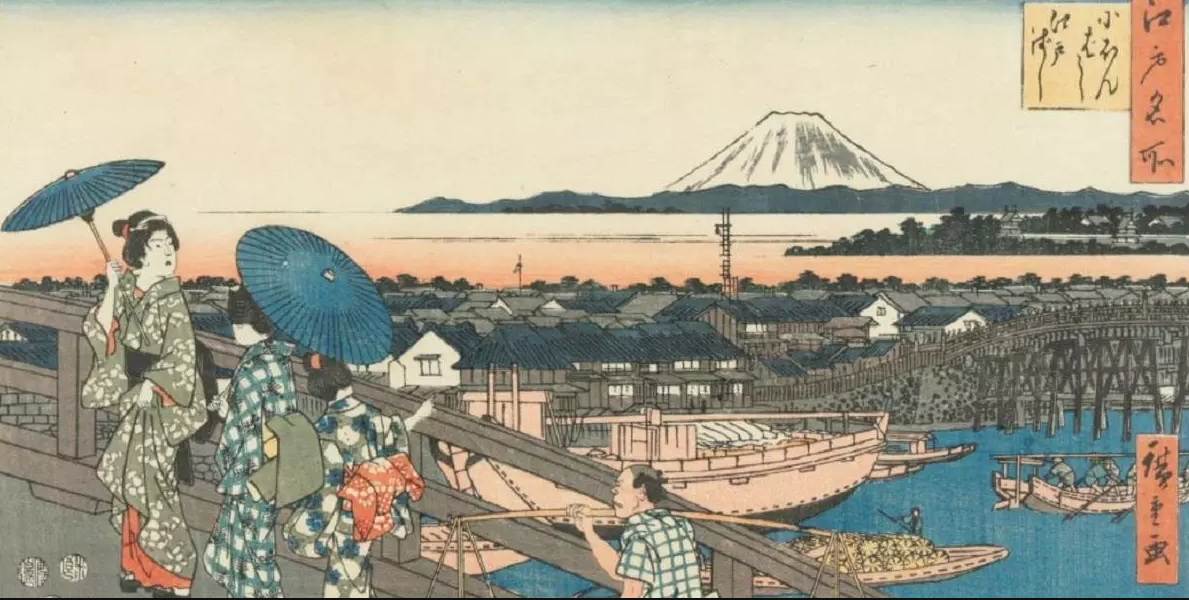








 The Trickster's Guide to Geopolitics