Lieberman is Dead. Gaming Still Lives

The first politician I ever hated and the first non-Presidential political figure I ever knew the name of where one and the same person. Joe Lieberman was that man, and he is now dead. No matter how far back in time I go looking for an image, he did always look like the Crypt Keeper. As Lovecraft put it, ‘That which is not dead which can eternal lie, and with strange aeons, even death may die.’

What Tipper Gore was to music, the evangelicals to role playing games or sexuality, or Adam Schiff to national security, Joe Lieberman was that for gaming. When I was a middle school kid who just wanted to frag to take the edge off my increasingly hormonal and frustrating existence this guy would always show up in the news to create some moral panic and have all the adults freak out about a form of entertainment and, yes, art, that made life a little more fun. Despite the fact that movies and board games had failed to make humankind more violent, Lieberman just needed some tail-end Satanic Panic energy to set him apart from the pack. This would go on to become his brand and one of the centerpieces of his career. Of course his real lasting legacy would be to become immortalized in Postal 2.

Lieberman would continue on to become an internet censorship advocate and a voracious neoconservative ideologue along with his BFF John McCain. His path down the hating on gaming to chickenhawk war advocacy pipeline would soon be followed by Hillary Clinton. It seriously begs the question at the societal level, why do so many warmongers fear depictions of fictional violence? Why is the view of the dangers of make-believe so existential and hyperbolic for the same people who spare no thought to the very real world consequences of military interventionism, sanctions, and escalation? I don’t have the answer to this question, but I feel like it is an issue worth exploring. Looking at so many of the safteyism-coded issues of the day, its easy to see how they appeal to the messianic mentality and the insecure.

It is also worth noting that I, a kid who loved the color black and playing Doom, Quake, and Postal, ended up an advocate for foreign policy restraint. This wasn’t in conscious reaction to Lieberman when it happened (he was already old news by that point), but it goes to show just how if there is any relationship here, it is in the exact inverse of how ole Senator Droopy Dog imagined it to be. I even got to talk about him and his delusional calls for war with Iran on a radio show a few months back. But now he is dead, and gaming still lives. It is positively thriving. I am going through my second playthrough of the Resident Evil 4 remake right now, and heads are popping all over the Spanish countryside even as the real world continues to sour on the schemes of our endless war-loving elite.

Anyway, I like to imagine the last thing he heard before we was dragged down to the fiery pits and forced to play Quake III deathmatch for eternity against Iraqi pro gamers previously killed in the wars he championed was the Postal menu music.

The Ouroboros of Cancellation

The Left Sowing:

‘Yes, yes censorship and cancelling! This is how we get revenge on society for being the bullied losers in school! We are the cool kids now! You’re cancelled, you’re fired! No one will ever be made uncomfortable by words ever again when we abolish all bad things to protect victims everywhere!’

The Left Reaping:

‘Wait no, tyranny, censorship, how could I have known the culture of civic repression and empowering HR in society I took part in for a decade could one day revert back to the neoconservative and evangelical pro-Israel militancy from which it first spawned? What about my rights to dissent and not be fired for diverging from mainstream institutional thought?’

I always have despised the impact on public discourse by the Israel Lobby. Not one to enjoy taking part in ethnic strife halfway around the world in which I have no attachment to either side, I deeply resent the most effective group organization at entwining my country into a dispute which I think it should not be involved in at all. Israel is, of course, correct to follow its own interests in curating American support. But the United States is not correct in assuming its interests and those of Israel are the same, particularly since the end of the Cold War.

But I cannot help but laugh at the hole leftist activists have dug for themselves. Anyone with even a modicum of (fairly recent) historical knowledge knows that cancel culture in its modern form was pioneered by right wing Christians and their often-allies in AIPAC in a process that began in the 80s and continued without interruption through the 2000s. The left, subsumed by its own evangelical revivalist religion of wokeness, adopted all of these tactics for its own increasingly unhinged goals starting in the early 2010s. In a country where everything except some of their economic and socially libertarian ideas was deeply unpopular, this was always going to create a backlash. The question was simply when. As the former proper social justice causes of erasing legal inequalities got replaced by more and more ever-escalating demands which invaded people’s lives in the most horrifying of panopticons (workplace surveillance, censorship, ideological motivated firings, college campuses eschewing open inquiry for rigid conformity, victimhood grievance as the pinnacle of progressive activism, mandatory pronouns on work signatures, etc) a turn against the left-puritans was not only necessary, but inevitable. The linear-progressive view was such a blinker that it blinded the left activists to this obvious reality just as much as the same world view has blinded centrist liberals to the dangers of financial globalization and liberal internationalist diplomacy. It is dangerous to believe there is such a thing as a ‘Right Side of History.’

Ron DeSantis, or as I prefer to call him, Meatball Ron, was the first big figure to really exemplify this pivot back to the old pre-Occupy normal. A censorious culture warrior who governed an entire state seeking national media headlines, he pioneered (if not successfully for his own personal campaign so far) the return to right wing cancel culture by building off the very untenable situation created by the North American left. Even now he and that absolute horror show Nikki Haley are demanding mass censorship of universities and public spaces to defend the feelings of pro-Israel students. Cancel culture for me, but not thee. The right’s posture against censoriousness was always a canard.

It shouldn’t surprise anyone. The left absorbed and regurgitated the right’s old bugbears of sex entitlement, sex panic, the idea that people can become morally corrupted by entertainment media, and the cosmic battle of good vs evil to bring about the End Times. It merely repackaged them for different audiences. So why shouldn’t the right learn from professional managerial class and activist cancel culture? One form of slave morality meeting another in an Ouroboros of victimhood and cancellation.

I lament the canary in the coal mine that is mass censorship targeting critics of the U.S.-Israel alliance and will always advocate for the freedom to dissent from the establishment, as I always have. But I can’t help but laugh when it targets the American activist left. If anyone deserves this, it is them. Those of us who have remained consistent on these issues get nothing but our own peace of mind. But those others who are so insecure they are threatened by mere words will never know the confidence and satisfaction we feel to explore the world around us unburdened by their insecurities.

The Glorious Subversion of Tabletop Roleplaying

Players handbook - small

As you probably know, Stranger Things is quite the thing these days. For once, a popular trend I can thoroughly get behind to boot. I haven’t indulged in any television commentary since what is probably my largest entry, on Deep Space 9, as very little TV is interesting to me or overlaps with topics worth going into detail over if it is. But I really don’t want to go into detail about Stranger Things in particular so much as use its reflection of one of my hobbies and the greater societal reaction-at least initially-to that hobby.

The shows seasons, so far, depict a time before I was born (even if the second season is only months away) and yet still so accurately depict the tabletop roleplaying middle schooler world which I was part of over a decade later. Before the internet was fast enough to reliably have all forms of entertainment on command in a convenient package, the tabletop roleplaying game served the multiplayer needs of those seeking dynamic, impromptu role playing experiences with friends. Of course, it still does, and its popularity if anything seems to have grown in time even with the greater convenience and sophistication of the electronic forms of gaming in the role-playing field. In addition to the obvious bonus of it being better to set mood and tone in person, it also seems like the tabletop can provide a greater level of authenticity and a break from so many of our indoor entertainments.

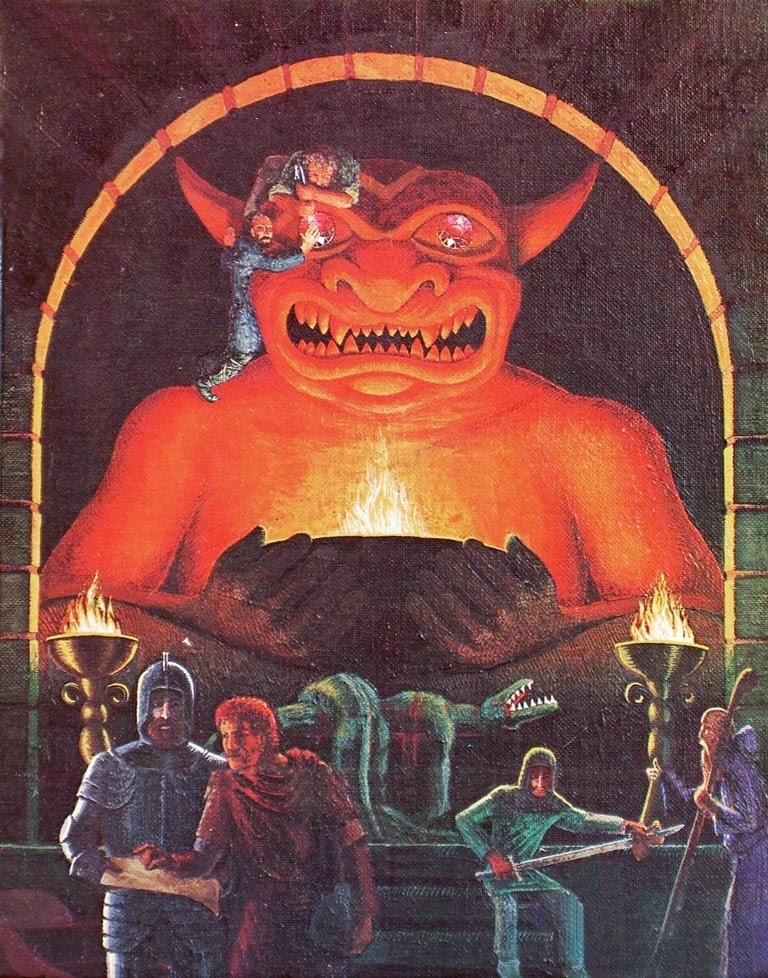
It wasn’t always so. In the mid-80s time that Stranger Things depicts roleplaying games, especially Dungeons and Dragons, was new and innovative. While recruiting agencies for child actors quickly saw the advantage of a dynamic rules-based system for innovation, on the spot problem solving, and basic tactics in teamwork, numerous hypochondriac parents saw a terrifying moral panic. DnD and other games were linked to Satanism, suicide, and criminal behavior-without a shred of evidence-in a first round of cultural wars waged perpetually throughout American history by the recurring trend of willful know-nothings of American conservatism. This was in congruence, of course, with the famous pursuit of out of touch politicians (chief among them the Gores) against heavy metal and hip hop as well. But while that campaign is rightly infamous in history for its ridiculousness and naivete, many people forget about the even more hysterical movement against roleplaying games in general.

There was a certain extra emphasis, in the time, of the danger of DnD and similar games that went outside just the casserole-quaffing church ladies and easily sensationalized news-manipulated suburban parents. It was a more general phenomenon, sucking in the apolitical and the ostensibly progressive as well. Keep in mind that the 80s was the decade where Baby Boomers first started becoming one of the more politically powerful constituencies, which in turn mean a lot of ageing ex-hippies. In other words, many people who thought the ideal youth was ‘peace and love mannnnnnn’ had to confront that subcultures existed where children fantasized about becoming characters they invented, going underground (or wherever) armed to the teeth to slay scary monsters. Nevermind that this had been a significant part of both children’s literature and mythology since probably prehistory, an imagination used for something other than relentless positivity by children older than was normally considered acceptable to ‘play pretend’ was a dangerous imagination.

But games like DnD did more than become a creepy new fad to fuss over for navel-gazing parents. They challenged the entire world view of what was fast becoming the new dominant political culture of the times: neoliberalism. Whereas the 80s and 90s would be about rampant individualism, faith in market forces, and the belief that society was running forward to a new and glorious cosmopolitan and global future, many fantasy settings show a world filled with crumbling ruins of civilizations and technologies too numerous to speak of which all in the end collapsed. The treasures of the past are the only way to circumvent a rigid class system or regional poverty, and require skill and the facing of danger to unearth. Rotten monsters crawl in formerly glorious ruins either as all that remains of past civilizations or perhaps simply the first scavengers to arrive at the charnel house. In such a world, only teamwork, group solidarity, and risk taking can possibly succeed for those not born with a silver spoon in their mouths. Ibn Khaldun would be proud.

Spoiler Alert: it turns out this was a more realistic vision of the future than the one pushed by that era’s political and cultural elite. Perhaps this was the reason that it struck so many as a heretical and threatening activity, at least on a subconscious level. After all, policy makers had the ability to see that less money was being spent on public infrastructure, and that crime was spiking to record breaking levels. What they lacked was the ability to see that perhaps it was they who had more responsibility for that state of affairs than some kids seeking to escape the first stages of Hellworld currently then being fashioned by their elders. After all, a world filled with monsters the luck of the dice and some smart character building can slay is a world far more filled with hope than our own for many people.

So, why don’t we sell the line that RPG’s are a recruiting tool for critical thinkers and those to challenge the status quo? I mean, younger generations are far less into individualism and capitalism than anyone previous since the Great Depression, and now people are used to the cyber realm having all sorts of things but largely confined to slactivism. After all, groups of young people, meeting in ‘meat space’ in shadowy locations to learn communal action against the odds—all while a show that popularizes the idea that adults and authority figures are either clueless or malignant and it’s up to the youth to take action is popular-could be once again labeled as a threatening thing. And if it was so…its coolness factor would increase exponentially like an album with an explicit content label and the inevitable reaction from the perpetually out of touch would be at least hilarious, if not further engaging to recruitment for those opposed to them.

As Dustin said in Season 2’s finale: ‘If one member of the party is danger, the whole party acts’ (from memory, not exact quote). And as the newest member of the party, Max, showed, you have to earn your place by fighting for the community and showing your outsider status…but once you do…

And we can always hope that on a future season of Stranger Things, Jerry Fallwell or Tipper Gore is the monster.

Death Dealer WEB

The Death Dealer, because