The ‘Liberal Media’ is Not Ready for a Multipolar World

Tucker Carlson’s recent interview with Vladimir Putin has touched off a firestorm of criticism in the Anglo-American press. An interesting turn of events considering that the United States and its allies are not officially at war with Russia. It was once the case that journalists would have jumped at the chance to interview the leader of a rival state, but now it seems to break message unity with the establishment on foreign policy is to commit an act of unofficial treason. Never mind that the interview is hardly being seen as an undisputed success in Russia. It is worth examining why this circling of the wagons has become the case.

The establishment press is majority liberal. Not necessarily in the sense that it is used in U.S. partisan domestic discourse, but in the philosophical sense. It is primarily made up of people who believe that an individual making choices in a marketplace of ideas and goods is the core unit of society. This usually comes with a set of assumptions- that history is teleological and linear with clear-cut right and wrong sides, and that economic development will cause political and economic convergence between different societies. Such a world view leads to an attitude which is akin to that of the missionary: If liberalism is a universal good, it must be expanded by any means

It is in this sense that much of the North Atlantic’s foreign policy focused press is also liberal. Regardless of if the author or publication is left, center, or right in official inclination when it comes to domestic issues. There is a kind of monoculture based around seeing the U.S.-led alliance network as ‘values based’ forces of light, against a nefariously defined ‘authoritarian’ alliance of darkness.

The multipolar world we are entering, however, is not an abstract choice by policymakers. It is an inevitability. The existence of a roughly three decade long interregnum of an unchallenged United States being able to imprint itself on as many parts of the globe as possible is coming to an end. Not because anyone lost their moxy or gumption, but because there are more countries, great and middle powers alike, that are much stronger now than before. The United States in the 1950s had almost half of the world’s industrial and economic power, today it is roughly a quarter. Its power is real and still unsurpassed, but the proportions vis-a-vis the globe have shifted dramatically.

The double standards between the rhetoric and practice of the “Pax Americana” have always been there, but recent events coupled with the diminishing ability of Washington to hold itself up as the global gold standard make them all the more glaring. Even the concept of human rights, itself the darling cause of a liberal press, is ultimately dependent on unipolarity in order to have any kind of globally applicable definition. As viable rival power poles continue to multiply in different regions of the world, causes such as these will see a multiplicity of values replace what was once assumed to be convergence. Whether one celebrates, laments, or is indifferent to this state of affairs, to accept this inevitably is to acknowledge the increasingly undeniable. 

But can the liberal-internationalist media foreign policy complex do so? This press culture has grown accustomed to two generations of constant self-validation building off of the fall of the Soviet Union- an event that fades ever more distantly into the past. Long flattered by the expatriates of their own profession (who share similar class backgrounds) who originate from less free countries and who seek better opportunities abroad with affirmations of loyalty to a democratic ‘west’, it is worth asking if this field as a whole is even capable of understanding that some societies may now want to pivot away from, rather than towards, the world view of internationalist liberalism.

Long used to not being challenged by different values or divergent interests, it seems quite possible, even probable, that the liberal press will have to run into the reality that not every foreigners is a poor oppressed drone with an inner American yearning to be liberated from the shell of their circumstances. Regionalism and nationalism are more likely to drive domestic pressures on the foreign policy of many states than the quest for political globalization. When journalists actively pine for a free world guaranteed by liberal hawkishness, they do so from the perspective of their concept of freedom dominating all others. The long-held ability to monopolize the media discussion on other countries by manufacturing conformism on issues related to human rights abroad is rapidly deteriorating in the face of growing distrust from the general public

As U.S. power diminishes in a relativistic sense towards most of the world, will the reporting on foreign affairs be able to psychologically adjust? The question is worth asking because the way in which this reporting is framed can often impact the general public discussion. Even simple adjustments such as taking the old Wikipedia’s policies on scouring ‘weasel words’ (i.e. value-saturated adjectives meant to tilt the reader’s perceptions included in supposedly unbiased reporting) could meet with pushback from journalists citing such small steps as ‘selling out to tyranny’ or ‘endorsing oppression.’ This means that as more regions of the world come into their own concept of statecraft priorities much of the press will actually increase its agitation for sanctions and military operations even as the capacity for the liberal states they are based in to engage in such interventions decreases. Will necessary cordial relationships with countries with different domestic values be too baffling to comprehend for a professional class so tied to a universalist worldview they see international relations as an extension of domestic culture war? Would a breakdown in relations between two liberal states precipitate an existential crisis among the commentariat? Most importantly, would diplomats be constantly hounded for doing their jobs in a sober and prudent fashion by a press that demands purity, leading to opportunistic politicians running against the practitioners of statecraft itself in order to court favorable press coverage?

These factors, if not addressed, pose a very real danger when the majority of the foreign policy press attempts to shape liberal discourse over a world that is unquestionably realist- where divergent interests, values, and capabilities must be taken as they are in an ever-changing and vaguely cyclic world. So the question remains, can a profession that has spent decades giving itself over to the missionary impulse adapt to a world where the hard compromises of diplomacy inevitably reign? And what happens if it does not?

A Cowardly Clergy of Stenographers

‘If the ideology of democratism continues to replace the older understanding of democracy as rule by the people, then we can expect the concentration of greater and greater power in the ruling classes. That may include elected or unelected political officials or more nebulous but arguably more powerful interests, such as those who control our media and forms of communication- the so called tech giants and corporate media. The proclaimed need for these bodies to have greater control, including over ideas, will invariably be couched in the language of protecting democracy.’
~Emily Finley, ‘The Ideology of Democratism’

I once had a fun drunken conversation with some friends. What is the worst profession for every generational cohort? In which life direction does the lowest form of scum from a particular age group drip and congeal in the largest proportional numbers? It was surprisingly easy to answer this question. Boomer: Small business owner. Gen X: Silicon Valley. Zoomer: Streamer. And of course, most relevant for this post, Millennial: Journalist.

Culturally speaking, there is little to say that differs from what I once said all the way back in 2015. These types fly between Eurozone and North American mega-cities interacting with the same people from the same class and professional backgrounds endlessly and, no matter all of their accrued flight miles, never learn a damn thing about the beautiful cultural and ideological diversity of planet Earth. They are mostly mediocre English literature majors whose experience of difficulty and challenge comes from ‘needing mental health breaks’ when someone makes fun of them. They value access to prestige over even their own salaries and especially the truth of the ‘scoop’ they pursue, selling their services to trends in pursuit of an ultimately empty and vacuous currency which is paid through social media clout and ‘influence.’

It wasn’t always like this. Social media has compromised this profession. And it is a necessary profession. Back in the 90s, jokes about lawyers being the scum of the Earth were common, but few doubted they had a utility in the functioning of society. Likewise, in present day discourse those of us in the U.S. who have had any experience with the police here know how awful they can be, but most of us do not doubt the necessity of law enforcement to exist. The debate is merely how it conducts itself towards the public. So too is this the case with the journalist. Or journoid. Perhaps journoscum? We need them. But for them to function we need them to have certain attributes. Much as a sense of civic responsibility makes the lawyer and police officer more bearable, so too might a sense of intellectual curiosity salvage the journoid and return them to their pre-millennial roots as challenging asshole muckrakers.

Something happened around 2010. A certain coffee house loving, smooth jazz listening, insufferable twat had to grow up and did so by proportionally infiltrating one particular profession. Think the hipster is dead? No. The hipster is still alive…and dominates the mainstream media in English speaking countries. This song was memetic in 2010. You might think it dates poorly given its age, but give it another listen. You know who this is about, and where those people are today professionally. You know they will still chase clout until they die of old age, buried in a tomb covered in corporate Memphis bas-reliefs, even though chasing clout is normally just a thing for people under 25 and Hollywood types.

If I was willing to put in the effort, I would do a full study on how this profession became so proportionally obsequious and pathetic. I am not willing to put in that effort right now because I have more interesting things to deal with. The reality is undeniable though and I can give a quick theory: Social media. That thing so many journoids believe to be the end all and be all of influence, impact, and substance. It is none of those things. Additionally, sources now look at an entirety of output rather than a personal relationship. There has been an elite overproduction in the humanities so any unpopular opinion can be punished with termination. So desperate over-educated mid-wits clamber over each other, devouring the corpses of their kind in order to make it to that point they all crave: The Garden Party.

The Garden Party, perhaps hosted by The Guardian, perhaps by The New Yorker, is the Bohemian Grove of the journoid. Unable or unwilling to do proper reporting on anything larger than the local level (lest they be fired for rocking the boat) the average journoid’s only recourse is to rub elbows with the very people they should be viewing critically. This would be understandable, were it not for the fact that if anyone else does this for any reason it is inherently ‘problematic’ in the declarations of that own class’ mores. Especially since the Millennial Journoid’s mission in life is to stalk random non-powerful people and try to get them fired for minor transgressions against Current Year, but never to do this to CEOs or politicians. The journoid will judge you for making the necessary compromises to achieve results, but cannot be judged for doing the same in turn. Possibly because they almost never actually achieve the results they are supposedly seeking. Partly also because they will be the first to deny they are seeking results aside from objectivity. A claim that has been turned into farce long before the particular crop of professional activists.

Overly attached to their image in the public eye, the journoid often finds that they have no inner self whatsoever. No anchor but a desperate seeking of fame. No direction but that of being recognized. These are people who, in my experience, cite twitter threads as if they are equivalent to peer reviewed articles or books. Because it is ‘The Discourse’ that matters to them, not actionable policy goals or outcomes. And especially not the truth. God forbid, the truth is dangerous to this new type that rules the profession, as any concept of factual truth would call into question their failure to critically interrogate the Iraq, Libya, Syria wars before it was too late-to say nothing of the financial system that makes even their lives precarious. You see a current version of this playing out about the reticence to even have the temerity to ask questions about all the various suspicious narratives coming out around the Nord Stream pipeline bombing. If you want a totemic image to crystalize this in the mind, just picture Chuck Todd’s face looking smug and baffled at hearing anything that would never be said out loud at The Garden Party, on loop, across every media platform, forever. Needless to say, this is not the behavior of intellectuals. Yet they insist on being treated as such. Let us consult the words of Machiavelli for a riposte:

‘There are three classes of intellects: one which comprehends by itself; another which appreciates what others comprehend; and a third which neither comprehends by itself nor by the showing of others; the first is the most excellent, the second is good, the third is useless.’

And if this critique is put to them, I can tell you from experience how they would respond. ‘Its still better than in a country with a state run press.’ In terms of the practice of the profession, this is usually true. But in terms of the character of the people in that profession, it is actually worse. I know an RT journalist is a propogandist. And I suspect they know it too. The Anglo-Journoid, however, is deeply convinced that believing in a state sanctioned narrative voluntarily and perpetuating falsehoods as a matter of ‘defending democracy’ or some such nonsense is superior to having one mandated to them. I disagree. Self delusion is in fact more damnable in a person to me than mercenary work ever could be. The mercenary knows they want money and gets it. They might have to lie to others but not to themselves. The true believer, however, is a cultist used as tissue paper to wipe the ass of the cult leader, all while believing it is the right thing to do and castigating you for not doing the same. This is far worse. The dignity of the mercenary is heroic compared to the cowardly clergy of stenographers that presently dominate the journalistic profession. And no amount of maudlin refugee memoirs and Kite Runner tier cultural commentary is going to close that gap.

As a member of the realism and restraint community, I have long held that before being able to badger politicians to do what we want, we first must break through the consensus building of a professional class based around narrative shaping. My radical position, which is not yet remotely popular but is getting increasingly acknowledged privately, is that we must also wage a public struggle against much of the press. Not because they are the press, but because we deserve a better press. There are individuals who represent the craft of journalism well even today (some are even Millennials, believe it or not) but individuals matter little without coordination and communities. When non-mid-wit journalists are found, they should be supported. When those willing to question monolithic narratives arise, give them credit. Because, as I said before, we need this profession in society. But what we don’t need is people who believe they are critical thinking and investigatory when they are in fact a preaching priesthood interested only in imparting their (subjective) values onto morally neutral information, and even hiding other information that contradicts a teleological narrative uncritically inherited by the sheer osmosis of being an Anglo.

To come so directly against this in my profession is uncommon, but the sentiment behind this is not. Those who desire personal ambition and prestigious appointments simply cannot state how they really feel. And since I want more restrainers in power, I can’t fault them here. But for me, personally its the art of strategy I’m interested in. My personal professional outcome is a far lesser investment to me than being good at seeing the bigger patterns. If it becomes more expedient to switch paths once again I am more than happy to do so.

No matter the issue or professional field, if you are of a similar disposition you might enjoy this sentiment. Its the only thing we have in an era where social media clout takes over and consumes so many professions. Lets just hope this trend need not advance much further into even more careers.

As for the Journalists…

The uniformity of pro war sentiment in the U.S. media is not unique to this week, but is especially on display now. Across the ideological spectrum, mainstream media voices lament the end of a conflict as much as they tend to advocate the start of new ones. If you point this out, a certain clique will bristle with umbrage and accuse you of being a conspiracy theorist because, for some unfathomable reason, it’s considered a mark of culture to blindly trust giant for-profit (or in the case of PBS/NPR, and BBC, state run) news outlets who have been caught lying so many times it cannot just be error.


This pro war sentiment has both financial and ideological reasons. Journalists are often eager-beaver types quick to ingest national mythologies about exceptionalism and teeming masses of unwashed peasants abroad yearning for freedom. Most legacy publications have deep financial ties to defense industries and rely on the good graces of politicians for access. This pro-war bias is nearly omnipresent and it ignores what a supermajority of the public wants as well as the results of prior similar policies. The New York Times has never once in my lifetime advocated caution or restraint and has always championed war. Judith Miller led the charge of convincing the public, especially the liberal anti-Bush public, that Iraq had weapons of mass destruction and posed an imminent threat to the United States. It’s worst columnist even advocated an alliance with ISIS. Television news is orders of magnitude worse even than this, and caters to different partisan loyalties but always, ultimately, to the same power interests and policies like blind faith in military leadership and intelligence agency aligned commentators being taken at face value. This is no different than the restrictions placed on Russian journalists by their government when they report on the Donbass, but done more cleverly and often with the active collaboration of the journalists. Considering the nearly uniform failure rate of post 9/11 military operations, one would expect a press in service of the taxpayers would demand better results.


True dupes and conspiracy theorists are often those who work in establishment journalism and the rubes who believe them. Their shock and horror at the eminently predictable should underscore this. The establishment press, especially the Beltway (and London) based press, is not your friend. They are stenographers for centers of power first and foremost. This is why despite all their reach and resources (or more accurately because of this) their consumers are often woefully uninformed about the world while also operating under the false assumption that they are informed. This is the intention. Hence the incessant cries of the educated and supposedly worldly class of ‘we must do something’ which ignores the reality that often enough the tragedies such people are responding to are the results of past efforts to ‘do something.’


Right now most of those journalists are covering for military and intelligence apparatuses that have failed despite insanely lavish budgets and all the good will propaganda can buy. They are not just doing this to remain in the good graces of their sources, but also to avoid coming under scrutiny themselves for the role they played in manufacturing consensus around a series of deadly, expensive, and ultimately failed policies. The military and intelligence agencies knew Afghanistan policy was a failure, and lied to cover it up. The majority of the journalistic class was too indoctrinated and servile to challenge these narratives, and thus also lied by proxy. The dumbest ones most likely believed what they were being told, which to me is far worse than willfully lying for political or tribal reasons.


It is not a conspiracy theorist mindset to be extremely skeptical of the reporting of the establishment press. It is the opposite. They are often the conspiracy theorists who perpetuate lies to manipulate others. The clear-eyed perspective is a default skepticism towards the narratives that those with money and power wish to push and an understanding that many journalists are mercenaries in their employ. The mainstream media’s response to the end of the Afghanistan War is a particularly stark example. This is one field where the media literacy of those in the undeveloped and developing world tends to be far in advance of the overly-credulous in the developed world.

The Court Stenographers

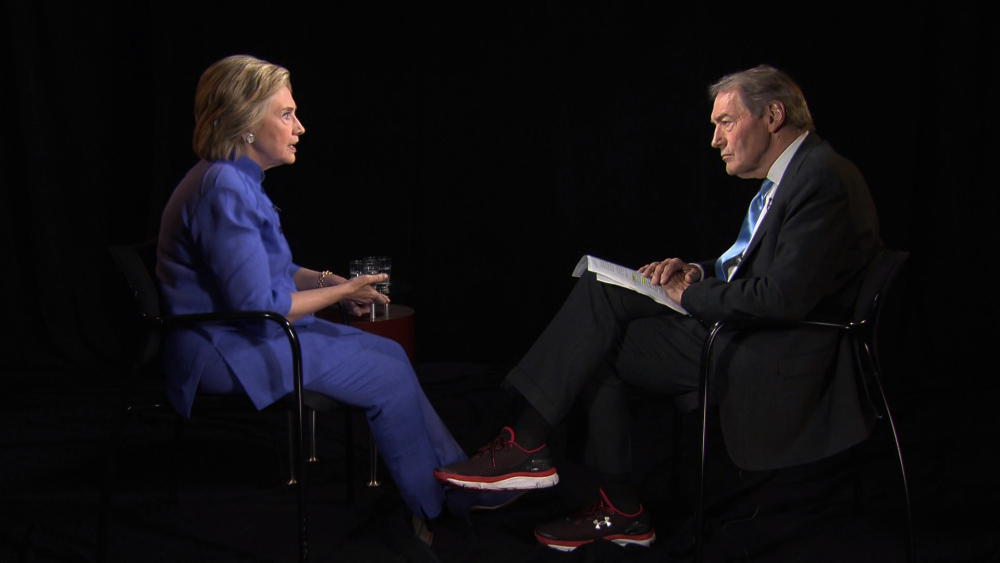
hillary_clinton_charlie_rose

Where would we be without good journalism? Nowhere really. Not those of us outside the circles of power anyway. So it is a shame that this vital service has been so thoroughly colonized in the supposedly free and developed world by Court Stenographers. Not entirely, of course. But in the Twenty-First Century and the ‘rally round the flag’ effect of 9/11 it surely must be at least 75%.

‘Court Stenographer’ naturally implies the vital role that those who keep impeccable records of court processes. And indeed I mean that analogy, if unfavorably, towards the press corps of powerful nations’ capitols. Anyone who has dealt with them from a policy perspective-which I have- knows that those who cover powerful institutions largely just repeat the talking points they are given by the internal press corps of those very institutions. But Court Stenographer can also have another simultaneous meaning as well…where the court is taken to mean the court of a monarch, with the relationship such journalists being similar to that of the town crier.  When I speak of Court Stenographers I am speaking of both of these things at once.

Most people, I feel, pretty much suspect this already. As Chomsky once implied, many a tinpot dictatorship would envy the slavish obsequiousness of the Beltway Press towards the DC establishment. Surely it is impressive that societies have replaced overt censorship with an ostensibly free press that merely chooses what to cover and what not to, which candidates to boost with coverage and which not to, and which opinions are deemed unacceptable for polite society and which others to promote. This is not me railing at injustice here for I am genuinely impressed. Living in a society that seems hell-bent on unlearning all power politics for the sake of the smooth balm of ideological complacency, I can’t admit to feeling much but admiration for those in the ship of state who have created and fostered this system.

This feeling does not, however, extend to many or most of the journalists themselves. Sure, plenty make huge bucks (probably) knowing what they are doing, trading favorable coverage for promotions and access and effectively serving as the royal court’s influence peddlers, but what about the more regular rank and file? While more than enough have a quite jaded and sardonic view of the process there does seem to be this grotesque culture of ‘Wow I’m Such A Brave Journalist™ Who Loves Coffee© Always Drinking So Much of It Because I Am Always Out For The Scoop© And What I Do Is Very Heroic And Woe Is Me For Being So Poorly Paid As I Perform This Vital Service To Society®’ which applies most to the very people who do the least to expand the public’s knowledge or critical thinking abilities.

How much of this is genuinely felt and how much is affectation I do not know. I do know, however, that you only get Gumshoe Reporter status in my book if the work you do actually expands knowledge, holds truth to power, and tells uncomfortable things about the society that our more sensitive and polite elites would rather not speak about. It should shake, rather than uphold, the pieties of our politicians and talking heads. So much of groupthink one hears today is really just recycled and empowered via media coverage. The same few talking points about specific public figures, good or bad, depending on consensus.

A politician or government worker who holds secrets is wise to guard them. It is part of the test of their capabilities. But the journalist who breaks a story is also being honest to their true calling. The best of all possible worlds is one where people do what they should be doing as their duty as well as possible, regardless of the clashes with others. The journalist who sells out to the political powers that be is compromising their own professional integrity just as I would have been had I, when a federal employee, broke my silence on matters which I was professionally not allowed to speak of to others.

A well-functioning society is one where the consensus we have is that we all do our jobs well. It is just a shame we have yet to figure out how to make this work. But surely the Court Stenographers do us no service…though thankfully a minority of other journalists do.