As the person who first termed the concept of Washingtonian Realism it seems only fair that I give my take on the recently dropped Young Washington film. It was not originally my intention to see it as the particular saga of Fort Necessity-Monongahela opening to the French and Indian War is well trod ground. Also, the company that produced the film is mostly known for feel good family flicks and Christian cinema. But I eventually figured if I keep banging on about the Farewell Address there is a non-zero chance I will be asked about this movie on a podcast or something so here are my impressions stripped down to simple separated points while still fresh in my mind.
For a small studio the film is very well acted, both in the less famous and more famous members of the cast.
The directing is not necessarily anything to write home about in either good or bad directions, but it certainly has its moments.
There is some creative license given to certain things, such as Washington’s half brother’s time of death and the relationship between George and his mother (which was more difficult than the simple tough love shown in this movie). Additionally, the French army operating that far from their North American core areas in Quebec would not be dressed in full field uniforms like depicted in the film, with only high ranking officers going for the whites and blues. Most would in fact have a mix of pioneer and native garb.
Nevertheless, I feel the movie did well to capture how Virginia was the one colony that replicated elements of the British class system which ran through its social interactions.
The British pomposity towards colonials is exaggerated for dramatic effect here, but was a real thing.
The depiction of General Braddock (portrayed by Andy Serkis no less) has been critiqued as over the top, but I enjoyed it. Its long become an American tradition to depict Braddock as a kind of cartoon martinet and I would almost be disappointed if this was not so. Even in death he is mocked by having the site of his greatest and most fatal defeat named after him, which then became the first town in American history to elect an ogre to be its mayor.
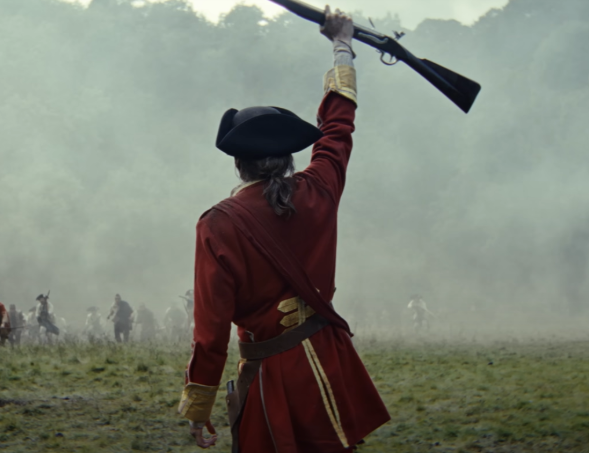
Despite some obvious liberties, I did generally enjoy the depiction of most events until the Battle of the Monongahela. Even leaving aside my previous point about the French uniforms, the way this battle was depicted stuck in my craw. It would be more accurate to see it as a Native-French victory rather than a French victory with Native help. The majority of fighters there were Ottawa, Ojibwe, and Abenaki, and some other allied tribes more recently displaced like the Lenape. The being said, once the film embraced a little ridiculousness and had George popping foes with perfect John Woo style pistol shots I was partially won back over.
You can tell these shots were not anywhere near the actual Allegheny region if you have ever been there. It was filmed in Ireland and it is very very obvious throughout the movie that this is so.
Movies in this era really shouldn’t shy away from blood and sanitized depictions of battle though. Stylistically it did what it could but the minimal gore rule really harmed the immersion. I know its going for a family audience but come on, its still a war movie at its core.
This movie did Thomas Gage dirty. No genius by any measure, but I never recall him behaving quite this badly in anything I ever read before. That being said, the final exchange between him and Washington over how divergent the world views of those born on opposite sides of the Atlantic had become, while obviously meant to the audience to wink and nod at, were a welcome bookend on the film opening with Washington’s surveyor experience and how it shaped him. Therefore, the film does in fact pass the test of fitting in the Washingtonian Realism camp, as the importance of situationally grounded geographic regionalism outlook (and how it informed Washington’s later concept of geopolitics) is upheld against what today we might call an imperial-globalist worldview.
There is some post credits speech thing about getting the message of the movie out. I’m not about all that so I left once it started.
While I probably would rank this movie last in the new 2026 films I have seen thus far this year, thats more a testament to there being some very strong offerings around than Young Washington being bad. It isn’t bad, it isn’t great, its perfectly watchable once.
Anyway, they will inevitably make a Revolutionary War sequel with a bigger budget and I can see that being good. But they better leave the one about his Presidency to me because there are few people I would trust to get that one right.
Also, is it just me or was Jeffrey Jones meant to play an older George Washington? I know he was Jefferson in the Washington mini-series from the 80s but come on, he’s got the face.
Anyway, if you want a great depiction of the Battle of Monongahela in musical form, and from the other side, the band Nechochwen has you covered:
Mystery Science Theater 3000: A Cultural History is Matt Foy and Christopher Olson’s overview of the show that coined the term ‘riffing’ and launched a strange sub-genre of media made to parody other media. The idea of following people online or on television while they make fun of an old piece of media may no longer be quite the novelty it was when this former titan of comedy was at its peak in the 1990s, but I suspect the authors (as well as myself) feel the format has not yet surpassed its original incarnation.
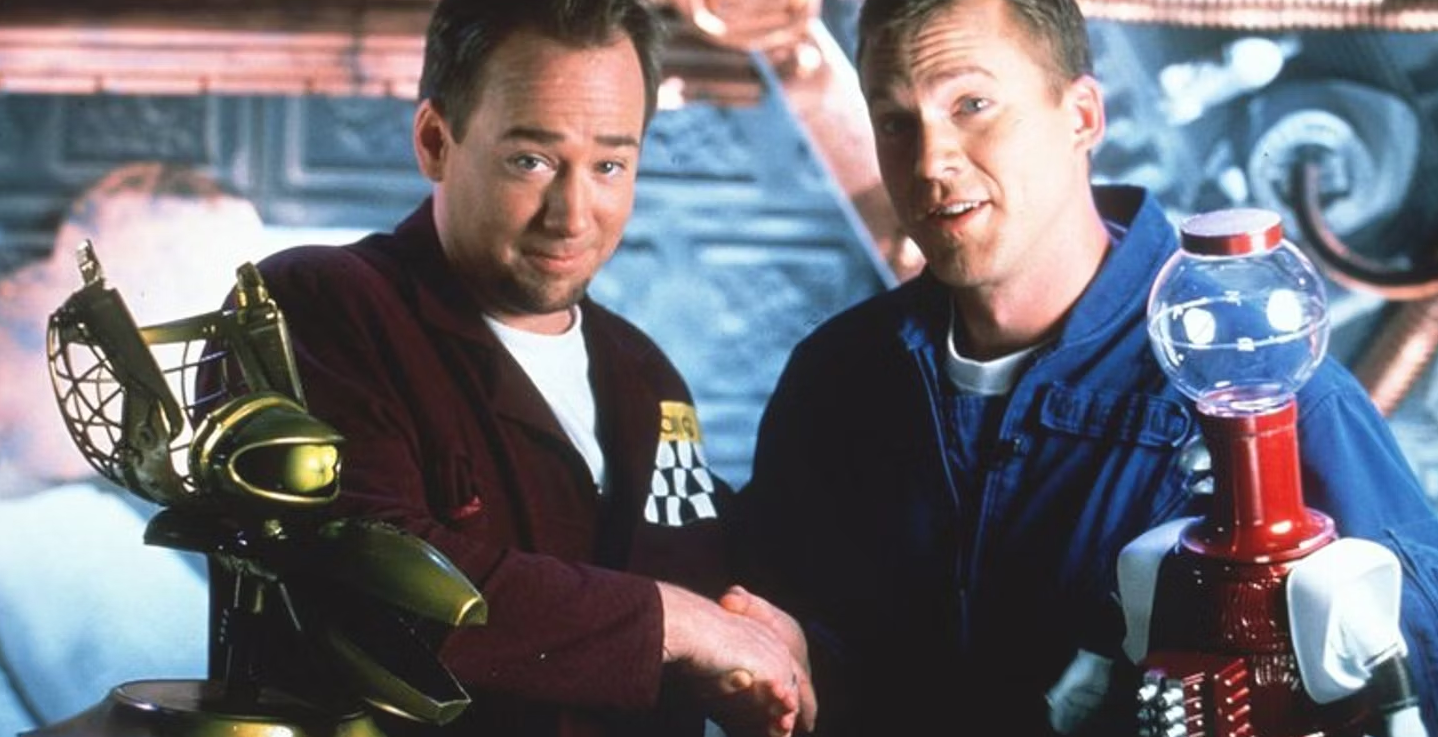
MST3K was the creation of prop and occasional stand-up comedian Joel Hodgeson paired with producer Jim Mallon. Coming from a do-it-yourself first run in Minnesota public access television, the show’s premise was as ridiculous as the movies it would become famous for clowning on. A mad scientist (or more accurately over the course of the show, a series of mad scientists) imprisons a hapless janitor in an orbiting satellite and forces him to watch bad movies in order to research his deteriorating brain. To help him get through this trial, Joel builds sentient robots to serve as his compatriots in trashing some of the worst films ever made. Oh whatever, the show’s intro explains the whole thing in under a minute anyway.
Foy and Olson’s book does two things concurrently in its narrative: First, it narrates a straightforward history of the program from local Minnesota, to Comedy Central, to Sci-Fi Channel, to long hiatus and internet spin off projects, then a two season run in Netflix 20 years later and its return to independent creator control with today’s Gizmoplex. As it does this, the text singles out specific episodes of particular relevance to the show and its growing mythos (the show would come to riff itself too, drawing on jokes that referenced previous episodes more as time went on). Additionally, the book also intersperses commentary on the cultural effect of the show as it evolved and by midwifing the riffing genre which is placed between these historical sections. The fact that these two different sections are not separated from each other and are melded together within chapters dedicated to specific time frames is an odd organizational choice. While it takes some getting used to, it soon comes to make sense as the legacy and nature of the show is analyzed in time with its past evolution as a program.
A straightforward history of the program was needed, as most other books on this topic seem to be anthology series that primarily look at the cultural dimensions. Here, Foy and Olson have delivered something valuable. But their own cultural analysis is also worth reading on its own as well. Defining riffing as not just an audience interacting with media, but rather a triangulation of found media, intermediary comedy, and an audience, the book makes the case that the art form popularized by the show becomes intrinsically interactive in a way few things are. And, in one of the most insightful passages, the riff of a film becomes a subversion of not just the media itself, but how media is to be consumed in general:
‘MST3K demonstrates that movie riffing empowers riffers to reject or modify a film’s constructed binaries of good and evil. Villains can become laughable, just as heroes can become loathsome or ineffective. This deconstruction of heroic mythologies becomes useful when reading problematic films such as Space Mutiny or Mitchell, which glorify mindless aggression and violence as world-saving strategies. MST3K’s rejection of simple yet seductive binaries of good vs evil keeps the film and its characters open to reevaluation and audience self-reflection.’
This is followed up soon after with another passage referencing the cheap quality of many of the mocked movies in this vein:
‘On the surface, riffing on a movie’s gaffes and choices may come across as shallow mockery rather than critique. However, riffing on botched elements of a text’s craft should not be dismissed as mean-spirited because it fulfills a crucial and underappreciated function in active media consumption by keeping the constructed nature of cinematic storytelling in the foreground. Such riffs reveal that a movie (or whatever if being riffed) is a product crafted by artists and producers with a purpose. Films are generally engineered to immerse viewers into a manufactured universe, one crafted intentionally in the service of art, profit, or both.[…] Isolating and magnifying any element of film- obvious or subtle goofs produced by stress, indifference, or lack of skill- draws the audience’s attention to a film’s construction invites audiences to question not only how it was made but why.’
This perspective has obvious value outside of cheesy entertainment criticism. We do, after all, live in an era where established narratives have become so complacent and lazy that the wheels fall off of them constantly. A large media edifice exists to castigate anyone who notices these goofs, and in so doing often shows its own hand. This prompts us, the viewers of, say, world affairs, to ask ‘do you know what you are doing?’ and ‘what is this narrative even for?’
But I don’t want to over-intellectualize this too much, even if that is the point of the book and my review of it. The show’s motto is, after all, ‘Remember it’s just a show…I should really just relax.’ So let’s close out with something more personal.
I can’t deny that my own relationship to the show is almost as related to childhood nostalgia as it is to its role in comedy. I first came to the show when I was around 9 or 10 years old, having been told about it by an art teacher, and (thanks to catching re-runs of the original 60s Star Trek) in love with old B-grade sci fi jank. My family did not have cable, and so I saw one year later rebroadcasts of MST on a local public channel based out of Philly, perhaps fitting given the show’s roots (weirdly, I have a distinct memory of every single commercial break of the show running this Dining A La Card spot).
Naturally, I did not understand most of the jokes being made. It was funny robots making fun of a funny movie. My first episodes were Giant Gila Monster and Teenagers From Outer Space and the flimsy effects and forced acting of those offerings were good enough. The novelty of being in a ‘simulated’ dark theater with people more clever than one’s own friends gave the humor a strangely comforting vibe. Perhaps this was further enhanced by the fact that I tended to watch the show close up with low volume in the dark as its broadcast hours were late and therefore past my bedtime.
By the time the show went to Sci-Fi Channel I was old enough to watch it whenever I wanted (and had access to cable). This was also, in my opinion, when the show was at its height with Mike Nelson’s new hosting (which I originally viewed as a downgrade but eventually came to see as positive) bringing a cutting edge that really appealed to my tweenage self. Also by this point I had many friends who also enjoyed the show and we often watched it together at sleepovers, being especially fond of Japan-schlock episodes such as Prince of Space where the goofy chicken-man villain warlord could honestly carry the entire thing without the riffing.
Upon hitting some time in high school I just stopped watching. Probably because the show had ceased to exist. I never even came back to it, except as occasional joke references, until the Netflix reboot almost 20 years later inspired me to re-watch some favorites before moving on to the newer episodes. (I do like the newer three seasons, though I feel this guy sums up pretty well why they aren’t quite as good as the 90s run). Coming back to it as an adult actually made the show entirely fresh. No longer just some funny robots mocking funny movies show, I was now getting most of the jokes and commentary too!
I also re-appraised what my favorite episode is. It is now Mitchell. ‘Enjoy’ my ‘fan art’ of our moist 70s Slob-King.
This made me really appreciate the design philosophy of much of the humor to a much greater level. The creators of the show often said they were proud of how obscure many of their jokes were, knowing few would get them…but that the ones that did would really get them to the point where they would feel it was written for them. This ties into a theme that comes up in MST3K: A Cultural History frequently: something is strengthened by particularity. It is not for everyone. If it was, it would be diluted, ineffective, overly safe. Whedon-Reddit-Marvelized. The authors are right to constantly point out that the rootedness of the show in midwestern culture, regional in-jokes, and keeping its strange characters consistent around certain themes is an enormous strength. It is from a specific place, from a specific kind of person doing a non-typical form of humor, and this is what makes it work in a way that those seeking as large and non-specific an audience as possible can not.
I spent another few years not thinking much about the show until two months ago when I decided on a whim to watch as many of the 90s episodes as I could. Somehow, there were even a few I had never seen before. I had no idea this book was coming out when I began, but found out soon after and thus planned to read it once it dropped.
All of this re-engagement has been running concurrently with my re-reading of many of Thomas Ligotti’s stories. I have spoken at length on Ligotti before, but needless to say I see a hilarious halfway point that I believe I personally occupy between MST’s joyful good natured mockery and Ligotti’s treatment of the universe as built for horrific entropy and nothing else. Imagine that the universe and all its iniquities and miseries is really just the equivalent of a poorly put together B movie. Coleman Francis is a type of Gnostic Archon or mad creator. All of it built out of malice or incompetence or both. And yet out there in the cosmos there reverberates a cackling from the creatures who have found this B-move, and at least are having fun laughing at it- at all of us- and reveling in just how awesomely bad the whole production is.
Because, when you look at things that way, sometimes even the worst the Earth has to offer can be pretty funny. So long as you have a distant enough theater to watch the spectacle from, at least.
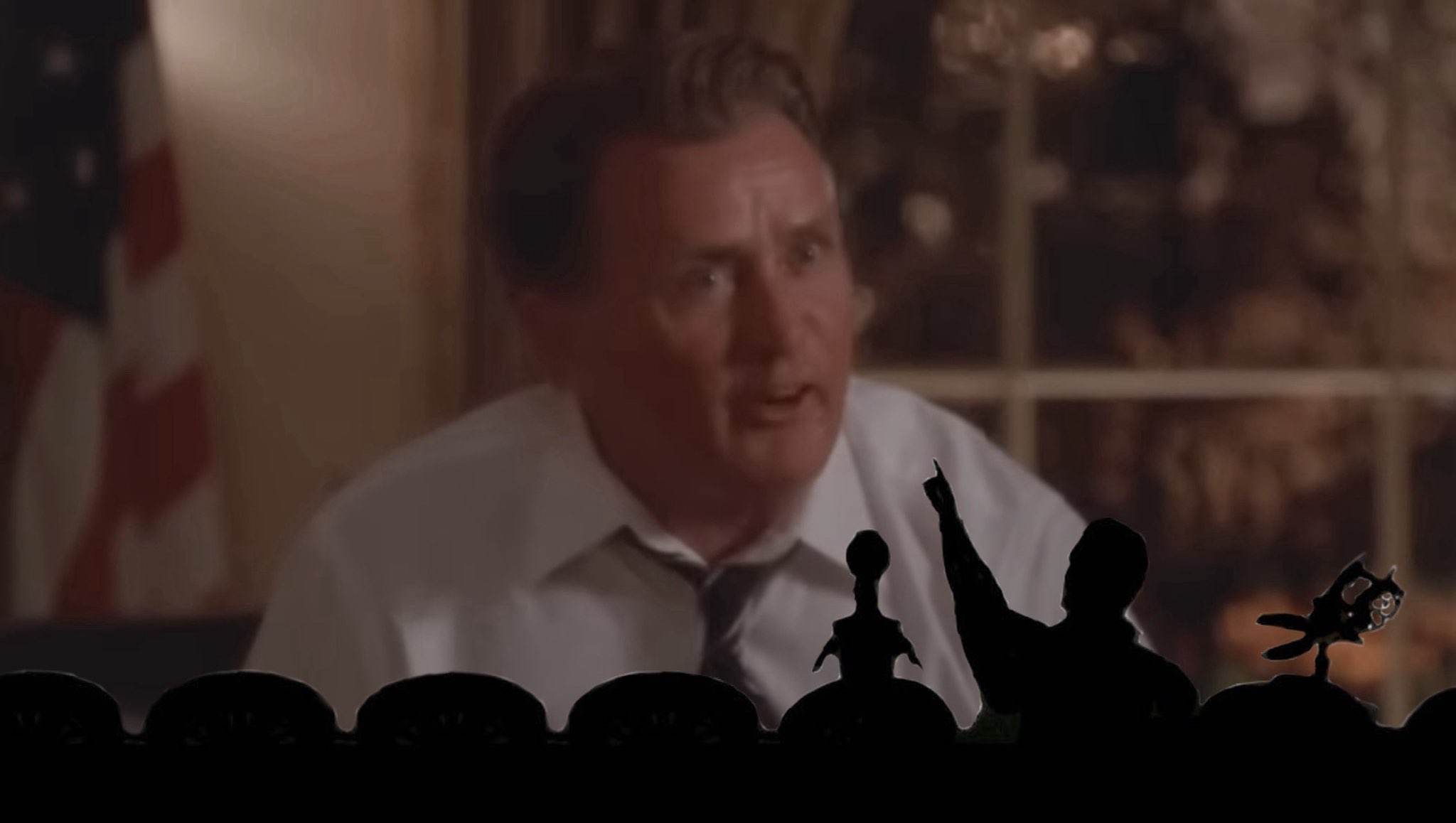
The whole experience also has got me thinking we are long overdue for a series of anti-establishment analysts riffing on The West Wing and Newsroom. Sorkin is owed his ‘due’. Perhaps the set up is that we are imprisoned in a Hungarian bunker, being experimented on by the hammy Mad Scientist Supervillain Seb’astyon Gor’Ka. Played of course by James Adomian.
I have a personal history with George Romero entirely separate from the fact that I met him once at the 2008 Sundance Film Festival. It was back in the last few years of the 1990s, when I was a tween, that I got really into low budget 70s and 80s horror movies. Introduced me to what Perfidious Albion once called ‘video nasties‘ through the last years of the video rental store. The favorite of mine adjacent to this genre was the original Dead Trilogy, my favorite film trilogy of all time to this day. Night of the Living Dead, both its original and 1990 remake (both were made by Romero hence the lack of usual decline in quality of remakes) got me hooked, and the totally apocalyptical conclusion of Day of the Dead was an apt and surprisingly Epicurean conclusion to the series. But the real stand out was the middle entry, Dawn of the Dead. My favorite movie of all time to this day. I still remember the night I first watched it. It was the week of Halloween, 1997 and I was home alone. Despite the movie already being twenty years old, I had never seen gore like that, nor such a perfect blend of bleakness and comedy. I was a kid and coming into an awareness that shopping malls were the nexus of social interaction still for the time (though this would be the last decade that would be the case), and did not like that, and so thoroughly enjoyed the thorough pisstake of consumer culture the movie represented. Not to mention that soundtrack with what has to be the most iconic (to me) main theme of any movie. I had yet to be acquainted with Italian synth-prog-rock band Goblin, now, thanks to the Giallo film subgenre, a general staple of my life- but unknown to me then. More importantly, I liked that human society still exists at the start of the movie, despite being a sequel to Night, but gradually fades in the background before utterly unraveling by the end, leaving only disparate groups of people to fight over resources while they still hold off the zombies.
And if you thought this was cynical, in 2006 Land of the Dead rolled around and we got to see civilization’s reboot quite literally eat itself once again due to an inability to deal with class inequality.
But while the Dead Trilogy may be Romero’s best faire, it is one of his other movies, The Crazies, that we should turn to foremost in the era of Bungled Pandemic. While definitely not one of his best movies as an artistic production, and mildly irksome to my inner military history nerd due to the ubiquity of M1 Carbines shown in the 1970s army, it remains an exceptional take on government, bureaucratic, and small town bungling and miscommunication and is tied only with It Comes At Night for my favorite pandemic movie.
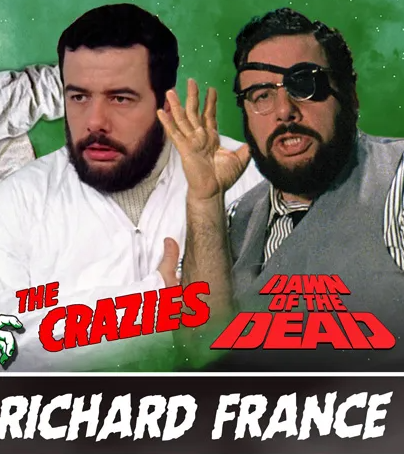
“Oh Gentlemen, we are not dealing with the flu virus here.” The most sympathetic character in The Crazies is played by the same actor who did the best background character in Dawn of the Dead.
In The Crazies, a bioengineered virus by the Department of Defense is accidentally released due to a plane crash over a town north of Pittsburgh. The virus, codenamed Trixie, drives people into violent and irrational fits of behavior making them murderous and/or suicidal. The town is already half descended into chaos by the time the army arrives and begins setting up a quarantine. The initial response was badly bungled due to the need for secrecy, and just when the state forces are beginning to start fixing the situation the people begin revolting. As scientists are given the correct amount of leeway to do real work, the bungled edifice around them crumbles at the moment when it can do some good. The damage is done, a heavy handed government response is too deadly and the people no longer believe nor seek to obey state decrees as too many have been killed or detained.
And here is where the most interesting part of the film comes to play. Unlike the Dead Trilogy, there is no way to tell who is infected with Trixie and who is merely reacting due to stress and mass panic from societal breakdown. The movie shows us multiple massacres and gunfights between the army and the citizens where it is entirely unclear if anyone is even infected with the virus at all. The main band of townies we follow is entirely sympathetic when we see them storm an army occupied house and massacre the soldiers there. But when it becomes obvious part of their party is infected we also see that the main military figures we are following are also sympathetic as the existence of the virus is in fact quite real.
Meanwhile, the monotonous military drum roll music that provides most of the film’s soundtrack goes from annoying but perhaps reassuring and authoritative to increasingly farcical as the entire setting and containment operation collapse under multiple factors of bureaucratic clashes and incompetence. Additionally, the use of amateur actors and locally recruited extras (a common in Romero films) is actually a boon as real life people in a crisis behave like amateurs and not actors with prescribed roles. The heroic Dr. Watts, played by the memorable Richard France, is too rushed to tell his aide the details of the vaccine he is developing and then, right as he completes his task successfully, is caught up in a stampede of detained townies and killed in the resulting mob rush, his work lost. The last surviving rebel local that we followed is finally captured after everyone he sought to escape with has been (rightly or wrongly) killed. It is clear he has natural immunity and even knows it, but he elects to stay silent out of spite once under government custody. Whether this situation is handled well considering the its chaotic and unprecedented nature becomes irrelevant as a new outbreak is reported in Louisville.
This leaves us with some important questions: Did the virus only effect a few people and the rest was all resulting panic? Who was really infected and who wasn’t then? These questions are never answered. It is worth noting that the 2010 Crazies remake, while not a meatheaded disaster like the 2004 Dawn of the Dead remake was, makes it obvious who is infected and who is not, which fundamentally undermines the core ambiguity of the original film.
Once again, like in Dawn of the Dead, Romero’s filmmaking is an intense and personal-to-small group view into societal breakdown while, like in real life, feeding incomplete information from rumor, hearsay, and a dysfunctional media. Romero was no fan of unrestrained capitalism or the carceral state, and I can’t help but think he, along with other later-tier Silent Generation directors and writers, saw something in the coming Boomer zeitgeist that would lead to only the most farcical of societal breakdowns. A plague of mullets and hideously colored clothing and interior decor that would usher in a chaotic new dark age of misinformation, confusion, and mass panic.