Pray for Bourgie White Girls

Last summer, I wrote a piece about The Basic History Bro, or BHB. A type of faux-history buff ‘political scientist’ (i.e someone who reads Cracked and has opinions) male who is really just a bombastic tool who propagates received wisdom and generic middle class American chauvinism, dumbing down any conversation every time. There is however, a female equivalent to this creature, and now is the time to turn our attention to that.

Before recently, I noticed these kinds of people, but never bothered giving them my bother due like I did the BHB’s due to the fact that I am fortunate not to come across them in real life so much. The internet, however, is where they thrive. And in the wake of several subsequent terrorist attacks, where they…’shine’.

The Bourgie White Girl, or BWG, loves to pretend that she is ‘aware’. In fact, one of her favorite words is ‘awareness’, which needless to say has basically become a punchline about her type of thinking by anyone who isn’t her. ‘Awareness’ of course means posting about top news stories with snippy little tag lines such as ‘Get Educated’ and ‘Inform Yourself’ but devoid of any analysis that shows their own opinion is either educated or informed. Above all, it is an opportunistic online form of being a vulture, exhorting you to ‘pray’ for victims of tragic events, be they nations of groups of people. Leaving aside the obvious point that praying is nothing, this is not a call to discourse, to greater understanding of issues, or to advocating anything to politicians or even really to their friends. No, it is just a call to have feelings about something and then share publicly that you do so in a meaningless and context free way in order to both bulwark your status of being *aware* as well as empathetic. Of course, such shallowness is neither.

The motivation for this is the same with the unwanted and uninteresting opinions of the BHB in that it is to pontificate without the effort to justify itself, though there is one key difference. The BHB wishes to create an inside/outside group dynamic to separate who to invite to the kegger and who to insult using insecure presumptions on their sexuality. The BWG, on the other hand, wants to install a more individualistic pecking order. One where she is looked up to as separate and above the pack. ‘Look at me!’ the duckface profile picture run through a French/Belgian/Turkish flag filter says, ‘Am I not educated? Am I not empathetic? Am I not informed?’

This however is really the only major difference between such people and their male equivalents. For the reaction when challenged is the same. Become uncomfortable, retreat into received wisdom, and rather than question your sexuality, imply sexism and or some other form of oppression. Because it is oppressive to disagree with rote-learned received wisdom, apparently-just as a BHB will assume such disagreements make you gay, so too must any disagreements with a BWG make you sexist, if male, or an insufficiently educated feminist, if female. The irony of course being that most feminist theories are not too into neoliberalism, which the BWG is buried up to her neck in.

This question then dovetails into what they actually mean when BWGs talk about education. I can only speak from personal sample size, which may be unreliable, but there does seem to be a correlation between small liberal arts colleges with nice campuses in rural or rustic locations and the BWG. Usually ones with large endowments and some name recognition but no actual academic reputation and especially not Ivy League status. Being a product of both brass tacks public university education as well as a fancy-pants one, I suspect that, much like the suburbs, these kinds of universities are really the worst of both worlds. A unique combination of entitlement in attitude and generic education. That is at least the impression which its alumni so often give.

Naturally, coming from a lifetime of rote-learning and uncritical mainline mythology indoctrination, the BWG believes she is educated and informed to the hilt but shows no actual evidence for this position. Much like the her male equivalent, it is entitlement alone that keeps her afloat.

I once ruminated on the political ramifications of the BHB, deciding it was a natural fit for rising populist right wing movements such as Putin’s vatniks or Trump’s, well…vatniks.  Turns out I was right. So what, if anything, is the BWG politically? Well, to their credit, they always hate Trumpistas. To their not-so-much-credit, they pretty much unflinchingly and unquestionably fall into the Clinton camp. After all, what does the name Clinton signify better than prestige for progressive causes while also doing everything possible to screw poor people? Well, she is a bourgie for a reason. You can starve to death in the gutter, but as long as its about the amount of money you have, rather than your race or sexuality thats A-OK! So this actually makes sense from the BWG point of view. Hillary Clinton is even better than Bill because she has all this plus the woman factor.This support, unlike the BHB’s for Trump is actually fairly logical. There is, however, one glaring problem.

Remember how this post began? It started with the ‘prayers for xyz who suffer from terrorism’ thing. Here is the problem: US recalcitrance to work with-rather than against-the Syrian government is holding up the destruction of ISIS. This prevents us from coordinating with Syria in the same way we do with the government of Iraq. So people who are even more hawkish than Obama represent the precisely opposite kind of response needed to actually reduce the amount of terrorist attacks. If there is one thing people who have actually been paying attention to know, its that regime change policies do not work and must not continue-they are the ultimate enablers of international terrorist movements. Politically opposing such policies is actually doing something, unlike for instance, prayer. Supporting someone who wants to continue these policies…well, this is why all they have is prayer isn’t it?

So, if on this issue and no other, Please Pray for the Bourgie White Girls.


Adrift with the Tweeders?

We may have just witnessed the largest geopolitical earthquake (outside of Syria) since the invasion of Iraq. Some international relations focused thoughts are in order.

Lots-of-men-in-red-trousers-landscape

In my last post I argued against Brexit, but without really making a pro-EU case. It was a choice of the lesser of evils in many ways, two factions of the ruling class arguing about how best to propagate themselves. Most people will end up screwed in or out of the EU. But all politics is in some sense lesser evils, and this is inevitable. There are some countries that might be better out of the EU, Britain, I do not think, is one of them. After all, I have long believed the EU is more prone to ignorance and crisis than the United States, and wrote an entire previous article on how the complacent assumptions of cosmopolitanism would be its doom. After all, the smug tweed jacket red trouser wearing Little Englanders (who we in St Andrews disparaged as ‘Tweeders’) were always going to support whatever gets daddy a bigger dealership.

Postmodern identity politics began this rampant assertion of identity uber alles, and like all postmodern ideas, they were poison to the left that spawned them, leading to acute and even terminal cases of Tumblritis and anti-intellectualism. But even more importantly, all postmodern ideas eventually migrate to where their true Heideggerian home inevitably belongs-on the right. Where they manage, somehow, to become even worse. The pathology of victimhood, standing out due to accidents of birth and parentage, and other factors, merge perfectly with the conservative idealization of the past and the dominant ethnic group. The language of persecution gives people who are targets of comedians and writers the platform of martyrdom for…well…being in power and getting the criticism one gets for that.

And as that process unfolds, its the identity-obsessed right which holds all the cards in today’s developed world, as it dovetails perfectly with nationalism. A Brexit could lead to a vote on a Frexit. Not one likely to succeed, but even a vote in France could really bring out a new future for European nationalism beyond what is now inevitable. Even if not, the EU will work to save itself by reversing many of its current policies, becoming an awkward hybrid of preexisting unsustainable neoliberal sensible-serious-centrism with various populist movements. It is always amusing how migrants get the blame for the very obvious economic policies of the higher ups. Such tendencies could either save the union or break it up further depending on the strength of backlash. History is not a progressive story. It comes and goes, periods of integration conflict and merge with periods of division. It is clear we are entering such a more divided period now. In some ways it was the inevitable result of just how many gains the United States made from World War II onwards. Fueling world globalization was also destined to fuel backlash eventually. There has never been a narrative of history which goes only one way, save technology, and even that level of success is still dependent on a variety of factors in the humanities that wax and wane.

Not to mention the suddenly interesting issues that might come up with British military bases on Cyprus, the Falklands, and above all Gibraltar. Also overlooked is how Russia, once the backer of leftist European groups to sow dissension in western alliances, is now the tacit backer of rightist movements. Putin admires and is admired in turn by all kinds of figures from Trump, Le Pen, to Farage. The geopolitical ramifications, even without the economic issues, are large.

My personal concern, I will admit, is about the future of Scotland. A country which was my home far longer than England was, and was my home for almost as long in my adult life as America has been. As someone who once reluctantly backed the Union cause in the Scottish referendum, changing circumstances, as they always should, require one to change with them. I now support Scottish independence. For if we are to enter a world of resurgent nationalism, we can at least foster the right kind of nationalism.

Scotland has the right kind of nationalism, as far as these things go. The Scottish referendum was open to all citizens who lived in Scotland and closed to Scots abroad or in other parts of the UK. This is because Scotland has a geographic rather than strictly ethnic sense of solidarity. As a Edinburgh taxi driver once told a friend of mine, ‘Being born in Scotland doesn’t make you Scottish, dying in Scotland makes you Scottish.’ It was meant in jest, but shows some aspect of the attitude. Most UKIPers are the people you would expect, whereas the SNP has people from all over the ethnic and socio-economic spectrum. Considering also that Scotland has made a proportionally stronger push to tackle issues of environmental sustainability than the rest of the UK, it further bolsters a growing idea of mine-that the constructive form of nationalism of the future will be environmental and geographic.

Granted, this will not be most forms of nationalism, which will remain atavistic and self-destructive as usual. But if one country gets it off the ground a new example that could attract different coalitions could come into being.

Countries I thought were wise to stay out of the EU for specific reasons of the challenges they face are Greenland, Iceland, and Norway. Perhaps they should consider forming a league of their own based around arctic and sub-arctic issues in order to be better at dealing with resource and biodiversity crisis not likely to be we will understood by eurocrats. If such a thing occurred, Scotland could always break out of the UK and join such a group using Shetland and Orkney as its ins. Perhaps even carve a niche by joining both it and the EU and act as the vital bridge nation between them. It is speculative to be sure, but in crisis there is usually opportunity for those of strategic vision.

But it would be my personal hope that increasing division and nationalism, should it come to pass, could at least have a strain focused on the future rather than an idealized past. A future of being environmental stewards custom tailoring policy to biome, land, and sea. One thing is for sure, with ecological catastrophe already upon us, some civic dedication to keeping where we live livable is an inevitability. I can only hope that Scotland or some other country has the chance one day to pioneer such a turn.


Brexit to Nowhere

battle of the thames

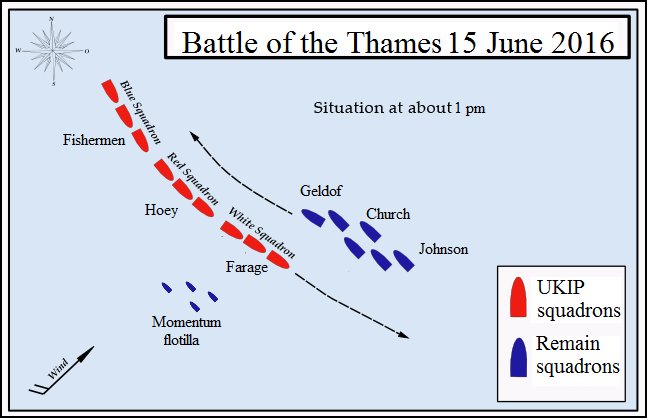
From the ridiculous if amusing ‘Battle of the Thames‘ to the tragic and horrifying political assassination of a Labour MP by a fascist causing both campaigns to temporarily suspend themselves, it is apparent that emotions runs high in the upcoming vote for Britain staying or leaving the EU. Obviously, the geopolitical ramifications are potentially quite large.

Interestingly, there could be both a left wing and a right wing case made for leaving. Though considering the reality of domestic British politics the left could probably deliver far less than the right when it comes to this, even if their case on the inherently opaque and corporate backed EU probably more accurately identifies the organization’s problems than the Little Englanders on the right. The EU has many problems for sure, this blog has previously talked about some of them. However, as things currently stand, I am here to make the case that for the cohesiveness of the United Kingdom as a state, it is best at this juncture of time to vote ‘Remain’.

Granted, if the dissolution of the UK is more your style you might take this as a reason to make an accelorationist vote for ‘Leave’, as we shall see.

It boils down to trading one form of compromised sovereignty for another.

Britain is no longer a major world power, but a secondary one located in close proximity to other secondary ones. To offset this factor if freed from the EU Britain must compromise by becoming an even more attractive economic partner to other non-EU states. Naturally this means pulling a Boris Johnson (who once, it should be noted, almost ran over me while riding his bike up Holloway Road) by trying to turn London into a kind of Singapore-West but without the intelligence of discipline of that state. All the current factors affecting the housing and renting prices in London would be accelerated as London was made more and more a city built for Russian oligarchs and Chinese capital flight. The rich get richer and ironically for UKIP, it will be at the hands of foreign interests at least partially. Granted, the Conservative Party and UKIP will take credit for the short term economic boom that will ensue, but the long term trends will be to exacerbate already disturbing and unsustainable paths already being taken. Once the city becomes addicted to getting a nice chunk of its budget from these sources, it will further attempt to appease such investors in order to attract more.

And that is just the city of London. More interesting might be outside of said city.

For reasons listed above and others, leaving the EU will already exaggerate what I have come to call ‘The London Effect’, which is noticing how the UK is so dominated by its capitol city, which no close or even moderately distant secondary center of urban power can compete with, that it resembles a massively overgrown city-state in all but name. Perhaps this is something that comes from living in a variety of locations in the UK starting with London and eventually ending with my favorite city of Edinburgh which I liked much more, but it is a very real structural phenomenon built into the state.

Without being part of a zone containing the various competing mega-cities of Paris, Berlin, and what-have-you, the dominance of London over British affairs (and budgeting) will only increase. Combined with the likely loosening of various regulations on average workers this will exacerbate forces pulling away from state centralization. In other words, expect another Scottish independence referendum if the UK leaves the EU, and expect it to win the second time. And once that starts, who knows what next for a supposedly United Kingdom? Especially if, as would be extremely likely, Scotland then immediately applies for EU membership. How long could Wales agree to be even more proportionally dominated by the English? What would this bode for Northern Ireland?

We don’t know the answers for sure, but at this moment in time if one wanted to keep the UK together one should want to keep it inside the EU, at least for now.

Perhaps in the future we can talk about an alternative to the EU and NATO I came up with called ‘The Northern Alliance’, which would exist to protect the interests of states with arctic and sub-arctic climate change challenges and who do not wish to be divided and dominated by Russia, but that is a different enough topic that it can be saved for a future post.

Learning to Die in the Anthropocene, a review

Roy Scranton wrote this large pamphlet/small book to address what he saw as the act of a civilization not yet coping with its own ending. Not to say human extinction, but that it now seems most likely that, barring a technological miracle, the delicate economic and geopolitical forces underpinning the present lifestyle and assumptions of the developed world-as well as the environmental factors of the entire world at large-are coming to an end. And most people are in denial about it.

To quote from early on:

‘Yet the reality of global climate change is going to keep intruding on our collective fantasies of perpetual growth, constant innovation, and endless energy, just as the reality of individual mortality shocks our casual faith in permanence.

The greatest challenge of the anthropocene isn’t how the Department of Defense should plan for resource wars, whether we should put up sea walls to protect Manhattan, or when we should abandon Miami. It won’t be addressed by buying a Prius, turning off the air conditioning, or signing a treaty. The greatest challenge we face is a philosophical one: understanding that this civilization is already dead. The sooner we confront our situation and realize that there is nothing we can do to save ourselves, the sooner we can get down to the difficult task of adapting, with mortal humanity, to our new reality.’

Since I am of the materialism or GTFO school I disagree on prioritizing the philosophical question over that of the sea walls and the potential for conflict. That being said, this is a very valid question to grapple with.

Personally, though I feel like a downgrade of living standards and a rise of conflict are now inevitable due to environmental factors already under way, it would be unwise to underestimate technological innovation for future energy. Though one must be aware that vested financial interests in various old school companies will do everything they can to sabotage such a move through lobbying, and so don’t bet on public funding in any country that allows such political activity.

I found the prose and call to contemplate in this book extremely evocative and probably worth most people’s time. Though if you are already pretty versed in this and/or the growing new (finally, a good new school of philosophy!) of Speculative Realism-also called Speculative Materialism or Object Oriented Philosophy- you will hardly learn anything new. But this issue, of us as a species learning to deal with the consequences of forces we have unleashed-forces now as intrinsically a part of nature as non-man made plants and animals, is one which is desperately needed in an idealistic age overrun by anthropocentric and often non-material ideologies such as liberalism, constructivism, religious fundamentalism, and postmodernism.

The fault I find in this interesting text is its call for a new humanism. Personally, I find humanism itself to bear much of the brunt of our recent delusions and faith in ourselves and ability to consciously dominate nature. But I feel that my thoughts on the much vaunted factor of consciousness are long enough and touching upon issues out of scope with the topic of this post to talk about here. Needless to say, a future post on the topic could very well be in the making. What matters now is humanity dealing with a faceless enemy of its own making which is not human. The ultimate Frankenstein fear story where instead of a cobbled together re-animated corpse we must now recon, like with the early Godzilla movies, with something truly massive and awakened by us.

I will close with another quote I quite liked from near the end. ‘…Global Warming offers no apprehensible foe. That hasn’t stopped people from trying to find one. The Flood Wall Street protesters say the enemy is American corporations. Tanzania’s Jakaya Kikwete and Nauru’s Baron Waqa say the problem is the United States and Great Britain. Shell Oil and the Environmental Defense Fund seem to think it’s intractable UN bureaucracy that is holding us up. Barack Obama has implied its China. Tea Party Republicans would blame Obama, I’m sure, if they actually admitted that global warming is happening and caused by human activity. Meanwhile, NPR listening liberals want to believe that Tea Party republicans are responsible, so they can frame the problem as one amenable to solution by moral education and enlightened consumerism, as if it were all a matter of convincing people to eat more kale and drive electric cars…The enemy isn’t out there somewhere-the enemy is ourselves. Not as individuals, but as a collective. A system. A hive.’

Classical Geopolitics, A Review

Despite having started out near the beginning of this blog with a couple book reviews, I have not really kept the trend going. So, I figure it is time to look at a book I discovered purely by accident here in a DC bookshop and recently finished. ‘Classical Geopolitics: A New Analytical Model’ by Phil Kelly, Professor at Emporia State University.

Kelly seeks to make the article, in a vein similar to Brzezinski or Kaplan, that geopolitics is a lost art buried by frauds (such as the racist Nazi version of geopolitics) or obfuscated by…well, an ideology which does nothing but obfuscate, such as postmodernism (seriously, when did anything good ever come from putting the word ‘critical’ on the front of any academic topic?). The main thrust of his argument is that at its core geopolitics has an emphasis on the geo part-a la geography- and thus is an understanding about physical properties and the shapes of states and their access to resources with no predetermined ideological baggage. He goes even further than most in seeking to divorce geopolitics with the theory it is most widely connected to, that of realism. Kelly does not deny that on so many issues the theory of realism will in fact merge with that of geopolitics, and is its closest fit, but he seeks to establish geopolitics as a stand-alone strategic understanding in its own right. This may be one of the more unique arguments in classical geopolitics I have yet seen.

As to what he means by classical geopolitics, it is the method of focusing international and foreign policy strategy around geographically based strengths and weaknesses, resource bases, the trade routes that connect them, and the general logistical issues which arise between these physical factors. It is a kind of study which is often associated with being created by Halford Mackinder, but antecedents of which have been floating around many cultures and eras. Most notable would be Kautilya’s understanding of the geographic and political checkerboard made by multipolar systems in Northern India in the classical era early Maurya Empire as well as Sun Tzu’s clear prioritization of shaping ones military and sometimes diplomatic strategies primarily around the nature of the geography one has to work with. One does not have to agree with Mackinder to be into geopolitics. I myself believe that though he started an interesting discussion, if Mackinder were right A. land power would have long since superseded sea power before the 21rst century and B. that the Soviet Union would have come to at least equate if not outright outperform the United States. Obviously, none of these came true, though one could argue that in the case of the latter it was because of skillful grand strategy on behalf of the Nixon administration towards China and the exploitation of the Sino-Soviet split.

But Mackinder brought the centrality of geography to foreign policy back to the European (and North American) worlds as a keystone with a power unseen since Hadrian demarcated a defensible height and stopping point for the Roman Empire. Many of his acolytes were more interesting either by refining his thoughts in a more interesting way (Spkyman) or for being ridiculous and downright terrible (Haushoffer, Dugin). In Kelly’s book I also learned about the very recent ‘Great Powers and Geopolitical Change’ by Jakub  Griegiel, which I very much plan to read in the future based off the synopsis given. Perhaps it will be the next book review to appear here.

One commonality that most geopolitical thinkers have, no matter their interests or disagreements, is the importance of Eurasia. As a supercontinent (if India is not considered a separate continent than neither should Europe be, anyway). It is ‘the world island’, the place where the most people, land, and resources lie. If a single power were to exert dominance over all of it at once its power-projection capabilities would be truly immense. Of course, the nature of multiple large powerful states in Eurasia does make this exceedingly difficult and even the China of today is more constrained in the international hierarchy than the Han or Tang dynasties were at their heights.

Still, it behooves those on this landmass who are not major powers and are jealous of their autonomy to ally with stronger powers which can prevent such a geographic monopolization. The United States fills this roll better than any other country yet has. Its own fortunate terrain (total hemispheric dominance and major naval protection while also being located suitably far from major powder kegs) being the predominant factor in this equation.

What I like best about Kelly’s work however is not merely his defense of furthering this once popular but now on the back-burner field, but his South American academic background. Nearly every example of non-global but rather regional geopolitics comes from what I once referred to as ‘the strangely overlooked continent‘ which is a nice departure from normal literature on the subject.

I do have some quibbles with the text, however. First of all, many may be turned off by the very academic style of the writing. Being a veteran of academia, I was not, but its worth noting. Another thing is that Kelly argues that geopolitics should be positivistic, and I believe it is too into the humanities for this to be desirable. He also then adds little that could actually be in the field of positivism, further boosting my criticism. Arts of Strategy are often called arts for a reason. I feel if one wanted to go into that direction one should study geology and the earth sciences more. Even though I am not a fan of positivism in IR, geopolitics itself got me into the topic and I now possess a hobbiest level of knowledge about plate tectonics, ecology, and the like. But you never see any of that in geopolitical literature which makes it come off as a bit solely map-studyish.

But none of these concerns negatively impact the overall point of the book or the main arguments made therein.


A Future of Nagorno-Falklandbakhs

falklands pic

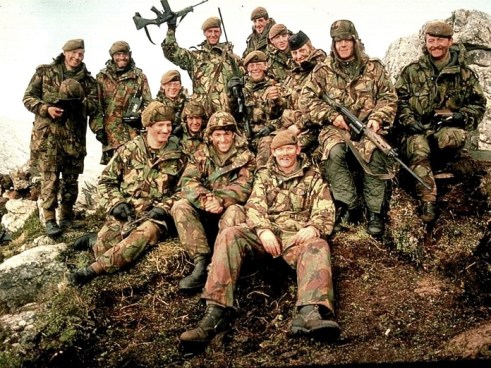
This past month marked two very interesting events the bilateral relations of four different countries. Fighting once again broke out in the disputed Nagorno-Karabakh region between Armenia and Azerbaijan, and the UK made a very strong statement about their ability to obliterate an Argentine attack on the Falklands in a short amount of time should another conflict ever occur.

Much has been made of Russian foreign policy in regards to exploiting frozen conflicts in order to retain a post-Soviet periphery, be it in Georgia, Ukraine, Moldova, or Tajikistan. But this is hardly a behavior unique to Russia. It is only the scale and multiplicity of Russian interests that mark it out as most noteworthy. But frozen conflicts play a large role in the foreign policies of many smaller nations. In fact, a single seemingly minor dispute can be an all-consuming issue in a smaller nation’s outlook on international affairs. Sometimes, these disputes are useful rallying cries for fragile nations, but they can also be quagmires which reasonable policymakers know are useless but are forced to continue on with thanks to domestic pressures. It can also be both of these things at once.

When Argentina invaded the Falklands and South Georgia Island in 1982 it was after the failure of decades of diplomacy. The risk was high but Britain was obviously in steep decline compared to its great power days and would have a massive logistical problem to overcome to re-take the islands, located near the Antarctic Circle. Even with this accomplished, they would still be in range of South American based fighter attack and far away from the nearest British base on Ascension Island. Considering the internal instability and economic fragility of the Argentine junta, this was seen as a risk worth taking to rally the people to their cause.

But while the Argentine air force performed well, crippling several British ships in succession, their navy chickened after the General Belgrano was sunk by a submarine and their mostly conscript army rapidly folded once the professional British forces landed and began to make their way across the wind-swept islands. Britain seemed to reverse its former historical record by performing impressively on land and awkwardly at sea, but considering the timidity of the Argentinian Navy this ended up working out.

In the end the total count of killed and wounded on both sides would slightly outnumber the population of the islands in that era.

The dispute, which technically began in the 18th century between Spain and Britain, is still ongoing, with the UN currently contemplating that the islands are in Argentine waters. Having turned the conflict into a post-WWII rallying cray, Britain is unlikely to voluntarily hand over the territory without some kind of joint-administration agreement, if at all.

The Nagorno-Karabakh War is another hold over, of a more recent but more deadly nature. It was a region where both Armenians and Azeris lived in Soviet times, though rising nationalism throughout the Caucasus in the latter-Soviet era was present. Before even the unraveling of the USSR it was apparent that Armenia and Azerbaijan were fast moving into independence and conflict with each other over the demarcation of their borders. It became ethnic and both sides committed mass deportations against the ethnic populations of the other. This eventually spiraled into full blown conventional conflict with newly unemployed Russian officers and tank units even selling their services to both sides as mercenaries.

The Armenians, despite the initial odds, wiped the floor with the Azeris. And yet, much like in the Falklands, a dispute was not actually ended by a strong showing on one side. It became politically toxic for the losing side to give up the ghost, so they simply did not. Perhaps in the hope, not unreasonable, that if one is patient but dedicated one can get with negotiation what they failed to retain by fighting.

But the main point here is that these are not isolates. If anything, I would expect to see more of these big military and diplomatic blow ups over remote and disputed territories. It can be both a legitimate way of asserting sovereignty and a useful distraction at home. From the present military build up in the South China Sea between China, the Philippines, the USA, and Japan over various disputed and sometimes even artificial islands to various tiny islands between Greece and Turkey to the potentially rekindled fires of Nagorno-Karabakh and the Falklands, the future of conventional warfare could very well be tied up with these kind of disputes. Average civilians in the core regions of countries are probably under little threat, but those on the frontier and in the armed forces might just have to be aware that these kinds of frozen conflicts are highways to the danger zone.

For a real life example of *Danger Zone* check out these low level Argentinian bombing raids on British ships in 1982:


The Sensible Serious Center Cannot Hold

Tokugawa_Yoshinobu_with_rifle

Tokugawa Yoshinobu, no doubt being a Sensible Serious Centrist

Not exactly a foreign policy post, though it overlaps. I have made a point before of knocking rote extremest and complacent ideological thinking. But I never got to the most irritating form of ideological thinking to the trickster: centrism. Let us start with a list.

Famous Moderates/Centrists of History:

Low level Vichy collaborators
British Loyalists in Ireland and America
The Anglican Church
American Indian Boarding Schools
Condoleeza Rice
Michael Bloomberg
President Bill Clinton
President Andrew Johnson, President John McCain-oh wait
President John Kerry-oh wait, President Joe Lieberman-oh wait
President Hillary Clinton-oh wait (so far)
Pro-democracy Burmese who also love genocide.
Any Saudi monarchs who only hates women  and infidels *half* the time.
Any North Korean who does not believe Dear Leader is from celestial lineage upon a mountain top but still believes said Dear Leader to know best.
Syrian rebels. Ha!

What an illustrious intellectual and cultural lineage!

Such are the measly scraps of moderation and centrism contributing to any kind of interesting discourse. Namely, they do the opposite of contribute. This is not to say that it is always wrong to not agree with various wings in an argument. In fact, I greatly encourage it. This is a blog about unorthodox thinking towards the boring and rigid confines of the humanities almost as much as it is about foreign policy issues. I find issues of right and left, authoritarian and libertarian, to be infinitely boring if simply taken straight on face value.

And yet, none of that changes that it is above all the centrists who I reserve the most disdain. If a person has a variety of unorthodox views and you simply appear to be in the center when all of them are averaged together, well, it happens, not your fault. So long as you have reasons for your views and on a case by case basis they remain interesting, it is all good. Take myself. Simply speaking I am a libertarian on social issues, a moderate hybridized socialist on economic issues, conservative but only slightly on second amendment issues, quite radical if open minded on environmental issues, and a realist who (in the US anyway) is closest to the paleoconservative position of foreign affairs. Surely you cannot get more unorthodox than that. These are however part of a world view based on an intense and life-consuming study of world history, and they came about by the very process centrists claim to uphold: critical inquiry.  All of these seemingly divergent views of mine only seem bizarrely diverse if you suffer from the disease of rote-thinking that thrives in our neoliberal order-and in so doing assume that the centrism that lurks as the singularity inside our (temporary and situational) system is inherently reasonable. And therefore that only the people in close orbit-the moderates-are rational actors.

This naturally rests upon the assumption that the center is reasonable. But the center of any society, no matter where it lies politically, is a product of circumstance and a quest for legitimacy on behalf of whoever rules a nation. It is the epicenter of uncritically accepting the dictum of one’s rulers with just enough waffling to keep one’s distance from their mistakes. See, it is all well to come to a moderate version of a position through internal and external debate and reconciling different arguments that work for you, but this process should have nothing to do with splitting the difference and equivocating, as if by averaging all points together in a blender and drinking the thin beige gruel that comes out is in any way sensible or original. It is not. An idea from one end of a spectrum might compliment another, but they can also clash. If your default position is to assume they can always be made to compliment, or that that is some glorious ideal, you may have a problem.

Henry Clay made a career out of trying to do this, but it just ensured a coming civil war by delaying an actual struggle long enough that total war became inevitable. The Tokugawa Shogunate, a government I have a lot of respect for that I feel is often maligned by western historians, tried to straddle an awkward line between retrenchment and embracing the foreign world in its final decades. It would have been better to go in whole hog. Even the reactionary (and wrong) position adopted by Satsuma and Choshu domains ended up being a better path in the end than centrism, as to fight against the odds for what they wanted forced them into government and a total reversal of their previous positions. See, it isn’t not so much about right and wrong, but motivation. Centrists motivate no one but themselves…when they talk to each other…about their supposed nuanced superiority.

It is something they share with extreme nationalists and patriots actually. Their country is the center of the world. Their country’s most centrist parties are the center of their country. This is the fountain from which they just so happened to have won the lottery of life to be born into. And with this miracle of being born amongst the elect, they are now more enlightened than everyone else. Through their own will and exertion, of course.

It cannot be a coincidence that protestant majority countries are most attracted to this way of thinking. Indeed, centrism shows its true nature as a die hard fundamentalist position for ideologues-especially lazy ideologues-precisely because its intellectual lineage in any society can be easily traced in whatever country you are looking at’s historical experience. It is, like so many other things, a product of external forces. From geography to ecology to the nature of the political system, the very nature of Sensible Serious Centrism (SSC from here on out) and Meticulous Moderation is simply an excuse not to look too critically at the most mainstream of assumptions which exist. Hell, even stodgy old Edmund Burke at least acknowledged that different societies are marching in different directions, an admission which is too extreme for most theocracies and neoliberal nations to even fathom, believing as they do (sensibly of course) in some linear, rational world order.

I can guarantee you, as a former doctoral student in academia, that whatever their flaws might be, finding a self-declared centrist amongst people who actually have a depth of knowledge in the humanities is like finding an intelligent and articulate statement on policy from Donald Trump. I mean, sure maybe you can find a couple, but they are outliers, and the topic they are focused on is probably stupid or boring anyway.

There is nothing Sensible nor Serious about being a SSC. It is simply being a tool who has reams of psychological validation to bolster their position from the media and whoever rules at the time.

It is only by acknowledging that times change that one can be serious, and it is eminently sensible to see that a present day and geographically situational ethical fad is not some window into an eternal political truth.

So the next time you meet a SSC, play a little game with them. Ask them a series of questions and watch the answers.

What is a centrist in Saudi Arabia?

What was a centrist during the inquisition?

What is a centrist in a genocide-someone who advocates only exterminating half of a minority group instead of all of them?

Does a centrist Khmer Rogue labor camp commander only want racks of jaws rather than entire skulls?

If you are in a western nation, I guarantee you the response will be that centrism only applies to their own country and those like it. A fascinating bit of chauvinism that, so bring up the immense unlikeliness of them being born in said country. Also bring up the divergences in policy between developed countries.

Actual critical thinking can indeed be sensible and serious. But if it is nearing those things we can assume it is not in fact centrist. To actually engage in critical thought one must never be a slave to fashion.


The Washington Treaty of 1871 and Sovereignty Today

kearsarge vs alabama

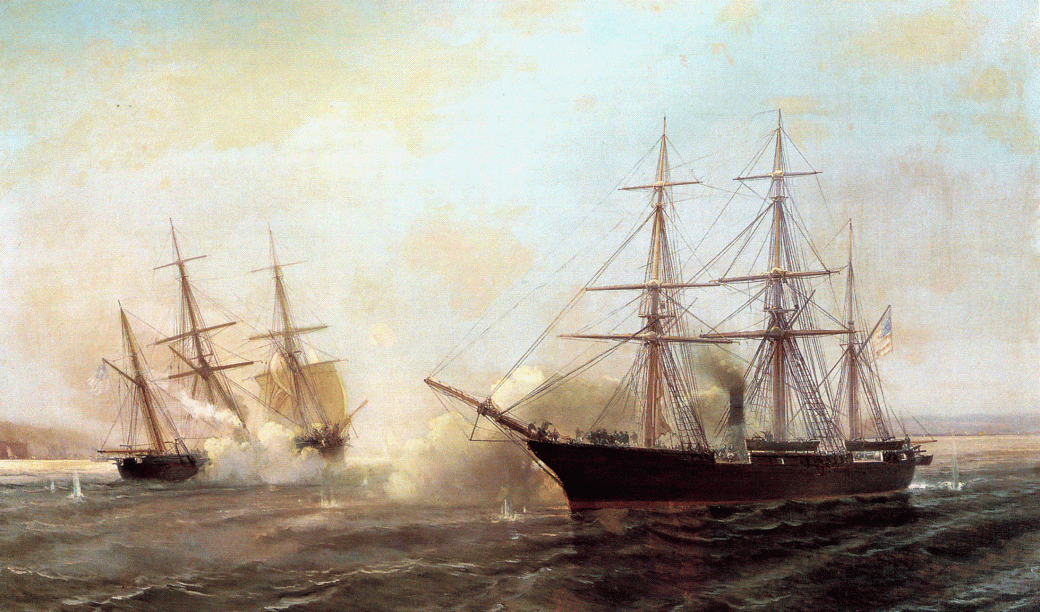
USS Kearsarge sinks CSS Alabama off the coast of Cherbourg, France in 1864

There is the temptation among American Civil War buffs to view that conflict as a purely American affair. Brother fought brother and everyone was American, etc. But this assumption is just as wrong as if you to assume that the Syrian or Congolese Civil Wars have little outside involvement.

From the beginning, the governments of Britain and France pulled heavily for the Confederacy. They saw the emerging industrial and commercial might of the United States as a grave threat to their Atlantic supremacy and the order they had barely established after the Crimean War with Russia. With the US distracted by what would become the bloodiest conflict in all of its history, France seized the opportunity to install a puppet regime in Mexico. After the Trent Affair in 1861 (when British ships were boarded and Confederate agents on them arrested in international waters) Britain upped the ante, sending threatening noises of war and violating neutrality by building blockade runners stocked with weapons shipments which would slip into Gulf ports such as Mobile Bay and New Orleans. This in turn would shape the Union naval strategy for the rest of the war, with David Farragut’s famous battles being the actions to close those ports.

Despite Gladstone’s and Queen Victoria’s southern sympathies, once the Emancipation Proclamation was declared after the Union victory at Antietam in 1862, general British public opinion turned against the south. But the rich business of economically and logistically aiding the Confederacy continued among the entrepreneurs of the Liverpool dockyards. Confederate agents remained extremely active in Canada, and even planned (though did not execute) a biological warfare attack by infecting New York City army hospitals with Yellow Fever.

In light of this dangerous situation, only one power expressed open support for the Union cause. The navy of the Russian Empire sent squadrons of warships to dock in both east and west coast ports of the United States should Britain or France get any ideas about attacking the strung out Union blockade. Sealed orders on board the Russian flagship contained instructions that should any outside power attack the United States during the war against secession, the Russian fleet was to sail and engage said power’s naval forces. Tsar Alexander II was not about to let Anglo-French meddling deprive him of potential allies all around the world.

After Gettysburg and Vicksburg the attractiveness of supporting the Confederate cause abroad dried up. And yet those British built commerce raiders with their British cannons continued to wreak havoc on the US whaling and trading ships. The CSS Alabama-the most effective commerce raider in all of history to this day-was a particular sensation in the press. It was finally sunk, as pictured above, by the sloop of war USS Kearsarge after an intensive hunt throughout Europe.

But the end of the war in 1865 did not bring an end to the international repercussions of that conflict. Secretary of War Edwin Stanton was ready for another war against Britain on the charges of the immense damage its ships and weapons had done-even if in Confederate hands. He considered the war to have been effectively over more than a year before it finished-and its prolongation a direct result of British interference. Britain, therefore, should pay the costs of the Union for late 1864 and 1865.

Meanwhile, in the now occupied south, US forces under General Sheridan began their own weapon smuggling operation to the forces of Benito Juarez who were fighting the French backed Hapsburg pretender in charge of the occupation of Mexico. The tide had already turned in Mexico’s favor, but the new weapons surely sped things up. Rather than overtly violating neutrality, US forces tended to simply leave weapons stockpiles at certain places on the border and then disappear, expecting that in the night Mexican agents would come, cross the border, and take them without anyone ‘knowing’ otherwise. Two could play at the cloaked interference game.

The French were eventually driven from Mexico. But the economic reparations demanded by the United States on Britain remained, poisoning relations between the two countries, who had remained steady rivals since 1775, with little to no respite even further.

But then came the Franco-Prussian War, the rise of an immensely powerful German state, a major economic and industrial boom in Russia, and several naval arms races between Britain and France. Britain could no longer blithely sit on the top of the world, uncaring as to its relations with other major powers. As the furthest away power, the US represented the safest option to begin a re-orientation of British policy. With the Americans agreeing to drop their more outlandish claims and also paying reparations for events like the Trent Affair, Britain agreed to pay damages and acknowledge guilt related to the neutrality violations of British built commerce raiders. Since then, the two countries have enjoyed quite amicable relations by and large, with the notable exception of a major breakdown in the 20s and early 30s in the aftermath of the failure of Wilsonian idealism.

So, what does the Washington Treaty of 1871 have to do with us today? Well, functionally, quite little. But I would like to float the idea that in the case of the Syrian Civil War the issues of outside backing of internal rebel movements is once again a major issue in great power diplomacy. Russia plays a much more direct role supporting the government, but remains committed to stopping its allies from being overwhelmed by foreign-supported forces. Meanwhile, in the United States and other countries, a backlash is growing in the general public to a policy which is increasingly clear should never interfered in the first place, and failing that, is backing the wrong side. Like the Union, the Syrian government is a flawed but multicultural organization, like the Confederacy the rebellion in Syria belongs overwhelmingly to a much narrower demographic. While the rebellion in Syria is much more justifiable than the southern rebellion was, it has come with time to be if anything even more scary and destabilizing for its region. Meanwhile, the US now plays the role of 19th Century Britain, its people increasingly coming to look with horror over who they are backing while the policy elites blithely continue on an expensive course of confirmed failure. Motivated as much by personal sympathies as strategic concerns, if not more so, as the recently declassified Hillary Clinton emails strongly imply.

In our extremely globalized world, upholding national sovereignty, particularly of small and weak states, seems almost an antiquated idea. But perhaps it is time to realize that quite often it can serve big power interests. I am not so naive to believe that strong countries will not interfere with the internal politics of smaller ones. There are in fact many instances where this serves vital strategic interests. But I do think it is time to make it something people think upon as a dangerous action one should only pursue in extremity-and this means there should be repercussions. Russia is doing to the Ukraine what America, Turkey, and Saudi Arabia do to Syria. It doesn’t like the government so it plays brinksmanship with rebel forces as its allies. Rwanda has decades of experience with similar actions in the Congo. These turn into frozen conflicts that simply drag out suffering on the ground, as per Secretary of War Stanton’s presumption of British actions in the 1860s.

My favorite aspect of Cold War history to study when it comes to diplomacy is the Non-Aligned League. I do wonder if there could be such a small-state-in-hotspot alliance in the future. A league of nations who might share little in the way of domestic structure or big power friends but remain committed to domestic sovereignty against outside interference. The fact remains that nations like Syria and Ukraine could make quite good cases for reparations from other nations for neutrality violations in internal conflicts. Even though the great powers could never be forced to pay, the mere PR of such a move might grant small states a bit of a reprieve in today’s world as journalists picked up on the story. It would certainly make them more sympathetic.

Plus, rather than pay it itself the United States could always split the difference between Saudi Arabia and the Clinton Foundation to get the money for its reparations to Syria.

Anyway, have a musical number. Maybe one day they will write one that replaces Georgia with Donetsk or Raqqa.

Foreign Policy in the Present Election Cycle

Domestic Politics? In *this* blog? It’s more likely than you think.

Of course, I really mean to discuss how American domestic politics impacts foreign policy. So it still fits the theme.

You would think that in a highly competitive primary season with both parties selecting from pools of candidates that there would be more interesting discussions on foreign policy in the United States. While it was true that Rand Paul was the torch bearer of sanity in foreign policy (if little else) earlier on, he has already become history. Donald Trump, who is grotesque and hilarious in equal measures, has at least forced a reckoning on Dubya’s legacy long delayed by the GOP-even if he has no coherent ideas of his own.

The candidates both party establishments clearly want to win are, unsurprisingly, the two most hawkish of hawks. Hillary Clinton and Marco Rubio are basically indistinguishable from each other on big picture foreign affairs. American Exceptionalism, delusions of grandeur, and a blind faith in military solutions when regarding small weaker nations ruled in ways contrary to American values. They both have track records of opinions which would meet the approval of Cheney and Kristol alike.

The Democratic primary is just as much wild card vs reckoning. No one actually knows what Bernie Sanders holds as views on foreign policy, if any are coherent at all. But then a very interesting thing happened…Tulsi Gabbard resigned her post as DNC Vice Chair to endorse him.

I am definitely not yet sold on the Sanders bandwagon, nor do I think endorsements matter as much as people think they do, but I cannot contain my joy at the following two things:
1. I remain convinced that Gabbard is going places. I have mentioned her previously on this blog as one of the rare realists left in congress. We have had decades of endless and naively conducted war with little grand strategic perspective. With a Sanders nomination unlikely she took a long term calculation to back him specifically because of foreign policy issues and to build her future reputation as the foreign policy realist (who is not Rand Paul). Its her career trajectory that most fascinates me rather than his. And if he does win, she will no doubt get an interesting cabinet post.
2. I am so thankful after decades of evidence that the Clintons are basically Dick Cheney Lite that someone is making a major point of finally calling them out for it. The media never had the spine to do this. It still doesn’t. They look at the quantity of titles on her resume without looking to see the quality and results of what they describe.
There is something beautifully Roveian (in the best ways) about destroying a foe’s strength. Going after Clinton on foreign policy is like a factual and justifiable version of swift boating, you sink the opposition’s main selling point-and this time you actually do it by telling the verifiable truth. Obviously Gabbard can do this, and Sanders cannot as he has no actually articulated foreign policy views or coherent record.
Maybe, just maybe, we can have a real discussion about foreign policy in this election season…for once. After all, this is hardly an issue that primarily affects Americans. One could say in fact it primarily affects people who are not Americans. That is why non-Americans tend to know more about American foreign policy than Americans do, by and large.
Plus, while you might think a trickster themed blog does revel in the chaos-or shadenfreude- caused by Trumps’ run, I would counter that Trump is just a shuckster insider who knows how to play the system created by decades of toxic (primarily conservative) social divide and rule politics. A quite typical figure actually in the mold of William Jennings Bryan, Vladimir Putin, or Marine le Pen. Whereas the first Hindu in congress (potentially, hopefully?) running with in some capacity a Jewish candidate against a bombardment of media hostility and entrenched interests is a much more interesting upset to the system. Trump after all hardly threatens any media oligarch tax brackets and thus no doubt they could come to accommodate him.
Even if the Sanders ticket goes down in defeat, as is probable, its run will have shaken things up-specifically in the realm least expected of it, that of foreign policy.
Keep your eyes on Gabbard. She is going places.


Russian Bombing in Syria

A very brief point I wish to make.

You are going to see a lot of headlines like this in American and European news outlets considering the deterioration of NATO-Russian relations. While I personally am not a fan of the present Russian state, I must re-iterate that they are getting Syria as right as they got the Ukraine wrong.

You see, Daesh in Syria is the scariest faction, but not the only scary faction. Well, technically they are all scary but you know what I mean. But in order to see the logic of Russian airstrikes in Syria you have to look at several maps of Syria. Take a somewhat up to date map of the conflict itself like so:

Syria-3-Jan-2016-static1

(Hope you don’t mind me using your map dude/dudette!)

Now take a look at population (and thus also major city) concentrations, geographically:

syria_pop_1979

Granted, 1979 census (it was the most photogenic) but even much more up to date ones show the same general distribution.

So, let us look at this strategically shall we? The largest and most capable ground force which could do the most damage to Daesh is the Syrian Arab Army. It is integral to any serious victory over the radicals no matter how much NATO wants to still pretend this can be a three-way war. This means the government must be strong and capable of holding most of the countries’ population centers.

What threatens that right now is not Daesh, but the FSA, Al Nusra, and others. Al Nusra, by the way, is a goddamn Al Qaeda affiliate. That’s right, the Pentagon is now complaining that Russian bombs are hitting Al Qaeda and their allies. This is the world we live in now.

So in the long game, we all want Daesh taken out, but the government is going to have to recapture more territory, specifically in the north-west, to do so. America shouldn’t complain that Russia is doing their own work for them for free, while also blocking a chance for the US to admit its Syria policy errors and open up real dialogue with Damascus.