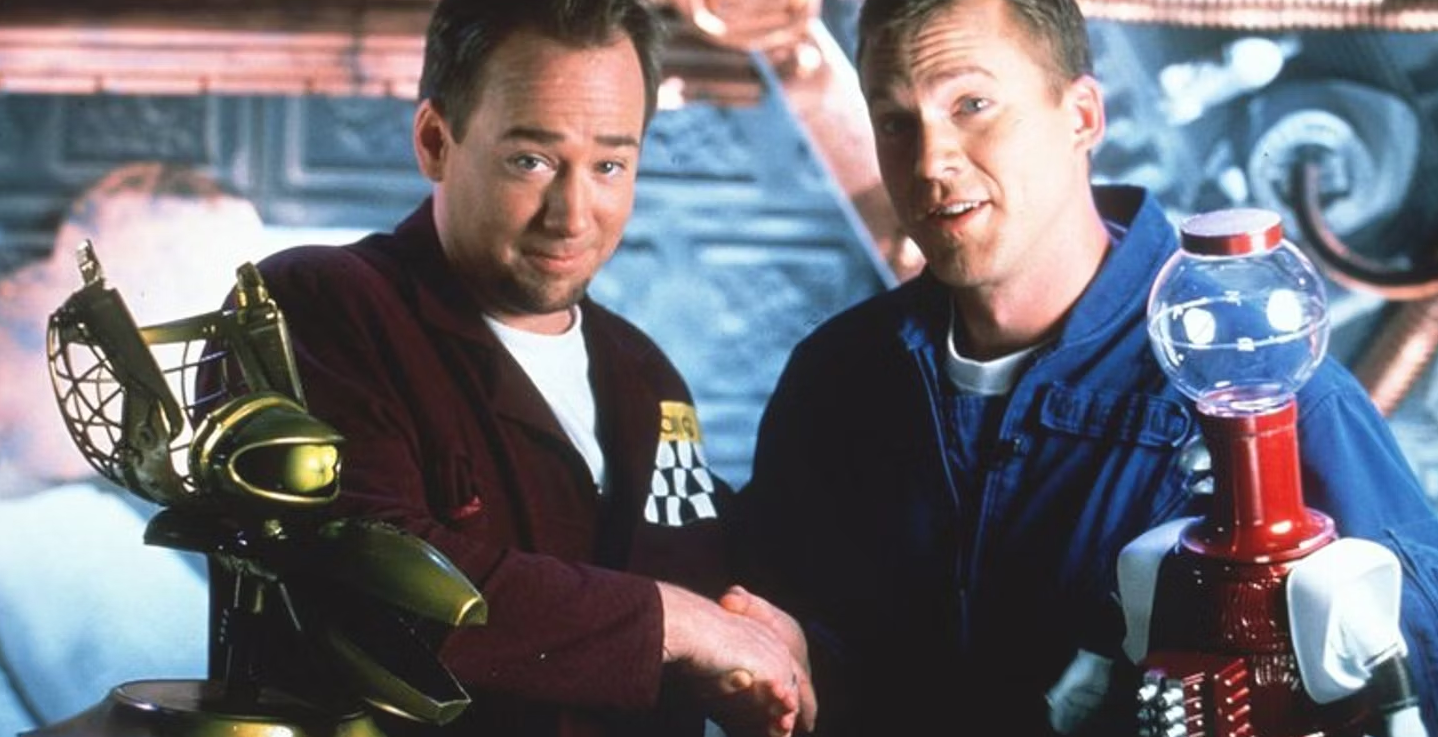
Book Review: Mystery Science Theater 3000- A Cultural History

Mystery Science Theater 3000: A Cultural History is Matt Foy and Christopher Olson’s overview of the show that coined the term ‘riffing’ and launched a strange sub-genre of media made to parody other media. The idea of following people online or on television while they make fun of an old piece of media may no longer be quite the novelty it was when this former titan of comedy was at its peak in the 1990s, but I suspect the authors (as well as myself) feel the format has not yet surpassed its original incarnation. 

MST3K was the creation of prop and occasional stand-up comedian Joel Hodgeson paired with producer Jim Mallon. Coming from a do-it-yourself first run in Minnesota public access television, the show’s premise was as ridiculous as the movies it would become famous for clowning on. A mad scientist (or more accurately over the course of the show, a series of mad scientists) imprisons a hapless janitor in an orbiting satellite and forces him to watch bad movies in order to research his deteriorating brain. To help him get through this trial, Joel builds sentient robots to serve as his compatriots in trashing some of the worst films ever made. Oh whatever, the show’s intro explains the whole thing in under a minute anyway.

Foy and Olson’s book does two things concurrently in its narrative: First, it narrates a straightforward history of the program from local Minnesota, to Comedy Central, to Sci-Fi Channel, to long hiatus and internet spin off projects, then a two season run in Netflix 20 years later and its return to independent creator control with today’s Gizmoplex. As it does this, the text singles out specific episodes of particular relevance to the show and its growing mythos (the show would come to riff itself too, drawing on jokes that referenced previous episodes more as time went on). Additionally, the book also intersperses commentary on the cultural effect of the show as it evolved and by midwifing the riffing genre which is placed between these historical sections. The fact that these two different sections are not separated from each other and are melded together within chapters dedicated to specific time frames is an odd organizational choice. While it takes some getting used to, it soon comes to make sense as the legacy and nature of the show is analyzed in time with its past evolution as a program.

A straightforward history of the program was needed, as most other books on this topic seem to be anthology series that primarily look at the cultural dimensions. Here, Foy and Olson have delivered something valuable. But their own cultural analysis is also  worth reading on its own as well. Defining riffing as not just an audience interacting with media, but rather a triangulation of found media, intermediary comedy, and an audience, the book makes the case that the art form popularized by the show becomes intrinsically interactive in a way few things are. And, in one of the most insightful passages, the riff of a film becomes a subversion of not just the media itself, but how media is to be consumed in general:

‘MST3K demonstrates that movie riffing empowers riffers to reject or modify a film’s constructed binaries of good and evil. Villains can become laughable, just as heroes can become loathsome or ineffective. This deconstruction of heroic mythologies becomes useful when reading problematic films such as Space Mutiny or Mitchell, which glorify mindless aggression and violence as world-saving strategies. MST3K’s rejection of simple yet seductive binaries of good vs evil keeps the film and its characters open to reevaluation and audience self-reflection.’

This is followed up soon after with another passage referencing the cheap quality of many of the mocked movies in this vein:

‘On the surface, riffing on a movie’s gaffes and choices may come across as shallow mockery rather than critique. However, riffing on botched elements of a text’s craft should not be dismissed as mean-spirited because it fulfills a crucial and underappreciated function in active media consumption by keeping the constructed nature of cinematic storytelling in the foreground. Such riffs reveal that a movie (or whatever if being riffed) is a product crafted by artists and producers with a purpose. Films are generally engineered to immerse viewers into a manufactured universe, one crafted intentionally in the service of art, profit, or both.[…] Isolating and magnifying any element of film- obvious or subtle goofs produced by stress, indifference, or lack of skill- draws the audience’s  attention to a film’s construction invites audiences to question not only how it was made but why.’

This perspective has obvious value outside of cheesy entertainment criticism. We do, after all, live in an era where established narratives have become so complacent and lazy that the wheels fall off of them constantly. A large media edifice exists to castigate anyone who notices these goofs, and in so doing often shows its own hand. This prompts us, the viewers of, say, world affairs, to ask ‘do you know what you are doing?’ and ‘what is this narrative even for?’

But I don’t want to over-intellectualize this too much, even if that is the point of the book and my review of it. The show’s motto is, after all, ‘Remember it’s just a show…I should really just relax.’ So let’s close out with something more personal.

I can’t deny that my own relationship to the show is almost as related to childhood nostalgia as it is to its role in comedy. I first came to the show when I was around 9 or 10 years old, having been told about it by an art teacher, and (thanks to catching re-runs of the original 60s Star Trek) in love with old B-grade sci fi jank. My family did not have cable, and so I saw one year later rebroadcasts of MST on a local public channel based out of Philly, perhaps fitting given the show’s roots (weirdly, I have a distinct memory of every single commercial break of the show running this Dining A La Card spot). 

Naturally, I did not understand most of the jokes being made. It was funny robots making fun of a funny movie. My first episodes were Giant Gila Monster and Teenagers From Outer Space and the flimsy effects and forced acting of those offerings were good enough. The novelty of being in a ‘simulated’ dark theater with people more clever than one’s own friends gave the humor a strangely comforting vibe. Perhaps this was further enhanced by the fact that I tended to watch the show close up with low volume in the dark as its broadcast hours were late and therefore past my bedtime. 

By the time the show went to Sci-Fi Channel I was old enough to watch it whenever I wanted (and had access to cable). This was also, in my opinion, when the show was at its height with Mike Nelson’s new hosting (which I originally viewed as a downgrade but eventually came to see as positive) bringing a cutting edge that really appealed to my tweenage self. Also by this point I had many friends who also enjoyed the show and we often watched it together at sleepovers, being especially fond of Japan-schlock episodes such as Prince of Space where the goofy chicken-man villain warlord could honestly carry the entire thing without the riffing.

Upon hitting some time in high school I just stopped watching. Probably because the show had ceased to exist. I never even came back to it, except as occasional joke references, until the Netflix reboot almost 20 years later inspired me to re-watch some favorites before moving on to the newer episodes. (I do like the newer three seasons, though I feel this guy sums up pretty well why they aren’t quite as good as the 90s run). Coming back to it as an adult actually made the show entirely fresh. No longer just some funny robots mocking funny movies show, I was now getting most of the jokes and commentary too! 

I also re-appraised what my favorite episode is. It is now Mitchell. ‘Enjoy’ my ‘fan art’ of our moist 70s Slob-King.

This made me really appreciate the design philosophy of much of the humor to a much greater level. The creators of the show often said they were proud of how obscure many of their jokes were, knowing few would get them…but that the ones that did would really get them to the point where they would feel it was written for them. This ties into a theme that comes up in MST3K: A Cultural History frequently: something is strengthened by particularity. It is not for everyone. If it was, it would be diluted, ineffective, overly safe. Whedon-Reddit-Marvelized. The authors are right to constantly point out that the rootedness of the show in midwestern culture, regional in-jokes, and keeping its strange characters consistent around certain themes is an enormous strength. It is from a specific place, from a specific kind of person doing a non-typical form of humor, and this is what makes it work in a way that those seeking as large and non-specific an audience as possible can not.

I spent another few years not thinking much about the show until two months ago when I decided on a whim to watch as many of the 90s episodes as I could. Somehow, there were even a few I had never seen before. I had no idea this book was coming out when I began, but found out soon after and thus planned to read it once it dropped.

All of this re-engagement has been running concurrently with my re-reading of many of Thomas Ligotti’s stories. I have spoken at length on Ligotti before, but needless to say I see a hilarious halfway point that I believe I personally occupy between MST’s joyful good natured mockery and Ligotti’s treatment of the universe as built for horrific entropy and nothing else. Imagine that the universe and all its iniquities and miseries is really just the equivalent of a poorly put together B movie. Coleman Francis is a type of Gnostic Archon or mad creator. All of it built out of malice or incompetence or both. And yet out there in the cosmos there reverberates a cackling from the creatures who have found this B-move, and at least are having fun laughing at it- at all of us- and reveling in just how awesomely bad the whole production is.

Because, when you look at things that way, sometimes even the worst the Earth has to offer can be pretty funny. So long as you have a distant enough theater to watch the spectacle from, at least.
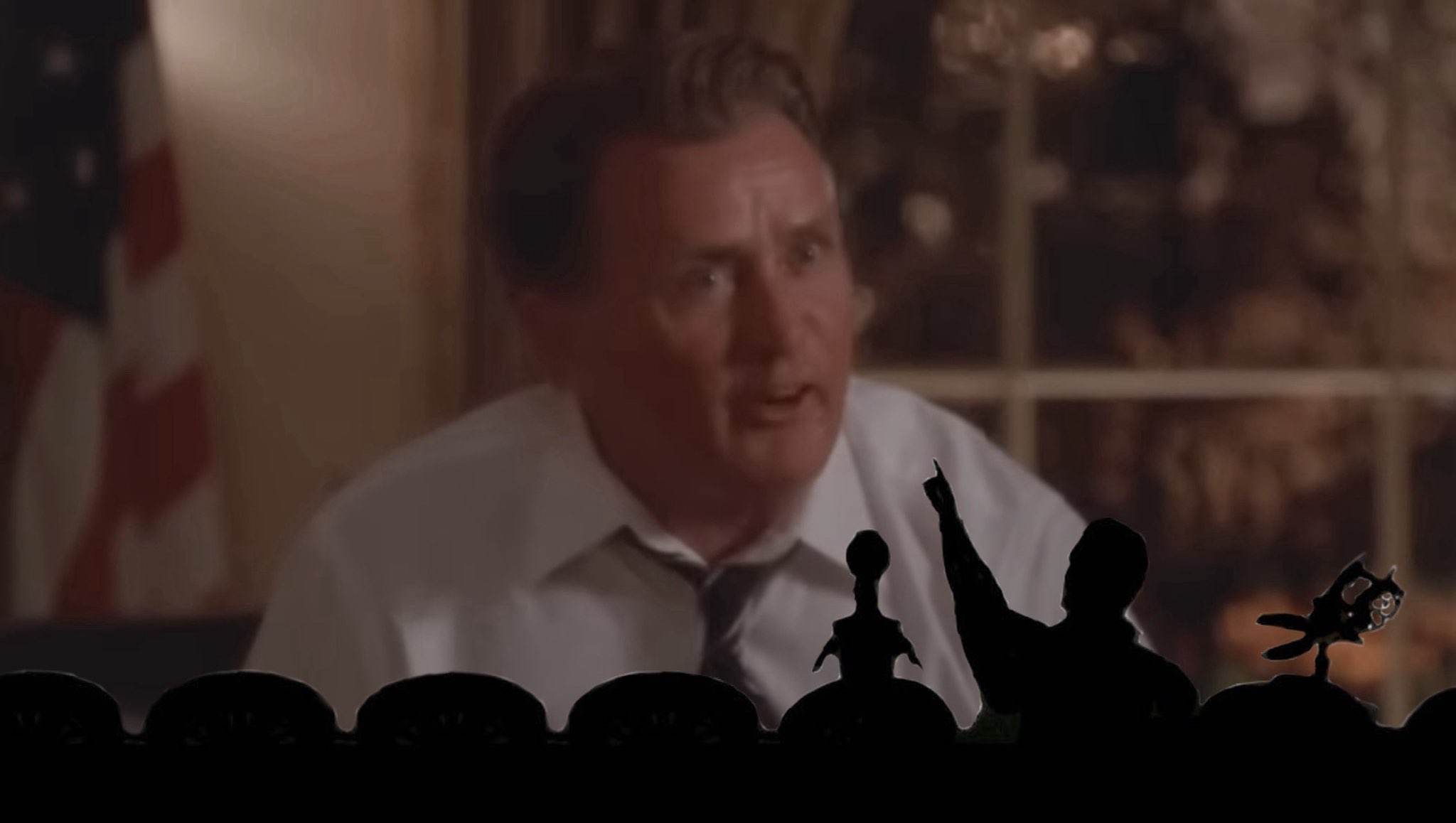
The whole experience also has got me thinking we are long overdue for a series of anti-establishment analysts riffing on The West Wing and Newsroom. Sorkin is owed his ‘due’. Perhaps the set up is that we are imprisoned in a Hungarian bunker, being experimented on by the hammy Mad Scientist Supervillain Seb’astyon Gor’Ka. Played of course by James Adomian

A Selection of My Favorite Short Stories

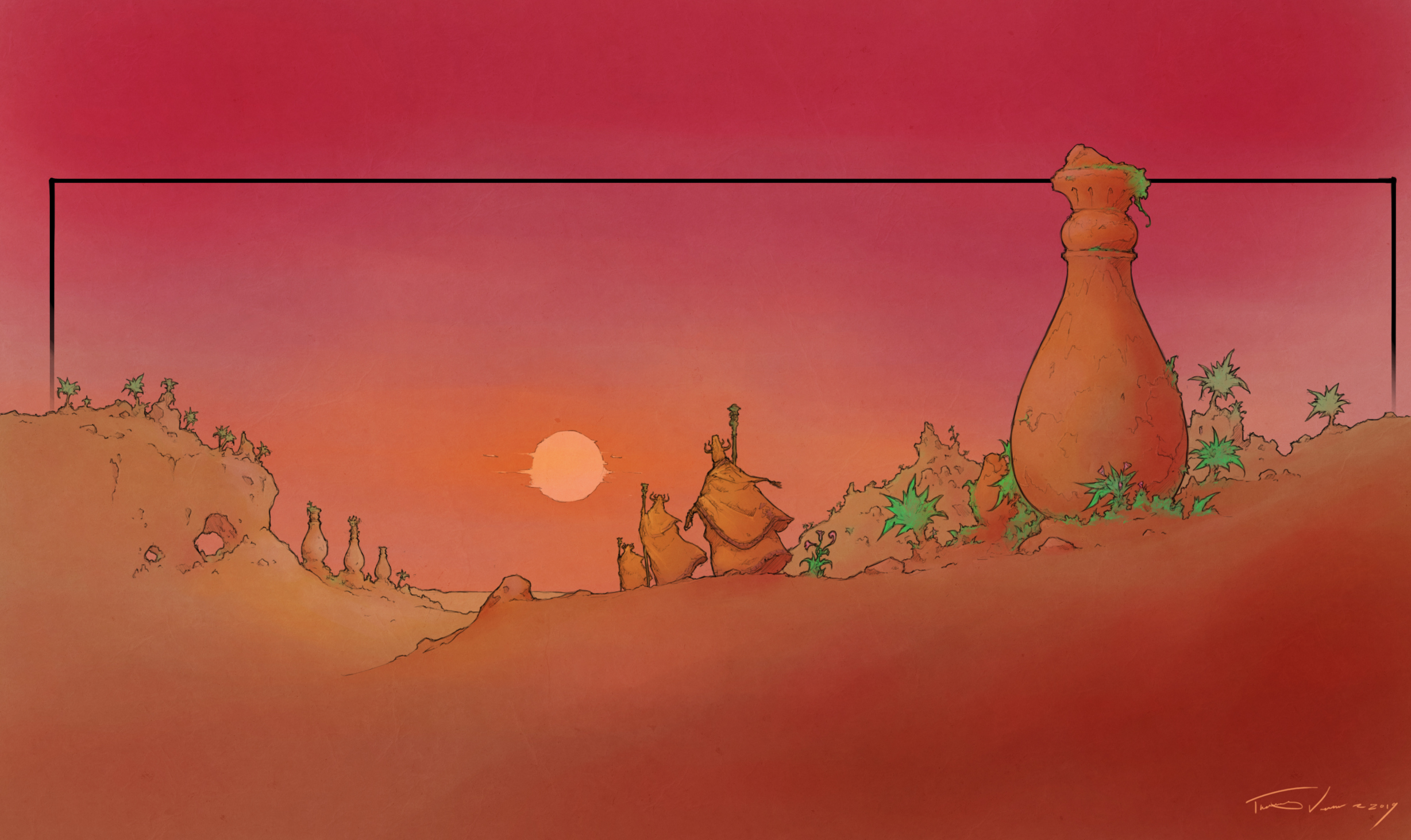
Every year for awhile now a friend of mine sends me an image for my birthday which is usually Clark Ashton Smith themed. I figured one of these would go well here.

I feel like the short story gets too little attention. Proportionally speaking, I read them (and write them) much more than full length novels. In the future, perhaps, I will list some of my favorite novels. But make no mistake, this list is more important to my interests then that of the novels would be. The short story, much like the film (compared to , say, the currently in vogue television season) is a much more self contained creature whose focus tends towards a focused approach. That being said, I do tend to prefer longer rather than shorter short stories. The difference between a novella and a longer short story can be hard to pin down, but personally I would classify it as whether you could read something in 1-2 sittings on average. Therefore, for example, I will not be listing anything from my favorite author Jack Vance (who I have written about here before and will do so again), whose best books are mostly novellas requiring more than 2 sittings to complete. Though ‘Guyal of Sfere’ is his best short work, for what it is worth.

I will not be listing all of my favorite stories. Nor will I be ranking them in a specific order. I have also limited the list to only one story per author, lest a few people (and especially Clark Ashton Smith) dominate this list overmuch. What I like most in short stories is a strong evocative mood whose power is unique to a particular tale, and I will try to get one author per the type of story I most like. Obviously, this being me, this is heavily biased towards horror and sword and sorcery. If I feel so inclined, I may include a ‘runner up’ from the same author of another tale I almost made the entry. There are no (major) spoilers and descriptions are meant to say why the story is good rather than great detail about its contents.

I also will not be including stories that are not as good if read just on their own and thus require other stories for better context (sorry Lean Time in Lankhmar by Fritz Lieber). To be on this list, the story must be fully contained and not need any context outside itself.

Dead Authors

Clark Ashton Smith–The Dark Eidolon:

No point beating around the bush here since his name has already been dropped twice. Also, even though I am not ranking these, there is still such a thing as first among equals.

The Dark Eidolon, which is in the public domain and you can listen to it here, is a masterpiece of dark fantasy and lush vivid imagery. Smith, who is already like if Dionysius wrote tales in a setting part Kentaro Miura and part Baudelaire, goes all out to make a story of supernatural revenge involving mass necromancy and stunning visuals which he himself said was ‘among his best’ and that would have looked great in the then young field of film. As such, I have always imagined it rendered in lush high contrast interwar black and white within my mind when I read it. Overall, it is a feast of mental imagery that calls to mind the paintings of Hieronymus Bosch in prose.

(Runner Up: The Double Shadow)

H. P. Lovecraft–The Shadow Over Innsmouth:

The one extremely famous author on this list, so the one I am inclined to say the least about. Let us just say, all of Lovecraft’s best writing and pathos come together in a now famous tale of alienation, fear of the other, and ultimately, fear and embrace of oneself. People say this tale of exploration of a dying seaside town and the human-fish people hybrids within is an ultimate example of Lovecraft’s (even then) quite legendary racism, but if so it also predicts his evolution in later life towards more nuanced perspectives when he realized he was just as monstrous as everyone else and his true hatred was for humanity in general.

(Runner Up: The Music of Erich Zann)

Robert E. Howard–Black Colossus:

Of course the big three from the original Weird Tales heyday of the 1930s are all here! My personal favorite Conan tale combines many different elements that make the character and his setting so iconic. Conan as an adventurer who becomes a leader, aspects of survival horror, and epic battles where swords and pikes clash on shields. While the first tale I read to really hook me into Howard was (Runner Up:) The Scarlet Citadel, and thus it retains a special place in my heart, Black Colossus remains the ultimate Conan story.

Alice Bradley “Raccoona” Sheldon–The Screwfly Solution:

It is very hard to pull off a horror story that reads like a thriller and retain both the atmosphere and the pacing of watching events unfold in real time. Watching human civilization crumble through mass femicide and placed firmly in the context of zoological experimentation has a cold detached logic of its own, which in this case is expertly paired with the very real personal loss and madness of the observing characters for an impressive roller coasting of building tension.

Karl Edward Wagner–Lynortis Reprise:

KEW is hugely underrated and might just be second only to Howard in the field of low fantasy. While I personally prefer Wagner’s full book length fantasy tales most of the time, the one of his short stories that really stands out to me is Lynortis Reprise. (Runner Up:) Where the Summer Ends covers him for horror and may be a technically better story, but Lynortis is just so damn unique. It uses the nature of Wagner’s recurring immortal protagonist to his best extent, having Kane return to the site of an awful siege he fought long ago to find old veterans there still living as the horror of the combat made them too broken to go anywhere else. These living ghosts serve as a foil for the lingering effects of war long after history moves on, and they revere the brutal and amoral Kane for his role in the battle that made their new cursed life.

Living Authors

John Langan–Mother of Stone:

An astonishingly executed second person story that begins as an academic investigation into the statue of a lost god that gradually evolves into one of the moodiest and actually fear inducing tales to ever exist. The less I say about it the better, but it and its (Runner Up:) ‘The Revel’ from the same collection was what got me back into writing horror after a few years in hiatus and experimenting with new ways of style to do so. The sheer ornate power of Langan’s prose is unmatched and this is is simply his best story.

Laird Barron–The Carrion Gods in Their Heaven:

Well, you know me from past posts. I love coyotes and I love Coyote (singular). Here we have what seems a simple set up of two women on the run from one of their abusive ex’s who end up in the woods. There’s a coyote pelt, some shape shifting, and the best single example of that earthy pagan TerrorWonder (perhaps the author would call this ‘Mysterium Tremendum?) that only Laird Barron does so perfectly. Its a simple and shorter story, but its execution is flawless.

T.E.D. Klein–Nadelman’s God:

If you are like me and of a weird-creative bent, you will love (or possibly hate) this story. What if one of those strange monstrous characters you periodically invent actually came to life, but outside of your control? Nonsense song lyrics used to make an angsty tune in one’s youth ends up becoming a summoning ritual for a mentally ill person who years later happens upon the author’s work. And the ritual succeeds. And garbage made animate to the instructions of forgotten about lyrics now seeks reunion with its erstwhile creator.

(Runner Up: Children of the Kingdom–its like if the movies C.H.U.D. and Summer of Sam were combined in prose and were not only good, but *extremely good*)

Richard Gavin–Mare’s Nest:

Gavin is an underappreciated gem who I suppose would be considered a horror author, but is really more like the dark reflection of pagan wonder on the surface of an algae-shrouded pond in the forest on an overcast day. His ability to be poignant and moving while inspiring wonder in nature and the uncanny is always apparent, but none more so than in his tale of tragedy and renewal for an artist couple.

Honorary Yet Redundant Mention: Thomas Ligotti–The Shadow, The Darkness:

I have written about Ligotti before, particularly about my heretical view that his best work is his novella. However, the one story that stands out among the shorts is the one whose themes are already explored in this prior post here.

There are many, many more short stories I love of course. And yes, many of them are not even in horror! But these were the stand outs to me in this first foray into examining them as a concept.

Thomas Ligotti and Tantric Horror

‘Consciousness has forced into the paradoxical position of striving to be unself-conscious of what we are-hunks of spoiling flesh on disintegrating bones.’ ~Thomas Ligotti

‘The awesome, horrifying renunciation of the aghori sadhu seems to defy the norms of civilized life. He will live only in the cremation ground, cook his food on the fires of the funeral pyre, eat and drink from a hollow skull that he uses as the sadhu’s bowl.’ ~Rajesh Bedi, ‘Sadhus’

I have been a Thomas Ligotti fan for almost a decade now. While not my top favorite author for exploring the macro-tale of humanity, he is always an author I return to, again and again. I do not share his relentless pessimism, but I do share his scorn for optimism. And in his endlessly dour world view I find something intensely useful to meditate on. For indifferentists and ‘true neutrals’ like myself do share a very common world view with the Ligotti’s and Cioran’s of the world, we simply respond differently.

For Ligotti, a previously underground horror writer who writes mostly short fiction and whose fame increased greatly after it was realized by the public that he was a big inspiration of the first season of True Detective, the cut of his work is to write philosophical fiction with a dose of cosmic horror. His style is like that of an early Twentieth Century absurdist mixed with the gothic elements of Poe and the themes of a very modern alienation that come with certain trends in postwar fiction. He tends to ruminate on ruins, dying and diseased towns and cities, and the innate intrinsic horror of existence. Obviously of a depressive character, he, like the philosopher Emil Cioran with whom he is often compared, has a wry and quite funny sense of humor wrapped up among this bleakness. Not everyone sees it…though I do.

I have also seen much ink spilled about the intellectual traditions of pessimism that such figures belong to in the western tradition. But I think they are a far closer approximation to the school of thought I have become most interested in these past couple years, Tantra. I have shared my thoughts on Tantra before in its own right. How a school of thought began as rebellion from Brahmanical pieties and embraced a kind of material baseness as a method to investigate the inter-connectedness of things. While I disagree with the monist trends in most modern practices, I find the exploration of the self and the world through challenging oneself by confronting-by-embracing the darkness of both self and the world to be a remarkably interesting and novel approach, specifically for those who find little use in our present self-censoring eggshell-treading age.

In Tantra, one confronts the fear of death by meditating on a corpse. The fear of lust by engaging in sex to attain full control. The fear of the forbidden by eating what society proscribes. Deities of compassion and wisdom are depicted as terrifying relentless monsters for only such could cut through illusions and shock you into the ruthless nature of reality. Once shocked into reality one is less likely to be shocked by it again. One lives with reality as it is, without fear. Tantra is the opposite of a trigger warning. It challenges you to define your greatest fears and then plunge into them. You are going to think about them after all, so why not face them directly?

Ligotti’s fiction (and his one non-fiction work, ‘Conspiracy Against the Human Race’) does exactly this but in a modern post-industrial context. The charnel ground is no longer representative of our fears of the future, but the dying blighted town or the crumbling ruin is. It is on such subjects that Ligotti likes to focus on. ‘The Red Tower’ is a rumination on a ruined factory and the connections it made throughout the community when it manufactured whatever it was that it made in a pointless process of self-replication. ‘This Degenerate Little Town’ (spoken by the author himself in this clip no less) sees the entropy of the universe reflected in the image of a horrific miserable small town that lies symbolically at the center of everything. Having once visited one of ‘the most dismal towns in Britain’ specifically because it was near a ferry I had to catch and the town was described as such in a guidebook, I have the specific image of the small and suitably named community of John O’ Groats in mind whenever I hear this prose poem. Perhaps the greatest Tantra-adjacent work of Ligotti’s, however, is ‘The Shadow, The Darkness.’ A longer story bordering on novella about a hack artist who suddenly becomes filled with talent and drive after a near death experience forces him to confront his lack of self, humanity, and practically anything save the terrifying Schopenhauerian ‘will’ that drives his body to simply perpetuate its own existence. But even this is not enough for both the artist, and his social clique, and they respond in various ways depending on their psychological disposition.

While Tantra’s end goal is liberation from fear, weakness, and myopia, Ligotti promises no liberation. Even death is not an end of the horror for reasons best summed up in a Cioran quote, ‘It is not worth the bother of killing yourself, since you always kill yourself too late.’ Of course, I see the humor in that quote. I would also say that there is a form of liberation-through-darkness that lurks implicitly in the background of Ligotti’s works. This is most apparent in his one novel, ‘My Work Is Not Yet Done.’ This novel is often not talked about by Ligotti fans, the consensus seeming to be it is more a send up of insufferable co-workers and office culture than part of his serious canon. I could not disagree more.

While ‘My Work Is Not Yet Done’ is a workplace revenge fantasy involving making a dark pact with a cosmic being in order to torment ones workplace foes to death or fates worse than death, it is in some ways the ultimate modern Tantric novel and thus has as much philosophical value as Ligotti’s other works, if with a different tone. Like the works of contemporary horror author Richard Gavin, himself a Tantra-adjacent author in my view, its a story that speaks to people who walk a different path from the sunshine lollipops and rainbows of most of society while also avoiding the mopey ennui of those kinds of manic depressives who, by their aspect, let tell that they are really dejected and scorned optimists at heart. ‘My Work’ shows us that an immense amount of capability can be bestowed on one willing to plunge the depths of horror. The reward is still basically to die, but to die honestly with no illusions about what oneself is and what the world at large is as well. Ligotti’s (and Gavin’s) works are for those who walk a different path and are not enlightened nor empowered by the things we are taught are supposed to bring joy to our lives. The band Garbage had a catchier way of putting it, I suppose.

The Tantric approach is an attitude, one befitting those of trickster like disposition I might even say. It need not be followed like the counter-establishment religion of a very specific time and place that gave rise to it to be worthy to us today. Our cremation grounds are rotting towns and cities and our holy men are horror authors. Our world can be thoroughly material and yet still one of immense and awesome horrors. But rather than the Lovecraft protagonist who shrinks from exposure a world where humans are not at the top of the food chain, we embrace the shattering of our illusions because, as Ligotti himself says, ‘We can hide from horror only in the heart of horror.’

Indeed, the Cult of Dionysius back in the classical era arrived to similar conclusions on its own. As Professor E. R. Dobbs wrote about Euripedes’s play ‘The Bacchae’: ‘The moral of The Bacchae is that we ignore at our peril the demand of the human spirit for Dionysiac experience. For those who do not close their minds against it, such experience can be a source of spiritual power and eudaimonia. But those who repress the demand in themselves or refuse its satisfaction to others transform it by their act into a power of disintegration and destruction.’