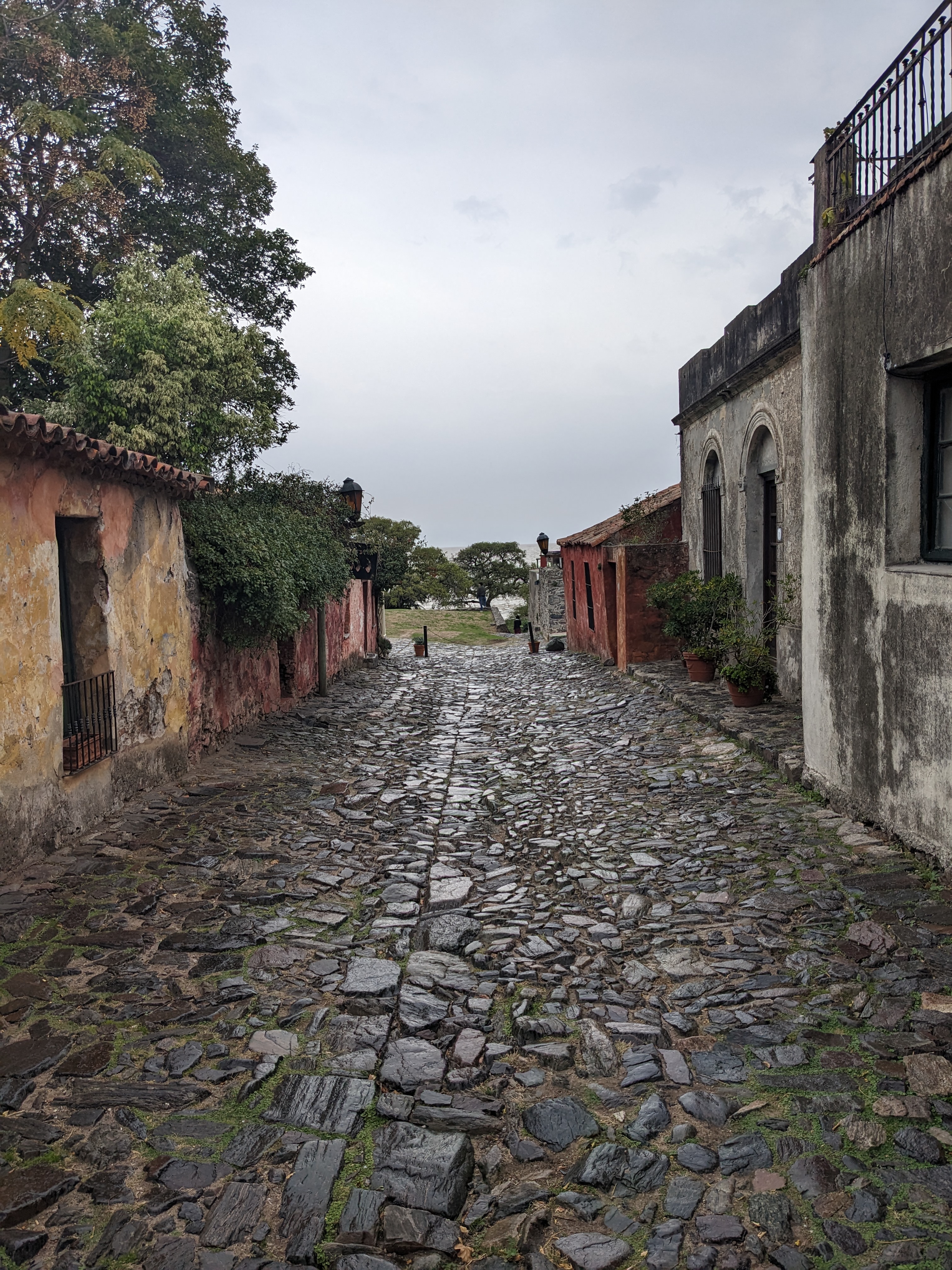
I recently gave this exact lecture at a conference in Buenos Aires organized by Nueva Sociedad, the Fredrich Ebert Foundation, and Torqada Di Telli University. I am going to leave the text here.
The Ukraine War dominates the field of international relations and conflict analysis like no event since perhaps the fall of the Soviet Union. Its effects are truly global despite being extremely limited in the geographic scope of its combat. A combination of NATO’s relentless expansion ever eastward and Russian chauvinism towards its former satellite states and near abroad have plunged the world into once again worrying if a crisis in eastern Europe will drag powers from across the world into an ever spiraling situation outside of anyone’s control.
Here is where I diverge with the many analysts who comment on the danger of geographically fractured geopolitics. This present struggle is, and should remain, a European War as much as possible. Particularly now that it has devolved into a territorial dispute more than its likely original objectives- which was a full scale regime change operation planned in Moscow to be carried out in Kyiv. The worst case scenario feared at the outbreak has subsided, and now the worst case scenario has become further international escalation. Increased regionalization is in fact a good thing, as it presents an ability to keep conflicts local and compartmentalized rather than have them immediately reach the status of global crisis.
I would contend that this war has harmed Russia far more than it will ever help it, even if Russia emerges from the maelstrom with actual territorial gains. Its plans to dominate the European energy market are wounded, its military is shown to be badly in need of major logistical and tactical level performance reform, and many countries known for close relations with Moscow are more suspicious than ever before. Especially Kazakhstan, whose growing oil wealth contrasts with the sword of damocles that hangs over its decision making by a bellicose Moscow and a Russian-majority population in its northern territories. Meanwhile, countries like Turkey and China are making the most of the situation to act as interlocutors between disputing powers. This reflects the increased competitiveness of strategically located middle powers, of which the Eurasian landmass has many. This factor is as important as the rise of China, considering how Japan, Indonesia, India, Iran, Turkey, Germany, and France all exist in a shatterbelt of regional power projection.
But Russia’s blunder has not just adversely affected its own position in a multipolar world. It has also exposed the fragility of an increasingly elderly Postwar Order. Cold comfort on a grinding attritional battlefield perhaps, but a very real faultline between the United States and its European allies on one side and much of the rest of the world on the other has been clearly exposed. Much of this divide stems from an over-reliance on sanctions by Washington, ironically undermining the very global trade the United States claims to be vital in upholding. Despite alienating many potential partners in the Global South, the amount of U.S.-led sanctions imposed on trade in the world consistently doubles with every new Presidential Administration, despite the provable fact that sanctions have a higher failure rate than they do successes. Concerns from abroad at this destabilizing behavior go largely unheard in the halls of DC. This is largely due to the immense imperial hubris of the U.S. and the ideological indoctrination of many of its junior allies who have come to believe such self-comforting ideas as “the end of history” and an eternal march of linear progress towards market economics, democratic norms, and other culturally specific and historically contingent elements falsely marketed as universal to the human experience. Such a world view makes every international crisis a global battle of ideas and thus existential. But to most of the world, the only thing existential about various faraway wars are the damage it does to international stability, and the dangers of being strong-armed into various great power alliance networks.
Allow me to bring these themes to a more local context as befits our present location. I will start with a literary reference.
In Gene Wolfe’s quintet of novellas known as The Book of the New Sun, the majority of the events of the story take place in a far future state known as the Commonwealth. This declining South American-based adoptive monarchy was once a vast interstellar empire, but now is a besieged continent-sized political entity centered around a massive capital city known as Nessus…which is strongly implied to be the future Buenos Aires. This state has its own massive internal problems but generally seems less odious than the sea monsters that lurk in the ocean or the massive northern power known as Ascia, which is invading it.
A fascinating thing about the Ascians is how they speak a language no one can understand. This is because it is entirely based on political slogans and analogies related to their ideological worldview. For example, if you wanted to begin a story with the phrase “Once upon a time,” in Ascian, you would say “In times past, loyalty to the cause of the populace was to be found everywhere. The will of the Group of 17 was the will of everyone.” Being so committed to a utopian vision of how the world works, the Ascians can no longer communicate with anyone outside of their ideological bubble. Warfare seems to be the only form of international relations left to them.
This is what ‘The North Atlantic world’ (as well as some elements of Eurasianist Russia) seem to be increasingly becoming. Obsessed with false analogies over ‘Appeasement’ and ‘The New Cold War’, they have lost all contact with the local, regional, and national interests that still constitute survival for the countries of the Global South. But much like the Commonwealth in Book of the New Sun represents the potential for an alternative divergent from its ideologically maximalist neighbors, so too do parts of the Global South show us a way to handle faraway crises and keep them local.
The Non-Aligned League in the Cold War is an interesting example of trying to opt out of superpower-rivalry dominated politics, but it lacked any kind of geographic continuity and was really more of a statement of intent than something viable. But the future of the southern hemisphere in general looks better for such experiments in stability and peacebuilding than any other region, particularly South America.

While South America is in the Western Hemisphere and thus will always need to factor in (ideally positive) relations with the behemoth known as the United States, it also exists at a safe distance from most of the world’s conflict theaters, and has a unique history of comparative geopolitical stability when it comes to peer-to-peer diplomacy. Sure, events such as the War of the Triple Alliance, The War of the Pacific, and the Chaco War have all occurred here, but compared to any other significant landmass with multiple nations sharing borders, this is positively pacifistic. Considering that the general trend of the future seems to be towards a re-regionalization, and most of the revisionist powers are in Eurasia, this trend of relative international stability in South America is likely to continue in the near future. And perhaps even come into greater self-direction as the U.S. directs more and more of its efforts towards East Asia and Europe. Most competition, struggle, and therefore military effort in the world will be in Eurasia, giving places further out a time to breath and find their own way forward.
Personally, as a citizen of the United States, I look forward to more Western Hemisphere cooperation, which builds off of a mutual desire to keep the stability of the region and prevent outside powers from dividing it. North and South America, taken together, represent an immense supercontinent which is eminently defensible by sea, and which contains three major global chokepoints on maritime activity, the high Arctic, the Tierra del Fuego, and the Panama Canal. It cannot be bypassed, something that cannot even be said for Eurasia. I believe there is a more realistic possibility for mutual security and prosperity here than there ever could be in either Eurasia or Africa. Indeed, this overlooking of the immense geopolitical potential of the Western Hemisphere is a subject I would like to research to a much deeper level in the future. (Anyone also interested in this, please feel free to contact me directly).
However, for obvious historical reasons, countries south of the United States cannot exactly trust its good graces. For now, no matter what future the hemisphere as a whole holds, South America must plan for itself. And the dangers of the present global moment of multipolarity offers opportunities to those far from the core regions of global rivalry, so long as the continent continues the trends begun in the 1990s by pursuing constructive mutual relations with each other. In fact, these should be deepened precisely because remaining reliant on faraway imports, globe-spanning supply chain networks, and the like risks turning a position of distance into one of isolation. But, building upon a legacy of self reliance, I believe that South America, collectively, can continue serving as an example of what geopolitical maturity and regional stability looks like.
The long term prospects I feel bullish about are that South America has many countries with clearly defined maritime interests and large port facilities, enabling participation in what has been a centuries long turn towards oceanic commerce being the most efficient form of economic activity across the globe. This is coupled with productive yet sometimes remote interiors. Most of the problems faced by South America have to do with these often coastal-facing countries having ill-defined borders in geographically challenging frontiers and seeking to manage demarcation of resources and land with neighbors. But with much of the population far from these potential clashing points, there exists less fuel to treat disputes as existential or ideological in nature. This has enabled a level of sober statecraft in diplomacy to take root that has prevented a major war from breaking out here for a much longer time here than happens elsewhere. Should South American governments continue the trend of pursuing regional cooperation outside of alien and globally-maximizing alliances, it is they, and not the ‘North Atlantic,’ Beijing, or Moscow that will serve as the most instructive example of responsible statecraft for smaller powers in the near future.
In his book ‘Imagined Communities’, Benedict Anderson postulates that despite most historians ignoring the trend, it was the wars of liberation in the Americas, and in particular in South America, that really invented the modern concept of a nation-state as we know it today. Not founded so much on unified ideology or romantic ethno-centrism as the common Eurocentric narrative goes, this first modern nationalism was a result of newspaper print runs and collective arrangements being limited by often forbidding geography, and people realizing that their experiences had diverged from that of the sprawling empires that they were birthed from and their inevitable global wars.
As the various revisionist regional powers gear up for a new round of competition, and the previously hegemonic United States struggles to adapt to multipolarity, it is precisely this confluence of localism and stable regionalism that will come to delineate the more successful regions from the ones consumed by struggle. As too much dependence on the far abroad is replaced by more regional and secure connections less likely to be disrupted by a cascade of distant wars, other parts of the world might take note in turn, reducing the ability for regional wars to go global and enabling more nations to choose their battles judiciously, away from the requests to partake in economic or even military crusades far away from their interests.
If I may end with a quote from Argentina’s most famous founding father, Jose de San Martin, ‘You will be what you must be, or else will be nothing.’
Thank You.
 The Trickster's Guide to Geopolitics