Middle Powers, Small States, and Neutrality in a Multi-Polar World

Garni Temple, for the cult of Mithra, built by Tiridates I in the 1rst Century CE. During this period Armenia was a mostly neutral buffer state precariously balanced between Rome and Parthia. The royal family came from the Parthian Dynasty but the succession had to be approved by Rome.

I just came back from a trip to Armenia to present at the Yerevan Dialogues, a conference about the changing nature of foreign policy in a post-unipolar moment. I had prepared these following remarks, which I ended up not using because they overlapped too much with another presenters topic. Rather than force everyone through repeats, I elected to just wing something else instead. But I am going to put my original prepared remarks here anyway so they don’t go to waste.


The general trend of our work at The Institute for Peace and Diplomacy has been to prepare people for the inevitable reality of the return of the multipolar world. This world is a return to normality to over 99% of human history, so why does it require so much effort to conceptualize?

The answer is that it does not- for most people around the world, who have lived in a reality of hard-nosed great power politics continuously. Nearer the imperial core of the North Atlantic, however, those of us who still see this reality remain a minority, however, albeit a growing one.

This creates a disconnect with many weighty states on the world stage living in a nostalgic fever-dream, albeit one they seem to be ever-so-fitfully awakening from. In the meanwhile, we are constantly subjected to narratives about the ‘New Cold War’ or other obsolete reference points to periods of history irrelevant to the current realignment.

One of the largest trends which we at IPD have identified has been the rise of the Middle Powers. In a world where there are basically three global powers of diminished capacity and increasing capability for regionally anchored middle-tier nations, the name of the game is polycentrism. This is the opposite of hegemony and far from anything resembling the Cold War. Stronger countries with regional-but not fully global- ambitions will become the equals of the superpowers within the realm of their own near-abroad. This restricts the sway of the global powers, locking them out of regional domination

To many around the world who tire of American hubris or the globalization of conflict, this sounds like a welcome improvement. It will be- for some. But the smaller states located in less geopolitically stable regions now face possibly heightened dangers. A regionally dominant middle power, or even worse, multiple regionally potent countries vying for dominance over their near abroad, could spell an increase in danger for these smaller countries whose core imperative is to survive before any other concern.

This is especially true in West Asia, a region prone to so much conflict and great power rivalry. What possible path could the more vulnerable countries of this region take in order to maximalize their chances of avoiding conflict with their sovereignty intact? I would argue that while we are far away from it right now, the only direction with any long term feasibility is one of neutrality and nonalignment between regional and global powers alike, where the declining influence of the globals is leveraged against the rising influence of the locals. The superpowers may yet have a constructive role to play in the saga of small states- and in doing so they can retain some credibility in a world of resurgent middle powers.

Balance of Threat for the smaller states

This brings me to the other side of the polycentric world, the one that both accepts the reality of the rise of the Middle Powers while also understanding the security concerns of the smaller states around them. What path forward is there for states who fear the growing influence of their regional powers? One path stands out to me, a neutralist accommodation occupying a guaranteed space between both the regional and the global powers.

Global powers might be consumed with concerns over the Balance of Power, but the smaller a nation’s world profile it is, the less relevant this concern becomes. What matters more to the smaller nations of the world is Balance of Threat. Rather than looking at a state’s overall potential for danger, balance of threat theory dictates that a country will seek to balance its security against other nations whose potential for revisionist behavior directly affects them, regardless of how powerful those nations may or may not be on the world stage. With the declining ability for great powers to directly intervene, smaller states should not plan on being able to rely on alliance style security guarantees from outside nations, however. This poses the question of what kind of policy to pursue.

The global powers may no longer have hegemony over entire regions outside of their neighborhood, but they are still the world’s most important actors. Smaller states now have an opportunity to engage in sovereignty-affirming balancing behavior. The idea should be to become useful business partners in a way that does not threaten the regional powers nor requires the traditional subordination of smaller states to the great powers.

A hypothetical example of how this would work would be as follows:

1. A small state in a region of high competition between regional powers makes clear its intention to seek neutrality between all parties. It does this by simultaneously appealing to the region and the relevant global powers.

2. In order to gain the regional leverage needed to have its position respected, the smaller state prioritizes the global power’s recognition for this new stance. It can do this by appealing to the global power as being a secure and reliable trade, regional resource, or finance hub partner that would be politically oblivious to regional-power-imposed sanctions and hardened against external disruptions. A country that is always open for business is a country that can maintain relationships with distant nations.

3. The smaller country’s military is only for defense, and it disavows joining large global alliance networks. It does, however, maintain a strong enough military to serve as deterrence to conventional attack by revisionist regional powers. By maintaining friendly if unaligned relations with the great powers, it also increases its options to introduce qualitative advantages to its forces. This can be done without formal security arrangements.

4. Should a country be successful in achieving the above deterrence, its odds of having its desired status of achieving neutrality greatly increase. Should this happen, the ability to attract investment from multiple regional powers could further bolster the country’s status and security.

Neutral and Buffer States

Buffer states are often famous for when they fail, such as Belgium in 1914, but there are many success stories too, including Belgium itself for generations before that fateful date. Some other examples exploited natural geography to further reinforce the natural borders already in place. Nepal, between the British and Qing empires and now modern China and India, is an example of this. Austria in the Cold War, with the victorious powers of World War II all agreeing to a mutual military withdrawal, is another. Perhaps the longest and most surprising of such states to modern observers is that of late-nineteenth through mid-twentieth-century Afghanistan. Not wanting to rule the unprofitable and warlike territory itself, the British Raj nevertheless was consumed by the specter of a Russian invasion through the territory during the height of Anglo-Russian rivalry in Central Asia, often referred to as “The Great Game.” After a succession of fruitless wars there, it was agreed to draw the boundaries of Afghanistan in such a way that Russian and British imperial interests would not directly collide with each other. The arrangement would bring a surprising amount of stability for the tribalistic nation, and only collapse when a series of coups and internal upheavals opened the way for a Soviet invasion in 1979 and subsequent Pakistani and U.S. intervention.

Lest it be assumed that a long-term successful stint as a buffer nation can only come about from circumstances of comparative stability, the experience of Uruguay offers one of the more remarkable transformations from instability to long-term success. Contested for centuries between the Portuguese and Spanish empires, the early independence of Uruguay was rocked with trouble. Both Argentina and Brazil attempted to dominate the country, and internal factions fought each other on the domestic front, sometimes in open civil war. These contests even helped spark South America’s deadliest war, the War of the Triple Alliance, which further seemed to relegate the region’s smaller countries to domination by their larger neighbors. And yet it was the cost of that war, coupled with the desire to maintain some kind of balance in the region, that ensured Uruguay would be able to harness its natural agrarian bounty and access to ports in order to become one of the most developed and, eventually, peaceful Latin American countries. When Brazil and Argentina could both openly admit that they feared the space between them being dominated by the other, it became possible for them to mutually agree that neither would absorb the country into its security arrangements.

The Two Big Boys of Western Asia

Now let’s look a bit closer in space to where we presently occupy, West Asia. Ever since the fall of the Achaemenid Persian Empire and the subsequent collapse of the Alexandrian and Seleucid Empires that toppled it, the region’s history has been dominated by perpetual great power rivalry from a state based in Anatolia and a state based in the Iranian plateau. Rome and Parthia, Rome and Sassanids, Rome and the Caliphate. The subdivision of the Seljuks of Rum with the rest of their empire, the Ak Qoyunlu and Qara Qoyunlu Empires, Ottomans vs Timurids, Safavids, and Nader Shah. And today, Turkey and Iran.

Then a third player entered the game. The political falling out of the Golden Horde with the Ilkhanate in the late 13th Century in a battle over grazing lands in modern day Azerbaijan was a precursor to Russia’s entry into regions south of its homeland. It would eventually be this new player, starting in the 18th Century and culminating in the global power projection of the Soviet Union, that would turn a two player game into a three player one. For a time, Russia was by far the biggest player of all of these, but what we are seeing now is a proportional reversion back to the traditional Anatolian and Iranian regional powerhouses- just with the addition of Russia. Moscow as a global power, Ankara and Tehran as growing regional powers.

For now, the dynamic is that Turkey is allied to the NATO bloc and Iran is allied to Russia. This seems to replicate the traditional Cold War alliance structure that I spoke of as obsolete before…but we are in a time of rapid transition. Russia and Iran share mutual enemies, but not many constructive interests outside of Syria and some defense cooperation. Russia still has many dealings with Israel and across the Gulf region. Turkey, meanwhile, has taken the most independent of NATO course possible in regard to both Ukraine and the Red Sea, positioning itself as a pivot power that has the protection of the North Atlantic alliance while also acting blatantly in its own interests.

There is thus no inevitability to smaller nations being perpetually subordinated in this fluid situation, but I do think there are a few different factors at play today that could bode well for attempts to move in a neutralist direction. Colonialism is out these days, and not primarily because it is ‘wrong from a moral perspective’ but rather because it no longer pays. An intractable occupation of a people with their own culture and loyalties is expensive and inefficient. Trade can be a much better and cheaper method of achieving similar goals. Most importantly, great power allies can no longer trust the subservience of their regional power partnerships, and so need to diversify their investments. Smaller countries provide this failsafe.

Regional and great powers alike fear more relative loss to other powers, rather than the autonomy of smaller states. A small state, using the Westphalian system of sovereignty that we have decided to conduct most international relations within the present is much better at keeping foreign domination at bay so long as it can balance the regional powers enough that all except the neutral country as a buffer and reliable nonpartisan meeting point. Due to the variety of deeply held territorial disputes and grievances in this region, especially those held between smaller neighbors, the odds of being sucked into a regional power alliance network are high. But all this just means to me that if there is any region that needs to explore small state neutrality and the potential windfall it can offer, it is here. If it can work in this region, it can work anywhere.

The danger I see here is not that the smaller countries won’t see this opportunity, I am sure most do. Nor is it even so much the inevitability of power politics between Ankara and Tehran over places like Lebanon, Syria, and other parts of their near-abroad. No, what I see as the first problem comes from my side of the ocean- the inability of Washington DC and perhaps also Moscow to recognize that neutral buffer states are in its own interests. Failed attempts to enact regime change in Syria and Libya have greatly destabilized the region, while the flexible nonalignment of many members of the Gulf Cooperation Council show the first stirrings of moving away from global binaries (and perhaps global oil price stabilization). Should the opportunity ever arise for Lebanon to become a fully sovereign and neutral state, it would be better for everyone save perhaps Israel if it did so. Iranian and Russian influence over countries like Syria and Iraq has only grown due to the aggressive and Manichean nature of US policy towards those countries. Meanwhile, false narratives of ‘the west’ vs the rest, or ‘axis of authoritarianism’ prevent North Atlantic policymakers from recognizing that rather than supporting maximization of their own influence in each and ever country, they should be working towards helping countries opt out of alliance networks entirely, creating a far more stable web of non-aligned nations whose business is open to all and whose sovereignty is open to none.

The interesting thing is that China seems to get this on a level the other world powers do not. There is no political engineering there so far, only a desire to do business. As of this moment, they have the advantage in courting the smaller states. They would be wise to keep up this approach, as it is the sober statecraft of the polycentric future.

The middle powers, likewise, must recognize that they are in a bidding war, and will be looked at more favorably by their neighbors if they can reign in the revisionism towards smaller countries. The first middle power to offer a more benevolent offer to its near abroad is the one who receives more trade opportunities and constructive engagement in turn.

So we have two dynamics here: the middle power who can get along with smaller countries makes more friends at home, and the great power who in turn can tolerate the rise of the middle power prevents the unchecked growth of other rival great powers abroad. This is a model for potential future stability, and it could start in regions where the smaller countries are looking for opportunities in a dangerous multipolar world. While distant from today’s immediate reality, it also represents a possibility for greater regional stability in West Asia.

A ‘Progressive Foreign Policy’ is Nostalgia for a Bygone Era

Unipolarity — The world being primarily beholden to the whims of a singular power, is long since over. The question now seems to be how the last holdouts against recognizing the obvious fact of multipolarity in the D.C. political establishment are coping. 

In a recent Foreign Affairs piece by Megan A. Stewart, Jonathan B. Petkun, and Mara R. Revkin, we are offered one potential vision of what a progressive foreign policy vision for the future might look like. Someone who was a former Bernie Sanders supporter with past ties to the progressive movement, but who is also firmly in the realism and restraint camp, like I am, can read this piece with interest but in doing so detect major points of objection with the authors. Namely, that their thesis presupposes American domestic priorities can be successfully evangelized abroad, that multipolarity will allow this values-based posture without backlash, and assuming the progressivism of today is a radical break with the unipolar hubris of yesteryear.

The primary purpose of the “The Progressive Case for American Power: Retrenchment Would Do More Harm Than Good” is to advocate against retrenchment and for a robust grand strategy force posture abroad by the United States, albeit with enough reforms to be in line with progressive values and correct for past excesses. 

To make this case, the authors begin the piece by acknowledging the undeniable reality that over two decades of the War of Terror policies have been a disaster for the United States and the world at large, and that U.S. policy has often been fueled by a chauvinism that can alienate other countries. 

Despite these excesses, however, the authors contend that the backlash to them risks over-corrections, which would include creating dangerous conditions where the United States withdrawing from the world enough to make power vacuums that will be filled by rival countries with hostile values. 

There are correct observations in the piece. For instance, the authors are rightly skeptical of a type of “anti-hegemonism” that fuels a certain section of anti-Americanism on the left which replaces the positive vision of American exceptionalism with a negative one, and in so doing loses sight of all the other morally ambiguous great power actors with agency of their own at large in the world today. They are also correct to imply that a country that completely gutted its investment in defense investments would lose its deterrent power. 

The problem is that these relatively practical observations are then wielded to make a series of contradictory points in favor of an interventionism that performatively breaks with the mistakes of the past while fundamentally repeating unipolarity’s key philosophical and strategic errors.

 To quote: “Proponents of both progressivism and deep engagement want Washington to work with allies through multilateral institutions such as the U.N. But progressives go further, championing significant changes to these institutions, with an eye to making them more equitable rather than necessarily U.S.-led.” Some of these ideas, such as expanding the Security Council to include nations like Brazil and India, have merit, but a diversification of the Council is as likely to lead to a diversification of values as it is a convergence around contemporary North Atlantic progressivism.

The authors themselves correctly state that the U.S. “does not operate in a vacuum”, however. Acknowledging the reality of multipolarity and the growing capability of rival powers means an attempt by Washington to play global culture-maker abroad will inevitably see backlash and possibly even a diplomatic counterattack by its rivals. Russia seems to be attempting already to set it up as a kind of counter-culture warrior to American conceptions of international human rights. It is no longer the 1950s and the United States is no longer half of the world’s economic and industrial output

The idea that such institutions under these conditions will always be a net benefit for progressive causes is an assumption that the U.S. share of global power will always be favorable, as there is no other power with broadly similar values who carries anywhere near as much weight on the world stage. It also assumes that there will never be a time where other powers are innovative and the U.S. is reactionary.

The authors then move on an argument that states that the U.S. should oppose imperialism in general and from revisionist powers in particular, rightly stating that anti-imperialism “is a pillar of leftist and progressive thought.”. Drawing from the past experience of progressive opposition to the old European empires of old, the Foreign Affairs piece interestingly connects these stances to the present. “Retrenchment cannot resolve this tension between, on one hand, opposing war and, on the other, defending egalitarianism and resisting imperialism.” But the tension appears to me to be that of the authors themselves, who conflate resistance to Russian goals in Ukraine with some entirely unrelated conflicts where the invasive power may be the United States itself.

“A similar tension arises in Syria policy. Some progressive Democrats in the House of Representatives, such as Alexandria Ocasio-Cortez and Becca Balint, have joined isolationist Republicans in calling on Washington to bring home the 900 U.S. troops still deployed in Syria. These troops work alongside the Syrian Democratic Forces, a predominantly Kurdish alliance of rebel groups opposed to the regime of Syrian President Bashar al-Assad, helping combat the remnants of the Islamic State, or ISIS. The SDF was a crucial ally in the U.S.-led coalition to defeat ISIS; it governs parts of northeast Syria as a de facto state with a constitution-like charter that reflects a commitment to democracy, human rights, and gender equality.”

By the author’s own logic, any intervention in the Syrian Civil War should be seen as an unmitigated disaster. U.S. support for various rebel movements disproportionately benefited jihadist networks with eliminationist goals towards many minority groups in the country. As Jake Sullivan himself once put it, Al Qaeda is on our side in Syria.” The fact that one of the largest and most expensive arm and equip programs in CIA history ended up with a covert invasion of a sovereign nation which resulted in parts of the country being ruled by Islamist rebels to this day is hardly absolved by the existence of a Kurdish political experiment elsewhere. U.S. forces in the east of the country, meanwhile, are used as target practice by Iranian militias. A bit of realism here would go a long way, with the understanding that as a land-locked faction surrounded by larger and inevitably hostile societies, the Kurds would at best represent a left- equivalent to the U.S.-Israeli security relationship. To keep such a deployment would be an unsustainable and perpetual security commitment that would poison U.S. relations throughout the region and eventually invite the possibility for another embarrassing failure.

To bolster this focus on long discredited Samantha Power-style humanitarianism, the authors list other past interventions that they believe the foreign policy could have made better through intervention. “There have also been countless humanitarian crises, such as Rwanda in 1994, in Srebrenica in 1995, and in Sri Lanka in 2009, in which the United States failed to intervene- and where even a modest military intervention would likely have reduced suffering without exacerbating violence.” These examples are interesting, as both Rwanda and Sri Lanka are far more peaceful and stable today than they were at the times of these proposed interventions, and in the case of Bosnia, foreign involvement in the conflict did eventually happen and seems to have frozen it into a perpetual tinderbox that could reignite at any time. Just as strong a case could be made that intervention has a negative consequence on such civil wars as letting them play out. It is at best a mixed record.

There is an economic element to critique with the argument as well. The authors state that “Retrenchment from global markets, such as withdrawing from trade agreements or international economic institutions, can likewise create vacuums for bad actors to exploit.” The concern by many progressives here is not simply that TPP offered few protections for domestic labor and would be a giveaway to massive corporations (though it was that, too), but that such trade deals themselves often disadvantage smaller nations and leave them more vulnerable to multinational corporations. Smaller nations require economic sovereignty as much as territorial sovereignty in order to best secure self-governance. Once again, the progressive bona-fides of multinational institutions cannot be assumed to be perpetual, and if progressives seek to differentiate themselves from their more centrist rivals, they must keep in mind this danger.

Additionally, progressive spending priorities innately clash with the inevitably ballooning defense budget under an interventionist agenda. Both a desire to see greater social spending at home combined with the necessary funds to defend the commitments proposed by the authors would likely be an unsustainable debt burden in the long run.

Historically, nations do not develop along a linear path. A variety of governing arrangements and development models pepper the record, and the assumptions of liberal interventionists, ironically, often end up replicating the very Victorian empires the authors rightly condemn. The British imperialists saw themselves as a force of progress and civilization, uplifting all of mankind with a universal model. They left us with a disproportionate share of the world’s intractable conflict zones as their legacy. The mainstream position in the foreign policy community today, be it left, right, or center, seems to be to advocate for the United States to be the unintentional successor to this values-centric world view, now wearing the cloak of liberation. But only a sober calculation of interest can suffice in a dangerous and polycentric world where the rightness of one’s cause is subjective, and power is split between nations with divergent interests and experiences.

Progressives have an unfortunate tendency to ignore that many causes once viewed as progressive in the past either were rejected upon further scrutiny or merged with other worldviews to create unrecognizable coalitions which would come to be thought of as divergent from their original intentions. This would almost certainly be the fate of a ‘progressive foreign policy’ under present day conditions. The rhetoric of international liberation would inevitably become assimilated onto similar policies– such as the Iraq and Libya wars– that the authors oppose. Policymakers living today are no more the protagonists of history than any other group of the past, and so must be aware of the dangerous waters their ideological predecessors have often entered.

Using one’s domestic political views as a framework for a foreign policy grand strategy, be those values progressive or anything else, always risks running up against the fact that there is no international sovereign to appeal to like there is in domestic politics. Multipolar systems are not just divisions of power blocs, they are also divisions for a multiplicity of values and systems to which claims to universal morality can no longer apply. Projects of world transformation are the luxuries of hegemony and the faster these schemes are dropped the easier it will become to increase the efficacy of diplomacy and retain resources for causes where they are well and truly needed. If progressives become the champion of an interventionist garrison state they will find it more difficult to practice a beneficial civil society at home and seek a modus vivendi with other powers abroad.

The ‘Liberal Media’ is Not Ready for a Multipolar World

Tucker Carlson’s recent interview with Vladimir Putin has touched off a firestorm of criticism in the Anglo-American press. An interesting turn of events considering that the United States and its allies are not officially at war with Russia. It was once the case that journalists would have jumped at the chance to interview the leader of a rival state, but now it seems to break message unity with the establishment on foreign policy is to commit an act of unofficial treason. Never mind that the interview is hardly being seen as an undisputed success in Russia. It is worth examining why this circling of the wagons has become the case.

The establishment press is majority liberal. Not necessarily in the sense that it is used in U.S. partisan domestic discourse, but in the philosophical sense. It is primarily made up of people who believe that an individual making choices in a marketplace of ideas and goods is the core unit of society. This usually comes with a set of assumptions- that history is teleological and linear with clear-cut right and wrong sides, and that economic development will cause political and economic convergence between different societies. Such a world view leads to an attitude which is akin to that of the missionary: If liberalism is a universal good, it must be expanded by any means

It is in this sense that much of the North Atlantic’s foreign policy focused press is also liberal. Regardless of if the author or publication is left, center, or right in official inclination when it comes to domestic issues. There is a kind of monoculture based around seeing the U.S.-led alliance network as ‘values based’ forces of light, against a nefariously defined ‘authoritarian’ alliance of darkness.

The multipolar world we are entering, however, is not an abstract choice by policymakers. It is an inevitability. The existence of a roughly three decade long interregnum of an unchallenged United States being able to imprint itself on as many parts of the globe as possible is coming to an end. Not because anyone lost their moxy or gumption, but because there are more countries, great and middle powers alike, that are much stronger now than before. The United States in the 1950s had almost half of the world’s industrial and economic power, today it is roughly a quarter. Its power is real and still unsurpassed, but the proportions vis-a-vis the globe have shifted dramatically.

The double standards between the rhetoric and practice of the “Pax Americana” have always been there, but recent events coupled with the diminishing ability of Washington to hold itself up as the global gold standard make them all the more glaring. Even the concept of human rights, itself the darling cause of a liberal press, is ultimately dependent on unipolarity in order to have any kind of globally applicable definition. As viable rival power poles continue to multiply in different regions of the world, causes such as these will see a multiplicity of values replace what was once assumed to be convergence. Whether one celebrates, laments, or is indifferent to this state of affairs, to accept this inevitably is to acknowledge the increasingly undeniable. 

But can the liberal-internationalist media foreign policy complex do so? This press culture has grown accustomed to two generations of constant self-validation building off of the fall of the Soviet Union- an event that fades ever more distantly into the past. Long flattered by the expatriates of their own profession (who share similar class backgrounds) who originate from less free countries and who seek better opportunities abroad with affirmations of loyalty to a democratic ‘west’, it is worth asking if this field as a whole is even capable of understanding that some societies may now want to pivot away from, rather than towards, the world view of internationalist liberalism.

Long used to not being challenged by different values or divergent interests, it seems quite possible, even probable, that the liberal press will have to run into the reality that not every foreigners is a poor oppressed drone with an inner American yearning to be liberated from the shell of their circumstances. Regionalism and nationalism are more likely to drive domestic pressures on the foreign policy of many states than the quest for political globalization. When journalists actively pine for a free world guaranteed by liberal hawkishness, they do so from the perspective of their concept of freedom dominating all others. The long-held ability to monopolize the media discussion on other countries by manufacturing conformism on issues related to human rights abroad is rapidly deteriorating in the face of growing distrust from the general public

As U.S. power diminishes in a relativistic sense towards most of the world, will the reporting on foreign affairs be able to psychologically adjust? The question is worth asking because the way in which this reporting is framed can often impact the general public discussion. Even simple adjustments such as taking the old Wikipedia’s policies on scouring ‘weasel words’ (i.e. value-saturated adjectives meant to tilt the reader’s perceptions included in supposedly unbiased reporting) could meet with pushback from journalists citing such small steps as ‘selling out to tyranny’ or ‘endorsing oppression.’ This means that as more regions of the world come into their own concept of statecraft priorities much of the press will actually increase its agitation for sanctions and military operations even as the capacity for the liberal states they are based in to engage in such interventions decreases. Will necessary cordial relationships with countries with different domestic values be too baffling to comprehend for a professional class so tied to a universalist worldview they see international relations as an extension of domestic culture war? Would a breakdown in relations between two liberal states precipitate an existential crisis among the commentariat? Most importantly, would diplomats be constantly hounded for doing their jobs in a sober and prudent fashion by a press that demands purity, leading to opportunistic politicians running against the practitioners of statecraft itself in order to court favorable press coverage?

These factors, if not addressed, pose a very real danger when the majority of the foreign policy press attempts to shape liberal discourse over a world that is unquestionably realist- where divergent interests, values, and capabilities must be taken as they are in an ever-changing and vaguely cyclic world. So the question remains, can a profession that has spent decades giving itself over to the missionary impulse adapt to a world where the hard compromises of diplomacy inevitably reign? And what happens if it does not?

‘Escape From Rome’: A Book Review

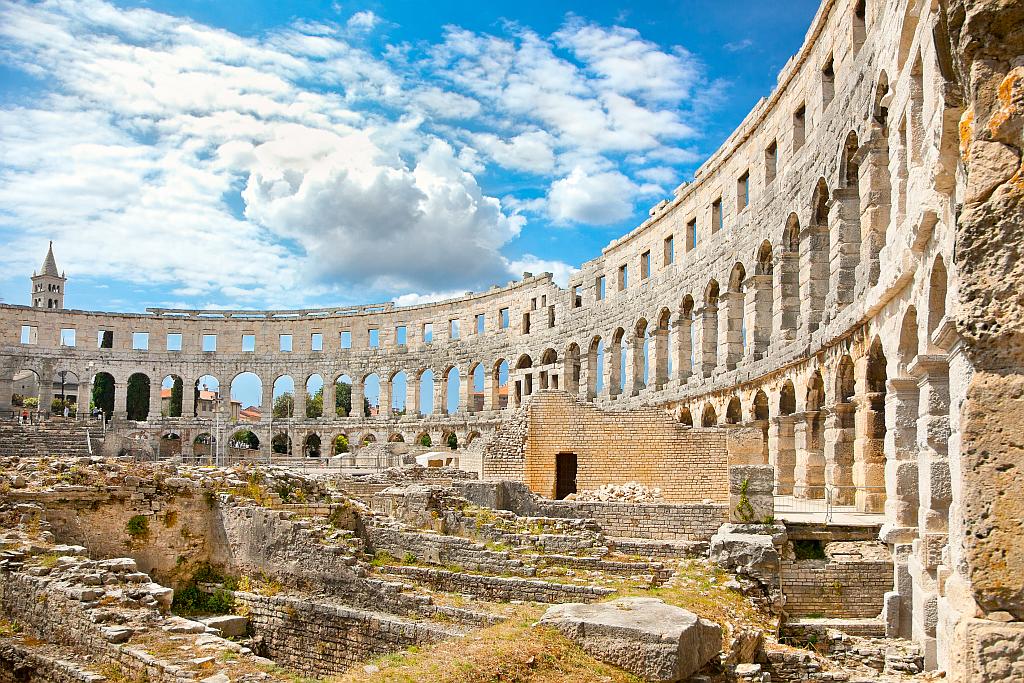
roman ruins

Almost exactly three years ago, I reviewed Walter Scheidel’s book on historic cycles of inequality, ‘The Great Leveler.’ I am pleased to be able to now review the more recent ‘Escape From Rome: The Failure of Empire and the Road to Prosperity’ by the same author.

While my review for the last book of his on here was uniformly positive, this one will be more critical for reasons I will get to later. I will, however, start with the positives. I do insist that it is a very good read and I am glad I read it, personally.

  1. Why ‘Escape From Rome’ is a work of serious scholarship and worth reading:

Despite the title, Scheidel is not primarily focused on Rome itself so much as its absence after it fell. Talking about Rome specifically is restricted to the very first chapters and the epilogue. In these sections, Scheidel makes a very strong case as to why Rome was so successful in a region where hegemonic empires are a rarity. No other state controlled such a large proportion of Europe’s territory and population directly save in ephemeral conquest periods like Napoleonic France or Nazi Germany. By showing that Rome faced no truly dangerous long term challengers to its north or west and a unique mass mobilization system, he makes the case that Rome’s singular commitment to mass armies and to long term expansion, coupled with the durable staying power of its alliance system, was something not seen before in European history and would not be seen again until revolutionary France-a state that would not arise until polycentrism (multiple unfriendly states in one region) was long established as the European normal. Polycentrism prevents one government from quashing innovation and allows dissident thinkers to migrate elsewhere if home turns into a sour environment. This in turn increases the contractual and mercantile orientation of a state, perhaps leading to constitutionalism.

Following this is a case for why, in the long run, polycentrism is preferable to technological and economic advancement. This includes other parts of the world who often saw such periods, though they did not have the persistence that Europe’s polycentrism did. In International Relations speak the term for this is multipolarity, by the way. Geography naturally starts the calculation with the broken terrain of Europe playing a massive role in both facilitating naval power as a utility and reducing the effectiveness of land power.

Scheidel then gives us a comparison of the other regions and how large scale hegemonic empires were far more common an occurrence. Rightly ceding the Western Hemisphere and its enormous divergence from the Eurasian experience to Jared Diamond, he focuses entirely on Eurasia and predominantly on China. In the end, his case can be simplified to ‘Rome may have given Europe a common educated language and religion after its fall, but it was keeping Europe in a hegemonic trap and its full potential as a region could not be unleashed until centuries and centuries of polycentrism established themselves.’ This case is both rigorously made and lucid. It is worth reading and it will make you think about macro historic trends.

2. Questions  I had:

Before getting to my criticisms of Scheidel, I want to pose the questions I have that aren’t critical so much as ‘why is this the way this text was done?’ Namely, Scheidel and I both love historical counter-factuals so long as they are neither sloppy nor over-simplified. They help us question our assumptions and show what moments actually were decisive in the world we have today. Yet Carthaginian victory over Rome is given quite a short shrift despite being more probable than some of the speculations he engages with in the book. While it is obvious that Rome had a massive manpower and logistical advantage in total war over Carthage, it could not have exercised that power outside of Italy without first winning some improbable victories over Carthage at sea. A theater it started out in with far less experience and many losses.

It seems to me that the ultimate counter-factual in discussing Rome’s impact (or lack thereof) on long term Roman history would be Carthage confining Rome to Italy through naval victories and subsequent alliances with Celtic tribes north of the Alps. A predominant Carthage would have played to Europe’s geographic strengths more than Rome. This is not to say that Carthage ever could have replaced Rome at all, a scenario Scheidel rightly dismisses given its societal model, but that by thwarting Roman hegemony and setting up urban mercantile enclaves throughout the coastal areas of Europe, Carthage could have strengthened the Celts in terms of both technology and institutions-not so much through direct policy but gradually by cross-pollination. It becomes plausible to see a medieval Europe of small states in the west but with a Gaulic-Punic-Germanic culture and Hellenistic Greek-Slavic states in the east, with Italy as a weird Latin outlier in-between.

This brings me to another question: Africa outside of the northern coast is barely mentioned at all. I get that its trajectory diverges from that of Eurasia pretty strongly, but nowhere near as strongly as the Americas. The Sahel was connected to the north through trade routes and the east coast strongly integrated into the Indian Ocean network (itself barely covered in the book despite its immense historical economic importance). Why is this? I feel some words on Sub-Saharan Africa are needed to round out the text.

3. My criticisms of Scheidel’s Thesis:

Perhaps unsurprisingly, considering my Central Asia focused historical background, but I didn’t take kindly to Scheidel joining the ranks of the many historians who have effectively dumped on the steppe for retarding the growth of more littoral civilizations. If I thought this thesis was true I would admit it, however. Nomadism is still cool even if its overall impact is being the cool loser guitar playing boyfriend who makes your sister drop out of high school to move to Reno. But its really not. Using Scheidel’s own examples only, in fact, I can prove it is not. How? Because he specifically cites the Song period and the Yuan (Mongolian) dynasty as examples of China-centered governments who were into technological experimentation and pushing the envelope. Indeed, his favorable treatment of Song history is admirable but is missing the vital ingredient of just how much of a multi-state system it is, with both the Liao and Jin successively providing counter-hegemonic multipolarity and the Tangut Xi Xia state clinging on throughout it all for good measure. The Liao barely gets mentioned at all for being a state far smaller in population and economic power but that equaled the Song in military and diplomatic power. Like a western European state in the modern era, it punched far above its weight, largely due to the contractual nature of its dual-system governing structure between nomads and farmers and its ruling elite’s interesting in poaching talent from the Song through brain drain.

If Scheidel thinks the steppe has a retarding influence on state innovation why does he admit that the Yuan was far ahead of the game in future oriented policy than the native Chinese and southern-born Ming Dynasty? He correctly points to the Ming as the true era where China began to fall behind, but seems to ignore that for most of Chinese history it was technologically more advanced the Europe. If vulnerability to steppe predation was such a long term problem than why did it only become a problem when the steppe began losing out to the littoral regions due to the rise of gunpowder and the greater levels of trade being conducted at sea? We can see how the steppe and pastoralist conquerors aided technological development in the African Sahel as well.

And there we have an alternative answer to Scheidel’s: technological change favoring the ocean as the primary trade conduit to the steppe. Before the massive improvement of shipbuilding and navigational techniques, it was the steppe that was the sea. The ultimate realm of trade, exchange, and military competitiveness. Thus, a case could be made that the steppe was once a formative engine of innovation, but due to the material factors of technological change eventually coming to favor ocean-born cargo this went away. Regions with well established naval traditions took the mantle. The nature of maritime exchange also lends itself to bureaucratization, considering the technicalities of running trade through a harbor system. So, most of the institutional uniqueness of European early modern history once again stems from a geographic and technological impetus. And a maritime culture, of course, would be the first to get to the Americas, infect it with Eurasian diseases, and exploit its vast resources-growing the trend to exponential levels.

Another criticism I have is putting the primary poles of comparison between macro-regions into a mostly Europe vs East Asia comparison. This is not to say it doesn’t make sense, those are the two areas with the most durable states and the most surviving records for pre-modern history overall. East Asia belongs in any comparison here. But, South Asia strikes me as a far closer analogue to the European experience. While hegemonic powers were more common in South Asia, they were less common than in East Asia and the proportion of their reach was often limited once you hit the Deccan. Southern Indian states like the maritime Chollas and the militarized Vijayanagar are mentioned by Scheidel but never elaborated on. One could argue that the classical Mauryas, while not lasting as long as Rome did, had a similar foundational impact on India and disseminated en elite language (Sanskrit) and a new religion (Buddhism) widely enough to have a comparable legacy. Furthermore, during the breakup of the closest thing to a post-Maurya hegemony and pre-British hegemony was the Mughal Empire. This empire’s decline caused many of the smaller states to enter into a dedicated arms race quite similar to early modern Europe in the same period. Could the military innovations of the Marathas and the mercantile expansion of the Bengal region have set off something akin to the industrial revolution a bit later in history had not the East India Company got in there first to run roughshod over the place? Its very possible. Ergo, I do not believe that something akin to the modern world could only have come from Europe.

Going further east, into Southeast Asia, Scheidel specifically brings the region up as the only other heavily populated section of Eurasia where balanced and anti-hegemonic state systems were the norm… but then never uses it as a thorough compare/contrast with Europe. I feel like this is a lost opportunity as this region, rather than the more northerly East Asia, is the best center-point for any compare/contrast. It is perhaps here that he could have best made his case that Rome at least gave a common intellectual language to Europe-something lacking in Southeast Asia. Still, as I showed in my Carthage Uber Alles scenario, I am no convinced that a once-off hegemony is necessary. Perhaps if India had really taken off Southeast Asia would have succeeded even more. Think of how the urbanization and renaissance in Northern Italy was the start of Europe’s breakout but it wasn’t these states but rather the North Sea powers of the Netherlands and England who really took it to the next level. I can see something similar going from south and east India to Southeast Asia, especially considering the mercantile capabilities of Indonesia, Malaysia, Thailand, and Vietnam. Burma then gets to play the role of France as a semi-continental and semi-maritime hybrid country whose influence on the globe is somewhat thwarted but whose regional land dominance in the core region is hard to dispute.

My final and most substantial point of criticism builds off these prior points. And that is presentism. Where you to go back in time before the enlightenment or the takeover of the New World and the harnessing of it to Europe, not only would Europe not have been out in front, it would be lagging behind. Not just South and East Asia but the Middle East and potentially parts of western Africa too. No one then would have seen any kind of ‘European Divergence’ if they were somehow able to experience much of the globe. Marco Polo himself would write about how much more advanced the cities he traveled to in Asia (notably then under Mongol rule, ahem) were to most places he had experienced in Europe-and coming from Venice he was arguably from the most advanced city in the region of that era. But sure, if we are going to talk about the modern era from the benefit of hindsight that is all well and good.

But presentist bias does not just apply to the past, it applies to the future. And if Scheidel’s ‘great divergence’ is true than it represents not a permanent reorienting of the planet but rather a specific epoch that already belongs to the past. The last gasp of western Europe being in the drivers seat of world affairs ended in the First World War for everyone save Britain, and Britain was an empire continental in scope if not in shape, its crown jewel being India whose population outlclassed any European state. Britain too would exit the world’s relevance with the crushing losses to its colonial empire in the Second World War, paving the way for the continental empires of the United States and the Soviet Union to cannibalize the fates of many of its old colonies between them. This in turn would be followed by a brief period of American global hegemony which is now fading into something more akin to a high Byzantine period where America probably retains its overall top dog spot but as part of a multipolar system divided between other big powers like China and India. No European state matters outside of Europe anymore save for its economic trade influence and the French informal empire in parts of Africa. Only one of the major powers is a cultural descendant of the age of European expansion and it is not based in Europe and appears to be diverging, rather than merging, with its allies there. The continental empire is back and has been since long before anyone reading this was born. Scheidel does not see this and opts instead for a clean break of premodern to modern with nothing new after that. I think we should instead see continuity from predmodern, modern, on through now and the future. If no other time in history was set aside for being absolutely special, why should this one be?

4. Conclusion:

So, multipolarity/polycentrism is back. But theres nothing at all European about it. In fact, for us to once again see the benefits of polycentrism in technology and civil society, its best to divorce from the era of Europe entirely and embrace a new era of new institutions reflecting new global-scale power poles. This is an era where the continental empire has become maritime-and the world has become small enough that they can no longer be complacent in their own specific regions but must compete, like early modern nation states, on a smaller planet. One doubts this is what Thomas Friedman meant when he said ‘the world is flat’, but the actual result of globalization turns out to be the super-state getting all Westphalian.

That does, however, leave plenty of regions between the major power poles that can make use of the polycentrism that Scheidel rightly praises. You can turn your diplomacy further afield than even before even as a small country now. You can always recruit technocrats and appeal to scientists by offering an alternative to the increasingly invasive surveillance states of America, India, and China. Only time will tell if the resources of smaller states could again outperform big ones, but they can always offer refuge to the dissident and the misfit. If there is one real lesson of European history (after the utility of naval power) it has to be that such states offer immense cultural and economic value to human development.


P.S. Someone tell Scheidel that as a fan of Hellenistic successor kingdoms and not a huge Roman fanboy, I am always grateful for more ammunition for my case that Rome replacing Pontus, Ptolmaic Egypt, and Seleucia was a net negative trend in history. He even at one point mentions that they were more technologically innovative than Rome as a point in his cases favor.

The Coming Multipolarity, or, ‘Damn it Feels Good to be a Horder’

Yes, I meant ‘Horder’ as in Horde and not ‘Hoarder’.

So in my last post I mentioned in passing how freakish unipolarity actually is as a part of talking about how the people in American foreign policy circles who advocate constant interventions, lest they confront a decline, are actually the ones causing said decline. The once and future restoration of multipolarity, whether it comes in a decade or a century-I know not the time scale- is actually a subject that interests me even more than what I wrote about last time. To talk about it, I am going to do something a bit dangerous in IR-if only because there is a sad lack of historical knowledge in many quarters of the discipline-I am going to make a historical analogy to what I think approximates the future of return to multipolarity and great power behavior. I am going to talk about the Golden Horde.

Mongol warrior rearing

If anyone knows the artist please let me know so I can give credit and find more of their work! It is just such a cool image.

Now studying this topic is kind of my bread and butter, I did write a book on the influence of nomadic people in Eurasian geopolitics after all. It is, however, a niche topic and after dealing with it explicitly in graduate school and in book adaptation form you are only going to get the summary here. But I have to say that I think the strategies enacted by nomadic people are an interesting pre-modern analogy to what we might see in the future, albeit in an obviously different form.

Previously on this blog I have talked on multiple occasions about my affinity for Neoclassical Realism and regime survival theory. According to scholars such as Beckwith the primary political arrangement of the Eurasian steppes was a type of enlightened despotism with high levels of mutuality and dependency of the ruler with his in-group elite. Depending on the example, this in-group could be anything from family members, military leaders, adopted foreign administrators, and in some cases all of the above. The Mongol Empire was one of those ‘all of the aboves’. More importantly to the theme we will be examining here though, is how it viewed self/other relations on the international stage. In other words, their approach to International Relations. Now, the Empire was large and diverse, and after a couple of generations it split into several increasingly different kingdoms. Though all of these states shared many attributes we will be looking over, it is ideal for brevity to pick the best successor state for looking at the messy world of multipolar relations. This is the Golden Horde, also known as the Kipchak Khanate and the Ulus of Jochi.

When the Mongols invaded Russia to stay they broke all that Basic History Bro received wisdom of never attacking Russia in winter. In a large land filled with poor-to-nonexistent roads which was often forested or swampy in much of the year and where cities lied almost exclusively upon rivers, this made sense. The cold-adapted Mongols used the frozen rivers as highways to hit city after city, which fell to their rapid mobile horseback armies backed by the new acquisitions of Chinese siege techniques and the new (to Russia) technology of gunpowder explosive. It was a remarkable campaign which further added to the laurels of the general Subotai Bahadur’s already amazing reputation, and ensured that Batu, son of Jochi, would have an impressive inheritance.

But Batu Khan was not just some spoiled scion of the Mongol royal family riding the coattails of their greatest general, but rather a keen politician. This was good, for his domain of the empire began with unique challenges and required more autonomy than was yet normal due to its distance and remoteness to Mongol power bases. A small number of nomads now had to control a territory that did not always favor them as well as greatly larger numbers of subject people. Their advantages were in speed and intelligence, not numbers, and their distance from the Mongolian core (and integration already of many other Turkic people into their system as they moved west) meant their position was different.

Batu, like other Mongols, believed in the efficiency of indirect rule. But he would take it further then the rest of them yet had. He allowed all Russian princes who surrendered to keep their lands, and those who never fought against him in the first place could get elevated positions in his hierarchy. Rather than stretch his forces out or occupy places, he relied on the threat of his rapidly moving horsemen to serve as the stick to the carrot that was being integrated into the booming Mongolian trade network. To top it all off the Mongol Empire gave freedom of religion and tax exempted clergy as well as administered a postal service. It offered an attractive package especially when the alternative was punishment expeditions which could result in enslavement or utter destruction.

The Horde constructed a wall of these buffers, many of them willing, to bolster its frontier with the large and then very powerful Grand Duchy of Lithuania. Reaping the taxes of its subjects without the costs of occupation and even being able to ‘offshore’ some of the fighting was a good deal. An empire made by sudden conquest essentially turned to become a remarkably defensive player. Attacks served only to weaken foes or secure pasturage. To put it in World Systems Theory terms, the core exploited the periphery due to their unique military and trade managing advantages. Only in this case the core were the smaller amounts of ‘less advanced’ (by settled societies’ standards) nomadic people and the periphery were the cities and farmers.

Batu and his descendants spend most of their time on the steppe, they even built what became two of the wealthiest cities in the world for that era off of the Volga. Cities of which little remains due to the later campaigns of Timur, though which many records of travelers speak of their immense multicultural settings and wealth.

So why is this relevant to the future of multi-polarity? Well, for one thing since at least the Second World War if not the rise of steam powered naval vessels, speed and rapid deployment of multi-functional forces has returned to world political and military calculations in ways not seen since the impressive medieval armies of Inner Eurasia. Indeed, it now far surpasses them. Another factor is the rise of transnational trade and resource extraction networks, which pillage on a scale Chinggis Khan could never have dreamed of, but remain vulnerable to geopolitical breakup just as his did. If Mongolian trade networks suffered with the collapse of the empire, then they must have been partly a product of unipolarity. So too are the shipping lanes and grand trade deals of the United States no- doubt temporary artifacts of its own power. Like the Mongols, the United States uses a smallish elite military capable of immense speed of deployment to keep such a system open. Like anyone, past present or future, this system cannot last forever.

In a non-unipolar world all powers must tread lightly with each other but also have the luxury of being quite brutal with smaller powers in their respective zones of influence. Repeated failures and some extremely expensive successes with things like peacekeeping and anti-guerrilla warfare was made most leery of directly occupying places. And yet in a world with several competing power-poles there will be no one else to do the dirty work of securing economic hegemony for powers towards their own periphery. They will have their own markets, their own needs, and wildly divergent internal structures. Rather than seek to impose these structures on each other or even their ‘vassals’ they will simply seek to support their own regimes however they can at home while getting what they can abroad. When two power-poles enter conflict it might be over proxies or even entirely *through* proxies. Either way, the wonders of modern technology enable plausibly deniable warfare to be fought abroad without necessarily increasing war fatigue at home.

All of this means that special forces and elite columns will matter more than mass armies-at least as long as the conflict remains peripheral and doesn’t break out in total war (always a possibility in any multi-state system). But even a big breakdown bringing back conventional war using today’s (or the future’s) technology would be one prioritizing speed and firepower over numbers, as things currently stand anyway. A Subotaiian force deployment, if I can coin an awkward new phrase, adds on to this levels of utilizing organized crime backchannels and cyber warfare and you have yourself a 21st Century recipe for whatever the new equivalent is of ‘Golden Hordeing’ by living large on the steppe with occasional shows of force abroad.

If this does come to pass, and it already seems to be manifesting in the early stages in regards to Russian policy towards Ukraine, Moldova, Georgia and Tajikistan, you might see more of the continuation or exploitation of frozen conflicts so that larger powers can project their influence without directly invading anyone. Although increasingly a specialty of the Kremlin, this is hardly unique to Russia these days. From South Pacific islands and Taiwan between the US and China to France in many parts of western Africa and increasingly other powers there as well, it seems the best way of building a protection network is for technologically or logistically advanced nations to insert themselves as arbiters in perpetual conflict zones. Now imagine that without a stabilizing power. So, the princely states between Lithuania and the Golden Horde in the 13th Century seem suddenly relevant.

I do not know if this arrangement, should it come to pass, will be an overall improvement or a downgrade. I can see certain issues and peoples losing out and others gaining. As typical in the humanities it would most likely be a mixed bag with people’s reactions coming from where they are geographically and in terms of economic station. The good news is that there won’t be a drive to impose a uniform socio-economic vision on everyone else (always a quixotic and ultimately disastrous cause which the Mongols were astute enough to avoid except in rhetoric). But, the bad news is of course that there could be more conflict, and that with looming ecological disaster waiting in the wings such division might finally occur right when we need collective policies the most. Of course, one look at human history shows that when the chips are down people turn against each other when resources are on the line most of the time. So one could always hold out hope that the divergence of geopolitical blocs beyond what we have now might create new creative policy dynamism to confront ecological degradation, leading ultimately to a type of ‘survival of the greenest’ which in the end might help in dealing with the problem.

But if history has any lesson-a statement one should always be dubious to make-it is that history has no linear path like the hard sciences. Politics and philosophy is basically the response to conditions which arise from resources, conflicts and deals struck about them and the physical world we live in. It is adaptation, and like natural selection while all branches might die in the end, some will fair better than others in particular moments of crisis. Whatever those adaptations may be, any breakdown in multipolarity is going to go through a phase which is at least Golden Horde-like for the more powerful countries which may exist at that time.

And even in the unlikely event of one unipolarity giving way directly to another through unexpected catastrophic collapse concurrent with canny rise (say USA to China) this has just delayed the inevitable. Unipolarity, as I said, is a freakish occurrence. And much like a supercontinent, it is a temporary arrangement between cycles of greater division. One day great powers (whoever they may be) will find themselves hoarding smaller countries to create their own little NATOs all over the world. Some arrangements may be nice to their clients, others cruel, most a mix of the two, but in a world so used to only one or two true superpowers it is good to occasionally remind people that you can look at Imperial Rome all you want as a glorified example of past and present analogy, but its the various Hordes who people might be studying in the transitional future. It sounds apocalyptic, but for all we know it might be awesome. Or both, whatever. The tides of history know no morality either way. And I just want to examine as many strategically relevant things in the past and present as possible. And listen to Tengger Cavalry of course.

https://www.youtube.com/watch?v=yu1dYm9rI9g

For further reading on these specific topics I recommend Dilip Hiro’s ‘After Empire: The Birth of a Multipolar World’ and Charles J Halperin’s ‘Russia and the Golden Horde: The Mongol Impact on Medieval Russian History.’