New Atheism was a Christian Form of Unbelief

I have no idea if it is random chance or something in the aether, but recently I have seen many post-mortems on the ‘New Atheist’ movement of the late 2000s and early 2010s. Some of these offer insights. More do not. But one thing I have noticed is that they are as likely to reduce the ideological diversity of atheism just as much as the New Atheists did, replicating many of that movement’s initial problems and ultimately creating a shallow critique.

The problem with New Atheism that has gone unaddressed by so many of the modern commentariat is precisely that it could not escape its Christian roots. Because of this, it was unable to create the intellectual freedom it claimed to be making.

Before getting into this I would first like to explore what the New Atheist movement was and my own interactions with it when it was new. 

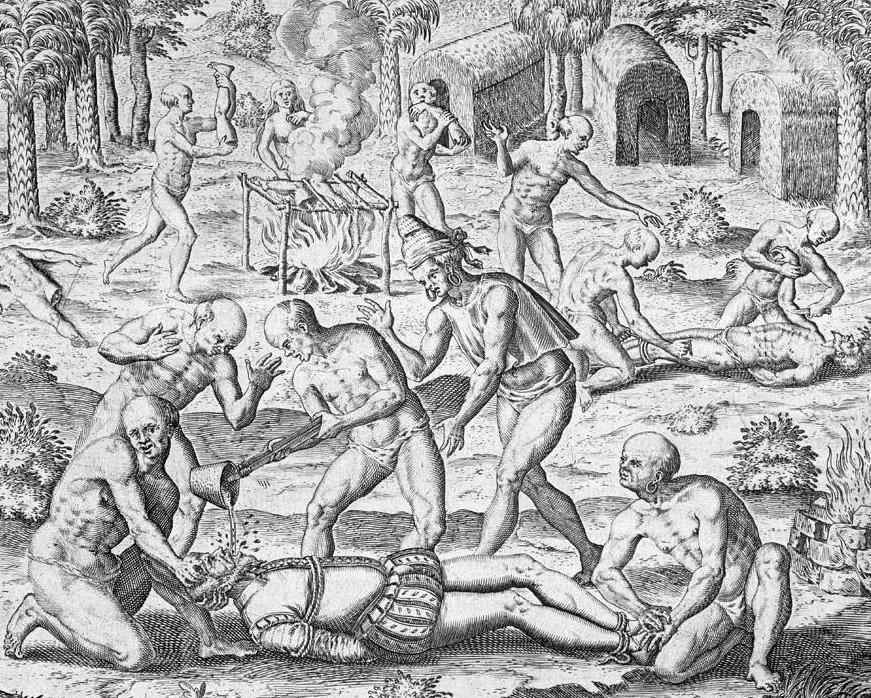
Pope Dawkins declares a crusade.

New Atheism in Context

In hindsight, the 2000s seems to us today like the last gasp of organized religion’s outsized influence on public and political culture. It did not feel this way at the time. The Bush Administration was openly theocratic in its approach to both domestic and foreign policy. And in the brief window of the unipolar world there were no alternatives to moral panic neoliberalism, save global jihad. While Islamic radicals tried to expand their power in the Middle East with what was effectively a terror-for-media-coverage campaign, the United States played into their trap by doubling down into crusader rhetoric. While Bush waged what he claimed was a divinely sanctioned war abroad, he oversaw a homophobic moral panic at home which may have succeeded in securing his re-election. The government was staffed with Liberty ‘University’ graduates as political appointees and U.S. aid policy to Africa was subordinated to an ultimately doomed quest to tie programs to abstinence-only education. Most insulting of all, there was a concerted push by right wing culture warriors to push teaching creation science in public school science class. If anything, this last was the issue that really forced a strong backlash from an intelligentsia that had too eagerly jumped on the establishment bandwagon after the rally-around-the-flag effect of 9/11. 

Enter the Four Horsemen: Daniel Dennett, Sam Harris, Richard Dawkins, and Christopher Hitchens. Though by no means starting as a coordinated effort, the very obvious open void created the space for the publications of these four individuals (and many of their imitators) to make an outsized splash on the cultural milieu by not just opposing evangelism on the defensive, but by stridently attacking it. Religion was not just a tool used by the powerful to deceive the masses, it was the mark of a foolish person. A willing dupe. And someone who stood against good government and a rational conception of civil society. 

Another aspect of this ‘movement’ was that it was not just a rejection of theism, but also a rejection of postmodernism. The postmodern left, which in the pre-Occupy neoliberal era was the unquestioned  left mainstream (arguably it still is, albeit increasingly more identified with center-left professional managerial class types) rejected anything incompatible with a totalizing relativism. Postmodernism could not say that creationism was inferior to science or even wrong, it could only equivocate. Another aspect of this was the left’s (still existing) bizarre fetishization of Islam, a value system that could not be more hostile to the one they profess, but which they allow a leeway of tolerance they would never give to their domestic Christian enemies (likely out of the bizarre belief that it thwarts U.S. foreign policy objectives to be publicly sympathetic to a religion that was once committing the same kind of ideological expansionism and cultural gentrification as the present American empire).* It has always been a funny irony that the world view that upholds relativism as its ultimate ideal is so often championed by people so hostile to nuance and prone to moralistic binary thinking, but I digress as, we shall see, the postmodernists would hardly be alone in this error.

So we had a new movement that dumped on the pieties of the politically correct left while stridently attacking the evangelical political establishment of the era. Both of those things were necessary and welcome reliefs from the trends of the time.  They were a breath of fresh air in a stultifying political era where self-censorship was normal and the avenue for dissident expression was narrow. It was bracing and fun. I confess that I myself once (and thankfully only once) made the conscious choice to be seen reading The God Delusion on the train to test the waters. 

But even early on, and despite all the fun, I had my doubts. The same kind of doubts that let me shed my religious beliefs in middle school were reappearing in my later college years. I owe this early turn against New Atheism to my dedication to the study of premodern history. This was something that kept me grounded and aware that what might seem like an inevitable trend could just be a fad. It also made me deeply skeptical of the core concept of New Atheism: linear progress. I remember upon concluding The God Delusion that it was ultimately a form of cathartic entertainment, but hardly a work of philosophical rigor. It contained many bizarre assumptions about humanity’s proclivity for rationality that were easily dispelled from historical knowledge. I would go on to find many of the works of Harris and Hitchens in a similar vein. 

A Neconservative Handmaiden 

It was actually Hitchens, the most charismatic and entertaining of the four, that would turn me against his ilk first. Hitchens was a die-hard Iraq War supporter, proving the hypothesis of ex-Trotskyists becoming neoconservatives correct in a very public way. His defense of that dismal operation on explicitly democratist grounds utilized many of the same rhetorical tricks and sloppy assumptions that the alliance of Evangelicals and Zionists he was supposedly opposed to made use of. A culturally righteous society had the duty to remake the world in its own image. To bring the others to heel for the crime of holding it back from its unified destiny. Not only was the world filled with cultures who were theorized to be destined to clash according to ideology, one of those cultures (the enlightened North Atlantic) was ultimately correct. And it seemed obvious to this freethinker that faith in the social engineering power of the United States military was a logical corollary to bring about what really was a missionary ideology. Needless to say, even 15 years ago I was always going to pick realism over atheism if forced to choose between them in an artificial binary. 

These were the elect. The City of God against the pagans. Special praise was given to nations that were seen to have ‘defected’ and joined the club of enlightenment-by-conversion. Dawkins loved Israel, seeing it as the Enlightenment’s version of a neo-Outremer, as well as his recent declaring himself to be a ‘Cultural Christian’. Harris dreamed of an apocalyptic Revelation-style war with the Muslim hordes. All of them viewed many East Asian countries as joining the club of ‘civilization’ when in fact they had always had their own civilizations filled with inventiveness and innovation. In fact, the justifications for many modernization projects in the non-western world were often explicitly nationalistic and even anti-western. And even in the Middle East, outside of a few spoiled rich kid failsons and radicalized losers who wanted to die for a cause, the Muslim world never ‘hated us for our freedoms’. They actually hated us because we were interventionists. 

There was also an inexplicable fear of China’s development and growing power on the world stage shared by the New Atheists. Here was an explicitly secular, even atheistic, state that had overseen the largest and most rapid  reduction in overall poverty in human history all while taking an assertive role against global designs promulgated by evangelicals and jihadists alike…yet it was disdained and even feared by the Enlightened Gentlesirs.

Why? Because the real point of New Atheism was to support weaponized liberalism. And to do this the history of atheism would have to be rewritten to be one solely of liberal-humanism.

The Christian-Liberal Teleology

The liberal world view puts undue emphasis on personal and individual reactions to moral stimuli. Ceremony and group-affirmation ranks quite low compared to the singular unit, whose journey is (ideally) constructed to be one of personal growth. There is nothing wrong with this per se, but it is not how any society on Earth has ever worked in practice. Sure, societies can be liberal and this can bring certain benefits, but it is always in addition to something else- a pre-existing collective skeleton which the rest must be built upon. 

Societies, in turn, are regionally divergent adaptive mechanisms meant to increase survival. This is done through resource surplus and strategy. When done well, it has little to say about moral progress. Any group that lives long enough to cross multiple eras will inevitably become unrecognizable to its past self. This pragmatism is actually a sign of success, as pure stasis would almost certainly mean death. In a world where everything is changing and chaos reigns, there is no final moral arbiter, no ‘right side of history’. There is only survival, and, if lucky, a brief period of thriving before an inevitable decline. We are no more entitled to eternity than the dinosaurs were. And they are still far more successful than we are in terms of sheer longevity. 

If one does not believe in an ultimate moral arbiter, as it should be very clear that I do not, then why would one still believe that a secularized society should be guided by a universal mission? Especially a mission related to the spread of a singular type of civil society across the globe? Surely, the freedom to think outside of teleology means that one is liberated from the colonial quest of messianism. Once can cut back their efforts of conversion and focus instead on the real and material benefits of building and exploring. The diversity of the planet’s cultures (including political and ideological cultures) is actually a boon, not a curse. It means the blind spots of one society are not overlooked by the entire species. That the mistakes of one need not be the mistakes of all. If something goes right somewhere it can be reproduced elsewhere, but if something goes wrong it can be stopped before all of humanity is afflicted.

But to the militant liberal, as was the case for their Abrahamic forebears, a society can only be legitimate if it meets a certain credo. The Augustinian dedication to dividing societies into legitimate and illegitimate based on ideological grounds is done to impart a sense of universal mission to civilizations. That this will inevitably lead to hostility and warfare with all who disagree is irrelevant because righteousness will sort out the End Times/ End of History. This religious impulse has been with liberalism since Kant and Rousseau and New Atheism was a (probably unintentional) attempt to bring it back for a younger and more secular crowd.** Its media elevation at least implies neoliberals and their friends in the media understood that the many failures of the Bush Administration were causing the winds to blow against their Reagan Era alliance with political Christianity.

The making of a better human through moral effort merely changed from a spiritual cause sometimes supported by the state to a state cause supported by a new spiritualism. The problem with these arguments is that they rest on the work of Stephen Pinker and others of a similar outlook who effectively rely on the logic of ‘line goes up makes world more gooder.’ 

The problem here is that Pinker’s data is itself highly selective and suspect. Much of the improvement in living standards come from non-liberal societies. Other dollar based metrics fail to account for subsequent rises in living costs in places where average wages grow. Meanwhile, the flagship liberal society, the United States, has been seeing a steady decline in its standard of living for years. If there be progress here it is unconnected to liberal promises or simple linear narratives. Every order so far gets a rise sure, but they all fall too. It is a bizarre act of presentist faith to believe the current one will be any different just because we are the ones experiencing it now.

I believe it is this fear that anything can be undone by irrational circumstances, often beyond anyone’s direct control, that motivates a strident faith in enlightenment. But history is replete with periods where knowledge was lost and living standards declined. Oftentimes, it was true believers seeking to make a better world that played a role in this loss. 

History is not progressive. Nor does it adhere to any unified set of human values. It was New Atheism’s fatal flaw to adopt Christianity’s worst and most Platonic assumptions about how the world works. You can invert the values on topical issues all you like, but the philosophical edifice is still the same rot of morally redemptive protagonist syndrome all the way down.

John Gray’s True Skepticism

Why should disbelief in God presume that humanity can be rational in the first place? After all, humanity felt the need to invent communing with the supernatural to compensate for something. Whether or not this is a vital social glue (and it is to many), it is not a rational behavior. If anything, humanity is the least rational species. A kind of ultra-performative ape which is the only one we know of that must invent elaborate rituals and justifications to get along existing. Something other species do just fine without such pretense. If I had to create a list of words to describe the human experience, ‘rational’ wouldn’t be anywhere on it. It is a nice idea, but an idea it remains. Perhaps open to rare individuals in some scientific and scholarly fields, but never to the whole of the species or a particular civilization.

The philosopher John Gray is himself an atheist, and began to rise in prominence in the 90s. Being one of the rare non-leftist scholars who took a decided anti-neoliberal and anti-end of history tone after the fall of the Soviet Union, he scorned claims of a rational destiny. He was lambasted for (correctly) predicting the eventual collapse of international democratic capitalism as the guiding policy lodestar of the future. He then turned against those who assumed Al Qaeda was a reactionary backlash by pointing out it was in fact one form of a hyper-aggressive modernity. His book, Straw Dogs, was the formative moment in my own journey away from whatever vestigial shreds of liberalism I retained. It was, interestingly enough, recommended to me by someone who challenged me to articulate my own world view. I confessed it was cobbled together from historical knowledge and not a preexisting philosophy. What I proceeded to describe was then responded to with ‘that sounds like John Gray’. Up until that moment I had never heard of him.

Straw Dogs is effectively an anti-enlightenment mood piece whose philosophical similarities draw more from Taoism than any western tradition. Just seeing such a thing in the early 21st Century Anglosphere was a bracing gateway to explore something new. Black Mass, arguably Gray’s best work, traces how religious apocalyptic thinking, especially that of the messianic religions, influences assumptions about the world from many secular ideologies and especially neoconservatism. The Silence of Animals drives home the centrality of irrationality in the human experience and the dangers of forgetting our true biological origins. These books questioned philosophical progressivism without being a knee jerk reactionary. Importantly, they were written to be accessible to a general audience. His most important book for this topic was Seven Types of Atheism. You can read my full review here, but the key thing to keep in mind is that he laments how New Atheism stripped away all of the varieties of preexisting atheism and tried to replace them with a single progressive-liberal vision in the popular imagination. Gray is mostly interested in reminding the world that atheism is a negation, not an affirmative ideology. As such it contains multitudes. Many of those alternatives fly contrary to the claims of New Atheism…and many of these, in turn, are the ones who actually broke more successfully with established religion’s dominant culture. A large proportion of the covered world views are indifferent or even hostile to liberalism. 

Tellingly, many of Gray’s conservative fans, who glowingly reviewed so many of his prior works and who were probably primed for 7 Types seemed to have passed over this book in silence. I believe this is because the book critical of modern atheism was actually the most strident of all Gray’s works when it came to criticizing Christian ethics. Gray’s disdain for messianic teleology was the real fuel of his points on atheism- something the cultural right could not face.

This point should be so obvious as to be trite, but it goes to show how little ‘Freethinkers’ often move away from how they were raised. By definition atheism can never be a unifying project as it is merely the disavowal of a kind of belief. There never was going to be ‘an atheist community’ in the style of the pretentiously named ‘Brights’ or ‘Atheism+’. People who wish to be active in something communal should look at something else as the basis for organization (more on this later).

Besides, if your point is simply to register displeasure with the dominant theology of our times (spiritually or not) the devout are far more bothered by a rejection of their values than they are a rejection of their god. If you disdain Yahweh they assume you are simply mistaken, to be punished later or to come around in an act of redemption. But if you reject the very values associated with their tradition you are proof that their concept of light vs dark, good vs evil, is itself something that can be lived without. Villainous antagonists they can understand. Indifference or opposition to the very idea of moral melodrama? That wasn’t part of the prophecy.***

Where are they now?

The upcoming inauguration of President Incel_Sniper1488 in 2028, formerly Gary Wentler, President of the University of Wisconsin’s (Eau Claire campus) Secular Humanist Club from 2010-2013.

New Atheism’s attempt to become explicitly political in a ‘positive’ sense broke whatever unity it might once have had. The current soy male and legbeard womanchild nerd vs (equally unmanly) mens-rights neckbeard-chud-nerd divide that has poisoned younger Millennial/older Zoomer culture actually began from the (religious) schism forced upon the community by clans like Atheism+. It turned out that without Rick Santorum and the Moral Majority breathing down their neck there was nothing but divides. In other words, New Atheism spawned Gamergate, and Gamergate spawned the first round of the still ongoing post-Boomer culture wars. 

So where are these people now? They have proven just how Christian their form of unbelief was considering the nature of their sectarian split by being divided between Catholics and Protestants. 

In the case of the Catholics this is quite literal. Becoming a reactionary Catholic is the next phase in hipsterdom. The ‘alternative lifestyle’ (which never was anything of the sort) of the now is no longer loafers-with-no-socks, electropop-meets-southern-hip-hop, it is the ‘universal church’. This makes sense when you consider angry nerds clearly need an impersonal structure and sense of mission and belonging that they are often unable to get through the more natural social interactions they struggle with. Considering the incel culture of much of Gen Z, this is probably going to continue for some time before moving on. Kind of like New Atheism and hipsterism. These kinds of people are often urban and very terminally online.

The Protestant branch are the wokes. Though I have made this point many times before, I am hardly the only one who has noticed. Rather than seeking institutional authority, this branch simply seeks personal power by the vector of social media canceling campaigns. In this way they live in a perpetual position of re-enacting the Cromwellian Commonwealth and the Salem Witch Trials, individualism fueled by sanctimony to build the Kingdom of God on a new Earth. Ironically, they are fond of the phrase ‘we are the daughters of the witches you didn’t burn,’ while proving both by their demographics and their attitudes that they are in fact the descendants of the witch burners themselves. These types are more suburban/university campus but are also the most aggressively internet-brained of all demographics around today.

There is, of course, a New Atheism descended center too. These kinds are the Stancil-Yglessiai of the precocious up and coming professional managerial class. They all look the same, sound the same, and reference Pinker constantly. Their priorities are grand narratives of human development, though their cultural impact is nil. I personally suspect they may be a future febrile recruitment ground for strange cults and social movements once their vicarious causes end up going south. 

There are two things these very disparate groups still have in common. One is that they come across as Reddit users (and this is the most damning thing I can say about them), and the other is that they ended up on paths that mirror the Christian upbringing most of them had. As it is, the philosopher Slavoj Zizek, who advocates for a ‘Christian Atheism’, and, unsurprisingly, seems to be undergoing a clash of civilizations/neoconservative rebrand, serves as a living example of what little common threads remain in a once much stronger movement. 

Why, aside from historical knowledge, did John Gray, the speculative realist philosophers, or myself end up so different from these people? It is because we were completely different from Zizek. Almost diametrically opposed, in fact.

Pagan Atheism

I was an atheist long before the rise of New Atheism. I am still one long after its decline. Its impact on my life was that I could be less cautious about my unbelief in public around unvetted company. But this came at the cost of being associated with philosophically shallow cringe in the popular imagination.

Atheism is, as implied before, a negation and not an affirmation. The only thing that can be rooted in it is skepticism. This is a most noble virtue. But it is only one. The point of being free from universal morality (itself an artifact of moralism and Platonic idealism) is to accept that a variety of societies are free to diverge over values without necessarily threatening each other, and that others who share your position on religion may also do the same in divergent directions at the individual level. Therefore, this is not a principle I believe in organizing around unless a shared threat such as theocracy or an attack on the secular state arises. However, if one was to suggest the necessity of non ‘New’ Atheists having a common culture I would recommend this: learn from polytheism

New Atheism was as monotheistic a world view as a non-religion could be. It saw freedom of will under a unified and moral universe as its lodestar. It saw a Pinkerite future for those who could only seize the power to become the new Enlightened Elect and usher in a world free from irrational superstitions. It saw humanity itself as a god.

Why not do something totally different? Why not seize on determinism, fate, and humanity as one aspect of nature among many? Why not recognize the very reality of a world of devouring food chains where mankind may be high but is not the highest? Values clash because there is no overarching moral truth outside of the objective material stage we all must share (and that stage itself is still of vital importance, being nature), and situational context and the ability to wield power will ultimately decide a variety of outcomes along divergent paths. This will be so in the future as it has ever been so in the past. No order lasts very long in the end. An explosion of cultural diversity awaits in the future as it did before. Deep time itself proves that the quest for teleology is a false one. But the quest for ritual, belonging, and to define both what one is and what one is not is eternal. The modern humanists may have lied about the possibility of changing human nature with ideals, but the reality of living in the real world exposes this deception constantly.

I am a proportional rather than absolute thinker. I believe atheism is most likely the correct philosophical position when it comes to the nature of reality. But it’s not exactly fun. By cutting itself off from a cultural context of mythic analogy, terrifying monsters, and powerful heroes it becomes easily infiltrated by halfwits and consumerists.**** It should not be so hostile to religions that don’t require faith or evangelism but rather inspire fortitude and courage. It can ally with religions that don’t seek to homogenize the world or care how many followers they have but rather seek to bring that irrational animal mind inside every human skull to revel in the uncanny of nature and fate.

I may not believe in the literal truth of Susanoo, Coyote, Dionysius, Apedemak, and Qetzacoatl, but in their clashing elemental forces and chaotic struggles I see a far truer reflection of the world as it truly is than in the sterile moralism of Levantine monotheism or the naive euphoria of liberal humanism. The world is ruthless and rudderless and it will sweep away us all, especially those too frail to face the bracing reality of its callous but freeing indifference to human concerns. But in the chaos lies endless creativity and a bracing fatalistic acceptance of the dynamic tension inherent in the natural world. 

I love it so.


*It never occurred to these people that one could oppose regime change wars and sanctions on Middle Eastern countries without having to look like a fool by being sympathetic to such a religion. The fact that I was someone who both protested the Iraq War and took part in Draw Mohammed Day seemed to break many brains when it really shouldn’t have.

**If you ever need a perfect example of both Christianity and liberalism openly merging around cultural supremacism, please explore the literature around Just War Theory. It is a tiresome subject where various types of idealists attempt to give moral justification for chickenhawkery based around ideals rather than interests. In my experience in academia I found that the vast majority of people who do this are people who are both Christian and liberal.

***This is also why Satanism is extremely stupid and cringe. It is the acceptance of Christian cosmology but just with the values inverted. The anti-liberal equivalent to this is probably getting really into Russian Orthodoxy and ‘esoteric’ politics.

****I am reminded of the time Richard Dawkins waged war on children’s fantasy literature, creating a divide with his friend the author Philip Pullman. I met Pullman once when I was a very young child (and his biggest fan), he signed my copy of The Golden Compass with the line ‘to Christopher who asks all the great questions.’

Review of John Gray’s ‘The New Leviathans: Thoughts After Liberalism’

The New Leviathans: Thoughts After Liberalism‘ is the philosopher John Gray’s latest book-length work. As long time readers may be aware, I am a huge fan of his. This was one book I could not wait for the official U.S. release of, and ordered a U.K. copy early so as not to have to wait until November to read it. It helps that it will be used, along with some other of his works, as part of a longer term research project I am just beginning to embark on.

Those who are unfamiliar with much of Gray’s work will find this book bracing, unique, and a welcome antidote to the normal neoliberal consensus/culture war echo chamber of our decaying order where nations pretend to be fighting for the angels of light against the forces of darkness, and mediocre politicians such as Gavin Newsom and Ron DeSantis square up to have debates over who can be the better Not-President.

Those who are familiar with Gray’s work, however, will find little new here. The Ukraine War has given Gray an extreme fascination with historical writers and thinkers in Russian history, which colors most of the central portion of the book. His (correct) disgust at early Soviet attempts to create ‘a new man’ becomes a tad overdone in his list of aphoristic anecdotes, to the expense of the first and closing sections of the book, which, in my opinion, are superior. If you have read Black Mass, Soul of a Marionette, Two Faces of Liberalism, and The Immortalization Commission, however, you will not find wholly new material here. Only new combinations centered loosely around the framing of Thomas Hobbes.

The overall argument is one I have made before myself, while citing Gray and his prior work no less, Hobbes -along with Spinoza- was the true and original liberal (before it began to mutate into a messianic religion starting with Kant and Rousseau and reaching full apotheosis in the present day neoliberal). His Leviathan, for all its flaws, was a useful and practical attempt to escape the delusions of endless sectarian warfare and the social engineering of Puritans by creating a society that could arbitrate between different groups, allowing diversity to exist below the state while retaining outward facing unity.

As society has changed, however, so too has this Hobbesian state edifice-the Leviathan. I myself have written before about its becoming an out of control beast that is no longer restrained by human-tier comprehension. (Considering Gray has a subsection on Lovecraft in this new book, I cannot help but wonder if he has read this blog). Gray wants to focus on how the Chinese social credit Panopticon and the Russian theocratic-mafia edifice are also now rival leviathans to the neoliberal-woke hybrid in the North Atlantic. Not just to let his readers know that the world is currently multipolar and the liberal internationalist experiment has failed, but also to lament the passing of the old secular Leviathan. A Hobbes brought forward in time might recognize Singapore or some of the Latin American states, but would not recognize these three creatures.

For in place of the old has come the Leviathan taken over by the very forces it was meant to control and dissipate. The Leviathan of the missionaries which seeks total control over the private as well as public sphere. The old and perpetually failed project of directed human betterment to bring about the great teleology which is always claimed to be around the corner, yet never arrives. There is no diversity and keeping the peace, no navigating the necessity of a balance of power, only eternal war of The Elect against all who are not Elect. The very thing the Leviathan was meant to prevent is the thing it is becoming. It is mandatory inclusiveness in sectarian war.

Gray once had a bunch of reactionaries who gravitated to his thought. Such people suddenly stopped writing about him favorably once Seven Types of Atheism was released and it became obvious that his true target in attacking humanist pathos was the religion that inspired it. In New Leviathans he reminds us of why this was with his bracing honesty at the intellectual lineage of the dire process he speaks about:

All four of the defining ideas of liberal thought are continuations of Christian monotheism. The primary of the individual is a secular translation of the belief that each human being is created by the deity, which has an authority over them that transcends worldly power. The egalitarian belief that human beings have the same moral status reproduces the that all human beings are equal in the sight of God. Liberal universalism- the belief that generically human attributes are more important than particular cultural identities- reflects the idea that humankind is created in God’s image. The belief that human institutions are indefinitely improvable replicates the theistic faith that history is a moral narrative of sin followed by redemption.
The ancient pre-Christian world accepted that the evils of human life recur in unending cycles. The secular humanist faith in progress is a pseudo-solution to the so-called problem of evil, which arises only with the belief in a benevolent and omnipotent creator-god. […] This Christian message inflamed the millenarian movements of medieval times and the secular revolutionaries of the twentieth century. It underpinned classical liberalism, and inspires hyper-liberals today. In woke movements, victimhood confers moral authority, as it does in Christianity.

This book is a warning. It may not be one needed by those already familiar with Gray, but it is one that more people should heed. Though perhaps I might be more likely to recommend Black Mass or Two Faces of Liberalism above it. Nevertheless, the central thesis holds up. To quote from the conclusion:

The deification of the human animal was alien to Hobbes’ way of thinking as the divination of power. Leviathan was mortal just as every human being was mortal. There is no final deliverance from the state of nature. This is Hobbes’s hidden message, which he never fully accepted himself.
If Leviathan is human artifice, politics is a necessary art. The task of the age is not to bind to the new Leviathans, as was attempted in the late liberal era, but to bring them close to what Hobbes believed they could be- a vessel of peaceful coexistence. In recognizing that peace can be achieved in many types of regime, Hobbes was a truer liberal than those that came after him. The belief that a single form of rule is best for everyone is itself a kind of tyranny.

17th Century Survival Tips for a Hysterical Age

Running themes on this site are historical trickster figures, explorations of books on relevant subject matters in detail, and past parallels to present challenges. Here, I will bring you all three in addition to some original ‘artwork’ from myself at the end.

Despite being primarily interested in other eras and parts of the world, it should be obvious to regular readers that I have developed a recent fixation on 17th Century Europe and in particular Britain. This is not because it conflates with most of my actual historical interests, as it mostly does not, but because it is the time that is so culturally similar to our own and thus demands closer examination. Those with little to no historical knowledge have a tendency to reach for over-used and often ill-fitting periods, such as the Great Depression and World War II, but the world we live in looks nothing like the Inter-War era in actual substance. This is merely hyperbolic rhetoric from neoliberals who have no comparison point to the fairly regular occurrence of localism re-asserting itself against internationalism.

Today does, however, look a lot like Europe of the Thirty Years War and the Britain of the era of its civil wars. Indeed, the ideologies and struggles of that time plague us still. Our present era, I would argue, is a very Cromwellian one. For those of us who oppose this and find it the potential start of a new dark age, it becomes relevant to familiarize ourselves with how this happened before and how such a time was overcome and displaced. Having already dealt with the lessons that can be learned from the Thirty Years War before, I now wish to move towards the British origin point of so much of present ideological pathologies.

Since the analogy is obviously imperfect, (there is no conventional war yet, for one thing) it should be understood that I am more focusing on the cultural and philosophical life of political society rather than claiming an exact parallel in events. Nevertheless, you may find yourself surprised by the overlaps between then and now. Wokeness, Christian evangelism, universalist liberalism, creationism, and many of the other afflictions of the Anglophone world were born or revived in this time. And now, as the cultural dominance of that world begins to recede in our present era, it comes forth once again with full force and with a cacophonous death rattle…knowing the time to remake the world in its image has come to a close but seeking one last great push.

The Commonwealth and Protectorate’s Messianic Endeavor

‘If He that strengthens your servants to fight, pleases to give your hearts to set upon these things, in order to His glory, and the glory of your Commonwealth, besides the benefit of England shall feel thereby, you shall shine forth to other nations, who shall emulate the glory of such a pattern, and through the power of God turn into the like.’ ~Oliver Cromwell

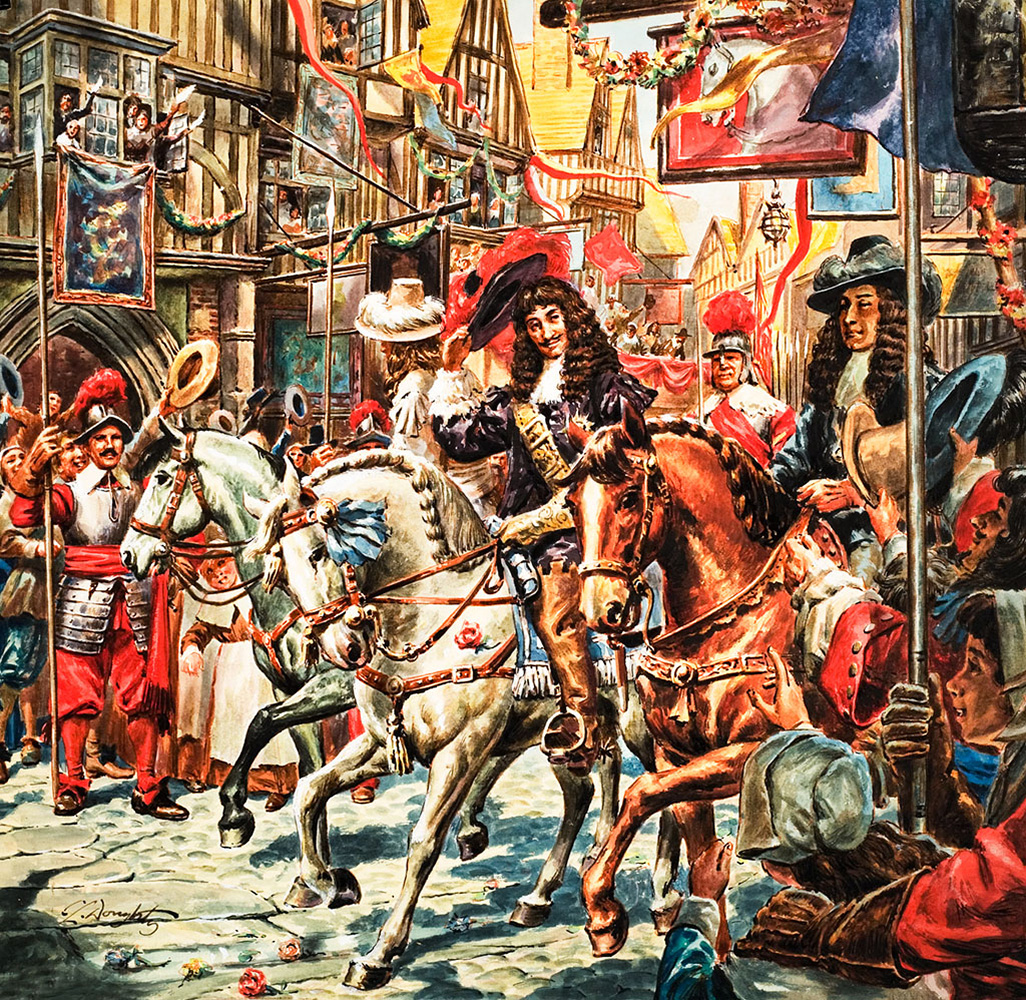
(an image so good I had to use it twice)

The British Civil Wars began in Scotland and ended in Ireland, though they are often erroneously called ‘The English Civil War’. In the end it would be England dictating the peace for the others. The union of the crowns that had begun with James VI of Scotland becoming James I of England upon Elizabeth I’s death had finally brought inter-state warfare on the British Isles to a close, but sectarian and domestic political struggles would tear the country apart under his inept successor, Charles I’s rule. Parliament would emerge victorious in the resulting civil war, and then eject various other groups from power in Ireland and Scotland. Charles I would be executed, his family driven into exile, and an attempt to set up a republic would ensue. Cromwell himself would end up shutting down parliament and ruling as a dictatorial “Lord Protector” not long after this.

Paul Lay’s ‘Providence Lost: The Rise and Fall of the English Republic’ is an Anglo-centric yet nevertheless engaging read about the state that existed between the fall of Charles I and the restoration of Charles II. He describes a state that began with so much experimental promise but descended into factionalism and moralistic hypochondria. Something akin to if the American Revolution had been immediately co-opted by an alliance of Cotton Mathers and Tipper Gores right after the Treaty of Paris.

Sadly, this could not have been a surprise. Even before the war was over it was soon apparent that, demographically, the Parliamentarians were far more puritan than ‘leveller’ (the term given to people who wanted a universal male franchise). In a situation that should strike familiarity with anyone who has followed the Syrian Civil War, what looks on the surface like a noble cause can in fact be nothing but a sieve for fanatics and sectarians. People throughout Britain soon learned this as a government that was supposedly committed to freedom of religion began to persecute anyone not clearly of the Puritan ilk, including former allies of theirs like the Quakers.

Messianic regimes, especially new ones, cannot justify themselves without outward expansion. And so, the powerful military edifice built to win the Civil War would be turned onto Spain. In particular, its enormous New World empire. But the invasion of Hispaniola ended disastrously amidst tropical disease and local Spanish soldiers who knew the terrain. As a consolation prize the defeated English swept into barely-defended Jamaica. It would be their only gain from an expedition with dreams of driving the Whore of Babylon out of the New World and introducing a new Protestant reign for Central America.

In a pattern all too familiar to moderns, failure abroad led to a bizarre rise of extremism at home. Cromwell entered a kind of existential crisis. He had not failed in such a way. Surely, it must have been the nation itself that had yet to repent for its wickedness. And so, loyal generals were appointed as satraps throughout the country with explicit instructions to crack down on irreligion, drinking, the arts (especially theater) and even folk festivals. A life simmering within unadorned churches would be the only publicly sanctioned form of culture for the masses. It was this that made the people turn against the government in large numbers. But living in a literal garrison state, there was nothing they could do but grumble. Lay has a particular section that describes the goals of this society which is designed to strike us today:

‘The concept of a tirelessly interventionist and inescapable God might be compared to social media, resulting in comparable levels of anxiety and paranoia. Facebook, Twitter, Instagram are realms of round-the-clock surveillance, where one’s thoughts and actions, beliefs and appearance are posted and preserved for all to see and subjected to constant comparison and judgement. The shame, vindictiveness, and piety that social media generates would not have felt out of place among seventeenth Century Puritans. But one can opt out of social media, however addictive. There was no such option in the world God had created, nor in the next.’

The various sects denounced each other constantly. To borrow a phrase from Angela Nagle, ‘competing over a scarcity of virtue’ in order to prove who was the most humble and the most ideological pure. Cromwell himself cared only that people were Protestant, but the forces and style of governance he had unleashed catered to only the worst and most extreme of ideologues. Fortunately, this government did not survive Cromwell. His ineffectual failson and chosen successor fled the country as the disputes between Generals and ex-Parliamentarians threatened to tear the islands apart again. But no one wanted a sequel to full blown civil war. A compromise was reached, if the exiled son of the late king would sign on to acknowledging the existence of Parliament in government, he would be invited back to bring the country together and avoid calamity.

The Restoration Undoes the Era of Hysteria

‘The King spent most of his time with confident young men, who abhorred all discourse that was serious, and, in the liberty, they assumed in drollery and raillery, preserved no reverence towards God or man, but laughed at all sober men, and even at religion itself.’ ~James Butler, Duke of Ormond.

‘He spends all his days

In running in plays

When in his Shop he should be poreng;

And wastes all his Nights

In constant delights

Of Reveling, Drinking, and Whoreing.

~Anon, ‘Upon His Majesties’ Being Made Free of the Citty.’

One would have expected had he lived the life planned for him King Charles II would have been a diffident, if witty, failson not unlike Richard Cromwell. At least he wasn’t that other and most cursed Charles II. The problem with monarchy is the sheer sheltered entitlement it breeds in those growing up expecting to inherit it. Due to the Civil War, however, Charles did not have this luxury. He fled the country, tried to rally support in Scotland only to be held hostage by the fanatic Covenanters and forced by Archibald Campbell, their de facto leader, to sign away much of his powers to them. Then, Cromwell had defeated the Scots (largely due to religious fanatics firing their most experienced commanders for ‘drinking and whoring’ on the eve of the Battle of Dunbar). Charles had to flee again. Crossing much of the country in disguise as a commoner and having many close calls, the heir to the monarchy slept outside, hid in trees, and developed a knack for socially integrating himself with common people he otherwise would not have. Once he made it out of the country, he would end up living an impoverished yet interesting young adulthood in the Netherlands, France, and Spain. Largely existing as leech on related aristocratic families in those countries.

When he returned to England he did so to a totally changed country. But not more changed than himself. In her book ‘A Gambling Man: Charles II’s Restoration Game’, Jenny Uglow documents how Charles’ unconventional and roguish new skill set served him well to meet this particular moment as the restorer of the monarchy in England, Scotland, and Ireland.

Charles II had a victory procession of sorts, but it was not simply pomp. As he disembarked in the country that had once tried to kill him, he was met by crowds of people relieved that there would be no civil war or continuation of Puritan rule. Formerly powerful general submitted to his authority, and he used his political capitol to disband the radical-infested army. This not only removed his most dangerous enemies, but also freed up immense amount of finance for the state. The regicide parliamentarians were hunted down for execution or driven into exile. Archibald Campbell found himself publicly executed in Edinburgh, and Cromwell’s body was disinterred for a mock execution and display.

But what followed this score-settling would be even more interesting. Charles was both a monarch who liked to throw massive court parties, indulge in the arts (which he of course re-legalized and came to patron) but also was an accessible ‘man of the people.’ He was at ease with people of all backgrounds and often struck up conversations with random people he met on the street when walking his dogs (of the breed now named for him). Rumors that he ‘rolled from whore to whore’ incognito as a commoner abounded and seemed to actually increase many people’s affection for him after the dour Cromwellian cultural revolution. When the Great Fire of London threatened to engulf the entire city, he not only led the response in an official capacity, but was smeared in ash and smoke, working the firebreaks and hauling buckets of water with the crowd at the worst of it. I can personally attest from years living in multiple locations in the United Kingdom that there are many pubs named after him to this day. And, of course, there is that Horrible Histories song.

But Charles was not simply a people’s partier. He was actually a fairly competent monarch in his own right. His diplomacy showed immense flexibility and his limited naval wars, though often considered indecisive or even losses by conventional historians, did encapsulate his move towards international trade access and naval power. The gains made in this conflict would, in fact, end up with the acquisition of New York and New Jersey, unifying the English colonies in North America into one band of coast-the first springboard for a future great power Britain. These pickups were made possible by the money he made selling indefensible colonial outposts in other places like Tangier and Calais. A keen eye for geography, and the centrality of the offshore stance in Europe but expansion elsewhere, showed the way of the future for an island nation. People back then didn’t know it yet, but Charles II’s reign would lay the seeds of Britain’s future at the expense of its (then) more powerful rivals in France, Spain, and the Netherlands.

Charles would make some major errors too, most importantly designating his thick-headed brother as his official successor knowing it would cause another sectarian crisis. Some people have said this sympathy for a Catholic brother stemmed from Charles’ own secret conversion. But Charles, it seems to me, cared little for religion and made this conversion to gain war subsidies from Louis XIV of France. After all, he did get the money and didn’t even convert until he was on his death bed. He never ended up converting the court, meaning he got one over on his superpower cousin. But the point here is not to say Charles II was a perfect ruler to whom we should aspire, but rather that he was a cultural force. The right counterbalance at the right time. He singlehandedly ended Britain’s first Woke-Evangelical Era not with frothing reactionary policies, but through levity, pragmatism, and disdain for all kinds of cultural extremes. In so doing, a hot mess of a country prone to regular bouts of rebellion and sectarian strife began to transform itself into a future financial and industrial powerhouse.

For a time anyway. All gains are, after all, temporary. Something the Puritan can never understand.

Accepting the Hobbesian Bargain

‘The obligations of the subjects to a sovereign is understood to last as long and no longer, than the power lasteth, by which he is able to protect them. For the right men have by nature to protect themselves, when none else can protect them…the end of obedience is protection.’ ~Thomas Hobbes

‘The losers are the real victors. The victims are the real winners.’ This was the sentiment of puritanism, and it is the dominant sentiment in the Anglophone world today. So much of our present-day culture war (which was declared by and waged in service of the right before it became the lefty cause du jour of the present moment) is an all-pervasive and multi-ideological trend. But it is a trend that can be defeated. This can be accomplished by the marriage of two things often not thought of as partners: the marriage of state power and the levity of humor.

Anyone who has ever interacted with ideological cliques such as anarchists knows that it is often the people who fear the state who are the most authoritarian and censorious people imaginable. Radical cliques often degenerate into cults where people psychologically abuse each other for clout and differences between people are not tolerated. Individualism is ineffective for every cause, so when one does not believe in the arbitration of the state, one must create a sect to compensate. The sect, ironically, often tolerates less dissent and divergence than does the state. This is because all they have is ideology, whereas the secular state (whatever form it takes) is a more situational and territorial arbiter. Its concerns (when it is working anyway) is to maintain the peace over its sovereign location and to maximize its autonomy vis-à-vis other states. This is true for all states and state-like entities no matter their internal ideological and traditional structure. Though states that forget this are very likely to degrade the sanity and effectiveness of their governing class and become more like those sectarian cults that spring up in their absence.

Let us return once more to the 17th Century. Thomas Hobbes was an intellectual and instructor who had royalist connections. He missed the civil war due to his job as a private tutor having taken him to France beforehand. When Charles II was in exile in France, Hobbes became his personal instructor. It was at this point that he published his most famous work, Leviathan. Leviathan’s blatantly irreligious, pragmatist, and materialist nature would cause scandal in the Stuart court-in-exile…despite the fact that it made an implicit argument for the Stuart style of governance. Fearing retaliation from religious cavaliers, he fled to Cromwell’s Protectorate. He reasoned, rightly as it turned out, none of the members of that government had yet read his works. He also made it clear that the necessity of government he wrote about could apply to any form of statecraft. Sovereignty was not held by divine right, but by power over the land and the execution of the prerogatives of the state itself.

When Charles was restored, he invited Hobbes to enter the court. It was there that the already old man, known today as a dour sourpuss due to the nature of his thought, made himself indispensable through his wit, jokes, and ability to disregard superstition and religious dogma (Hobbes himself was almost certainly an atheist in private). This is when people really began reading him.

Hobbes’ political thought lacks the subtlety of Han Feizi or even Confucius. In his concept of the mediating sovereign which protects individuals and groups from each other, he is far too supportive of the idea that the subject must support the sovereign no matter what-so long as their security needs are met. He wallows in constant fear of rebellion for obvious reasons given the times he lived in, but the long view of history shows plenty of rebellions that replace an inferior sovereign with a superior one. He does not grapple with the problem, innate to his thinking, of sovereign capriciousness from one head of state to another upon succession and which is particularly common in monarchies.

All of this being said, Hobbes is worth engaging with as his primary observation, that society can only thrive under conditions of sovereignty where a state is the primary mediating influence between actors, is correct for any society larger than that of the tribe. It is also, though this was not Hobbes’ intent, a better model of achieving freedom of conscience and securing the ability of divergent people to live with each other than more ideologically motivated models of conversion. Leviathan, it turns out, is a better guardian of private liberty than even the ideal of private liberty itself. Just ask any non-Islamist and non-liberal Syrian today, especially if they come from a minority group.

In his book ‘The Two Faces of Liberalism’, John Gray examines this lost liberationist aspect of Hobbes. Most useful to us today, he makes a case that the best of liberal values can be saved only by rejecting the worst of them. Specifically, the freedom to live one’s life as they please in the cultural and lifestylist sense by sacrificing liberalism’s tendency towards universalism and messianic behavior. These two impulses which are endemic in the philosophy are at war with each other, because universalism cannot abide competitors and those who opt out of it, and, on the other side, divergence requires a morally neutral pragmatist state to balance interests without adopting a mission of its own aside from the survival and maintenance of the state itself. This restricts communal projects to the realm of necessary material needs for a community like security and infrastructure.

Whether we like it or not, we live in a very liberal society. And so, to convince those in power to change policies, we must all be liberals to some degree. Gray’s reappropriation of Hobbes is a way to do that which makes the messianic culture war obsolete. Indeed, Gray admires Hobbes’ Leviathan as a model which could ‘Extend the benevolence of indifference’ to issues of private lifestylist and social spheres so long as the political order that upholds this indifference is not challenged by the subject. He points out that such arrangements were the norm in the ancient and classical worlds, before messianic religions took hold, and are often still the norm in places like East Asia, were they never came to be powerful at all. They also tend to exist in early modern states like the height of the Ottoman Empire, and, most obviously and perhaps at its greatest extent, in medieval states like that of the Mongols. For a modern example, he cites Singapore as a country that guarantees freedom of religion but bans missionary activity. The liberals did not invent toleration, they merely invented a form which was a successor to the Christian world it was rebelling against. But as such, this toleration inherited many preexisting problems.

Despite liberalism being the pervasive default setting in the Anglosphere, but not in these other examples, Gray wishes to learn from such arrangements as ways to have a collective civically minded state that does not engage in enforcing ideological or cultural uniformity but still maintains a civic unity. I contend that, in order to appeal internally to this Anglosphere’s tradition and common historical experience, that the reign of Charles II serves as a potential in-house model for such an arrangement. Not because I am a monarchist (I am definitely not) but because it came from a similar age of hysteria and ended up dissolving many of the problems it inherited. While Charles II is a bit too establishment to fit my mold of previous historical trickster figures, he had a similar personality as those past examples and thus can cross the bridge of communicating these issues between more outsider and insider persuasions. This, naturally, applies to the international system as well as the domestic. Whatever ways we find around our present impasse will differ from the solutions of the past, but we can certainly learn from events that preceded us nevertheless.

Modus Vivendi, as Gray calls his proposal, is not only the acknowledgement that no one way of governance can work for everyone, but that the very idea of political hegemony through one ideology is a potential declaration of war upon much of the domestic population of a state and thus cannot exist in a world where pluralism is the natural state of things. Two Faces of Liberalism is a short book and worth reading in its entirety, so I won’t mass quote it here, but there are two passages in particular I wish to conclude with:

Modus Vivendi expresses the belief that there are many forms of life in which humans can thrive. Among these are some whose worth cannot be compared. Where such ways of life rivals, there is no one of them that is best. People who belong to different ways of life need have no disagreement. They may simply be different. Modus Vivendi is liberal toleration adapted to the historical fact of pluralism.’

And:

‘…When liberals set up one regime as a standard of legitimacy for all the rest, pluralists and liberals part company. For pluralists, a liberal regime may sometimes be the best framework for modus vivendi. At other times a non-liberal regime may do as well or better.’

Context reigns. Acknowledging that means there is something we can learn from the experiences of all types of governments. When the chips are down I consider myself more in favor of republics than monarchies, but should I therefore dismiss the experiences of all monarchs or all kingly states? No. Just as it is no great scandal to learn strategy from thinkers of all backgrounds why not also governments? It is this intellectual flexibility that keeps us from falling into the farce of Manichean culture war. That and the right kind of King Charles style levity that acknowledges that while running the state might be serious business, there is no reason it has to be too serious. Platonic absolutes do us no favors here. And those who are interested in working out the practical can do so with anyone else, regardless of that other person’s inner life. Speaking from personal experience, I can say that the only times I take part in culture war is defensively or where there is a codified legal imbalance that needs to be adjusted. If people do not seek to inflict their preferences on me then I have no need to do the same to them. But I have never been so insecure as to seek to convert others save on issues of real and pressing policy that affects the entire state. Those are the true structural issues that affect everyone-economic, foreign, and infrastructure policy. And those are the issues that supermajorities of people could, theoretically anyway, come together much more effectively if they were prioritized over the social. Obviously, those content with the status quo therefore have a vested interested in fueling rather than dousing the culture war and its attendant surveillance and cancelling network. But bad policies of the state cannot be challenged by disregarding the state itself, but by coopting or replacing it with another state.

Thoughts to meditate on while regarding the Wrathful Party King Charles Bodhisattva.

And if for some reason you do think it would be nice to have a monarch once again with this personality type, may I recommend the fashionable and party boat owning King of Morocco?