The one and only downside about leaving academia for first the policy and then the policy analysis community is that almost everything has to be framed as in the American interest. Now, since I wish to change my own country’s policies, this is hardly a bad thing on the whole. But boy does it ever make me long for times when I studied other countries’ strategies on wholly their own terms.
I wish to do that now, in what I am sure will be a scandalous exercise to centrists and journalists everywhere. Good thing its just my personal site and I will also be writing about concepts indecipherable to those still stuck at a 5th grade reading level.
Though many years have passed and the differences in details are now many, I have made the case before that Iran would most likely be a tough nut to crack for the U.S. and especially Israel. This is no half-failed Arab state with arbitrary borders drawn from a colonial office in Europe. At the same time, I want to acknowledge that the government is deeply unpopular with young people, is a ridiculous theocracy, and the government subordinating so much of its own national interest to the cause of Palestinian liberation has been a disaster for its own self-interest. I also don’t think (edit: more on this here) the toppling or weakening of a single government could knock a proud civilizational state out of commission for more than the short term. A better government would probably end up an even more potent regional rival to Tel Aviv in the end.
That aside, let us look at the short term. We now exist in a situation where either Israel will continue striking Iran unilaterally (no doubt with American assistance in intelligence and logistics) or will bring in America either partially or full force on Israel’s side. With the exception of some logistical support across the Caspian, I do not expect Russia or China to meaningfully intervene. China is happy to stay out of the region and let its rivals bury themselves in loser-wars. Russia is bogged down due to its own over-extension. So let us assume that Iran has to do this basically on its own.
Israel on its own can be stalemated, hence Tel Aviv’s desperate quest to ensnare Washington.
A full-blown U.S. intervention on Israel’s behalf represents the worst possible scenario for Tehran. There will be no choice but to withdrawal to extreme defense as a national war of survival. Though Iran’s networks would enable it to offensively unleash indirect chaos elsewhere, especially in Iraq and Yemen. These could exacerbate population migration pressures and alienate Europe. Inevitable casualties and cost for fighting such a turtled foe would grind down the American public and its low-morale military which has seen nothing but ruin in the Middle East. This would be a repeat of North Vietnamese strategy in a sense, though with a far less robust home front. Iran would itself be in danger the longer the war went on, as its own popular support would be strictly relegated to that of national defense. Either way, the only winner of this exchange is Turkey, who would gain in the region at everyone else’s expense and possibly even up as the peacemaker to the conflict.
Nothing too interesting yet, but lets turn to what might be the most likely scenario…a primarily Israeli war with US supporting air and naval assets in direct action but no ground war. Here is where Tehran’s opportunity lies.
Israel launched this war either knowing the US would be in on it, or assuming it could be forced into it by seizing the initiative. Tensions now exist within the alliance. The majority of the US public is opposed to military action. This might tick up as populations are fickle when bombs fly, but overall skepticism reigns. Israel seeks to lure Iran into attacking US forces in order to ensure greater American involvement. Iran would be foolish to fall for this trap. It should so thoroughly avoid doing this that should anything happen to US forces, many will suspect Israeli false flag operations or a repeat of the USS Liberty incident.
Most importantly, if the US strikes Fordow or any other target with its air force, Hypothetical Iranian Strategist Me would take the no doubt internally unpopular position not to retaliate…on the US. But there would be retaliation…on Israel.
This would be the crux of the plan: Every US attack invites a massive missile barrage on Israel as well as increased Hezbollah activity against the Israelis. The more the US acts, the more Israel is punished. The messaging would be that Israel had started the war and was trying to dogwalk the US into it. It would resonate with many parts of the public because it would be self-evidently true. If Fordow goes, so goes Haifa. If Isfahan is hit, so will Tel Aviv.
US logistics would still be strained by this as Israel ran out of interceptors and other equipment. The lack of American casualties would increase the antiwar voices in American media at the expense of the pro-war ones when discussing the threat Iran poses to the US. The Houthis, after all, already do a form of this with Israeli ships but not most other people’s traffic. Discontentment with Netanyahu would grow at home and abroad. He would have failed to bait the US to go fully in. His cities would be under attack, the economy of the country suffering. The Israelis will demand more from the US, ever more histrionically, and the US may often refuse them. Questions will arise, third parties will demand a negotiation. The Israeli elite would have to rethink the present government, whose justification for continuity is entirely based on Netanyahu’s proven record at manipulating America. If he has that, he has nothing. Domestic antics ensue. And then the Israeli public figures it out…more American support means more attacks on them.
In a scenario where Israelis die but not Americans, the rest of the world will shrug and point to Gaza when confronted with Israeli Exceptionalism/Chosen People Syndrome. It is at this point the Iranians state that they will allow their nuclear program to be observed by a neutral international commission if given full security guarantees against Israeli attack by international agreement, with the caveat being that they will fully reactivate nuclear development if Israel attacks them again. Trump, ever mercurial, might just want to claim a win and move on at this point. Israel, running low on supplies, would at least need a breather.
Such would be my strategy anyway. I don’t envy Iran’s position though. Attacked by some of the most duplicitous actors abroad and governed by some of the wackiest boomers on Earth at home, they have to navigate this security dilemma on the backfoot.
Today is the 50th Anniversary of the Liberation of Saigon and the reunification of Vietnam after almost a century of colonial and great power meddling. It was the first full blown American military defeat since Red Cloud’s War over a century before and the culmination of wise long term strategy on the part of the Vietnamese. The human cost was immense and the danger was not yet over, as the Sino-Soviet Split was about to go hot in Southeast Asia. Within almost no time at all Vietnamese forces would be ejecting the Khmer Rogue from power in neighboring Cambodia, toppling what had to have been the worst (adjusted for population and size) government of the 20th Century in the process, and incurring a retaliatory and ultimately ineffective limited invasion by the Chinese in 1979 (tacitly backed by a bitter US).
The Sino-Soviet Split preceded these events by about a decade, and Nixon and Mao’s diplomacy was basically a sealant on the end of the Cold War’s ideological phase. Vietnam, fighting what was always first and foremost an anti-colonial struggle, already knew this. The proximity and domineering attitude of the Chinese always meant that the USSR was a superior partner (this was the reverse of most communist states’ interests, showing the importance of geographic proximity), and that the security concerns of Chinese power projection could not be ignored. First was driving out the French and the Americans, then came dealing with a diplomatic assertion of independence in the near abroad. Sovereignty is not just ejecting foreign dominion, but asserting a ‘clear field’ over ones autonomy of action in diplomacy, similar to the difference between an actual planet and a dwarf planet, one isn’t all the way there if the baycenter of its orbit with a moon lies outside the primary central mass.
So Vietnam served as an obvious example of small state realpolitik in action. Less by actively seeking to be part of the preexisting Sino-Soviet Split and more by ignoring it entirely as it focused on more pressing matters. The world responded accordingly after Vietnam took action. More importantly, this was not just a part of the war of independence, but rather a hint of what was to come. Both Vietnamese and Chinese diplomacy dropped all pretense of being anything but national interest-based after this. Vietnam sought diplomatic connections with many abroad regardless of regime type, while China focused on anti-Soviet activities for the remainder of the Cold War. This even included support of the Afghan Mujahedeen. With the loss of its great power patron in the fall of the USSR in 1991, Vietnam immediately began to pivot to normalizing relations with the United States, something that would occur at the end of the decade. Since that time, maudlin Boomer tears for the doomed mafia-like client state of South Vietnam aside, the two countries have largely had positive relations. The U.S. has even worked to redirect offshoring away from China and towards Vietnam for reasons of obvious mutual benefit.
This has not meant that Vietnam has pursued hostile relations with the Chinese. Far from it, it attempts a kind of cautious neutrality and guarded openness to its giant neighbor. Something currently paying dividends as Hanoi becomes targeted by an erratic and undirected US trade policy. The true lesson of the Cold War, something the Vietnamese learned that the Americans and Russians often did not, is that globally-focused ideology in foreign policy is a leash. The smaller the country, the shorter the leash.
Despite having the formative events of its modern state tied up with the Cold War almost like no other state around today, Vietnam serves as an example of keeping grand political projects localized and non-universal. The freedom and security of their nation and their diplomatic autonomy always came first. They would have their own path to sovereignty, divergent from others. This is, after all, the point of independence and national unity.
Ho Chi Minh was scorned at Versailles by the imperious universalist Woodrow Wilson, but maintained an admiration for George Washington, one of the preeminent examples of turning an independence war into a diplomatic posture of non-alignment. This was the correct path as the war that Americans were told was necessary to maintain world order, which they were willing to kill millions to keep going, ultimately didn’t matter. The two countries live with each other and have largely constructive relations. Vietnam had no global capacity or ambitions, and the United States, so used to both itself and the Soviets, had to be reminded that sometimes all politics really are just local. And yet if you go to Vietnam in person in the 21rst Century, as I have, you’ll find nothing but water under the bridge. The world moved on. Geopolitics is always in flux. And in a world where constant rebalancing, entropy, and changing circumstances reign supreme there can be no universal principle save adaptability. Those who embrace this reality can outperform those who refuse to.
Vietnam didn’t just beat France and America, it beat the idea of a Cold War itself. In doing so it ensured its own success. This is worth remembering today when modern people try to tell us we live in a world of ‘freedom vs authoritarianism’ or ‘a new Cold War’. Any state that engages with the rest of the world as part of some kind of Platonic/existential struggle will meet only disaster, while the agility of the practical and situationally positioned states will run rings around them.
But lest you think I have only negative things to mention about the failed experiment of South Vietnam, check this out:
On the fourth of April it will officially be the 10 year anniversary of this blog. If it was another 10 years older backdated in time it would have been called part of the ‘Blogosphere’. Thankfully, that did not happen. I will be traveling on the fourth of this month, however. So instead I am going to upload this at a time when much of the world is in April Fool’s Day. It seems fitting. In that 10 years there have been 223 posts, well, now 224 I suppose. Not a bad clip.
My original purpose with this site was to serve the following purposes:
Practice for policy idea writing.
Working through issues I wasn’t sure about yet. A first testing ground so to speak.
To provide a repository for all the articles I either did not want to publish through someone else due to needing a custom tone or could not get published elsewhere (a formerly much more common arrangement).
To be funny and casual about stuff treated with way too much seriousness elsewhere.
Once I began publishing externally much more frequently, the amount of analysis on foreign policy decreased massively, with domestic and philosophical posts growing, and even a few fiction pieces too. Aside from this though, the original 5 points seem to have largely stayed intact.
A lot has changed since Spring of 2015. Otherkin no longer rule the internet, replaced by a medley of domestic terror-coded ideological otherkin. A global pandemic ran rampant and unleashed the contradictions of late neoliberal breakdown. A carnival barker became President twice in a nonconsecutive manner, the first since Grover Cleveland to do so. In the interregnum between these terms a vegetative fossil held the presidency, but since much of the media liked him there was a coordinated conspiracy to pretend that this was not so. Greater multipolarity in world affairs, something that was basically inevitable from the Great Recession onwards, went from the primary world issue in the background to very much the forefront. The failure to establish a left populism, undone by postmodern moralism and puritanism and tied to the rotting corpse of a liberal establishment, led to the rise of a right populism which is far dumber than the left that should have been born from Occupy but wasn’t.
And then came signalgate to really ram home one consistent theme I have always hammered on this site: it is not primarily malicious competence that is responsible for so much of what you see, but a kind of autopilot incompetence. Notice too how a scandal that should be overwhelmingly directed against Mike Waltz in particular seems to be intentionally obscured by the very media that broke the story, likely because they find his uber-hawk establishment positioning the most palatable of anyone in the government and fear his replacement. Freedom of will? Human consciousness directing the species through rationality? These are the most overrated concepts in all of the humanities. We do not assign this special status to other species, and it makes our observations of their behavior far more objective.
So on the surface everything changed. But if you were paying attention nothing really unexpected happened at the macro scale. The empire was in decline when I started, it still is now. The planet is suffering under incredible loss of biodiversity and conditions of accelerating climate destabilization, same as it was then. Neoliberalism was a discredited force everywhere but finance and the media 10 years ago, and now its often even discredited there too. These things were always going to happen no matter what individuals or even specific countries were wielding the most power, though the rate of the change might differ between variables. Trump is an accelerant.
But just because real life is fatalistic doesn’t mean its predictable! Far from it. This site has the name it has because of my fascination with trickster figures in mythology. They remind us that the murky reality of moral ambiguity that we live in is random and fun in at least equal proportions to its more dire and tragic elements. To quote Dasha Nekrasova from before her podcast went fully unbearable: “Stay alive- something retarded might happen.” These are words to live by.
I would like to think that in these 10 years I have been consistent. Always willing to admit when I make a bad call (Russia won’t invade Ukraine outside of the Donbass/Crimea areas, Hillary will pull out a squeaker in 2016, Syria won’t fall to foreign states-*though in my defense I always carved out a Turkish exception to that one as a hedge, which sadly turned out to be correct). Want to dunk on me, those predictions are all still here. You can search for them. But I have had a greater number of correct calls too in the same time frame (A second Karabakh War with advantage this time for Azerbaijan, the always lingering dangers of the Israel Lobby on crafting viable foreign policy, US recognizing Moroccan rule over Western Sahara, the increased importance of Panama and the Arctic for geostrategy, other countries invoking their own form of R2P to justify war-no longer leaving this as an Atlantic only causus belli, and the missionary/military uses of social progressivism, to name just a few).
If there is one criticism anyone can rightly lob at me which I will proudly accept as true it is that I am a geographic determinist. I am. And if I am doing my job, other people will see why this apparently reductionist position is the pinnacle of material philosophical rigor and policy planning priorities. When accepting geographic determinism, people can virulently disagree on policy but still do so rationally and respectfully, knowing at least that all sides share a common physical reality. The animal is made by ecology.
So with a decade on here passed what are my favorite entries and which were the most popular?
Most popular is easy to prove as I have access to the data:
Considering that there are hundreds I can choose from for my personal favorite I am just going to go with what hits the memory banks first as entries I am personally most proud of. These would be:
As for the future? I publish more often off this site than on it these days, but there will always be things that need a personal touch or that cannot be fiddled with by editors, things that fill the liminal spaces between clear cut genres and acceptable discourse, and books no one else wants to review. So long as that is the case, I will be here.
Professor Pekka Hamalainen wrote the book I was going to write. The book I had started research on in 2019 and planned to write since 2015. However, taking on lots of research and writing projects outside of this field slowed my normal breakneck speed for such things to a crawl. With the release of Indigenous Continent: The Epic Contest for North America, however, it looks like I lost the race. You might think I am going to whine about this, but I am not. Hamalainen is possibly my favorite currently active historian and I cannot think of a person I would have rather lost this race to. I constantly recommend his work to people, especially The Comanche Empire, which I still regard as his best book. Additionally, and this I realized the day after I learned this book was going to come out, having the general meta-historical narrative out there and completed actually frees me to focus in the future on the real core of my specialty: the geopolitical theory of large Native American confederacies. My opening still exists, and may even be better by being more focused. No longer having to include as large a historical section means it might even end up being a very large article or book chapter rather than a whole book. So my options for publication increase.
I believe this background means I am one of the most qualified people to review this book. I would first like to start with the positive aspects, which are the largest number of reactions I have.
Hamalainen gives us a very 5,000 feet above and looking down view on Native American history from precontact until the late 19th Century and the final round of ‘Indian Wars.’ Works like this are inevitably going to avoid too much hyper-specific detail and focus instead on broader strokes, but despite this the book manages to be almost as complete a narrative as it is possible for such a work to be. This big picture focus is on the political power, autonomy, and dynamism of Native American actors even deep into the period when colonists began seizing land and becoming powers in their own right. As a theme, this focus is kept consistently throughout the text. In providing this service, Hamalainen gives us a macro-history that restores Native Americans to their rightful place as part of the continents balance of power rather than simply being either ‘savages’ or ‘helpless victims’, which is what the two dominant strands of hyper-ideologues in North American history tend to reduce them to. This recognizes the importance of understanding these polities in ways separate both from progressive and reactionary Eurocentric scholarship.
The geographic space covered is from the desert border separating Mesoamerica from North America (a major cultural divide that predates colonization in many ways) up to the Canadian arctic. The focus naturally tends towards the bigger and more geopolitically significant nations and alliance networks, such as the Haudenosaunee, Cherokee, Anishinaabe, Comanche, Lakota, etc.
While it is apparent to anyone widely read in Native American history, particularly in niche specialist books about specific areas and time periods, that some of these confederations (especially the Haudenosaunee and Comanche) were most often the strongest powers in the region, general macro-historical narratives often ignore or downplay this despite their ability to outlast and defeat multiple European colonial projects. Hamalainen’s book’s primary contribution is showing how for the first century after colonization native powers were the strongest all over, and how even in the century after that both the Lakota and the Comanche still maintained dominance in particular regions. This is important and necessary work for the field. And long overdue in a generally accessible format like this work is.
I do, however, have some critiques.
The first and more minor one is that two major actors in this narrative still get a fairly short shrift. I do understand from personal experience one must always highlight some things and de-emphasize others. I did it quite a bit of this selection in my own book. But a person reading Indigenous Continent with little preexisting knowledge of the subject would definitely not quite get the power of the Blackfoot Confederacy at its height nor the uniqueness of the Tlingit experience. The second in particular would serve as a great example because of it mostly fighting the Russian attempt to colonize America to a stalemate, but more importantly because of its maritime and naval character. The Tlingit and Haida had canoes that were so large they were more like longships or small galleys and small cannon were often mounted on them. They wore body armor made of washed ashore Chinese and Japanese coins that was often bulletproof to musket fire. They lived what might have been the highest standard of living in the pre-Victorian world due to their ability to exploit the Pacific Northwest’s natural riches in such a way as to develop an extremely sophisticated material culture without having to engage in farming or urbanization.
A more substantial critique I have is that the (correct) fixation on Native power and autonomy in the book can sideline the very real existential dangers faced by native people from the start, and so once the tables turn against the native powers it can come across to the reader as extremely jarring and almost unexpected. A few paragraphs near the start really explaining why Natives were so disproportionately effected by Eurasian disease (it was because of there being far more domesticatable animals in Eurasia giving people who grew up around them for generations far greater disease resistance but also greater ability to spread them) would have helped the general reader. This would show clearly that these persistent and proportionally deadly outbreaks turned North America into a place of pure chaos and destruction from the 16th Century onwards. This was the single most post-apocalyptic setting human beings have ever found themselves on a hemispheric scale in recorded human history. Rather than diminish the narrative of Native power and autonomy it actually increases it by making the achievements of these countries that survived and for a time even thrived all the more impressive.
These events are of course talked about in Hamalainen’s book but not in a central way. This means that the constant background of irreplaceable losses among natives is sidelined along with the concurrent growth of the settler populations not only due to immigration but also a truly staggering and long lasting baby boom. This was something the more destabilized native powers could not replicate, and thus by the early 18th Century the tide really had turned against them and they were clearly headed towards perpetual underdog status through demographics. Yet in Hamalainen’s narrative settler advantage seems to only really appear about 50-100 years after this, which could throw a reader for a bit of a loop.
None of these critiques of mine sabotage the point of the book or its importance, however. I believe this is the correct book to introduce general audiences to the importance and awesomeness of Native American history and finally rewrite the focus of the narrative around North American history. The history of the peoples before the rise of what we now call modern North Atlantic society is every bit as important in understanding this continent and how to live on it as that which has come since.
I had to eat some shit last night for blowing my first big foreign prediction. I thought that Russian troop build ups were all for leverage at the negotiation table. I thought it would be too risky to launch a full assault when one could, theoretically, get a neutral Ukraine over the bargaining table. We don’t yet know if this was a realistic possibility or not. If Blinken and co sabotaged such a deal or if Putin did. I hate that Putin resorted to this in response either way. Fuck Vlad.
So yesterday I was getting ready to go to bed when suddenly some cursed impulse made me check my phone one last time. Only to be immediately jolted awake by The Great Gopnik War and cries of ‘Anuuuuuuuu cheeki breeki iv damke.’ I really wish I hadn’t looked. I wish I had a full night’s sleep and only got rudely awakened the next morning.
For now its too early to make super serious comments. But I will say this: If Putin’s goals are limited, he will likely scoop out either a diplomatic neutrality concession by Kiev or, more grossly, a new territorial swathe from the Donbass to Crimea, connecting them in a kind of Slavic Northern Ireland facsimile. He could get away with this and, in time, things might settle down. But if his ambitions are as stated and he wishes to go full American-style regime change…well, get ready for full insurgency, poisoned relations with neighbors in Europe, and a simmering guerilla war that will indirectly suck in other countries and hold the potential to directly involve more as it goes on. Russia’s inferiority complex to America, it seems, has caused it to flirt with repeating its mistakes too. I distinctly remember being a teenager in the Iraq invasion and having those first months seem a euphoric victory ride for most of the population. We know now how that turned out. Moscow has a choice, and choosing wisely involves recognizing your limits.
But I am not done eating shit, though I do wish to put it in context that makes it less bad. I never said Russia would ‘never’ attack Ukraine. I always quantified the prediction with ‘probably not’ and then went on to say ‘and here’s how they would do it if they did,’ which-so far-is still somewhat accurate from what I can tell. I do feel in taking this path Russia has burned a lot of diplomatic bridges it once could have crossed. This is precisely why I didn’t think they would go ahead.
For what its worth, Biden so far seems to be handling this better than any other President of my conscious lifetime would have. Ukraine is not a NATO nation, and we are under no obligation to defend them. Additionally, its location, political situation, and other factors mean it never was a likely inductee to NATO (another reason I thought Putin would refrain from attacking). It is truly baffling to me that no one in NATO could have admitted this publicly, and I wonder if they had if the current situation would be different now. Knowing this, Biden seems to be owning, much like he owned the issue on Afghanistan, the reality that war in Ukraine directly does not suit U.S. interest. Obama said the exact same thing in 2014, but now, due to Russiagate, his partisans seem to forget this. For now anyway. It is too close to Russia and all advantages go to team Moscow. Even in the event of a decisive U.S. victory that would mean permanent stationing of U.S. troops near Russia’s core area for decades. In a country with no core shared interest with the North Atlantic? Ridiculous. The cost would not be justifiable, especially considering how far east that would be. If Ice Cream Joe keeps it up, I might just vote for his reelection. And I haven’t voted for a major party candidate at the national level since 2012…including Joe himself. Granted, I suspect many of the others who yelled at me for not doing so in 2020 might jump ship by that point. Well, there’s little point to life without some contrarianism.
As I said already, its too early to go too much into detail on the war itself. If Kiev was wise they must have prepared interior defenses in depth to compensate for their numerical and firepower disadvantages and won’t contest every inch of ground but rather fight like hell in a core defensible area. If they didn’t prepare at all than their actor-president (who once played an actor-president on tv, peak clown world) is even more cavalier than I feared. Let us leave it at that for now.
What I can do, and what I will do right now, is examine why I got this one wrong by comparing it with my other bogus prediction: the 2016 Presidential election. Both are outliers in an largely on point predictive career, so maybe if smashed together they can be elucidating.
First, lets establish that I am actually on the whole good with predictions in politics. I am not going to go through everything I ever wrote for hyperlinks, but you can search this site and my external publications are largely linked to on the publications tab. Feel free to see for yourself. But I made many big calls successfully before. Nation building in Iraq would be a disaster (2002-still in high school!), proved true in 2004 onwards. NATO expansion being a mistake that could lead to further conflict in Europe (2005), proven true from 2014-present. That the U.S. and company should avoid the Syrian Civil War like the plague (2012), proven true 2013-present. Most on point, I predicted a Karabakh re-match (2016) where advantage would be strongly in Azerbaijan’s camp…this of course came true in 2020. Additionally, and more domestically, I predicted with a one state margin of error, every U.S. presidential election from 2000-2020 with the sole exception of 2016. 2004 and 2012 I got with not a single state in error. I also had one big but very mixed prediction made in 2020, that Afghanistan’s government would collapse post-U.S. pullout (yes) but not until at least 6 or so months had passed (no).
I am not listing this to brag or fellate my ego to compensate for messing the two I fumbled up. It is important to establish the overall record to investigate the flops. Furthermore, it is important when rating a geopolitical analyst to see the overall picture. Someone like Thomas ‘lets ally with ISIS’ Friedman is remarkable for his near total failure rate, while someone like George Kennan, who predicted both the overall course of the Cold War in the 40s, and, in the 90s, the current post Cold War mess, had a proper record that showed he was paying attention. Few if any get everything right, and some room for failure must be allotted, but proportionality remains a key attribute. And should I ever tip the balance near 50/50 or…even worse, under that, I promise to do something terrible and humiliating. Like drawing Uncle Klunk erotica, signing it, and sending it to whoever asks to adorn their wall of shame (as it will not be going on the blog).
So, what do my two big failures have in common? A domestic political call that thought the election would be close (correct) but totally misread several key states vs a tale of brinksmanship vs hard power deployment in a foreign country that came out on the wrong side of that equation?
I think, placed in binary, a common theme emerges. I am…and this pains me to say…far too trusting in the long term planning abilities of powerful people. Yes, me who dunks on lanyards all the time. But I thought ‘Hillary has the money and the connections, she’ll leverage them correctly.’ And I thought ‘Putin won’t burn most of his European bridges/NATO surely wouldn’t dangle out membership to Ukraine as an actual possibility.’
So clearly, I, who gets criticized for being too cynical, need to becomes more cynical. Because I am not yet cynical enough. Challenge accepted.
P.S.:
U.S. intelligence, possibly for the first time in my adult life, got something right out the gate and told us the truth of what was going to happen. This is a good thing actually (though last week it furthered my doubts as to Russian action given the general record of those-who-glow). I would like to see more of this. HOWEVER…so far this is one big public call for U.S. intelligence out of…what, dozens of failed or intentionally doctored calls? WMDs? Gadhafi’s Viagra rape army? Moderate rebels? Russiagate? Havana Syndrome? Kuwaiti baby incubators? Tonkin Gulf? The rise of ISIS? You get my point. They are going to use this one case as a ‘trust us’ pass in the future. Do not. The odds still do not bear out their claims on most issues. It is up to them, not to us, to earn the public’s trust again.
Of course the possibility I neglected to mention when I last wrote about this subject here almost four years ago was that Azerbaijan would use its greater levels of diplomatic and economic connections to rebuild and re-launch its armed forces. It was a possibility I considered, but as my primary focus on writing was on the concept of small scale territorial disputes in general and not this one in particular, I didn’t bother to go into it. I should have.
The struggle over the ultimate fate of Nagorno-Karabakh, which broke out before the Soviet Union even officially fell between constituent republics of that late superpower, ended strongly favoring Armenia, putting the Armenian-majority part of Azerbaijan within the control of that nation, though the territory is still internationally recognized by almost everyone as a part of Azerbaijan. Though it is worth noting that in addition to the properly disputable Karabakh region, Armenia has also occupied some large parts of Azerbaijan that are not Armenian-majority in order to create a defensive perimeter and to negotiate from a position of greater strength.
In the time since the first fighting ceased in 1994, the balance of power has been slowly changing. Azerbaijan has sought closer ties with its patron Turkey whilst still retaining its relations with Russia, while Armenia has gone fully into Moscow’s camp. Though Armenia clearly won the first war and has had greater success building up its civil society, Azerbaijan’s economic growth and diplomatic efforts outside the region have borne fruit and made it a valuable trade partner to the region whose pace of development has been impressive. In the brief flare up in 2016 it was apparent that Azerbaijan could roughly equal Armenian military performance. In the current struggles so far in 2020, preliminary imports show that unless a major reversal now occurs that Azerbaijan holds the advantage.
Russia tilts pro-Armenia but not yet in a decisive manner. France has taken a position opposite of Turkey by backing Armenia, dividing NATO on the issue. The prevalence of Armenian diaspora communities throughout much of the world has tilted many otherwise indifferent countries media coverage towards Yerevan. China retains a position of support for the Azerbaijani position but without compromising its relations or interests in either country, as both are needed to court various Belt and Road projects in the region. Perhaps most interestingly, the strongly allied governments of Syria and Iran have diametrically opposite positions on Karabakh. Iran’s largest ethnic minority is Azeris, who make up most of the people of its northwest regions that border Turkey and Azerbaijan. It has expressed support for Azerbaijan’s position on the dispute in the past. Syria, on the other hand, views Turkey and its allies as its greatest existential threat and contains significant Armenian minorities within its borders, and therefore backs Armenia. It seems that most powerful countries would prefer the present fighting ends rather than continue and risk drawing in more actors. The field is ripe for diplomacy and mediation, but not interventionism. There is a clear international consensus, Turkey excepted, of not wanting to internationalize this conflict any more than it has been already.
But this may change should Azerbaijan be foolish enough to enter Armenia proper. They are winning, and they certainly don’t have to. They must not let victory disease go to their heads, especially as the problem of the disputed region still being majority Armenian isn’t going away anytime soon.
One of the more interesting things is how conflicted the U.S. establishment is on this issue. America has a large Armenia diaspora community with political clout, particularly in California. But this tilt is quashed by the fact that Azerbaijan has more connections with the U.S. through geopolitical alliances with those tilting away from the Moscow axis, notably Georgia and Turkey. This has led to a kind of awkward media silence. Normally, U.S. media dutifully drums up support for one side over the other in a bid to do its job preparing the public for intervention on someone’s side, but that is simply an impossibility here. Sadly, rather than get even-keel coverage, it basically means your average American gets none. It is also interesting because a similar calculation holds sway in Iran but in reverse. Despite Azeris being an enormous domestic part of Iranian politics, Tehran’s highest level policy makers are most likely more sympathetic to Armenia due to the Azeri-Turkish alliance. The more complicated things are for Turkey the less Turkish proxies have to be fought by Iran and Syria outside of Idlib. But Iran cannot take a position hostile to a country made up of its second largest ethnic group, where support for Azerbaijan is nearly universal. This is the most awkward position of any of the regional powers.
It also presents a great opportunity to re-open communications between Tehran and DC. Neither side wants a greater escalation-and what a great excuse this would be to get these two countries talking again. You can bring in Russia who clearly does not want to sever relations with Baku despite its pro-Armenian stance. But I won’t hold me breath.
The only logical way to make sense of this conflict is to hope that it remains entirely local and does not precipitate a greater crisis among larger powers and alliance networks. Any other opinions should be restricted to just the two combatants on the ground given all the above stated convolutions. Despite my ‘to the victor goes the spoils’ view of the 1994 war, I cannot help but have tilted more and more pro Azeri on this issue as this decade has unfolded. Azerbaijan has offered diplomatic solutions multiple times in recent history offering the full autonomy of Karabakh with a bonus connecting strip to Armenia proper in exchange for Armenian evacuation from all the many non-Karabakh territories it has occupied around the region. While it was logical for Armenia to occupy a cohesive defensive perimeter, there never was a reasonable solution to this conflict so long as so much of Azerbaijan-outside-of-Karabakh was under Armenian occupation. By refusing to bow to this reality as Azerbaijan’s international position grew and Armenia’s shrank, Yerevan effectively forced Baku’s hand by indirectly admitting that only a military option could bring them back to serious bargaining at the table. The fact that they started referring to the adjacent to Karabakh occupied territories as part of greater Armenia, if informally, didn’t really help. There isn’t much of an international market for Armenian Lebensraum.
The closest option I can see for a relatively equitable peace would be that Azerbaijan, showing foresight, offers this exact same deal again plus both sides recognizing some kind of regionally autonomous status. A weakened Armenia would have to acquiesce to such a fair deal. It would avoid Russian intervention against them while making Baku look magnanimous. Azerbaijan gets its core territories back sans Karabakh, but the Azeris forced out of Karabakh can return home. There is an international peacekeeping area of no-contact set up to oversee the territorial realignment. The danger to this scenario is of course that Turkey and Russia ramp up their involvement even more, or that Azerbaijan, seeing the winds in its favor, keeps the war going to the point where they lose control over it and can no longer appear as the magnanimous grievance settler. Just as Armenia’s annexation of Karabakh set off a never ending problem leading to sanctions and bloated military budgets, so too does fighting an Armenian insurgency in Karabakh and dealing with all the bad press from that threaten to undermine Azerbaijan’s recent gains. If the Azeris complete what looks like a clear victory with a peace that eschews chauvinism for a just redressing of grievance, they will gain much in the long run. Then they can join the Azeri-Iranians across the border in song. This is my hope. But real world experience shows me that knowing when to stop when one is winning is a rare thing in policy makers. I expect they will push for pre-Soviet breakup border delineation. It will be impressive if they actually get it, but it will be a poisoned victory that risks setting off internal problems or turning a victorious operation into a quagmire.
Almost everything we know about this war is through selective leaks and context-free combat footage. No doubt current attempts to analyze the battlefield situation will not hold up well. This being said, it is clear that we are seeing drones used at an unprecedented scale in conventional warfare. Probably even more for artillery spotting than for direct strikes, even though most of the footage out of Baku-linked sources are from attack drones. Vehicle casualties are high on both sides as the terrain largely favors infantry and drones that can hover over defensive positions. The Azerbaijani advances have been enormous in the south, where there is comparatively flatter terrain, and quite limited in the more mountainous north. What remains to be seen is what the plan of Azerbaijan was at the start of the conflict and what it has become. Did they think they could sweep over the region in one big offensive? Unlikely, but if so that clearly hasn’t quite worked out. Was this operation launched as a test of Armenian defenses a la the 2016 fighting and turned out to be unexpectedly successful so they went with it? Also unlikely, given the amount of logistics clearly involved in the offensive (though more likely than the grand blitzkrieg the Armenians are claiming to have heroically thwarted).
To me it seems the most likely option is that the Azeris went for a double envelopment that bogged down in the north and won big in the south. Given the terrain, this is probably what they expected at some level and they just wanted Armenian forces tied up in multiple places before they dumped their main focus on the south and the cutting of Armenia off from Iran and swinging Azeri columns behind the road connecting Karabakh to Armenia proper. If so, then the plan is working pretty close to intention. Here is hoping everyone can keep their heads and return to the negotiating table.
————————————————————————
Sidenote: I cannot help but notice that so many of the people who love accusing those that disagree with them as being ‘Russian bots’ or ‘Kremlin stooges’ have taken a reflexively pro Armenian stance recently. Part of this is constituency (see Adam Schiff), but Armenia is a Russian ally nonetheless. Its almost as if evaluating conflicts on their own terms is a complicated place with no room for moralistic Manicheanism in how different countries’ alliance networks work. Shocker! So, of course backing Armenia doesn’t make you a Russian stooge. Just like my support of Syria’s right to crush its rebels and spare the world another jihadist enclave doesn’t make me a Russian stooge. This point is fundamental for conversations with people who try to turn geopolitical strategy into a morality play. All politics is first and foremost local, and unless someone is paying you to construct a grand strategy or you cannot divorce yourself from your home country when doing an analysis, you should first understand it on that level. It does not make me a Russian stooge to support Syria’s sovereignty nor does it make me a Turkish stooge to think Azerbaijan is owed at least some of its occupied territory back. Neither does it make me convoluted because on two separate issues I tilt towards different partners in two competing alliance networks. It simply is what it is, the tragicomedy of international relations. When things get that complex the only logical conclusion for those not directly involved is a desire not to become involved.
‘Savage Ecology: War and Geopolitics at the End of the World‘ by Jairus Victor Grove was a book I had to get the second I found out about it. It merges the disciplines of international relations, ecology, and speculative realist thought and long time readers of this blog know that that is something I myself have endeavored to do for the past few years. Naturally, it is interesting to see someone else work their way through this combination of interdisciplinary issues, especially when they come to different conclusions than myself.
Grove seeks to bring the new materialisms into IR theory specifically in the context of the present environmental crisis we find ourselves in. In doing so he argues that the very practice of geopolitics has enabled this present ecological dark age by forcing the world into a hyper modernist European-led state system he refers to as the ‘Eurocene.’ The competitive arms race and its focus on expansion or continuation through war has in effect played a major role in the climate crisis of today. He then goes through many examples of how a new framework of discussion to international affairs must be created that cuts through the assumed narratives and back to a materialism that will enable us to survive this self-inflicted misery.
I believe it would be easier to split this review into two parts-the parts I am with the author on and the parts I disagree with. First up, where me and the author agree.
I am entirely with Grove that materialism is necessary and vital in a time of terrifying natural changes and a new human-led mass extinction. And speculative realism in particular offers the best way forward to making a new school of thought in this direction. I also agree with his premise that we shape the natural world but are also products of it which are shaped in turn. Humanity is more of a process than it is a dynamic primary actor. We need to recenter how we talk about politics more in the direction of how we talk about zoology. To quote a Godspeed You! Black Emperor lyric, ‘we are trapped in the belly of this horrible machine…and the machine is bleeding to death.’ But its a machine we helped build to rule even though it rules us now. We need to stop thinking like good civilized people and realize some barbarism is exactly what we need to break our own self-inflicted misery-if that is even possible anymore. And the first step of that is rejecting anthropocentrism and civilized niceties not just in ecology but in politics.
Where I disagree with the author, however, is his very concept of the ‘Eurocene.’ If the present international state system wasn’t working for states across the globe it would be dying out, but it seems to strengthening. There is no way we are getting through what I will remain calling the anthropocene without some level of a command economy for resources and research direction for technologies. Many of these resources will be scare and will be competed over. The competitive nature of the state system means something Darwinistic is occurring, which is good as we do not yet have the answer for surviving our current era and so multiple approaches must be tried and the best will serve as models for others and the worst will die out.
I also do not see anything particularly European about modernity anymore. While a new era did begin with the biological and demographic takeover of the western hemisphere and its forceable wedding to Europe-previously a minor and not particularly important subcontinental peninsula of Asia-any Eurasian actor could have potentially done the same thing. The bureaucratic state was first born in China and the agricultural state came from the Middle East, and those strike me as just as relevant to where we are now than the maritime-industrial states of post medieval Europe. Furthermore, as India and China move their way into full industrialization on their own terms and countries like Japan have long held that position dating back to the colonial era, I find little to argue for something called specifically ‘The Eurocene.’ That being said, the author is entirely correct that our currently unsustainable methods of development are a type of self-replicating virus imposed by force. But so too will any solutions have to follow that path.
It may come as no surprise that I, a person very into geopolitics (and making speculative realist geopolitics in particular) also take a more neutral tone on the field than this author. I think geopolitics are as likely to get us out of this mess as they are to dig us deeper. Aside from general environmental goals, I see little universal in how we will escape from pollution and mass extinction and more a variety of paths which depend on the varying ecologies of different countries. As it is, some countries will benefit from climate change and their interests cannot be said to be comparable with those who will suffer. A stateless world is a de facto neoliberal world in practice and the author’s fear of political homogenization is not caused by realism or geopolitics but rather prevented by those same actors. Diversity can only thrive in the absence of grand universal projects.
So our approaches are very clearly different as I see realist geopolitics as the garuntor of ideological, economic, and ecological diversity, not its foe. But Grove is an excellent writer so I enjoyed his take on it anyway.
On a three dimension plane, where does a country end? If nations have such things as air space then the question of how high that space goes must be asked.
In the present day we have agreed that while satellites can be the property of a nation or a corporation-and so Earth orbit itself seems to be a neutral zone-this could change. Trump’s much derided ‘space force’, while hugely preemptive and likely just a PR gig for the time being, is still a very real future we Earthlings will face in the future should our technological capacity (and ability to support it) continue growing. This may provoke some kind of renegotiation for space and the power projection and militarization of it.
My personal hope would be that we could, in fact, put our Earthly differences aside when in the vast leagues of the solar system. But I know from history that hope is a hopeless bet. So long as there are multiple advanced nations on Earth a future of a solar system wrapped up in our power politics is very likely.
The Earth rotates of course, so unless we wanted to deal with the annoyance of an eternal airspace that oscillated throughout the cosmos based on Earth’s spin it seems most likely to me that competing space powers of the near future would seek to carve out distinct ‘zones of influence’ (mostly for mining and research stations) in specific locations. The earlier powers to Space Race 2.0 would have a huge advantage in finder’s keepers–though this could inspire the first offensive combat fleets from the late coming revisionist powers to take their fair share in turn. Certain asteroids and moons with deposits of useful materials would be the first stage of potential conflict zone. Whichever nation (or multinational) which held these in the long term would be given in turn a huge boost to their position back on Earth.
Keep in mind that one difference between all of this and present terrestrial warfare would be timing. War is faster and more instantaneous now than ever before…but that is just on Earth. Space itself and the distances under our present technological limitations drag out the pace of operations. Even information warfare that could be effectively conducted at the speed of light would no longer seem as instantaneous as it does back home, with such actions now having to be measured in light minutes and hours. Speed would matter more than anything else, including speed of physical weapons. Perhaps some kind of electronic equipment frying wave is the first attack followed by guided kinetics. The levels of sophistication in any conceivable future probably argue for a focus on larger, durable, and versatile vessels.
Let us push a few more hypothetical generations out. As a species we have managed to outdo my expectations and actually started the process not only of solar system colonization, but of terraforming. This means colonies are not little space-supplied pockets of experts but rather baby societies in the making with a self sustaining populations and basic tech levels.
It seems quite possible that if there were multiple nations on Earth with space-faring capacity, there would be nationally oriented colonies. Far less likely than see expensive and possibly pointless war between colonies on different celestial bodies, we would see multiple national colonies on the same most valuable celestial bodies. Think the Seven Years War in North America. So if Mars and Europa are the best place for colonists you would have multiple competing colonies on each. Geography, and geopolitics, come back into the fore in this new and more established phase of astropolitik. The underwater colonies of Europa, for example, moving towards negotiation over the space between the ice shelf ceiling and the sea floor in diplomacy with fleets of submarines to bolster their claims. The open nature and low gravity of Mars might be a boon for vehicles who can change from high to low altitude with great speed for a variety of technical purposes which could, in turn, be harvested strategically.
Of course, as colonizing itself becomes easier with logistical improvements new colonies might bud off from the older ones which diverge from national origin and become ideologically or sectarian based. Political dissidents, religious fanatics, utopian experimenters, escaped prisoners, etc. This is the kind of future phase extremely well portrayed by my personal favorite computer game, Alpha Centurai, despite that game starting out with the initial settlement already being ideological rather than national. Think Pitcairn Island, the Gulla culture, Iceland being settled and then settling Greenland, the Qara-Khitai Khanate, etc.
But if the core assumption of geopolitics is that geography shapes the strategy (and historically, the people) of a place then this colony on colony rivalry eventually might give way to greater levels of solidarity against Earth. Food and basic tool production, once achieved on the colonies, makes them more functionally autonomous. The various second tier non-national colonies begin to influence their mother societies (for better or worse). Colonial conflicts might increasingly become more akin to civil wars, where one faction seeks to take the entire body of settlements for itself, or remove some kind of dangerous local pest, rather than its mother nation. Mother nations back on Earth, in turn, might themselves collapse leading to colonies being stranded, independent, or being absorbed by others. New home grown factions topple loyalists allied with the Motherworld to make new deals and institute reforms unwanted by home base.
In the end, the distances, assuming we never develop the truly impressive drives made necessary for storytelling in so much of science fiction (it does seem improbable to happen anytime soon from today’s vantage point) practically ensure many colonies become independent. Some might go a Qin Dynasty route with a Shi Huangdi type figure forcibly unifying and then making a whole celestial body uniform. Others might be anti-Earth (or anti-other colony) coalitions that are domestically autonomous. Some might descend into total city-state style colony on colony warfare once a common external threat is no longer viewed as possible. A truly successful terraforming project coupled with exploitation of some new abundant locally available resource might even see a colonial power come to rival or even out-class Earth itself…which might in turn be a boon for peace on Earth as the common, now properly ‘alien’ threat might just bring those fractuous nations of Earth together for once.
Of course, Africa begat humanity and the Middle East begat urbanized agrarian civilization, and those have never yet unified in the face of outside threats so…there is always the chance that powerful colonies than completely reverse the process and begin fighting with each other on Earth over slices of Earth proxies and junior partners. You have to admit, there is a certain humorous irony in that. Especially if it eventually ends up creating Pan-Earth-Solidarity through anticolonial resistance to the occupation of the ex-colonies.
For this entry I was keeping solely with what seems realistic for a future expanding multi-polar humanity to achieve. In the future I might consider a less reality rooted hypothetical of faster-than-light transport and what it would mean for an interstellar empire or a few of them. If you are new to the blog and want to see the few other times I have talked about science fiction you can find my take on Star Trek: Deep Space 9 and IR theory (specifically neoclassical realism) here, and the overlooked but interesting concept of geopolitics and anticolonial war in Heavy Gear here.
On posts too numerous to mention (or bother going through to link directly to) on this blog I have often talked about the importance of the Eurasian landmass and the traditional fear of naval powers of grand land-power alliances locking up most of it. In contemporary terms this often means a China-Russia alliance of the sort from the early Cold War returning. I recommended to American strategists that this be avoided and that overly antagonizing Russia on all fronts would increase the likelihood of it happening. In the end great power rivalry was always more important than tiny peripheral gains (and over-expansion) at Russia’s expense.
Well, it has happened. Or more accurately, it now is definitely in the process of happening. This doesn’t mean that the numerous tensions in the relationship-especially over influence in Central Asia-won’t flare up or reverse the process, but its clearly time to start thinking about the US position of being sidelined in much of Eurasia actually is.
A true realist does not pine for the past (one the reasons I find the large presence of paleocon realists so baffling) but constantly adapts to changing circumstances. Rather than scream about how dumb American strategists are which I do enough anyway, here are some recommendations for them assuming present trends of the Moscow-Beijing bromance hold true:
Neither Russia nor China could challenge America on its own yet. Together they actually do provide a challenge large enough to get America back on spending government dime on science, technology, the space race, infrastructure, and competing in green energy. The Cold War was one of the best things to ever happen to the United States, internally speaking, and its end with hindsight was one of the worst. We cut spending on so many of the things that made us great and competitive so we could pursue the phantom chimera of endless tax cuts, deregulation, voodoo economics, and yelling about social issues while both major parties gobble from the Wall Street trough.
A mega-power blob of Russia and China will both attract new allies and alienate new enemies. In the re-alignment that occurs the US could in fact increase its influence in many new countries who fear a new Eurasian power bloc. I have said before that I see North America, not Eurasia, as the true ‘world-island’ in geopolitics, the ability to maintain and expand relationships with powerful nations like France, India, and the like in the long run counts more than losing much of the Middle East to Iran (which will no doubt go for Russia-China if present policies continue).
Finally, a way to responsibly end Afghanistan. Being bogged down in Afghanistan is a drain on American grand strategy (if a boon for defense contractors, funny how that often happens), and can be jettisoned if Afghanistan is de facto ceded to a Eurasian bloc as a security concern. China’s close relationships with Pakistan increases the odds of more effective policies being adopted, and the inevitability of Islamabad-DC fallout and growing New Delhi-DC ties make this a natural development which should be accelerated rather than delayed.
I have written numerous Eurasia geopolitics articles, North America articles, and a South American article on here so far. It was my plan to do Africa next, but instead it seems first comes one which is both Eurasia and North America together. Go figure.
Eurasia is what is often referred to as ‘The World Island’ in classical geopolitics. The closest thing our present geological era has to a supercontinent. For much of history land power was easier and cheaper to wield than sea power-though obviously this has changed since-and Eurasia, being directly connected to humanity’s birthplace of Africa and the birthplace of both agriculture and animal domestication was the location of the strongest and most technologically advanced states. Up until the rise of the United States this was almost always true, with a one off in Carthage, a possible economic Malian interlude in the Middle Ages, and Egypt really being the only periodic exception (and even then just barely as it straddled two continents). Having the majority of Earth’s population and societies, Eurasia was the natural laboratory of state formation and warfare innovation, especially connected as it was with other parts of its own massive expanse due to a plethora of natural harbors an an ‘inland sea’ of sorts in the grasslands of the Eurasian steppe that stretch from Hungary to Manchuria.
The first geopolitical thinkers to really get into this World-Island thesis were people like Halford Mackinder, who came of prominence in a time when the British were still top dogs but knew their time was running out due to the rapid rise of German, Russian, and American power. He was the first to postulate that the rapid industrialization of these powers and the expansion of their railroad networks would return the logistical and military initiative to land powers for the first time since the decline of the steppe nomads who had once been the qualitatively dominant military force in world history. It would become a British obsession, soon to be inherited also by the Americans, French, and Japanese as well, to hinder any one power from exerting this level of dominance over Eurasia, the continent-of-continents. The French would use alliances and dominance of Africa to attempt to be a secondary player in this game, the Japanese would attempt to carve out their own exclusive sphere, and the Americans would use their fortunate geography to sit around, sabotage everyone else from a distance, and then come roaring in with economic power and naval power. Russia, the second place player, had become the Eurasian colossus always feared in the form of the Soviet Union. But a rising China and a hostile Western Europe and Japan kept it safely in check and America secure. Eurasia was still too big and too diverse to become someone’s private world-island. Even in the face of the power and prestige of the largest an most mobile army the world had yet to see.
But this very falling of the dice called into question the Eurasian presumption. It was a North America, dominated by one power which also in turn dominated South America, that became the first truly global maritime power. As I wrote about on here previously, this leads to many factors to reconsider the concept of the ‘world island’: be it the very concept itself or which continent it might be. I argued that North America makes a better case if the concept is to be used.
What is clear, however, is that great power rivalry in the near future will more heavily involve North America and Eurasia as the central poles of alliance networks. This does not mean that major conflicts and powers will not arise elsewhere, but for the time being the changes that will matter most will happen on these two land masses. Their past interactions have already had a massive import on the world we live in causing spillovers across the planet, even pre-dating modern humanity when a more Eurasia-connected North America wreaked disproportionate devastation on South America.
There is nothing mystical or obscure about this. These are the continents with the largest East-West widths which enable an easier and more rapid spread of flora and fauna within climate zones, something that quite possibly helps the spread of human technology and infrastructure as well. Both have long productive coastlines, vast stretches hospitable to life but also diverse in biome, and connecting interior highways of grasslands and big navigable rivers. Due to the movement of plate tectonics and shifting sea depths due to ice ages, both continents would periodically compete and exchange life forms in evolution in more recent history than many other continental collisions. For most of history Eurasia was clearly the place to be for humans maximizing their power. The horse, a North American creature originally, would die out there before being reintroduced by the Spanish but thrive in Eurasia. Eurasia was bigger, most diverse, more connected with other places. It had the good fortune to have a larger span of dray-maritime real estate for agriculture and the most animals situated for domestication. North America lacked this critical large pack beast advantage. It was also, of course, settled by humanity significantly later than Eurasia was due to simple reason of location and distance from Africa.
The human version of the Great American Interchange would begin in 1492, though the uneven nature of it would not be apparent until the fall of the Aztec Empire to the Spanish decades later. Spanish iron, gunpowder, pack animals, and sea power would be decisive despite the fact that North America had on average even larger cities than Europe in Mesoamerica and just as-if not more diverse-agricultural crops and practices. Despite their late comparative peopling and isolation, Mesoamerica (and the Andes) had numerous inventions and highly advanced urban planning, irrigation systems, and in the Aztec and Mayan worlds specifically, written bureaucracies.
The technological disparity forged in the furnace of Eurasian state formation was an obvious advantage to the invaders, but it was not the most important one. Technology can be adopted and copied. The Spanish were few and far from home. It was the pathogens they brought from their long contact with pack animals that were truly decisive. The labor saving animals may have jump-started resource collection and travel, but for the point of the Columbian Exchange, the most important part was the diseases the Eurasians had partial immunity to that the Native Americans did not. On reading in this topic I have seen estimates of death rates due to disease anywhere from 80%-95%. It remains an open issue, but this was a far deadlier outbreak of pestilence for the western hemisphere than the Bubonic Plague ever had been in Eurasia. It also led to ridiculous myths about Native Americans being backward as many of their societies had been fatally weakened if not outright destroyed before they had ever even been seen by the newcomers. The western hemisphere had become a post-apocalyptic tableau of societal collapse. Spain had the keys to be the pre-eminent world power, the only country in that era that realistically could have equaled or surpassed Ming China.
And yet the technology was still too young. Spain squandered its gains by using pillaged gold in galleon convoys to basically drive up inflation. Its infrastructure would remain largely feudal at home and in the colonies. Meanwhile, piracy on the high seas of these easy Spanish pickings by British, French, and Dutch privateers would in fact end up benefiting those countries more at Spain’s expense. The cauldron of Eurasian competition was offshore to the oceans and outside of Europe, relocating to the Americas. By having to hack out self-sustaining colonies out of the blue these more northerly powers would end up getting more of the benefit from the new world with tobacco, cotton, furs, and timber. Native Americans north of Mesoamerica were less ‘advanced’ and lesser in numbers than those further south, but this in fact made them far more difficult to conquer. They were mobile, more open to adaptation in war, and could not be simply overrun by a specific region or city. Plus, they now had competeing powers to play off each other for weapons, horses, and supplies. For about a century, from the mid 17th to mid 18th Century, the Natives of North America would in fact be equal partners in the great power rivalry that dominated the continent. Either way, the Spanish unipolar moment in the hemisphere (and thus the potential of bringing that power home as well) was over. Even without the arrival of the new European powers, the Pueblo Indians and the Comanche had already rolled back the Spanish frontier in the north, and the Mapuche had stopped it in the southern cone of South America.
In many ways the European nations could only thrive in North America if the natives were fighting each other. But many of the natives gained when European fought as well. The Iroquois would destroy their long tong rivals, the Huron, and then go on to roll back Quebec’s frontier with their musket-armed forces. Hudson’s bay firearms-for-fur trading would empower the Blackfoot to heights previously unheard of for them, and the previously mentioned Comanche basically ran their own horseback empire in the southwest for a century at Spanish expense. This was a multipolar world. Then British naval power took Quebec and expelled the French from the continent. A defensive Spain could only play catch up as British goods and settlers flooded the continent. Unipolar domination of the Western Hemisphere, an explicit goal of William Pitt the Elder, then Prime Minister, once again looked in sight with London-rather than Madrid-its true heir. Demographics had now tipped in favor of the settlers. Europeans outnumbered Native Americans in their own continent. Despite the partial rolling back of the frontier in Pontiac’s War, Native solidarity could not survive the American Revolution and the subsequent Northwest War where the US army was born after its largest ever battlefield defeat at the hands of the Shawnee, Miami, and Lenape-but critically from the geopolitical (if not cultural) perspective, neither did Britain’s North American empire. The first independent country of the colonial era had arisen in the Americas, it would soon be followed by many others. Events in Europe were about to give the Americas a big break.
Napoleon upsetting Europe’s apple cart turned out to be the most important thing. Haiti would be the next country to fight for and gain independence. With Spain reeling from French occupation, its colonies in Central and South America would soon follow. Kicked out of North America south of Canada (aside from Caribbean Isles and Guyanas of course) and much more into India these days anyway, the British would pull a 180 degree turn after the stalemate of the War of 1812 and thoroughly support the independence of Spain’s former colonies in order to keep them out too and open the markets of these new countries to British goods. It was in this world that North America’s first diplomatic counter-blow to the dominance of Eurasian-based states would come: The Monroe Doctrine.
At the time of its formulation in the early Victorian era the United States most certainly did not have the power to enforce the claim of the doctrine, which was to oppose European re-colonization or re-establishment of spheres of influence over their former territories. Britain or France could have swept the American navy aside had they so chosen. But now Britain was the secret enforcer behind the American declaration. They weren’t going to take Latin America directly for themselves, so they would make damn sure no one else did, either. After the US-Mexico War it was obvious the U.S. was growing in power to one day enforce it on its own, however.
The doctrine had only one failure, the American Civil War. With the one great power of the western hemisphere divided against itself in a death struggle, and the secondary power of the region (Brazil) involved in a surprisingly costly war with a delusionally expansionistic Paraguay and without much of a navy, France moved in to establish a proxy-state in a weakened Mexico. Though the Mexicans would hold their own under Benito Juarez, the French would not be evicted fully until the American Civil War was over and the US army was redeployed on the border to threaten them and ship weapons directly to the Mexican forces.
The Civil War made a federation of squabbling pseudo republics into a proper nation. This nation was the empire of the west in all but name. With growing modern naval power and a final bookend of sweeping Spain from its remnants in 1898, the last vestiges of the old order had been relegated to a few isolated enclaves and Canada, itself already beginning the process of unofficially turning south. The worlds biggest economy and industrial producer now lay there, after all. Available resources and land along the wide continent were fueling a growth in power rapid beyond any previous one in recent history.
In this light of viewing the poles of conflict as geographic, it was now time for the power or North America to come to benefit from the misfortune of Eurasia. This time it would be neither disease nor technology but Eurasia’s multitude of great powers that would spell the reversal of the location of the world-island. From a large and removed scale much as multiple conflicts could be viewed as different phases in one grand struggle for mastery in America (Piracy and the Beaver Wars in the late 17th Century through the Mexican-US War), so too would the rise of new and fall of old powers in Eurasia set up a struggle for master in Eurasia which would last from 1902-1945 (the Anglo-Japanese Alliance, Russo-Japanese War, First World War, Russian Civil War, Turkish War of Independence, The Second World War). Britain sought to sure up its declining position by breaking its ‘splendid isolation’ and joining with Japan. Japan put the brakes on Russian expansion in southern Manchuria and its eventual dream target, Korea, eventually taking these things for itself and starting its own growth as a new power. This made Germany more a threat to the maritime alliance than Russia and made Russia more bellicose in its European objectives towards German allies. France, already in danger of being eclipsed, linked with with Russia and Britain to stave off this threat. The dying old empires of Austria-Hungary and the Ottomans would hitch a ride on German power in order to reverse their decline and ensure survival. They would end up the biggest losers of all in eventual Allied victory.
The United States played an important, but not decisive role in the First World War, but it was clearly now one of the big players at the global level. Though on the surface it seemed France and Britain had gained much from the conflict, the gains were of little long term value and their overall global position had actually been weakened. The British solider and poet Siegfried Sassoon ruminated that the only nations to gain from the war he fought in was the United States and Japan. Indeed, there were now three established naval powers by treaty, Britain, the USA, and Japan. Britain was part of a triumvirate that couldn’t get along. So much for ruling the waves. Not only that, but the Russians and Turks both, whose empires had utterly collapsed in the war, successfully fought to expel Allied backed foreign intervention in their lands leading to near immediate revisions of the postwar settlements made at their expense. Turkey would become an independent republic and the Soviet Union would reclaim most of the Tsar’s collapsed domains. Both would make rapid gains in development and education that would outstrip their less fortunate semi-colonized neighbors. More importantly, until WWII, they would be tacitly allied with each for precisely this end. The first tremors of independence movements started to rock India and Ireland. The colonial powers were living on borrowed time. Japan, having yet to experience a reverse outside of the Siberian Intervention, largely continued forward with that previous era’s policies of expansion, however, putting on a collision course with the United States.
World War II would settle Eurasia’s issue. Despite the ‘Great Game’ beginning due to fears of Russian domination, that would be exactly the outcome of all of this. Russian and American domination, that is. For all the death, destruction and misery The Second World War would cause a majority of the planet and especially the eastern and western edges of Eurasia itself, The Axis Revolt, as it could be termed, served much like the American Civil War only to delay the inevitable at great cost. In fact, it aided what was coming. The Soviets broke Germany, the Americans broke the Japanese, and each fought the other Axis powers at some time or another victoriously. But before this outcome it is relevant to note that the Germans had also now broken the French, and the Japanese had broken the British. There were only two powers. The Soviet Eurasian Heartland and the United States Western Hemisphere Dominion. The world was getting smaller due to technology, but the powers only got larger. When Britain and France tried to re-insert themselves as decisive actors in the great power game with the Suez Crisis, they found only embarrassment as the Russians threatened them and the Americans scolded them and offered no support.
But despite the one sided history in Eurasia’s favor, the Cold War would show that North America finally had the leg up. Naval power did still rule over land power despite Mackinder’s fears. Eurasia was too multi-polar and divided and it was harder for the USSR to export power when their Chinese proteges (now having replaced Japan to regain their traditional place as East Asia’s most strategically relevant country) could turn to their own interests once they were strong enough to stand up to a domineering partner. There was not, yet, an equivalent of this in the America’s to complicate the United States’ position-though if there one day were it would most likely be Brazil.
It was with deftness and skill that Zhou Enlai, Mao Zedong, Richard Nixon, and Henry Kissinger saw that world that was coming out of a simple binary. The Cold War was a power struggle, in my opinion, and the ideology that marked so much of it on both sides was largely intellectual cover for competition in the ripe proxy combat ground of the third world and newly independent former colonies. Both feared the world hegemonic goals of the other. Mix and match any number of socio-economic models with globe-spanning powers that big and strong and you would have a rivalry no matter what. So it was that two pre-eminent wingnut cold warriors of their respected countries created the conditions for bringing China in as a third pole to the rivalry, one that would send the Soviets into a conniption and, in the end, fatal death spiral of defense spending. It was this, in my opinion, that decided the Cold War more than any of Reagan’s policies, which largely took effect when the terminal decline was already taking place in Moscow. But it is worth noting that in the 60s and 70s the growth of the Soviet economy and tech sectors made many people, Kissinger included, convinced that the future was theirs more than the USA’s. China sold the new alliance to its people with much the same thinking as rhetoric. ‘The Americans will decline, the Russians are more the threat.’ In geopolitics the enemy of my enemy is my friend. Cold Warriors of the smarter varieties could see that their societies were no different from others with interests like when the Catholic French supported the Protestants in the 30 Years War against their fellow Catholics in Hapsburg Austria. Its the traditional cost benefit calculation of Cardinal Richelieu.
With the breakup of the USSR this proved to be the opposite. Or, more accurately, the USSR declined *first*. The United States did not gain in power in the post-Cold War era so much as have all checks on its preexisting power removed. Now Washington would call the shots directly in Eurasia in places never before imagined. China had ways to go at that point to replace Russia as the bipolar competitor, but by now its safe to say it may well reach that point in my life time. But much like how the USSR could alienate China, so too could China alienate India, or one day even Russia.
This brings us to the present, and many topics I have and will go over again and have before in other entries. So, to go full circle, the fate of geopolitics in the foreseeable future relies on events in North America and Eurasia and their interaction with each other. Right now, North America still holds an advantage, though having foolishly driven Russia into China’s arms by its own hubris, (thus counteracting Brzezinski’s grand strategic advice) its an advantage rapidly being squandered. Meanwhile, China’s One Belt One Road initiative resembles another attempt to create the internal ‘world island’ where a dominant power in Eurasia is safe from the sea-power of its foes. Having learned many lessons from Soviet and, increasingly, American failure, a concerted buildup of this inland international interior could end up being a challenge the USSR never was. Or not. Eurasia’s multipolar and divided nature still counts against it and India seems to be solidly orienting towards the oceanic world for obvious geographic reasons. Still, there is nothing so complacent as assuming the present state of sovereign nations is in any way permanent. That never has been true in the past.
Something that I could see if things changed more drastically is a Beringian World. In a Beringian World, the geopolitical alliances that matter most are a dominant power or alliance network in one continent being opposed in its own hemisphere by a defensive coalition backed by the dominant power of the other continent, which in turn is opposed by its own local coalition backed by the dominant power of the other continent. What this might look like with the present international states would be a China-backed Brazil or even Mexico (though that is less likely I think) or collection of South American states under Chinese partnership which in turn is reciprocated by a US-backed India or even eventually Russia. If China and Russia somehow stay friends permanently, this will be manifest in bringing Japan, Indonesia, and India closer together, a project which, arguably, is already underway in those countries.
Should China experience a decline or a shocking sudden state failure, however, this may reverse. If Japan and India are close together they might take up the mantle of Latin America’s revisionist states and the US will have to find no friends to balance against them. This is, of course, all very long term and hypothetical.
The point is, once Eurasian countries divided up North (and South) America for their spoils. Then North America rode a wave of Eurasia dividing itself up to become the center of political power. But now the technological disparities have largely gone from between them and the world continues to shrink bringing both new allies and new enemies. In a future Beringian World the geopolitical center of gravity might be split between both continents, which will, strategically speaking, come together as part of the same world in a way not seen since the seas were low and the Bering Strait open, when wild canines left the Americas to colonize and independently evolve all over the world.
Of course, some new exclusive resource revolutionizing technology could always finally through the ball to another region. You never know.
In the more near future don’t be surprised if you see another Nixon-goes-to-China moment except more likely with another power being the recipient of the visit and no one as smart as Nixon to do the visiting. If you see it, I encourage you to follow it as it flies away, it will be relevant if it fails or succeeds.




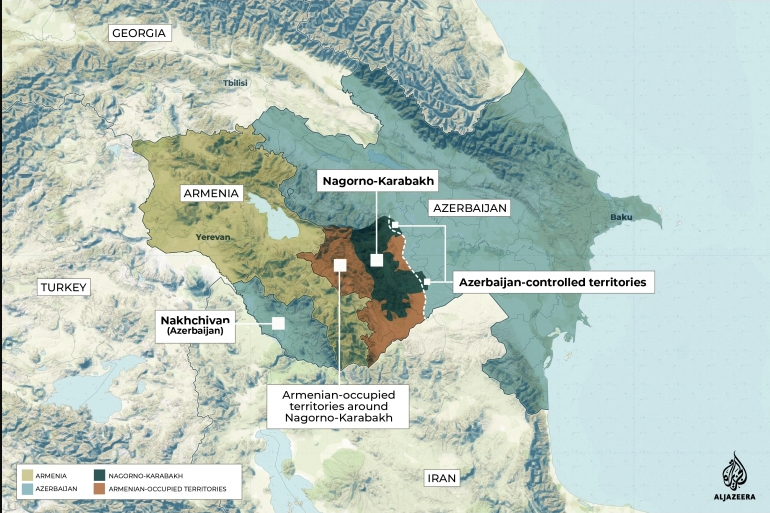

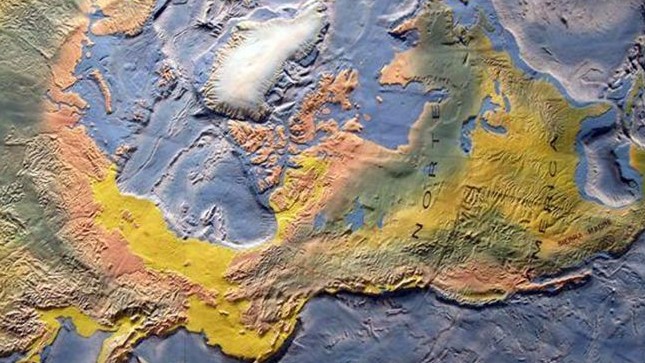


 The Trickster's Guide to Geopolitics