Siren Call of the Unholy Land

A predictable outbreak of debate and reaction has washed over the United States and many of its allies in light of the joint U.S.-Israeli assault on Iran that is presently unfolding. This includes debates over what percentage of the Iranian people want to see their government overthrown against how many would fight against foreign attack, what the damage done to diplomacy in the region will be, and how dangerous the Iranian and Israeli nations are to the Middle East. What all of this is often missing, however, is geography itself. And when looked at through the lens of geography- so core a concept to understanding geopolitics that it is part of the name- something becomes apparent:

The Middle East is not a particularly vital region of the world for those who live far outside of it.

My perspective is based in North America, but much of this applies to other regions of the world too. Many countries have pivoted away from fossil fuel dependence on the Persian Gulf. The United States in particular is now the world’s largest oil and gas exporter. There is no major world power based in the Middle East nor is there one (as the endless War on Terror seems to be showing) capable of utterly dominating it. Locally rooted middle powers are the most dominant long-term actors, and they have the capacity to outlast the imperial flirtations of more outside powers with global interests.

For profit defense contracting is certainly a major influence, keeping an unbroken stream of revenue pouring in from endless conflicts, and made especially lucrative by both the United Arab Emirates and Israel’s constant addiction to behaving as interventionist powers in their near abroad. Such honeypots in turn fuel media advertisement which in turn purchases favorable coverage and lobbying. But perpetual conflicts also exist in Myanmar, the Congo, the Sahel, and, albeit frozen, the Korean Peninsula, and in none of those places is there such a drive to intervene and to internalize the struggles of various peoples as there is for the Middle East. There is a genuine and seemingly at least partially organic push by many to see the safety and even outright expansion of Israel as some kind of existential virtue on behalf of some grand civilizational struggle. Likewise, amongst opposition to this consensus, the struggle of the Palestinians has become a moral litmus test in a way few other causes are touted. How Iran is governed internally also has become interwoven into these local struggles that so many insist on making global. The push for an Israeli regional supremacism is generally given far greater credence in mainstream commentary than its inverse doppleganger. Up to and including the Wall Street Journal’s editorials salivating for the next war for Israel against NATO-aligned countries before the present is even finished.

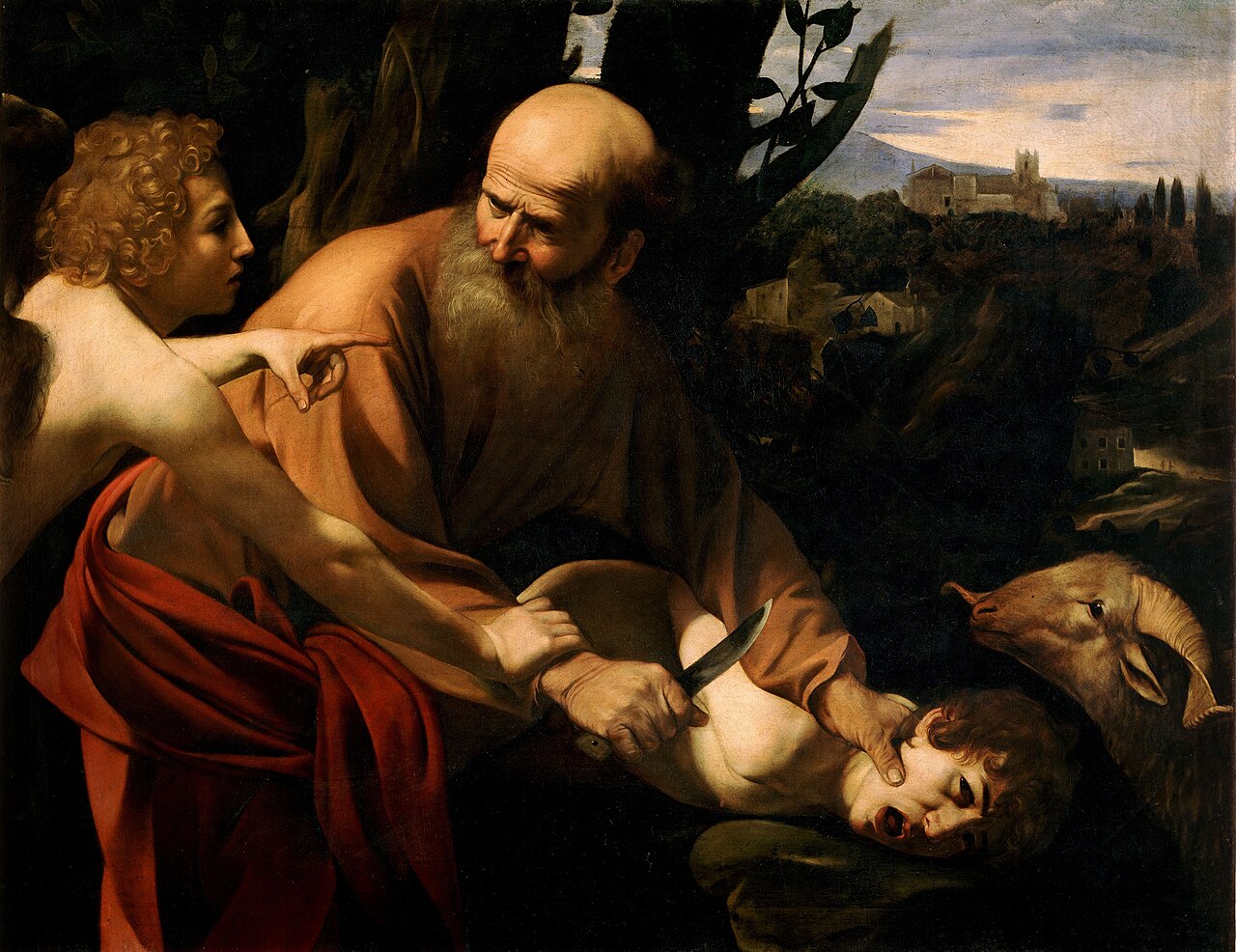
What accounts for this constant return of the U.S. and others and the comparative enthusiasm it receives from many despite often dismal results? I would argue that it is religious identification. Numerous sects of Christians, usually Protestant in denomination (and almost always evangelical variants) view Israel as a chosen land governed by a chosen people. In alliance with the equally ideological objectives of the neoconservative movement, which is almost monomaniacally fixated on the support of Israel, they seek to disseminate a narrative of prophecy and apocalypse- a final showdown for the entire planet at the ancient battlefield of Megiddo. The Jews were chosen by the Abrahamic God to be a special people on Earth, even if Evangelicals effectively view them as a human sacrifice to usher in the Book of Revelation’s promise to bring about a final war of all that is good against all that is evil. The True Believers, who make no secret of their intentions to use the United States military as their crucible of prophecy, will enter the Kingdom of Heaven, and the rest of us evildoers will be cast down into Hell where we can no longer remind The Elect about such pesky principles such as nuance, balance of power, and the fact that geopolitics at its most rational is ultimately not about morality or absolutes. A calculation that would inevitably turn up a dim view of outside powers being involved in local Levantine power struggles.

This is an even more unhinged-albeit clearly related- version of the liberal-humanist world view of an ever-advancing wave of democratic-capitalist societies putting on the ‘right side of history’. Both, however, share a total disregard for any sort of sustainability and see human lives as expendable in the face of some grand globalist ideological project. As it is, many supposedly secular people from outside of the Middle East have still adopted a Middle East-centric world view as a kind of automatic cultural inheritance. The time to critically interrogate this baggage is now well overdue.

The monomaniacal fixation of being involved in smaller regional wars on the other side of the planet from one’s home has exposed the dangers of universalist ideology. And no part of the world seems to attract this ideology quite like the Middle East, the place where it was first born. The Abrahamist world view taught that the local and situational was to be disdained for the existential and the absolute. A world whose only distinctions were moral, not geographic or cultural. From U.S. Ambassador to Israel Mike Huckabee to the Mullahs in Tehran, to the wailing snake-charmers surrounding the present President in the Oval Office, all agree; the fight for the soul of the world lies in the disposition of this dry and dusky land once known as the Fertile Crescent.

The spatial focus that should be at the center of all policy priorities is rejected, and countries like the United States, who should be rooted in the Western Hemisphere or, at most, the Pacific and Atlantic littorals as an offshore balancer, is once again dragged by the baggage of someone else’s history into wading into a strip of land no more valuable than any other on the far side of the world. In the heads of the Christian Zionist, the pro-Israel activist, or the global jihadist, the center of the world lies in the Levant. Therefore, their priorities remain fixated first on what they consider the ‘Holy Land’.

But the U.S. (and many of its allies) are secular countries. The First Amendment declared that the state would have no established religion, likewise the 1797 Treaty of Tripoli explicitly disavowed that religious traditions of other nations were of interest to American diplomacy. Knowledge of the horrors of 17th Century Puritanism has prepared the new ruling class in America for the dangers of an overly ideological foreign policy. George Washington himself was primarily motivated by a non-ideological spatial conception of national interest– a legacy that would influence an entire century of U.S. foreign policy after him.

Looking forward, I would urge those who live far from the Middle East to reconsider what the concept of a Holy Land is or should be. Rejecting the cause of universal telos and apocalyptic revelation, all rational foreign policy analysts must know they should not be in the game of rapture-making but rather supporting the stability and prosperity of the homeland. Any world view that advocates for a focus on a distant land over that of one’s own home is one that engaged in a kind of treason against any rational concept of the national interest (something that must be wrestled with first as domestic politics) on behalf what is effectively a globalist mythology of eternal cosmic battle amongst abstract and otherworldly ideals.

The deserts and scrublands of the Middle East are a far cry from North America’s varied natural splendor. If I needed a holy land, this ancient and biodiverse land that contains everything from temperate rainforest to swampy bayou to wide open plains does perfectly fine. Its centrality in its own geospatial mandala must not be sacrificed to those who live amongst its abundance and yet would still place the fables of the Dead Sea above it in importance. Those who live elsewhere may come to a similar conclusion about their own lands and thus they too must resist the siren call of yet more interventions in a distant and utterly unholy land.


NeoCalvinist Identity Politics and the American University

puritans

Pictured: Evergreen College today.

I know I am late to the ball game here, but as a former academic haven gotten caught up to the Evergreen College thing (sorry for the Vice but the video really does get to everything I am about to discuss) I feel its worth extrapolating what this is. You see, I have first hand experience with these people through living in and among them. It was the worst year of my life, naturally. It is why when people get offended that I equate performative wokeness and diseased Tumblr liberalism with right wing evangelicals I have to shrug. I have experienced both personally, and I find them far more similar than different. Evergreen College it seems has gone into full Bob Jones University mode. Perhaps it always was and I simply wasn’t aware.

I saw the first hand self-censorship of children who were instructed not to know better in a Christian elementary school, and I spent my first year of university at what could be considered the East Coast equivalent of Evergreen College and found myself surrounded by a similar phenomenon. It was so horrible I left that university to go to another which was as demographically different in every meaningful way I could find. Life got better. My education did too. It was also infinitely more ethnically and economically diverse. Funny, how schools like Evergreen are so demographically…well…I call this ‘The Portland Effect’.

But if you see this clash of hypersensitivity and demand for self-censorship in *learning institutions* that are (ideally) supposed to challenge you and make you have to actually have a defensible reason for believing what you believe rather than copy/pasting your parents or the first media commentary you liked I have some harsh words for you. The fact is, many people with college degrees often end up influencing policy, either by making it or by thinking they do via selective media consumption. They help create the context for what craven politicians will one day pander to, so its worth looking at this phenomenon. Sure, undergraduates will grow up. I grew up a hell of a lot from my former libertarian self in college to the hard realist self with a domestic socialist tinge I am now, thanks be to college in part and also the ability to debate those worth exchanging disagreements with.

But I think we are missing the fundamental and underlying problem here. The differences between Neocalvinist Left and Neocalvinist Right is not in base an actually political one. Sure, their views on any number of issues except virtue signalling, hating on video games, and having to raise awareness about Joseph Kony are not really in congruence at all, but those differences are obvious. What is more interesting, and terrifying to me, are the philosophical and quite possibly theological assumptions they both share which clearly show that they are two branches from the same common ancestor: Puritanism.

When Oliver Cromwell took power in Britain after The Wars of the Three Kingdoms, more commonly known as the English Civil War (despite starting in Scotland and ending in Ireland) he decided he would remake his new ‘Protectorate’ along the lines of a quasi-theocracy reflecting his puritan religious views. Holidays were banned, the theater was banned for promoting ‘immorality’, persecutions of dissenters reached a fever pitch not seen in centuries. Many were executed, many more were shipped abroad as indentured servants. A similar thing had happened before, under the theocratic mullah-like council of the Covenanters in Scotland before Cromwell had taken them out too due to their pledged conditional loyalty to the Stuart line. Having already turned Edinburgh’s Grassmarket-a traditional site for hangings-into the busiest it had ever been, the Covenantors caused even many of the Scotts to view Cromwell as a liberator. But he was only just getting started. Soon, he would take their project to all three of the kingdoms.

It was this rule of fear and theocracy, ‘The Rule of the Saints’ as it was known in the north, that would turn the kingdoms into something much like Saudi Arabia is today. You might even say Cromwell was the archetype of the ‘Moderate Rebel’ that has become such a punchline regarding Syria.  It couldn’t, and didn’t last. The Stuarts came back because after Cromwell’s death the country was nigh ungovernable. It was, no matter what people say, a liberation. The new government stripped many sectarian fanatics from their posts and re-appointed loyalists to the monarchy or people who had been sidelined by the protectorate. A middling degree of religious tolerance was restored and the single faith rule of the puritans was put to an end. Misunderstood heroes like Bluidy (bloody) George Mackenzie made sure to stamp out the bizarre wahhabi-like ideology and undo the damage caused by it.

Naturally, as Christians do, getting ones come-uppins was proclaimed as oppression. Never mind that nothing done in retaliation to the puritans and covenantors even held a candle to their various reigns of terror. Them not getting their own way in all things and dictating all discourse was trauma enough for them. They wanted a safe space. They left.

And settled in New England.

What followed was witch trials and genocide. Metacom, also known as King Philip, heroically tried to stop this plague which was born in Britain and invaded America to find its true home. He almost succeeded, and likely would have, were it not for the powerful Iroquois League, who viewed him as more of a threat than the colonists, which he likely was at that time. Naturally, this saving of their hides failed to change the attitudes of the colonists towards even the Iroquoian natives. They were all unsaved, folk far from God’s enlightenment. Just as they took the agriculture they learned from the Algonquians and then displaced them, so too would the descendants of the puritans do the same centuries later to their once Iroquois allies who had ensured their survival. If anything, King Phillip’s War had merely shown them that they had to more thoroughly persecute heresy within in the form of witches and warlocks. It wasn’t their land grabbing and unfair dealings with Native Americans that was the problem, and it wasn’t the Iroquois who saved their ass…it was a lack of virtue in thought and spirit. It was an abundance of sin. It was their entirely socially constructed cultural baggage that was the problem. In this way, these sad pathos-ridden people could easily take charge of their destiny, cast blame, and-often untaught in American schools-use such pretexts to seize each others property. But that last thing wasn’t the main intention, *of course*.

These people, if people indeed they can be called, would leave a dark fungus growing inside the American character for a very long time.  Their trauma of having no one like them on both sides of the Atlantic would become a perverse strand of religious fantascism and anti-intellectualism which would eventually migrate westwards and southwards after burning out at home. They were so wretched that when a gathering of far wiser individuals founded a new country in North America they would write laws based on fear of the mob, religious sectarianism, and the dark past they wanted to leave behind. They hearkened in civic thought as well as architecture to a saner classical world (in addition to the obvious enlightenment contemporary ideas of their times) whose values predated Constantine where civil virtue was understood to be paying into society at large in order to get something back. Respect was earned, or even bought, but where it was not an innate spiritual virtue.

Much like in 20th Century Turkey, this noble experiment would have to struggle against much of the populace. It would have set backs and victories. Eventually, beginning with the evangelical infiltration into politics in the 80s and up through recently, it would even hijack the government itself. Much like the AKP under Erdogan does now, the evangelicals came into American government and wreaked an internal destruction not seen since John C Calhoun. And they did it not to make anyone’s lives meaningfully better, nor out of a sense of real civic virtue, but rather out of a sense of identity politics. A sense to publicly show they were right and everyone else was wrong. Only they could save us. It is a kind of thought that stems directly from the protestant, and in particular calvinist, understanding of what good and evil are. It is a world understanding that holds only individual intangibles as worthy of human effort. And naturally, those who have these intangibles must show them publicly. The original humblebrag, now as policy.

These people reached a level of power never seen before under the Presidency of George W Bush, who appointed many unqualified people from unaccredited universities to run positions in the government. The government began to make noises about supporting young Earth creationism at the same time the economy had to gear up to be world-competitive in the tech sphere, then wondered why American students perform so poorly. Abstinence-Only education began on a large scale and showed time and time again to be an abject failure. But results didn’t matter, intentions did. Blind faith in American rightness and morality led us into complacency and Iraq. Really, though the potential is no doubt there, Trump still has quite a way to go to equate Bush and the rule of the traditional conservatives in sheer ideological incompetence.

A reaction to this was needed and necessary. At first it was great. To be a priggish social conservative went from the top of the political hierarchy to the bottom almost overnight. Humor got meaner, which I think was a good thing. People lost an unquestioning fawning over power they had inherited in the immediate post 9/11 world. But sadly, the dark fungal stain of puritanism would infiltrate the reaction as well. Years of pathetic right wing whining that colleges were persecuted Republicans, people who were pro-Israel, and Christians led to a university movement that decided colleges were also *really* persecuting someone else: people who hold their opinions and self esteem so lowly that they shatter from sheer fragility if challenged. People too young or too stupid to remember when it was right wingers who held the reigns of mainstream discourse, the importance of being able to buck assumed trends, and the need to protest a monoculture. Assuming that society was moving inexorably in one direction, something implicit in their liberal world view but decidedly unhistorical, they assumed that those dinosaur like conservatives were just holding up utopia with their mean words. Their virtue signalling was all wrong, as opposed to the right kind.

So professors, subject matter experts mind you, began to be criticized for holding views contrary to the students. This can be legitimate. A professor can say something totally out of line or unfitting for a class. But assigning literature with disturbing themes for a literature class is not one of those things. That is to be expected unless one is illiterate. Not scrubbing historical documents for present day sensibilities is not one of them. Not talking about the very real and very scary effects of the legal system or policy actions is not one of them. Yet all these things became the targets of liberal evangelicals. It was under the same basic puritan assumption that social conservatives operate under: ‘What goes contrary to my world view is evil, it is evil because I am good. I am good because I have an innate rightness which manifests through the positions I am psychologically biased to have. How dare you question my lived experience?’

Postmodernism obviously also played a role in popularizing this ridiculous and anti-intellectual individualism. But the American strain of this virus is in particular Christian and Calvinistic-no matter who holds it.

You will notice that at almost none of these universities are these protests held for better wages for staff workers, or better dorms considering the exorbitant sums payed by students. They aren’t even about environmental issues which affect us all. Materialism, (the only real and thus worthy basis of a political philosophy) is gauche. Much like the social conservatives too, the obsessions of these people gravitate inevitably to issues of a sexual matter, saying far more about the people fascinated by them than by anyone else. Wokeness is the rage. Look like you are doing something but actually don’t have to do anything. You are, after all, on the elect.

Performative virtue signalling is indulged, ironically, by neoliberal capital’s takeover of education. Since higher education is now a mostly for-profit enterprise, students are now ‘consumers’, and as anyone like myself who has ever worked in retail knows, customers can be real entitled shrinking violets…and store policy is usually that they are ‘always right.’ As customers, students (and their parents) except good grades and validation. They are paying for a piece of paper and a social promotion, not to actually *learn* anything.

Granted, not most students. This isn’t meant to be a ‘rah young kids’ rant, as generally I prefer the general opinions held of people younger than me to people older. I know these types of people, like evangelicals, are really not a majority. But in their case specifically they have come to see the university as validation rather than a challenge. Its performative, much like their actual views and much like the conservative views they often despise.

The irony is if we de-capitalized the university system, these types of people would not exist at all at the student level. But sadly, because of the curse America carries, the general anti-intellectual trend would remain in other fields.

But I have no doubt, as with all pathos-ridden ideologues, that the children of social justice neocalvinists will grow up to hate them and reject their ideas, and thus they will complete the circle by wasting away into elderly irrelevance…much like the conservative Christian movement is about to start doing demographically. I also have little doubt that much like the George Reckers/Ted Haggart/Dennis Hastert/Mark Foley wing of the old school conservatives, the new university and social media woke-reactionaries have an obscene amount of personal baggage and buried hypocrisy just waiting to be teased out to discredit them. No people that into moralism have ever *not* been hypocrites.

But can we stay sane long enough to outlast them? Or does the future Rick Santorum have blue hair and a Tumblr to support their run for office?

triggered mini