“”To know itself the universe must drink the blood of its children.” Her voice cracked like an ice shelf collapsing; it roared across an improbable expanse of inches. The talon pressed against my pupil. It went in and in.” ~Laird Barron, ‘Swift to Chase.’
“The foxes run. The foxes die. I mourn them, but I understand that there is a danger in mourning for those who would not mourn you in return. Empathy is for those who can afford it. Empathy is for the privileged. Empathy is not for nature.” ~Tanya Tagaq, ‘Split Tooth.’
Happy October. The best month is upon us so it is time to be thematic.
As of the time of this writing, I am one story away from closing out Not a Speck of Light, Laird Barron’s latest collection of short stories. I imagine that reviews of this specific work will be rapidly proliferating, so I am more interested in examining the overall themes of his oeuvre. All I will say about the latest publication is that it is excellent- as much so as his last collection Swift to Chase. As is normal, there are three or so stories on average from each work that really stick with me, a whole lot I enjoy thoroughly, and one or two that I am simply (but not negatively) baffled by.
Barron’s publicly available biography is well known because it is so interesting. Born and raised in Alaska, he worked in fishing and dog sledding, and spent some time in Washington State before moving to upstate New York. These three locations are extremely present in his works. Interestingly, he seems to be working backwards, with more recent stories being more likely to be set in Alaska. His earlier work was Washington-focused. There is also a novel series set in New York State, which retains the weirdness of his shorter fiction if more indirectly but is more focused on two fisted mystery and action.
Most of Barron’s stories are readable as self-contained and stand alone entries. Yet there is a clear overlap and greater cosmos going on here. Characters reappear, as do cults and monsters. Old Leech, an eldritch being who loves humanity “in his own way”, enjoys feasting on our suffering to sustain either his power or perhaps merely to slake his boredom. The world is animalistic and very much alive. But it is not a Live, Laugh, Love world- although you can do all of those things in it if you like.
Something that brings all of Barron’s work together, at least from my own perspective, is the same thing that has attracted me to for eleven years now: Its ruthless paganism. Barron’s protagonists are like Robert E Howard’s in the sense that they are tough and fight back no matter the odds. Unlike Howard, however, who was very much on Team Humanity, human supremacy never exists in Barron’s world. No one wins out over entropy. The food chain, like in Lovecraft of Clark Ashton Smith, is not stacked in favor of man. People fight back, but they often go down fighting. Specific underlings and odious toadies can get their comeuppance, but the protagonists don’t really win either in the long run. I have long maintained that Barron is really a modern Sword and Sorcery author more than even a horror author. That older and better form of fantasy was rooted in an earthy defiance of established order combined with naturalistic sensibilities. Horror was everywhere, but so was adventure. The world was predatory and so were its heroes.
A film example of sword and sorcery in the modern day which also goes unrecognized is the film Mandy, a movie I suspect Barron has seen, especially considering the direction some of his newer stories have taken in the past few years. In this way it takes one to know one as that film also influenced my own writing.
What you get with Barron is a kind of beautifully sparse and atmospheric writing style. Cormac McCarthy doing the pulps. But to say this is pulp is not to deny its literary value. In a culture where we are expected to be awash in Platonic idealism and a mandatory public moralism, it is of cultural value to take the human glasses off from time to time and see the surging tide of instinct and feeding that undergirds our experience. Life is visceral, and above such notions as good and evil. Suffering is everywhere, but so is the joy of combatting it. The pulps understood this drive, to see the awe in horror. Mysterium Tremendum made manifest. To choose life is to choose confronting, perhaps embracing, horror. Personally, I think these kinds of outlooks are extremely useful to meet many present challenges.
Barron shows us a world where everything eats everything else. An endless cycle of predation and consumption. It is perfectly in line with the view of the surviving shamanistic traditions or the old gods. This is the shamanic journey, where one is devoured by monstrous animals before being reborn with the devouring beast as a personal guide. One lives, laughs, and loves with a bloodstained mouth. As the musician and author Tanya Tagaq once put it while complaining about PETA’s demonization of traditional indigenous communities continuing to hunt: “We’re animals! We’re meat! We’re so stupid to think we are not.”
I am not one to become personally invested in people I do not know directly. When famous people I respect become ill or die it does not impact me like it does others. One very big exception to this, I found out, was when it was announced not too long ago that Laird Barron had a sudden and major medical emergency. A jolt passed through me fearing the worst. It was the fear that we would lose one of our best living authors. Someone who spoke to a reality lost in the endless publications of mainstream literary fiction with its endless focus on human subjectivity. Someone who had been one of the main reasons I had gotten back into writing fiction after years of inactivity on that hobby. Thankfully, he pulled through. Old Leech isn’t done digesting us yet. Here is to many more- both years and publications.
Mystery Science Theater 3000: A Cultural History is Matt Foy and Christopher Olson’s overview of the show that coined the term ‘riffing’ and launched a strange sub-genre of media made to parody other media. The idea of following people online or on television while they make fun of an old piece of media may no longer be quite the novelty it was when this former titan of comedy was at its peak in the 1990s, but I suspect the authors (as well as myself) feel the format has not yet surpassed its original incarnation.
MST3K was the creation of prop and occasional stand-up comedian Joel Hodgeson paired with producer Jim Mallon. Coming from a do-it-yourself first run in Minnesota public access television, the show’s premise was as ridiculous as the movies it would become famous for clowning on. A mad scientist (or more accurately over the course of the show, a series of mad scientists) imprisons a hapless janitor in an orbiting satellite and forces him to watch bad movies in order to research his deteriorating brain. To help him get through this trial, Joel builds sentient robots to serve as his compatriots in trashing some of the worst films ever made. Oh whatever, the show’s intro explains the whole thing in under a minute anyway.
Foy and Olson’s book does two things concurrently in its narrative: First, it narrates a straightforward history of the program from local Minnesota, to Comedy Central, to Sci-Fi Channel, to long hiatus and internet spin off projects, then a two season run in Netflix 20 years later and its return to independent creator control with today’s Gizmoplex. As it does this, the text singles out specific episodes of particular relevance to the show and its growing mythos (the show would come to riff itself too, drawing on jokes that referenced previous episodes more as time went on). Additionally, the book also intersperses commentary on the cultural effect of the show as it evolved and by midwifing the riffing genre which is placed between these historical sections. The fact that these two different sections are not separated from each other and are melded together within chapters dedicated to specific time frames is an odd organizational choice. While it takes some getting used to, it soon comes to make sense as the legacy and nature of the show is analyzed in time with its past evolution as a program.
A straightforward history of the program was needed, as most other books on this topic seem to be anthology series that primarily look at the cultural dimensions. Here, Foy and Olson have delivered something valuable. But their own cultural analysis is also worth reading on its own as well. Defining riffing as not just an audience interacting with media, but rather a triangulation of found media, intermediary comedy, and an audience, the book makes the case that the art form popularized by the show becomes intrinsically interactive in a way few things are. And, in one of the most insightful passages, the riff of a film becomes a subversion of not just the media itself, but how media is to be consumed in general:
‘MST3K demonstrates that movie riffing empowers riffers to reject or modify a film’s constructed binaries of good and evil. Villains can become laughable, just as heroes can become loathsome or ineffective. This deconstruction of heroic mythologies becomes useful when reading problematic films such as Space Mutiny or Mitchell, which glorify mindless aggression and violence as world-saving strategies. MST3K’s rejection of simple yet seductive binaries of good vs evil keeps the film and its characters open to reevaluation and audience self-reflection.’
This is followed up soon after with another passage referencing the cheap quality of many of the mocked movies in this vein:
‘On the surface, riffing on a movie’s gaffes and choices may come across as shallow mockery rather than critique. However, riffing on botched elements of a text’s craft should not be dismissed as mean-spirited because it fulfills a crucial and underappreciated function in active media consumption by keeping the constructed nature of cinematic storytelling in the foreground. Such riffs reveal that a movie (or whatever if being riffed) is a product crafted by artists and producers with a purpose. Films are generally engineered to immerse viewers into a manufactured universe, one crafted intentionally in the service of art, profit, or both.[…] Isolating and magnifying any element of film- obvious or subtle goofs produced by stress, indifference, or lack of skill- draws the audience’s attention to a film’s construction invites audiences to question not only how it was made but why.’
This perspective has obvious value outside of cheesy entertainment criticism. We do, after all, live in an era where established narratives have become so complacent and lazy that the wheels fall off of them constantly. A large media edifice exists to castigate anyone who notices these goofs, and in so doing often shows its own hand. This prompts us, the viewers of, say, world affairs, to ask ‘do you know what you are doing?’ and ‘what is this narrative even for?’
But I don’t want to over-intellectualize this too much, even if that is the point of the book and my review of it. The show’s motto is, after all, ‘Remember it’s just a show…I should really just relax.’ So let’s close out with something more personal.
I can’t deny that my own relationship to the show is almost as related to childhood nostalgia as it is to its role in comedy. I first came to the show when I was around 9 or 10 years old, having been told about it by an art teacher, and (thanks to catching re-runs of the original 60s Star Trek) in love with old B-grade sci fi jank. My family did not have cable, and so I saw one year later rebroadcasts of MST on a local public channel based out of Philly, perhaps fitting given the show’s roots (weirdly, I have a distinct memory of every single commercial break of the show running this Dining A La Card spot).
Naturally, I did not understand most of the jokes being made. It was funny robots making fun of a funny movie. My first episodes were Giant Gila Monster and Teenagers From Outer Space and the flimsy effects and forced acting of those offerings were good enough. The novelty of being in a ‘simulated’ dark theater with people more clever than one’s own friends gave the humor a strangely comforting vibe. Perhaps this was further enhanced by the fact that I tended to watch the show close up with low volume in the dark as its broadcast hours were late and therefore past my bedtime.
By the time the show went to Sci-Fi Channel I was old enough to watch it whenever I wanted (and had access to cable). This was also, in my opinion, when the show was at its height with Mike Nelson’s new hosting (which I originally viewed as a downgrade but eventually came to see as positive) bringing a cutting edge that really appealed to my tweenage self. Also by this point I had many friends who also enjoyed the show and we often watched it together at sleepovers, being especially fond of Japan-schlock episodes such as Prince of Space where the goofy chicken-man villain warlord could honestly carry the entire thing without the riffing.
Upon hitting some time in high school I just stopped watching. Probably because the show had ceased to exist. I never even came back to it, except as occasional joke references, until the Netflix reboot almost 20 years later inspired me to re-watch some favorites before moving on to the newer episodes. (I do like the newer three seasons, though I feel this guy sums up pretty well why they aren’t quite as good as the 90s run). Coming back to it as an adult actually made the show entirely fresh. No longer just some funny robots mocking funny movies show, I was now getting most of the jokes and commentary too!
I also re-appraised what my favorite episode is. It is now Mitchell. ‘Enjoy’ my ‘fan art’ of our moist 70s Slob-King.
This made me really appreciate the design philosophy of much of the humor to a much greater level. The creators of the show often said they were proud of how obscure many of their jokes were, knowing few would get them…but that the ones that did would really get them to the point where they would feel it was written for them. This ties into a theme that comes up in MST3K: A Cultural History frequently: something is strengthened by particularity. It is not for everyone. If it was, it would be diluted, ineffective, overly safe. Whedon-Reddit-Marvelized. The authors are right to constantly point out that the rootedness of the show in midwestern culture, regional in-jokes, and keeping its strange characters consistent around certain themes is an enormous strength. It is from a specific place, from a specific kind of person doing a non-typical form of humor, and this is what makes it work in a way that those seeking as large and non-specific an audience as possible can not.
I spent another few years not thinking much about the show until two months ago when I decided on a whim to watch as many of the 90s episodes as I could. Somehow, there were even a few I had never seen before. I had no idea this book was coming out when I began, but found out soon after and thus planned to read it once it dropped.
All of this re-engagement has been running concurrently with my re-reading of many of Thomas Ligotti’s stories. I have spoken at length on Ligotti before, but needless to say I see a hilarious halfway point that I believe I personally occupy between MST’s joyful good natured mockery and Ligotti’s treatment of the universe as built for horrific entropy and nothing else. Imagine that the universe and all its iniquities and miseries is really just the equivalent of a poorly put together B movie. Coleman Francis is a type of Gnostic Archon or mad creator. All of it built out of malice or incompetence or both. And yet out there in the cosmos there reverberates a cackling from the creatures who have found this B-move, and at least are having fun laughing at it- at all of us- and reveling in just how awesomely bad the whole production is.
Because, when you look at things that way, sometimes even the worst the Earth has to offer can be pretty funny. So long as you have a distant enough theater to watch the spectacle from, at least.
The whole experience also has got me thinking we are long overdue for a series of anti-establishment analysts riffing on The West Wing and Newsroom. Sorkin is owed his ‘due’. Perhaps the set up is that we are imprisoned in a Hungarian bunker, being experimented on by the hammy Mad Scientist Supervillain Seb’astyon Gor’Ka. Played of course by James Adomian.
Peter Jackson’s From Genghis Khan to Tamerlane: The Reawakening of Mongol Asia was something I got the second it was released. It has long been my assertion that English language works on the Timurid period are rare enough. Much less ones also covering the post-unity Mongol prelude that led up to it. Sure, there are specific academic works about certain places or kingdoms in this period, but seeing the process of Mongol decline and Timurid rebirth all at once is an important and overlooked aspect of these two states. Indeed, as Jackson asserts, they really aren’t two different states at all. Or, more specifically, the Chaghatai Khanate (the Mongol successor state in Central Asia) and the Timurid Empire are the same state, but simply domestically usurped. You wouldn’t say the Napoleonic Empire was not a French state would you? And unless chroniclers of the time were refering to Timur as in an individual specifically, they usually referred to his state and army as Chaghataiid.
A brief overview of the rise of the Mongols and then a focus on their post-unity decline and various fates of the successor states give us a full and meaty text. We then see the intermediate period of full Ilkhanate and partial Chaghatai state failure and fragmentation and then, only in the third, final (but most substantial) book subsection, the rise of Emir Timur with a short final chapter on the fairly rapid fall of the empire. Jackson does not deny the differences in the periods at the start and end of his work, but emphasizes continuity in many places which are often overlooked. We get citations from numerous contemporary historians to all kinds of aspects of this period, such as attitudes towards various peoples, how rule was legitimized, the large amount of the nomadic people that retained shamanism even after official societal conversion to Islam, and the courtly public debates between Chinggis Khan’s proto-constitutional Yasa (eventually called Tore) and Sharia law. There are also numerous asides about rival dynasties that emerged in the political vacuums that arose in the post-Mongol world. (If you would like another great book on this subject do check out Patrick Wing’s The Jalayirids.)
I cannot emphasize enough how useful as a reference and source this book is to those into Turco-Mongolian history. We get chapter by chapter breakdowns of these empires and how their histories flow into each other. How Timur rose from relative obscurity into a local warlord, then greater Samarkand bigwig, and then finally a warlord ruling through a puppet Chaghatai Khan. An extreme respecter of the Mongol experience before him, Timur married into the Chaghatai family to merge dynasties for his descendants, but never declared himself the head of the state even though he was by all definitions its sovereign. His descendants would end up claiming the joint heritage, most famously Babur, the founder of the Mughal Empire (itself named as a Chaghatai term for the more nomadic of the Central Asian lineages still connected to the Mongol invasions).
Many historians have posited that Timur wished to restore the Mongol Empire, but Jackson disagrees. The author sees the Emir as a usurper/restorer of the declining Chagatai state. Giving one of the less successful long-term successor states of the Mongol period a moment to outshine the others and go from least important to most important. A major part of this was the economic reorientation of Silk Road trade from its more northerly line through the Kipchak Khanate (Golden Horde) and into Yuan (and then Ming) China and back into its pre-Mongol Central Asian focus. There was a level of regional patriotism here too, with the plunder and tribute from abroad fueling Timurid building, art and science patronage, and, I believe, a sincere attempt to recover an economic dynamism for a region that had been declining ever since the Yuan and the Kipchak Khanate had ended up as the much more successful of the Mongol successor states than the Chaghatai and Ilkhanate were.
Jackson and I agree on all of the above. Indeed, I even wrote about the Timurid period as one of a strong example of a core vs periphery form of imperialism (World Systems Theory) rather than one based on constant territorial annexation in my own book. There is, interestingly, one point that only comes up in the end where Jackson and I disagree though. Jackson believes that the reason Timur was the last of these truly Eurasia-spanning successful nomadic army warriors (though others like the Aq Koyunlu and Dzungars would have some strong moments to come) was because of the state and military mobilization changes made to mixed regimes like Muscovy and the Manchu Qing dynasty. I completely agree that this played a huge role, and that the 17th Century was really the period of Manchurian military domination, but to make this point Jackson disavows that economic changes reorienting Eurasian trade towards the oceans had yet to play an important role. I believe it was both. Granted, this would not yet have been apparent at the time and is much more of a hindsight argument, but the Manchus and Muscovites and Safavids all were beginning to grow their connections with the more maritime parts of the world in addition to reforming their armies to take the best of both the settled and nomadic worlds. After all, the Timurid army itself was one of the first of these mixed armies (though much more tilted in the nomadic direction than these later states) but was already clearly acting in a way that implied fear of global trade networks moving away from in inland heartland. Nevertheless, this is a point where reasonable people can disagree and my quibbles in no way change my view of the book overall.
The book is both accessible to the non-academic but also rigorous and citation heavy and well worth your time.
In the meanwhile, enjoy a traditional-style but modern song in the Chaghatai language about Timur:
Geotrickster’s Note: Self-serving politician memoirs, particularly of failed Presidential candidates, has been a running gag in a circle of friends of mine for years. The book held up as the iconic example by us in this ‘genre’ (for some reason) has long been Tim Pawlenty’s ‘Courage to Stand.’ Pawlenty’s 2012 campaign had the dubious distinction of being hyped as inevitably nomination-clinching by MSNBC’s Chris Matthews, who had previously predicted that the 2008 race would be an inevitable showdown between Rudy Guiliani and Hillary Clinton. This eventually culminated in me giving my friend and now four-time guest contributor Brandon a copy of this book as a gag gift when visiting him in 2021. Of course, none of us ever actually read any of these things cove to cover…until now. With the recent predictable and hilarious removal of Meatball Ron from the oven of being a presidential contender (see two entries ago for my eulogy of that) it seems it was finally time for Pawlenty to get his due.
Without further ado, the following words are that of Brandon Hensley alone. Amazing how we went from gaps of years between his guest postings to gaps of weeks:
—————————————————
Memoir, in general, is my least favorite book genre. Two of my favorite women in all of history are Lucille Ball and Cassandra Peterson. I own both of their memoirs and I have never read either of them. I simply don’t have a great deal of interest in the private lives of celebrities, even ones I happen to particularly like. This might have something to do with the fact that I have somehow managed to avoid developing weird parasocial relationships with Youtubers or Tiktokkers, as well. But then, I was also able to quit smoking without blinking, so maybe there’s something genetic there.
Conversely, I’ve always been weirdly fascinated by the Presidential Primary Candidate Political Memoir. This is not a genre that Amazon or the New York Times recognizes, but they absolutely should.
A political memoir is simply the memoir of a political figure that narrows its focus from the broad biographical details of one’s life to the politically-salient biographical details of one’s life, and probably provides some sort of policy recommendations by the author.
The Presidential Primary Candidate Political Memoir, by contrast, is exactly the same except it is conveniently published conspicuously close to a Presidential Primary. It’s almost like a trunk novel that a politician has been carrying around for a while and tweaking every so often to keep it relevant until it becomes necessary to throw it into the marketplace and see how it helps the straw polls. Or, in the absolutely shitfacing hilarious situation of Hillary’s “Hard Choices” (2014) and “What Happened” (2017), the memoir bookends the election she lost. (“What Happened” also has the dubious distinction of having the question and the answer [in the form of the author’s name] prominently displayed on the front cover, gracefully saving people from wasting their money or time on it)
The reason the PPCPM is so interesting, however, is because it does what no other act of speaking on the record can do. It provides a single reserve summation of a political candidate’s moral character, fitness for office, and proposed manifesto. There is no amount of NYT article digging, CNN interview searching, or internet archive campaign website recovery that will amount to the convenience and cohesiveness of a PPCPM. If a candidate says one thing on CNN and then another on FOX, it’s a gaffe. If they’re quoted as saying something in the New York Times that they later say was taken out of context in the Washington Examiner, that’s just media spin. But what was committed to paper by them is a whole other story.
A couple years ago, Chris (yes, the owner of this very blog!) gifted me a PPCPM as a joke. Up to then, Tim Pawlenty was widely regarded as having run one of the worst Presidential campaigns in history. He barely raised any money, barely registered in polling, and, like current Vice President and 2020 Democratic Presidential Candidate Kamala Harris, dropped out of the primary before a single vote was ever cast. Having just finishedDianetics a couple weeks before Ron DeSantis stole Pawlenty’s crown of glory, it made sense that now was the time. Time to stand up and read “Courage to Stand: An American Story”.
There are two problems with a PPCPM that is now twelve years old and about to celebrate becoming a Bar Mitzvah.
Nothing in it is that relevant; and
Even if it can be mined for “ha ha, look at this hypocrite!” points, they’re all points that have already been made.
So I settled on option three: make fun of Tim Pawlenty because he has clearly never heard the word “recliner”.
I am not fucking joking.
“Grandma Rose always had cookies or treats at the ready. It seemed as if the measure of her love for others included how much food she could force into every one of us. Mostly sweets, of course, unless you were there for lunch or dinner, when you’d get some form of potato, or some form of sausage or other affordable meat. And she dispensed matronly advice with every plate.
“Some days I visited her by myself. I’d sit in her oversize grandma chair with the reclining feature, where you could pull the lever and get your feet up in the air.” (emphasis mine)
I am not making this up. He uses twenty-one words to describe a recliner, including the word for reclining. And it’s not the only time. He repeats his performance:
“It’s funny how the simplest things can leave the deepest impressions. Like when Dad and I watched television at night. I remember the two of us setting up those rickety old television trays to eat something and watch some show. I can’t even remember what we watched. … He’d sit in his La-Z-Boy with the leg-up option, and I’d sit in my chair, and we were the kings of the world!”
Again! He cannot bring himself to use the word “recliner”. He’s not even consistent with his failure to understand that a word exists to describe the thing he is talking about. It’s either the “reclining feature” or the “leg-up option”. I’m surprised that he didn’t borrow some sort of Seussian neologism in the process.
But it’s not just his inability to articulate the derived noun from the root recline that’s bothersome. He makes a really strange biographical point when recounting the passing of his mother.
“I later learned that in her very last hours, she pulled my two brothers and two sisters together around her hospital bed and told them directly, ‘Whatever you do, you get Tim to college.’ She made each of them promise to follow through. It was her dream for me, a dream she had instilled in me herself. She could not go peacefully without knowing that her dream would be fulfilled.”
I am not one to make light of a dying woman’s wish. Having watched my own mother die in a hospital bed, I am not a stranger to just how powerfully emotional that event is. And I was in my thirties when my mom died. Tim was only seventeen. But what’s weird about this is the way it’s phrased. It sounds as though she could give a shit less about her other four children. Only Tim gets to go to college. Fuck the rest of them, right? Partly this might be Tim’s own doing—he doesn’t actually say much about his siblings, but he especially doesn’t say if they went to college. Perhaps they were already in college? Who knows? Tim doesn’t say. But then, knowing that his mother’s dying wish is that he go to college, he says in a later chapter:
“But first, I had another important decision to make—whether to follow through on my mother’s dream that I would go to college.”
What a fucking turnip. Again, based entirely on what he has told us, we cannot be sure that his mother put this same premium or emphasis on his siblings. It is entirely possible a sister or a brother forewent the opportunity to ensure that Tim got to go. And here he is dilly dallying on whether or not he’ll go. Asshole!
Oh wait. Immediately after this he tells us precisely how many of his siblings got to go to college:
“No one in my family had earned a college degree before, (though Dan [a brother] attended classes briefly), so my family had no institutional memory on the subject.”
ASSHOLE. ASSHOLE. ASSHOLE.
Also, he was clearly an idiot asshole student for never having spoken to a counselor about how to apply:
“What colleges were even an option? How would I find out about financial aid? What did a year’s tuition cost? Would I have to live on campus, or could I commute? Was my GPA good enough? Was there testing? Where did I apply?”
But this also somehow feels entirely on brand for someone who doesn’t know the word recliner. If those passages above about the RECLINER TIM. IT’S CALLED A RECLINER! seem long just to make a point about how Tim doesn’t know what a recliner is, it’s not because Chris is paying me by the word (though I am open to the possibility), but it’s because this faux dopey Leave it to Beaver quality of Pawlenty’s “salt of the earth”, “son of the soil” shtick actually feels very genuine.
Remember that one of the defining qualities of the PPCPM is that it’s establishing the candidate’s bona fides. This includes their “authentic American patriot YEEHAW!”-ness, even in a Democratic Primary. Just look at Joe Biden from Scranton PA, even though he moved to Long Island briefly when he was four and then moved out of Scranton forever when he was ten, so the most formative years of his life where the bulk of his adult personality and remembered experiences occurred happened somewhere other than Scranton. Delaware, the home of the American insurance industry, doesn’t scream “working class” quite like Scranton, even though nobody in their right mind would look at someone who spent their entire lives from 11 onward somewhere else. Anyway, I digress.
Biden’s insistence on his working class bona fides is because the idea that Americans are by default a hardworking, labor-friendly civilization is hardwired into how we understand ourselves and our country. Or at least, it used to be. The entire façade is crumbling around us and most young people have completely fucking checked out of the myth that bootstraps are something you can actually pull on since we’re too broke to own any in the first place. But regardless, the legacy media and political establishment—and the vast majority of voters, by the way, since millennial angst expressed on the internet is not the summation of human accomplishment no matter what my LiveJournal claims—still subscribes to this political myth.
And so, every election cycle, every candidate for the highest office in the land tries to put forward whatever piece of their background speaks to that essential story.
In Pawlenty’s case, it’s entirely genuine. He was born and raised in South St. Paul, Minnesota, and didn’t leave until after college. He was a commuter student and only left when he and his wife got swanky law jobs in the Twin Cities. Unlike Biden, when Pawlenty says he’s from South St. Paul, he actually is.
“The meatpacking plants and stockyards that once thrived along the western bank of the Mississippi—once the biggest stockyards in the entire world—are gone.
“What used to serve as the center of employment and life for so many residents of this town was swept into history, seemingly overnight, at the dawn of the 1970’s. It’s something anyone in America who lives in a one-industry town, whether it’s an auto factory town or a shoe-manufacturing community, can relate to. When that one industry starts to close up shop, it leaves decades of unease and heartache in its wake.”
As a result of actually being from the place he claims to be from, Pawlenty speaks with a frankness about what de-industrialization did to South St. Paul that Biden can only ever pantomime. This is in part because Biden would not have been old enough at ten years old to understand what was happening as America offshored its industry and eviscerated the working class, and also because Biden is just so old that he moved out of Scranton while the Golden Age of the Middle Class was still happening.
As a quick point of reference to Biden’s age, the Boomer generation only lasted twenty-some years. Yet we had Boomer presidents for well over thirty. The first non-Boomer we got wasn’t some younger Gen-X model, but an even OLDER Silent Generation model. It’s like driving a 1988 Toyota Camry until it’s literally falling apart in 2019 and then upgrading to a Model T, not because you’re a Model T enthusiast, but because your Aunt Becky is convinced that buying a 2020 Prius will literally end democracy as we know it, so you can only drive a Model T or you’re a fascist. So you buy the Model T just to get her to shut the fuck up already but she won’t stop DM’ing you about it because there’s a chance the 2024 Prius will have a chance in hell at bringing this overwrought metaphor to a conclusion. If that’s not enough, remember that Kamala is still technically a Boomer and is one heart attack away from restoring that generation to the throne.
Pawlenty’s genuineness is important for two reasons. One, it actually sells him as a politician and probably has a lot to do with his success in Minnesota state politics. Secondly, it does for the rest of his memoir what that genuineness does on the campaign trail: it sells the policy. And this is where it becomes impossible to point and laugh at out of touch Republican talking points about the economy.
In any other case, pointing and laughing at Republican deficit hawks cutting taxes and then bemoaning deficits is pointless because we know they’re cynically doing this shit as a way to justify cutting down on business regulation. Republicans know they’re causing the deficit. But they also know that Democrats are cowardly shitgibbons when it comes to running defense, so they’ll cave every time and thus offer no reason for Republicans to stop. However, in Pawlenty’s case, that genuineness that he carries around with him suggests he actually believes it is sound policy based in reality.
There is not one drop of self-awareness on Pawlenty’s part when it comes to the relationship between taxation and spending and balancing the budget. He brags about cutting taxes as House Majority Leader, and then is surprised that there is a multi-billion-dollar hole in the budget projections he inherits once he’s elected governor. Time is linear for everyone except Tim. There is no rational connection between these things. He never addresses the connection. He just talks about cutting taxes in the State Legislature one moment, and then is GASP! Surprised that there’s a giant fucking hole in the budget once he’s in the governor’s mansion.
A couple of passages that really illustrate this complete lack of understanding is fairly standard for boomers writ large, but helps exemplify the fact that Pawlenty really does live in a Norman Rockwell painting:
“While I hate to reflect on it like some old man reminiscing about the good ol’ days, the world just seemed to work [in the 1960’s] in a way that allowed the people of South St. Paul, my family included, to live a pretty great life.”
And
“From everything I saw as a child, the city of South St. Paul was a place where neighbors mattered, where family mattered, where church mattered, where respect for things mattered. Everywhere you turned, you saw hardworking, fun-loving people, doing whatever they could to get by, most all of them living by the rules and trying to do the right thing.”
I wrote in the margin, “Pepperidge farm remembers!”
Boomers love to harp on contemporary complaints about working multiple jobs and not being able to afford basic housing or food. “Back in my day!” Well, no, you fungus, that was not back in your day. That was back in your parents’ day when there was an acute memory of what happens when billionaires rape the people who generate all of their wealth, and so they put into place an entire policy regime designed to minimize the power of the billionaires while funneling as much money back into people’s pockets as humanly possible. It wasn’t perfect, and was absolutely racist as fuck how the uneven distribution played out, but it was partly because of exorbitantly high taxes on the business class and regulations designed to keep them from dismantling and moving out on a whim that the 50’s and 60’s were even able to play out the way they did.
The reason boomers love to hate on taxes is because the current neoliberal regime has shifted the tax burden so severely off of businesses and onto people. Meanwhile the regulatory environment surrounding the business and its shareholders has become so disgustingly incestuous that shareholders will literally sue the board of directors for trying to give their employees raises during a global pandemic (Full disclosure: I am a former employee of NVI and a former shareholder, but did not purchase stocks during the period in question and sold the last of my shares in EYE prior to the lawsuit being announced). Boomers have a false class consciousness, where they think their interests and the interests of business owners are the same and so have unrelentingly supported this idea that releasing the shackles of business will usher in another golden age, whereas every single time we move further in that direction everything gets worse for everyone with more and more of the tax burden falling on individuals.
So hearing deficit hawks reminiscing about how great their childhoods were is always a special kind of special, since they are the ones pushing it further and further out of reach for their own children and grandchildren. Which makes the fact that Tim Pawlenty is a classic pre-Trumpian deficit hawk, and one that probably genuinely believes it without any irony whatsoever, so much more fucking grim.
It’s poetic, then, that he chose to run for President at the exact moment that the Reaganite Republican consensus was starting to break down.
The Tea Party rose to prominence beginning 2009 as a response to Obama’s election. Whatever their motives or unconscious racial bias, the Tea Party represented for the right what Occupy Wall Street did for the left—a disenfranchised, disillusioned, downwardly mobile popular mass expressing its frustrations at decades of bipartisan government mismanagement.
The difference between right populism and left populism (at least between 2009 and 2024) is that the right populists were willing to hold the government hostage to get their way, whereas the left populists have always bent the knee at the last instant. So the left populists have never understood that the entire point of gaining power is to wield it as effectively as one can, and to use every available means to do so. The Tea Party was so effective at this in the early days that it caused an institutional back lash within the Republican Party that eventually saw the isolating of some of the Tea Party’s most extreme members of Congress in the Freedom Caucus right up until Donald Trump and MAGA reinvigorated it.
Had Pawlenty played his cards differently, he maybe could have had a fighting shot at the 2012 nomination in place of Mitt “I have Binders Full of Women” Romney. Whereas Romney was widely viewed as out of touch and elitist, Pawlenty had genuine populist leanings that could have been flexed had he read the moment better. Instead, he came in third in a straw poll just before the Iowa caucuses and dropped out. And now I’m going to mathematically prove that Pawlenty is a fucking idiot for doing so.
The Republican primaries have only been run since 1976. Prior to that, the Republican Party chose its own nominee for President and didn’t let people directly influence that outcome. Since 1976, ignoring incumbent candidates, Iowa has only chosen the eventual nominee twice in 13 presidential primaries (including 2024 because we all know Haley isn’t going to win). In 2012, that was twice in ten. And the first place winner of the straw poll that made Pawlenty pack up shop wasn’t even the eventual winner of Iowa. It was straw poll fourth place winner Rick Santorum, which suggests that Pawlenty actually had a fucking shot at winning Iowa.
I’m just spitballing here, but New Hampshire has a tendency to seek a middle ground when it comes to the primaries. We saw this in the 2024 New Hampshire Primary’s lean toward Haley over Trump. Given Pawlenty’s “Aw shucks!” version of deficit hawkery, I would be willing to go out on a limb that a win in Iowa would have really boosted his chances in New Hampshire, and had he managed to pull off both of those, it would have given him a pretty decent betting chance at actually getting the nomination over Romney.
Would Pawlenty have stood a chance against Obama? Actually, yeah. Obama’s one and only success while in office was the Affordable Care Act which made healthcare more expensive for everyone. Romney couldn’t attack it since it was lovingly referred to as Romneycare due to its copying of Romney’s healthcare law while Governor of Massachusetts. However, Pawlenty could have attacked it and would have attacked it authentically. The ACA of 2012 was a paragon of government spending gone horribly wrong. The website was buggy, the open enrollment periods were (and are) nightmarish, the marketplace was difficult to navigate, and it required the hiring of thousands of new government workers to staff the phone lines which also routinely crashed.
Pawlenty would have had a field day!
Alas, it wasn’t to be.
The idiot who doesn’t know how to say “recliner”, whose four siblings forewent college educations so he could go, and former Governor of Minnesota read an informal, internal GOP poll that said the loser caucus that can’t pick a winner wasn’t going to pick him and dropped out.
In reading this, it made me think what is the benefit of reading a twelve year old memoir of a failed presidential candidate? There is no part of the reason why it was written that translates into the reason to read it now. Pawlenty’s political career in office is done. He is currently a lobbyist as near as I can tell for the Financial Services Roundtable as near as I can tell. His Xitter is just boomer small business dad, so, incredibly on brand. There’s no reason to pull out quotes from his book and yell “gotcha!”
Instead, I think the point of reading these is probably something to do with being able to look at a specific political moment, remember the specific partisan battles and the claims that these elections are too important to do anything other than vote for the centrist or else democracy will end and…maybe something deeply poignant about how the average American voter’s political memory is shorter than a goldfish?
Here are some other hilarious Pawlenty bits and the commentary I wrote in the margins:
“My family was eating breakfast one morning, discussing Greece and its financial trouble because it was in the newspaper. Mara, my then-thirteen-year-old daughter, completely unprompted, with simplicity and clarity, looked at me and said, ‘That will be America soon.’” [STFU Tim she did not say that]
“Whatever happened to the power of Enough? the power and the guts to say, ‘No’?” [Foreshadowing]
“It’s no longer okay to look backward, unless it’s to find inspiration or recognize the errors of the past so we can be certain we don’t repeat them.” [Woke!]
“The courage to say, ‘No’ when everyone else says ‘Yes’—because we know it’s the right thing to do.” [Say no to yes; say pizza to drugs]
“Stockyards and Stability” [by Jane Austen]
“My simple act of offering pro-Reagan brochures was viewed by many on campus as politically intolerable. People shouted at me, and one student actually spit at my shoes!” [This was actually because he was a giant fucking nerd; nobody actually cared about Reagan]
And let us close with the afterglow of the knowledge that Tim Pawlenty almost accepted a job for Rudy fucking Giuliani:
“[I] actually got as far as receiving a job offer from Bracewell & Patterson (now Bracewell and Giuliani), a well-respected law firm” [LOL]
What do you say…Shall we challenge him to another?
Geotrickster’s Note: The following is the third guest post by Brandon Hensley, who previously gave us such book review posts as ‘The Centrist Manifesto‘ and ‘Hope Never Dies.’ All other words are his.
———————————————————————–
Dianetics, Revisited
A thought experiment. You are in need of some mental health therapy to help mitigate the triggering responses of some traumatic event. They have intruded upon your day-to-day activities and you’re tired of it. Pushing open the door to the Therapeutic Center for Mental Health, a lobby with two doors greets you. Above the first door is a sign: “Modified abreaction therapy with a licensed practitioner who will recuperate the cost of licensure by billing you for the treatment.” Above the second door is a sign: “Modified abreaction therapy delivered via a convenient self-help manual.” Which door do you choose? (And we’ll clarify what is abreaction therapy as we move along.)
In the ever-expanding world of mental health destigmatization and expansion of therapeutic access, choosing a practitioner can be troublesome, and that’s before you even begin the journey toward treatment. And then, once you’re embarking on a course of treatment, there’s plenty of room to criticize the underlying theories of some of those treatments. Which door, in this period of late capitalism where the advancement of costs of living annually outpaces advances in wage growth, does one choose?
Enter Dianetics Therapy. Or really, re-enter. The second door in the lobby of our hypothetical Therapeutic Center for Mental Health contains a copy of L. Ron Hubbard’s 1950 best selling self-help book, Dianetics: The Modern Science of Mental Health.
A famous Scientologist, Hubbard was also interested in alternatives to lobotomies and electroshock therapy—both popular treatments in 1950—for the promotion of mental health. In fact, it was this interest in mental health treatments that led to the publication of Dianetics in the first place, and only later (1952) did Scientology become a thing. While it is impossible to discuss Dianetics or Hubbard without also mentioning Scientology, for the purposes of this review it is also important to remember that Hubbard did not start out the head of an alleged cult, and Dianetics was published with the intention of promoting a novel psychotherapeutic treatment, not to be the foundational text of an allegedly predatory cult.
It is precisely because Dianetics gets all the flak of Scientology’s alleged abuses while predating it and being patently uninterested in religious trappings for the first two years of its life that I have always wanted to read it. But, much like my interest in Hillary Clinton’sMasterclass(If you know, you know), I never wanted a penny of my own money going to the people who stood to profit off my purchase of a new copy (If anyone has a login to Hillary’s masterclass they’re willing to sell for $3.99, let’s talk).
Having spent my $3.99 on a used copy of a book which has a listed MSRP of $4.99 from 1986 (about $15 in today’s money according to an internet inflation calculator) I immediately dug into it and was…honestly, surprised.
The first few chapters are startlingly reasonable. Hubbard argues that the fundamental dynamic of human life is to Survive! (bold formatting Hubbard’s), and that all life processes are driven toward that one goal. He introduces some concepts that I don’t think are particularly relevant for this brief review, such as the tone scale and the four dynamics—these things are all readily available on Wikipedia—before getting into what I think is the meat of the theory.
According to Hubbard, we all possess two minds: the analytic mind and the reactive mind. The analytic mind is what we are aware of when we are conscious. Because life processes do not stop when we are unconscious, Hubbard’s explanation is that that is when the reactive mind is active (this is important). He describes the analytic and reactive mind in computational terms. The analytic mind is responsible for processing memories and experiences so that we as individuals can react and behave appropriately. The reactive mind, however, is responsible for collecting sense data and making quick associations that help feed relevant input into the analytic mind. The problem is that the reactive mind cannot analyze, and so it fills up with associations that lead to aberrations.
The example given by Hubbard is of a fish that swims into some brackish water to feed on shrimp. While feeding, he gets knocked on the fin. Startled, the fish flees the brackish water. The startle is a moment when the analytic mind shuts off momentarily and allows the reactive mind to take over. The reactive mind takes in all the sense information—brackish water, shrimp, knock on the tail—and files it away under the heading “startle” (he actually spends a lot of time discussing filing and cross-filing, but we’re keeping this simple). Later, the fish returns to the brackish water because the analytic mind remembers that there was plenty of shrimp to be found. However, just as soon as the fish enters the brackish water, the analytic mind pulls from the files related to brackish water and discovers important information about being startled. Suddenly, the fish develops a minor twinge in the tail which triggers the reactive mind’s associations in this regard, and the fish, without ever getting to the shrimp or being knocked in the tail decides to avoid the brackish water.
This becomes the basis of the engram, or a negative memory with the power to override a normal analytic process. Hubbard’s example is of entering 1+1 into a calculator while also holding down the 7 key. Ignoring that most calculators will either not let you push two keys at once or just produce a bunch of 7’s, we can run with the imagery. You’re putting in 1+1 but getting out 8. Or you multiply 1 by 10 and get 70. The 7 input is the engram stored in the reactive mind associated with the 1+1 program. Every time the analytic mind goes to run the 1+1 program, it reaches for all the files cross-referenced with it and the reactive mind is more than happy to supply a 7.
Hubbard links this behavior of the reactive mind to evolutionary processes and allows for the development of engrams as part of the survival process in an earlier stage of evolution. However, given the state of the human animal in the modern world, it is clear that these engrams no longer serve the purpose of promoting human survival and flourishing and must be cleared out.
The goal of Dianetics Therapy, then, is to clear these engrams so that the analytic mind can operate optimally and promote that singular essential dynamic: Survive!
How does this work?
The auditor and the preclear establish a rapport and trust between each other with the auditor assuring the preclear that they will know everything that happens during the session. The preclear then closes their eyes and enters “dianetic reverie”. The reverie is simply a term used to help the preclear think they’re entering an altered state, however Hubbard does say that optimal reverie will be noticeable due to a trembling of the eyelashes. A “canceller” is installed (basically a form of post-hypnotic suggestion that will be used to end the session) and then the session really begins.
The auditor asks the preclear to locate an incident in the past (Dianetics to a degree treats this like time travel; based on what I’ve heard the CoS treats this as literal time travel) and describe it. The auditor then asks the preclear information gathering questions about what is happening in this incident, to try and get as much data as possible. When the preclear hits a roadblock, the auditor brings the preclear back to the beginning and asks them to start again. This procedure is done over and over again until the session time is run out.
The same incident will be rerun over and over again over multiple sessions until the preclear’s attitude about it becomes positive. This is the sign that the aberration that led to the engram is purged, and the incident’s memory is refiled from the reactive mind to the analytic mind. Going “clear” is when the reactive mind is entirely purged. Focusing on individual incidents and specific engrams is called a “release”.
All of this can be done from the comfort of home using Dianetics: The Modern Science of Mental Health, because Hubbard intended it to be thus.
At the heart of dianetics therapy is abreaction therapy. “Abreaction Therapy focuses on reliving a traumatic event and going through the emotions associated with them to heal and move forward. Originally created by Sigmund Freud the method gives patients a way to release their unconscious pain and escape from the memories and feelings that have kept them from moving forward.” The mechanism by which Hubbard describes this working is the novelty introduced (along with his biological/physiological claims), which leads to specific claims about why the therapy is needed in the first place. Remember, according to Hubbard, we are full of engrams. These do not promote survival, but instead inhibit it. If we utilize dianetics to get to the state of “clear”, then we can optimize our survival and push human evolution forward. Thus, Dianetics becomes less a self-help book and more a manifesto of personal flourishing. In a way, it is the original Influencer Manual to Selfcare and Glowups (if this doesn’t exist, someone could make a mint).
Interestingly, ignoring the runaway freight train that is “going clear”, dianetics is regarded as pseudoscientific nonsense despite a very similar treatment being one of the most popular and widely evangelized treatments today.
If you don’t know what EMDR is (Eye Movement Deconstruction and Reconstruction) then you are probably a shut-in with no friends and no internet access. If you’ve had the unsettling feeling over the last 5-10 years that every minor inconvenience is being diagnosed as trauma, you’re not alone. The “traumafication of everything” is a discussion for another time, but it has correlated to the rapid destigmatization of mental health and allowed the proliferation of services such as BetterHelp (itinerate scandals aside) to help democratize access to therapy. Hand in glove with this destigmatization and democratization has been a growing chorus of people championing EMDR.
The following section is indebted to YouTuber Neurotransmissions and his video “A Hard Look at EMDR and its Unscrupulous Founder” . In the interests of transparency, Neurotransmissions and I have never spoken, this is not a sponsored plug, and I gain nothing by pointing people to his channel. However, the algorithm popped this video up while I was in the middle of reading Dianetics and it provided plenty of verified source material that didn’t necessarily confirm my suspicions but at the very least gave credence that I wasn’t imagining the parallel.
EMDR is an endorsed treatment for Post-Traumatic Stress Disorder discovered by Francine Shapiro. Discovered is the correct word, since, in her own retelling, she discovered it entirely by accident one day while taking a walk. While thinking about things that generally troubled her, she noticed her eyes moving rapidly back and forth. This caused her to lose focus on what she was thinking about, so she returned to thinking about whatever it was that was troubling her, and she discovered that she didn’t feel so troubled about it anymore. Shapiro decided to test her finding by thinking about something else that troubled her, intentionally moving her eyes back and forth a bit, and then revisiting it only to discover the same result: she didn’t feel so badly about it anymore.
Shapiro went on to more fully develop the theory and promote it as a treatment for PTSD. A general rundown of an EMDR session looks remarkably similar to a dianetics audit:
History and treatment planning, in which traumatic events are identified to be reprocessed.
Preparation, in which the therapeutic relationship between patient and practitioner is established and the process is explained.
Assessment, in which the specific event to be reprocessed is identified “including images, beliefs, feelings, and sensations” associated with that event.
Desensitization, in which the eye movements or other bilateral stimulation is used while the event is recounted internally by the patient. It is during this period that the patient is encouraged to produce new thoughts, images, feelings, and sensations while subjectively rating how troubling the patient feels about the event. The goal is to get this subjective rating to zero.
Installation, in which a positive belief is associated with the event until this belief feels completely true to the patient.
Body Scan, in which the patient holds onto the target event and the installed positive belief while scanning the body and processing any lingering disturbance from the body with bilateral stimulation.
Closure, in which the practitioner helps return the patient to a state of calm in the present moment.
Reevaluation, in which the process is repeated in subsequent sessions.
One of the enduring critiques of this setup is that in controlled trials, the bilateral stimulation (or, according to the EMDR International Association, BLS since BS would have been too accidentally hilarious, probably) did not actually add anything to the therapeutic effectiveness. Neurotransmissions recounts how in the early batch of these controlled trials, Shapiro responded to this criticism by saying the researchers had not been properly trained. So the next batch of trials was done by people who paid for and took the training, producing the same result. Shapiro’s response was to say that they only had Level 1 training when they needed Level 2 training. So the researchers paid for the Level 2 training and so on and so forth. You get the idea.
If this sounds like the ever-increasing “you need more training to do advanced auditing to ascend the Bridge to Total Freedom” costs of Scientology, it’s because it is. If you google “EMDR and Scientology” there’s not a few links to people asking on various platforms if anybody else is noticing the similarities. And when you follow those links you’re greeted with plenty of testimonial from people who underwent EMDR whose lives were reportedly saved by it trying to refute the claim at the heart of the question. We shouldn’t ignore the fact that positive testimonials for dianetics also exist. There is a reason that cults are able to sustain themselves even amidst widespread and consistent allegations of abuse, precisely because they are able to offer something that people find useful or lifesaving. If we can adjust the old adage of “the difference between a cult and a religion is money and time” a bit, the difference between a cult and a religion very often has as much to do with the people at the top. Dianetics and EMDR, both just dressed up abreactive therapy, work. But they work for the same reason that abreactive therapy work, and the additional dressing up of the therapy is just there to help earn a buck for the one who added the accessory. And in the case of Scientology, the additional dressing up has been particularly and uniquely lucrative.
Yet, it is not the point of this digression into EMDR to make the positive case that EMDR and Dianetics are the same thing. I actually do think it’s more a case of parallel development. Dianetics claims to cure many physical ailments and in fact diagnoses things as somatic illnesses that are clearly and irrefutably physical or genetic. This fact alone is enough to dismiss Dianetics out of hand, even if the basic therapy on its own would otherwise be effective. So clearly, EMDR is in the clear on this?
Except, as Neurotransmissions points out in his video, almost all the individual studies done on the effectiveness of EMDR that haven’t been dismissed by EMDR’s leadership have been done by practitioners who have a vested interest in seeing it be presented in a positive light. Accompanying metastudies don’t show an appreciable difference in effectiveness from other therapies, such as abreactive therapy or Cognitive Behavioral Therapy. However, as he (also a trained and licensed therapist) points out, the cost of EMDR certification is substantially higher than most other treatment certification programs, which only adds the sunk cost fallacy to people’s vested interests in seeing EMDR succeed. So if all the clinical studies around EMDR have potential issues, and the overall form and function isn’t radically different from what is correctly denounced as pseudoscience, then at least a sufficient pile of anecdote lends some credence, right? Well, sure, but only if you extend the same to Dianetics.
What I haven’t bothered to find out is if Shapiro ever uttered the famous sentiment of every cult that ever existed: “Disagreeing with me is proof of concept”. Hubbard, however, does. When discussing the interactions between Auditor and Preclear, he specifically addresses someone complaining about the auditing and questioning its efficacy. Instead of stopping, the Auditor is urged to persist and encourage the Preclear to continue. By stopping, Hubbard says, the Auditor will actually implant an engram that associates the Auditor with sympathy, and the Auditor-Preclear relationship will be shattered. Questioning the efficacy of dianetics is proof of its efficacy, and proof that the Preclear just needs more.
So why spend so much time interrogating the surface-level similarities between EMDR and Dianetics? I bring it up not because I am skeptical of EMDR (I actually am, but that is beside the point), but because of a broader cultural phenomenon surrounding the ascendant moralism of “bettering oneself”, “selfcare”, and “doing the work”. This entire aside connecting EMDR and Dianetics applies just as well to other current personal improvement endeavors from New Age “shadow work” to HR ED&I initiatives. Any of these would have provided for a provocative essay, but few have as many direct parallels as EMDR.They all are based on the premise that outward negative manifestations stem from internal traumas or aberrative learned processes that need to be purged in order to operate like a normal human being (and that’s before we get to people like Robin DiAngelo who insist that the original sin of being of European stock is insurmountable, so the option of going “clear” in anti-racist action for her is off the table entirely). Had Dianetics been written in 2015, we would have seen BLM protestors and veterans of Occupy Wall Street flocking to Dianetics Auditing Centers around the country and championing the purging of their reactive minds. “Decolonize your mind,” indeed.
The unsettling truth is that Dianetics, when you strip it down to its bare essentials, is actually a very reasonable and understandable conceptual framework for treating the postmodern condition, while at the same time avoiding the Victorian, finger-wagging moralism of much of the contemporary moment. In that way it actually holds up a mirror to a lot of the supposed magic bullets being bandied around by today’s enlightened liberal. The underlying technique is still used in therapists’ offices today. So when we get right down to it, the takeaway comes down to this:
Hubbard had a remarkable imagination, and it helps pad out his book to over 500 pages. But whereas you need to spend thousands of dollars to learn how to administer EMDR, you can spend $3.99 to administer Dianetics. I am not advocating this, but it’s there. The allure of Dianetics: The Modern Science of Mental Health, is because of the controversy surrounding Scientology and because of the alleged abuses and the alleged OTVIII material (of South Park fame). But at the end of the day, Dianetics is little more a boring snapshot of the state of mental health therapies in 1950 and one man’s imaginative alternative to electro-shock therapy and lobotomies.
‘The New Leviathans: Thoughts After Liberalism‘ is the philosopher John Gray’s latest book-length work. As long time readers may be aware, I am a huge fan of his. This was one book I could not wait for the official U.S. release of, and ordered a U.K. copy early so as not to have to wait until November to read it. It helps that it will be used, along with some other of his works, as part of a longer term research project I am just beginning to embark on.
Those who are unfamiliar with much of Gray’s work will find this book bracing, unique, and a welcome antidote to the normal neoliberal consensus/culture war echo chamber of our decaying order where nations pretend to be fighting for the angels of light against the forces of darkness, and mediocre politicians such as Gavin Newsom and Ron DeSantis square up to have debates over who can be the better Not-President.
Those who are familiar with Gray’s work, however, will find little new here. The Ukraine War has given Gray an extreme fascination with historical writers and thinkers in Russian history, which colors most of the central portion of the book. His (correct) disgust at early Soviet attempts to create ‘a new man’ becomes a tad overdone in his list of aphoristic anecdotes, to the expense of the first and closing sections of the book, which, in my opinion, are superior. If you have read Black Mass, Soul of a Marionette, Two Faces of Liberalism, and The Immortalization Commission, however, you will not find wholly new material here. Only new combinations centered loosely around the framing of Thomas Hobbes.
The overall argument is one I have made before myself, while citing Gray and his prior work no less, Hobbes -along with Spinoza- was the true and original liberal (before it began to mutate into a messianic religion starting with Kant and Rousseau and reaching full apotheosis in the present day neoliberal). His Leviathan, for all its flaws, was a useful and practical attempt to escape the delusions of endless sectarian warfare and the social engineering of Puritans by creating a society that could arbitrate between different groups, allowing diversity to exist below the state while retaining outward facing unity.
As society has changed, however, so too has this Hobbesian state edifice-the Leviathan. I myself have written before about its becoming an out of control beast that is no longer restrained by human-tier comprehension. (Considering Gray has a subsection on Lovecraft in this new book, I cannot help but wonder if he has read this blog). Gray wants to focus on how the Chinese social credit Panopticon and the Russian theocratic-mafia edifice are also now rival leviathans to the neoliberal-woke hybrid in the North Atlantic. Not just to let his readers know that the world is currently multipolar and the liberal internationalist experiment has failed, but also to lament the passing of the old secular Leviathan. A Hobbes brought forward in time might recognize Singapore or some of the Latin American states, but would not recognize these three creatures.
For in place of the old has come the Leviathan taken over by the very forces it was meant to control and dissipate. The Leviathan of the missionaries which seeks total control over the private as well as public sphere. The old and perpetually failed project of directed human betterment to bring about the great teleology which is always claimed to be around the corner, yet never arrives. There is no diversity and keeping the peace, no navigating the necessity of a balance of power, only eternal war of The Elect against all who are not Elect. The very thing the Leviathan was meant to prevent is the thing it is becoming. It is mandatory inclusiveness in sectarian war.
Gray once had a bunch of reactionaries who gravitated to his thought. Such people suddenly stopped writing about him favorably once Seven Types of Atheism was released and it became obvious that his true target in attacking humanist pathos was the religion that inspired it. In New Leviathans he reminds us of why this was with his bracing honesty at the intellectual lineage of the dire process he speaks about:
All four of the defining ideas of liberal thought are continuations of Christian monotheism. The primary of the individual is a secular translation of the belief that each human being is created by the deity, which has an authority over them that transcends worldly power. The egalitarian belief that human beings have the same moral status reproduces the that all human beings are equal in the sight of God. Liberal universalism- the belief that generically human attributes are more important than particular cultural identities- reflects the idea that humankind is created in God’s image. The belief that human institutions are indefinitely improvable replicates the theistic faith that history is a moral narrative of sin followed by redemption. The ancient pre-Christian world accepted that the evils of human life recur in unending cycles. The secular humanist faith in progress is a pseudo-solution to the so-called problem of evil, which arises only with the belief in a benevolent and omnipotent creator-god. […] This Christian message inflamed the millenarian movements of medieval times and the secular revolutionaries of the twentieth century. It underpinned classical liberalism, and inspires hyper-liberals today. In woke movements, victimhood confers moral authority, as it does in Christianity.
This book is a warning. It may not be one needed by those already familiar with Gray, but it is one that more people should heed. Though perhaps I might be more likely to recommend Black Mass or Two Faces of Liberalism above it. Nevertheless, the central thesis holds up. To quote from the conclusion:
The deification of the human animal was alien to Hobbes’ way of thinking as the divination of power. Leviathan was mortal just as every human being was mortal. There is no final deliverance from the state of nature. This is Hobbes’s hidden message, which he never fully accepted himself. If Leviathan is human artifice, politics is a necessary art. The task of the age is not to bind to the new Leviathans, as was attempted in the late liberal era, but to bring them close to what Hobbes believed they could be- a vessel of peaceful coexistence. In recognizing that peace can be achieved in many types of regime, Hobbes was a truer liberal than those that came after him. The belief that a single form of rule is best for everyone is itself a kind of tyranny.
One of the most precious local resources you can have is a used bookstore. Especially one with a focus on things usually not held at other similar establishments. Even in the age of widespread Kindle access (which as a person who frequently relocates and likes to travel light is usually a good thing), e-books tend to come to people either by algorithmic recommendation or from specific search. But sometimes, what you need to complete the collection is something you don’t even know exists. Or that is too obscure to be well known enough to get an electronic adaptation.
So was it with me this month. I knew I had to write something on the utility and necessity of divergent governance, world views, and culture complexes. Specifically because there seems to be a kind of partial resurgence of Fukuyama-Friedmanism among a surly establishment. But I held off due to lacking a specific frame of reference worth writing about. And then there was the missing link right on the shelf in front of me in the used book store. A book I had never even heard of previously; Maruyama Masao’s ‘Studies in the Intellectual History of Tokugawa Japan.’
The uniqueness in shaking up a complacent world plagued by used bookstores overlaps with the themes of appreciating the uniqueness of divergent societies. It is interesting to think how the big panic among bibliophiles in the 90s and 00s was how giant bookstore chains were going to eat up all independent booksellers. There was even a terrible romantic comedy about it. But now we see that smaller bookshops are doing comparatively well to these former behemoths, specifically because of their uniqueness, while the neoliberal edifice of the giant chain is the one which struggles to survive in the internet age.
Ask any farmer, herder, or long term trend examiner if they think monoculture is a good idea and they will tell you it is not. The Irish Potato Famine, the Dust Bowl, the modern day Khat farming in certain parts of the world, and many more examples show this to be the most dangerous thing humanity can do on the macro-scale. The same principle applies to politics and economics, albeit in a less immediately quantifiable way. Too much of one thing, no matter how apparently successful it may appear to be, invites disaster the second this singular thing goes wrong. The degree of interconnected commerce the world was under at the turn of this century was viewed by most in the developed world as a good thing, but the worldwide collapse caused by the failure of the American housing bubble caused the Great Recession of 2008 and a series of violent economic disruptions we are still living under today. Present conditions of social homogenization in the internet era are similar in that an apparent triumph by present teleologists is not but hubris before an inevitable collapse. Those prepared to diverge and capable of learning from different examples will weather the storm better than those who simply follow trends. Not because they simply adopt a contrarian world view (reflexive contrarianism is simply a values inverted take on still being enslaved to present trends, after all), but because they show that alternatives are not just possible, but necessary. Such examples do not exist to be copied, since they are context dependent, but because they can be proportionally learned from in a way that cultivates critical thought and distance from mandatory trend chasing. This is why diversity, which, sorry DEI HR people, includes ideological diversity, is a critical value for the flourishing of the human experience. And it is especially critical for the scholar of the humanities-itself a discipline subjected to a forced conversion of sorts in the last decade.
The Tokougawa Shogunate was in many ways a conscious effort to diverge from what seemed like omnipresent trends then affecting Japan. Coming to power after generations of constant regional warfare, it was a thoroughly feudal but also self-consciously centralizing force of stability. The ruling elites had spent a thousand years being Sino-Weebs and nursing an inferiority complex towards China and blindly copying its philosophical and political debates. Meanwhile, in the south, enormous amounts of people under the influence of Portuguese and Spanish missionaries were converting to Christianity, a religion of mandatory monoculture with an expressly ‘globalist’ intent to culturally assimilate the planet into a teleological quest of seeing the human experience of a universal battle of good versus evil.
‘Greetinth Heathan. We hath come from Cathhtillia to sthpread the wordzth of Haythooth.’
Japan had always been a place of syncretic tolerance when it came to religion. Buddhism and Confucianism could exist in syncretism or modus vivendi with local Shintoism and so they could be tolerated. Christianity could not play well with others, and thus it was not tolerated. It was, in fact, thoroughly exterminated. A decision which might have saved Japan politically and certainly saved it culturally. A side effect of this was the closing of the country to all but regulated amounts of Chinese, Korean, and Dutch commerce.
The conventional narrative at this point is that the Tokugawa Shogunate sat in a state of pure stagnation for over 250 years. Peaceful, yes, but undynamic. This is not true. Or, more accurately, it was not true until the last half century of its existence. For while there were many onerous, unnecessary, and even farcical rules of the closed country such as related to travel and adoption of technology, overall this was a remarkably successful and dynamic government. Edo went from a tiny fishing village to one of the largest (and one of the cleanest, somehow) cities in the world. Peace became the norm for centuries. The population exploded initially and the government responded by instituting the first country-wide forest preservation program in history. The creative world took off, especially in arts like wood block printing. The country would eventually fall behind, as all orders do under the entropy of time, but not after a massive and impressive recovery from what came before.
This brings me to the book I just finished, ‘Studies in the Intellectual History of Tokugawa Japan.’ The above was something I already was quite familiar with, being a lifelong student of East Asian history. What I did *not* know, however, was the specific intellectual currents of high Tokugawa thought. And Maruyama’s book (first written in the 50s and reissued and updated in the 70s) filled this void. And within the story of this period of philosophy are many useful ideas for those concerned with resistance to monoculture and who value practical steps for how to develop alternatives.
At first, the Shogunate decided to get into Confucianism hard. Neo-Confucianism, specifically. This was because it filled a very specific niche in converting the potentially dangerous samurai class into good administrators and bureaucrats. This process was so successful that it was basically completed in less than two generations. Once that was the case, many intellectuals began to realize that Confucianism may not in fact be an ideal synthesis for the Japanese context. Neo-Confucianism, the then dominant strain, in particular was extremely moralistic and idealistic, demanding a kind of cultural uniformity from ruling to ruled based out of the Song Dynasty priorities it has first arisen from. Specifically the thought of Chu Hsi, who was a kind of Song Aaron Sorkin who held out that public policy would follow naturally from personal example and the ruling class’ commitment to principle above all else. A walk-and-talk of style with no substance but that of being desirable to emulate. Yamaga Soko, writing in the latter 17th Century, was himself a Confucian but found this Song world view alien and idealistic. He noted that the Song had preached these principles as they were humiliated by the Khitan and Jurchen and then wiped out by the Mongols in turn, so what actual use had this world view served? Song history was not more glorious than other Chinese Dynasties and its failure to secure its own stability made its moralistic traditions seem like compensatory coping. Surely, Japan needed something more grounded and less idealistic. Confucianism, according to Yamaga Soko, had to be recaptured from these Song revisionists and adjusted to be practical.
This began a growing rebellion against moral-idealism more generally and with greater degrees. Ogyu Sorai, also a Confucian, would end up unintentionally laying the groundwork for a full blown intellectual anti-Confucian reaction with his critique of being wedded to Chinese examples and practices when the reality that the Shogunate governed Japan, which had a different historical experience, beckoned. The core of this problem, according to him, was the commitment to universal principles that Neo-Confucianism espoused:
“All things in Heaven and Earth derive their forms from yin and yang and the five elements. They all originate from one and the same source. But once they have been transformed into Heaven and Earth and a myriad of things, they cannot be discussed in terms of principle alone. It is a great mistake to teach that human nature and Heaven are the same as principle.”
Sorai’s main focus was that history debunked rigid moralism. The more one looked at home and abroad, the more complex the story became, and thus the less relevant seeing the world through a single ideological prism became. Now that Japan had some stability and distance from the conflicts of the past (and raging abroad) it could reflect more on its own place, which was distinct but not exceptional. In another quote which sounds all too real today he says:
“The fact that even many men of good character become bad after the pursuit of learning is entirely due to the harmful effects of Chu Hsi rationalism. According to the Tung-chien kang-mu, there has never been a satisfactory person, past or present. Anyone who views the people of today with this kind of attitude becomes naturally becomes a man of bad character…Those who subscribe to the Sung scholars’ version of Confucianism insist on making a rigid distinction between right and wrong, good and evil. They like to have every aspect of all things thoroughly clarified, and in the end they become very proud and lose their tempers very easily.”
This was coupled with an awareness that not everything is interconnected. Creative pursuits need not reflect governing ideals or vice versa. The multiplicity of living was to be found in the division of human output into different fields, rather than trying to force them all together.
Coming later came thinkers like Motoori Norinaga, the real hero of this story, so far as I am concerned. For him, Sorai had not gone far enough. Human nature was part of the rest of nature, and thus beyond such quaint concepts of good and evil- as was the world itself. Confucianism had blinded people from simply adapting to their circumstances without a need for elaborate justifications. So too had Japan erred in trying to become Chinese when it was not part of China. It was the historical evolution of society that mattered in how it should behave, not some abstract non-historical ideal. The Shogunate, according to Motoori, was a highly successful government because it had allowed Japan to become something other than a Chinese pick-me or a Spanish colony despite being initially outclassed by both. Devoid of the imperial ambitions that would afflict later Japanese history, he spoke of a uniqueness without resorting to that other kind of moralism, chauvinism. Neither was he a nostalgic, despite his scorn for both Confucianism and Buddhism, stating:
“When I propound The Way I do not advise the people of today to behave like the ancients, unlike the Confucians and Buddhists. Any attempt to compel people to practice the ancient way of the gods in opposition to existing circumstances is contrary to the behavior of the gods. It is an attempt to outdo the gods.”
Within this thought, and that of its successors, came a litany of scholars who had unknowingly prepared the way for the dissolution of the very feudal order they were supposedly defending, with a general questioning even of the class system being teased just in time for the sudden crash into modernity that Japan would experience in the latter 19th Century.
Masao Maruyama’s book, needless to say, was a great find. And it cannot be ignored that the only reason I found this useful book on societal divergence and bucking moralistic trends in another time and place was because of a used bookstore that itself stood against the tide of monoculture in my own society.
To wish for a universal order in economics is to wish for monopoly. In politics it is to wish for monoculture. When monoculture fails it can drag everyone else down with it, so alternatives need to exist, even if only on the outskirts. Motoori Norinaga advocated for obeying the laws but understanding that the laws were temporary and people must always keep an open mind to governance. This becomes impossible if everyone, everywhere, is governed the same way. The more different people are, the easier it is to learn from them. When ensconced inside one moralist order, be it that of the Sorkinite libs, neoreactionaries, or the Neo-Confucian fanboys of Chu Hsi, we must treasure the opportunity to learn from divergence, both failures and successes, whenever possible. It is not thinking through received wisdom with no counter-examples that serves as our antibodies from the failures of the monoculture.
This is also why the ‘Tokugawa Option’ is superior to Rod Dreher’s ‘Benedict Option’ and other related examples of North American paleocon thought. They wish to wed their attempt at an alterative to the very first ideal of universalized moralism: Abrahamic monotheism. Missionary monotheism is the ultimate monoculture after all. It knows no limit on souls to harvest or geography to conquer. World views that seek to squash context and distinction for mass moralism behind a universal purpose are contrary to the necessity of upholding intellectual diversity. To opt out from the relentless groupthink cannot be done with a world view that sees all of Earth as its rightful dominion and sanctimony as its unifying principle. Neoliberalism, and especially its current evangelical incarnation of woke-progressivism, is nothing if not the direct intellectual descendant of Christianity. But the Benedict Option people are correct that alternative communities (plural, I would add) are needed. But to live in a modus vivendi with each other they must take divergence as the norm rather than unity. Communities that reject atomized liberal individualism can and should exist, but only as situational groups in time and space. This requires the rejection of universal moralism and the acceptance of a polydirectional world view. In theological terms the word is polytheism.
The Tokugawa Shogunate died when it became too old and obsolete. All things do. Furthermore, one should never seek to copy the past. But when it comes to thinking, in a future oriented way, of alternatives, divergent examples are more useful. The Shogunate is just one of these case studies. I have endeavored to mention others before on here and will continue to do so. But for now the most realistic way to get to the end goal of The Black Longhouse is by contemplating The Tokugawa Option and other such self-conscious societal outliers. We look at those who intentionally turned away from massive pressure to take another’s path in order gird ourselves for potential futures. How can we emulate their successes and avoid their failures to outlast the monocultural fads that seek to brainwash us into acquiescence?
The yokai and goblins parade through the night, terrifying but fascinating to look upon. Without them the night streets would be devoid not only of character but of originality. They remind us that there is more than the rote mundanities of the town in daytime.
Ryn comes to the real problem of both rejecting missionary assimilationism and absolute universalism as well as postmodern/clashing relativism by creating a synthesis point where universal self-betterment is assisted rather than sabotaged by cultural and intellectual diversity. Different groups of people can not only learn about their own blind spots by studying and interacting with others, but in so doing learn to interact with each other more proficiently. Though he does not use this analogy, its a bit like viewing politics and culture like the Olympics at their collaborative best. These themes also dovetail well into previous topics I have talked about such as ‘Cosmopolitan Chauvanism.’
Ryn is writing as a universalist (albeit a rare non-messianic one) and I am reading it as a relativist (albeit very much NOT a postmodern/idealist one but rather as a materialist-anthropology influenced one a la The Human Swarm) and its remarkable how much we come together despite our different origin points. Perhaps proving the thesis of the book, we couldn’t be more different in how we approach the issues of societal cultivation, but come to many of the same conclusions based on the utility of the deep historical perspective and our mutual scorn for Leo Strauss and his ahistorical and idealist acolytes.
Which is not to say that I endorse all of his views. In fact, since I reject abstract concepts of ‘the good’ or the desirability of ethical convergence on many things, I would say we still have some fairly significant differences. One instance would be my objection to conservative historiography’s rejection of accepting big dramatic political breaks as part of the holistic story of how societies evolve-I happen to think they are almost as important as the continuities in creating the whole.
However, while Ryn talks about a true cosmopolitanism being the acceptance of difference and the ability to learn from it, our purposes are the same. I see this book being vital for diplomats in particular in underlining how their profession relies on both the acceptance of divergence but for mutually constructive benefit. After all, even if I think societies learn from others not just for self-betterment but also to heighten difference and compete, all societies have a certain set of shared interests. Keeping local wars from becoming global, management of climate change, and maintaining a diplomatic standard everyone can negotiate from.
While there was more than one section I wanted to quote, there was one section in particular that stood out to me I will directly cite here:
It hardly needs saying that all traditional societies have notable weaknesses and that some are much less admirable or humane than others. Much time has already been spent in this book explaining that a properly traditional society is always trying to select and extend the best in its own traditions and to discard whatever blocks the development of its higher potentialities…
As we have seen, today many want to replace the diversity of historically evolved peoples and civilizations with a ‘universal’ global culture. They do not grieve any lost historical opportunities of the kind just mentioned, for their view of humanity is flat and prosaic. To these globalists, a good society or world is one in which all live in the same way, the way that the globalists themselves deem to be superior. They do not recognize the conceit of the presumption that the world should be transformed according to their own ideas, for they have little awareness of the depth, complexity, and richness of humanity, formed as it is by histories extending in complex ways back to the beginning of time. These globalists cannot see any need for human beings to cultivate their distinctive origins. After all, the model of society that they advocate is recognized by all enlightened persons as the one for which mankind has always been seeking. What is cultural distinctiveness but an obstacle to achieving the desirable social arrangements and ideological homogeneity? The efforts of the globalists to substitute a new world order of their own for historically rooted societies will efface not only what they may think of as the quaint and superficial ‘charm’ of various traditions, but will gut mankind’s deeper, shared, though highly diverse, humanity. These efforts will rob mankind of a rich source of value and self-understanding. They could benefit only people who have something to gain from each others losing their creativity, strength, and self-confidence.
It was because of this that I overlooked the author’s old man comments on contemporary vs classical genres of music when listing aspects of civilizational self-improvement.
Professor Pekka Hamalainen wrote the book I was going to write. The book I had started research on in 2019 and planned to write since 2015. However, taking on lots of research and writing projects outside of this field slowed my normal breakneck speed for such things to a crawl. With the release of Indigenous Continent: The Epic Contest for North America, however, it looks like I lost the race. You might think I am going to whine about this, but I am not. Hamalainen is possibly my favorite currently active historian and I cannot think of a person I would have rather lost this race to. I constantly recommend his work to people, especially The Comanche Empire, which I still regard as his best book. Additionally, and this I realized the day after I learned this book was going to come out, having the general meta-historical narrative out there and completed actually frees me to focus in the future on the real core of my specialty: the geopolitical theory of large Native American confederacies. My opening still exists, and may even be better by being more focused. No longer having to include as large a historical section means it might even end up being a very large article or book chapter rather than a whole book. So my options for publication increase.
I believe this background means I am one of the most qualified people to review this book. I would first like to start with the positive aspects, which are the largest number of reactions I have.
Hamalainen gives us a very 5,000 feet above and looking down view on Native American history from precontact until the late 19th Century and the final round of ‘Indian Wars.’ Works like this are inevitably going to avoid too much hyper-specific detail and focus instead on broader strokes, but despite this the book manages to be almost as complete a narrative as it is possible for such a work to be. This big picture focus is on the political power, autonomy, and dynamism of Native American actors even deep into the period when colonists began seizing land and becoming powers in their own right. As a theme, this focus is kept consistently throughout the text. In providing this service, Hamalainen gives us a macro-history that restores Native Americans to their rightful place as part of the continents balance of power rather than simply being either ‘savages’ or ‘helpless victims’, which is what the two dominant strands of hyper-ideologues in North American history tend to reduce them to. This recognizes the importance of understanding these polities in ways separate both from progressive and reactionary Eurocentric scholarship.
The geographic space covered is from the desert border separating Mesoamerica from North America (a major cultural divide that predates colonization in many ways) up to the Canadian arctic. The focus naturally tends towards the bigger and more geopolitically significant nations and alliance networks, such as the Haudenosaunee, Cherokee, Anishinaabe, Comanche, Lakota, etc.
While it is apparent to anyone widely read in Native American history, particularly in niche specialist books about specific areas and time periods, that some of these confederations (especially the Haudenosaunee and Comanche) were most often the strongest powers in the region, general macro-historical narratives often ignore or downplay this despite their ability to outlast and defeat multiple European colonial projects. Hamalainen’s book’s primary contribution is showing how for the first century after colonization native powers were the strongest all over, and how even in the century after that both the Lakota and the Comanche still maintained dominance in particular regions. This is important and necessary work for the field. And long overdue in a generally accessible format like this work is.
I do, however, have some critiques.
The first and more minor one is that two major actors in this narrative still get a fairly short shrift. I do understand from personal experience one must always highlight some things and de-emphasize others. I did it quite a bit of this selection in my own book. But a person reading Indigenous Continent with little preexisting knowledge of the subject would definitely not quite get the power of the Blackfoot Confederacy at its height nor the uniqueness of the Tlingit experience. The second in particular would serve as a great example because of it mostly fighting the Russian attempt to colonize America to a stalemate, but more importantly because of its maritime and naval character. The Tlingit and Haida had canoes that were so large they were more like longships or small galleys and small cannon were often mounted on them. They wore body armor made of washed ashore Chinese and Japanese coins that was often bulletproof to musket fire. They lived what might have been the highest standard of living in the pre-Victorian world due to their ability to exploit the Pacific Northwest’s natural riches in such a way as to develop an extremely sophisticated material culture without having to engage in farming or urbanization.
A more substantial critique I have is that the (correct) fixation on Native power and autonomy in the book can sideline the very real existential dangers faced by native people from the start, and so once the tables turn against the native powers it can come across to the reader as extremely jarring and almost unexpected. A few paragraphs near the start really explaining why Natives were so disproportionately effected by Eurasian disease (it was because of there being far more domesticatable animals in Eurasia giving people who grew up around them for generations far greater disease resistance but also greater ability to spread them) would have helped the general reader. This would show clearly that these persistent and proportionally deadly outbreaks turned North America into a place of pure chaos and destruction from the 16th Century onwards. This was the single most post-apocalyptic setting human beings have ever found themselves on a hemispheric scale in recorded human history. Rather than diminish the narrative of Native power and autonomy it actually increases it by making the achievements of these countries that survived and for a time even thrived all the more impressive.
These events are of course talked about in Hamalainen’s book but not in a central way. This means that the constant background of irreplaceable losses among natives is sidelined along with the concurrent growth of the settler populations not only due to immigration but also a truly staggering and long lasting baby boom. This was something the more destabilized native powers could not replicate, and thus by the early 18th Century the tide really had turned against them and they were clearly headed towards perpetual underdog status through demographics. Yet in Hamalainen’s narrative settler advantage seems to only really appear about 50-100 years after this, which could throw a reader for a bit of a loop.
None of these critiques of mine sabotage the point of the book or its importance, however. I believe this is the correct book to introduce general audiences to the importance and awesomeness of Native American history and finally rewrite the focus of the narrative around North American history. The history of the peoples before the rise of what we now call modern North Atlantic society is every bit as important in understanding this continent and how to live on it as that which has come since.
Mamluk Cavalry Riding Amongst the Pyramids of Egypt- art generated using Midjourney
It should not come as a surprise that my favorite (post-ancient) state in the history of North Africa and the Middle East is the Mamluk Sultanate. As a collector both of unique governing systems and ‘barbarian’ run states from the Liao Dynasty to the Haudenosaunee, it should not be surprising that this entity that ruled Egypt, Palestine, and Syria in the late medieval period is the state from that place and time that most stands out to me. Perhaps more pertinently, it was the favorite state of the most influential intellectual on my own life, Ibn Khaldun. He would eventually relocate to this empire and serve as an educator and informal ambassador under its employ. Most famously in this capacity he would meet the conqueror Timur during the siege of Damascus.
Ibn Khaldun’s fascination with the Mamluk state is easy to discern. His own philosophy was about noticing the trends of barbarians to conquer the civilized, set up new vigorous states, and then gradually succumb to complacency and corruption as they became as overly civilized along the lines of the people they once replaced-opening them up to displacement by the next phase of barbarians as the cycle repeated itself. The Mamluks wanted to keep their Turkic and Circassian military character and so recruited new members of the elite by purchasing slaves from what is now the southern steppe regions of Russia. These slaves would then become the personal property of the Sultan (himself a former slave or descendent thereof) and be educated and trained to become the military and ruling class. Distinct from the general population, their internal culture was quite egalitarian and merit based (though frequently unstable when it came to determining succession). Though this model is incredibly distinct both to its time and place (what isn’t?), Ibn Khaldun thought it worth learning from as it addressed many of the problems in premodern governance he had diagnosed.
The question certainly could be asked of us today. What outsider-yet-amenable class can we draw an elite from to keep things going without sliding to poorly into entrenched decline. It is a question that is worth answering, even if it may never be solved.
Art by the late and great Angus McBride in Osprey Publishing.
‘The Mamluk Sultanate: A History’ by Carl F. Petry seeks to give us a thorough examination of this original form of statehood. Extremely comprehensive, Petry’s narrative begins with a summary of the reigns and events of Sultans in the new government, its shaping in the crisis of the Mongol invasions (the only successfully defended country from those assaults in the region), the seizure of power by the nomadic slave-class and their erection of a new form of oligarchy on the ruins of the Ayyubid order, and their initial expansion. This was a ruling class more based on lifestyle than on ethnicity, as even the great defeater of the Mongols, Baibars, aped Mongol court customs and actively tried to recruit defected Mongols into his army. We then see how restrained the Mamluks were once they had direct control over Egypt, Syria, and the Hejaz. For the remainder of their over 250 years, the large and powerful state would act mostly defensively in upholding this order. (The invasion and vassalization of Cyprus being a big exception to this, but that itself was provoked by constant pirate attacks). Considering the quality of its elite troops in its early years and the weakness of many of its rivals, this is impressive and most likely aided the longevity of its regime. Additionally, being a hub of trade, more of its money could go into works of public infrastructure and building than one might expect from a military government largely made up of foreigners who kept themselves apart from most of their subjects.
The coming of the Ottomans, however, would change the situation. Another rising power that gained traction in the post-Mongol world, the Ottoman commitment to technological innovation would be the one thing the Mamluk edifice was not prepared to handle. The fatal flaw of their system was not the occasional coup and counter coups (this never actually divided the realm when it happened), but the requirement of a military based off specialist cavalry warfare. The Ottomans had no such restrictions as their system was hereditary monarchy and they were forged in far more apocalyptic circumstances after the Timurid incursions lay waste to their core regions. Therefore, the Ottomans had become innovators in both technology and tactics in the use of firearms. Something the Mamluks had only just started experimenting with just a few years before in the attempt to recruit a Nubian infantry gunner corps. This experiment, however, was extremely controversial towards guardians of the social order and it was hard to move forward with it before Selim the Grim descended onto Egypt and Syria in what would be the Ottoman Empire’s largest scale and most efficient conquest in its history. As an independent state the Mamluks would be no more, but as a class they would retain their regional rule in Egypt until their decisive defeat by Napoleon and the subsequent modernization programs of 19th Century Egypt as it moved out of the Ottoman orbit.
The remainder of the book breaks down various internal and structural topics of the Mamluk state. Petry is extremely thorough and his work, especially in regards to the political economy, jurisprudence, and promotion of the arts is to be commended. What we are left with is a work that, while lacking general audience narrative flow, has a well organized structure and lends itself well to referencing and citation. This was, no doubt, the intent. And for those of us whose primary fascination is that of the stranger states in history, this book is well worth the time.









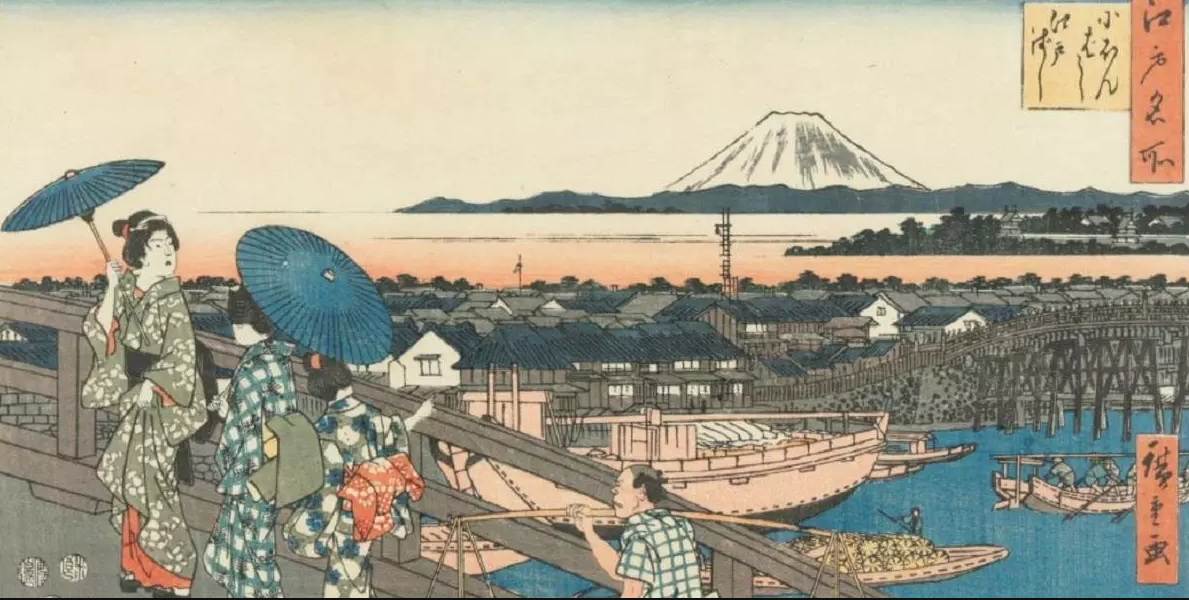



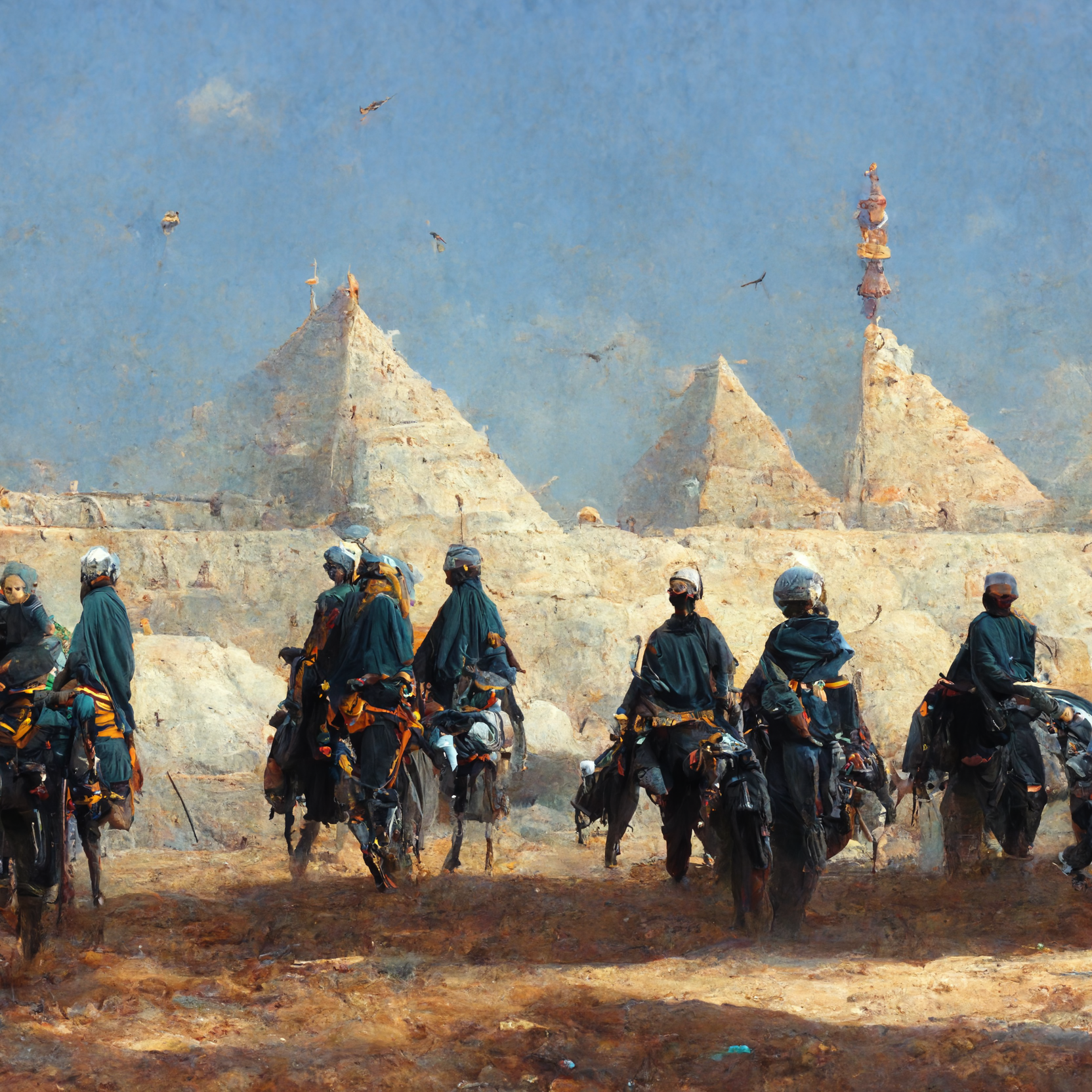

 The Trickster's Guide to Geopolitics