I have recently returned from Shetland and one of the stand out moments of that trip was observing a literal cliffside city of gannets numbering in the thousands. Their existence predates recorded history and possibly even predates human presence in those isles. Preying on fish might seem a simple life and pointless life to many in our species, but it is certainly a more long-term sustainable one than trying to force civilizational evolution. It also works because the gannets feel no need to question themselves. They act as evolution fated them to, and can not only fly but dive to depths unfathomable by most non-aquatic creatures to hunt.
So much of talk about philosophy extols its virtues as providing a way to transcend or overcome one’s supposedly base nature. This rests on the assumption that one can take the idea of a future version of themselves (something that does not yet exist), and project upon it a form of sculpting that will bring this imaginary being into reality. While I do not deny that one can intentionally and unintentionally influence their future self, the result will inevitably be subjected to the far more powerful forces of nature and circumstance (what the ancients called fate). This means that the imaginary future you see as the target for meticulous construction will never exist. It bears as much relation to your present self as a fictional character does.
Intellect can of course be honed. But I feel science, history, anthropology, and art is more effective at this. Especially as it does not automatically contain a mission like most of philosophy does. But this is not to say philosophy and its quest for the ‘good life’ is useless. I would simply rather reinterpret this from the academically focused ‘life of the mind’ into something else: the life of the instinct.
Philosophy’s true utility in an era where science has stolen so much of its former thunder is one of learning how to think differently. In the Anthropocene, this can mean learning to deprogram one’s sense of complacent entitlement towards humanity’s place in the natural world. A philosophy that reminds you of the precarious and ever-changing nature of everything is one that is enabling you, despite your domesticated circumstances, to be readier at the re-activation of instinct. And this, in turn, could increase the odds of acting correctly not through thought, but via unthought. A reconnection with atrophied instincts.
Instinctual behavior is usually rational behavior. It may be short sighted, and it might not always match with the situation, but it is always understandable and increasingly neglected in our overly-domesticated world. Philosophy as a whole is complicit in this domestication, which leads to its growing irrelevance. But it could be the opposite. It could be the key to breaking our disconnect with our evolutionary instincts. When we remind ourselves that so much of the ether we are surrounded with is socially constructed (i.e. fake) and that our animal nature is always waiting below the surface, we reconnect with the ability to act without thought and respond without half-measured hesitations.
Everything organizational is a pyramid scheme. The point of civilization is to make the pyramid scheme last long enough that multiple generations can avoid its collapse before the unlucky one gets settled with inevitable entropy. But it will collapse. When this happens it is those more in touch with the natural instincts that build the next order. In addition to natural inclination, I suspect that it is also those who used philosophy to gain some distance from civilization who will have this advantage. So it is not philosophy that enables us to ‘transcend’ our natural selves that will be of use, but philosophy that re-engages us with nature which enables us to transcend the limitations of presentism and domesticity.
One interesting and newly discovered fact about gannets is that after their communities were ravaged by avian flu in 2022-3, the survivors often had their irises turn black. This apparently has not ruined their eyesight. It merely serves as a striking visual marker of survival. A black metal reminder of nature’s ruthless and ever-churning gauntlet.
Unipolarity — The world being primarily beholden to the whims of a singular power, is long since over. The question now seems to be how the last holdouts against recognizing the obvious fact of multipolarity in the D.C. political establishment are coping.
In a recent Foreign Affairs piece by Megan A. Stewart, Jonathan B. Petkun, and Mara R. Revkin, we are offered one potential vision of what a progressive foreign policy vision for the future might look like. Someone who was a former Bernie Sanders supporter with past ties to the progressive movement, but who is also firmly in the realism and restraint camp, like I am, can read this piece with interest but in doing so detect major points of objection with the authors. Namely, that their thesis presupposes American domestic priorities can be successfully evangelized abroad, that multipolarity will allow this values-based posture without backlash, and assuming the progressivism of today is a radical break with the unipolar hubris of yesteryear.
The primary purpose of the “The Progressive Case for American Power: Retrenchment Would Do More Harm Than Good” is to advocate against retrenchment and for a robust grand strategy force posture abroad by the United States, albeit with enough reforms to be in line with progressive values and correct for past excesses.
To make this case, the authors begin the piece by acknowledging the undeniable reality that over two decades of the War of Terror policies have been a disaster for the United States and the world at large, and that U.S. policy has often been fueled by a chauvinism that can alienate other countries.
Despite these excesses, however, the authors contend that the backlash to them risks over-corrections, which would include creating dangerous conditions where the United States withdrawing from the world enough to make power vacuums that will be filled by rival countries with hostile values.
There are correct observations in the piece. For instance, the authors are rightly skeptical of a type of “anti-hegemonism” that fuels a certain section of anti-Americanism on the left which replaces the positive vision of American exceptionalism with a negative one, and in so doing loses sight of all the other morally ambiguous great power actors with agency of their own at large in the world today. They are also correct to imply that a country that completely gutted its investment in defense investments would lose its deterrent power.
The problem is that these relatively practical observations are then wielded to make a series of contradictory points in favor of an interventionism that performatively breaks with the mistakes of the past while fundamentally repeating unipolarity’s key philosophical and strategic errors.
To quote: “Proponents of both progressivism and deep engagement want Washington to work with allies through multilateral institutions such as the U.N. But progressives go further, championing significant changes to these institutions, with an eye to making them more equitable rather than necessarily U.S.-led.” Some of these ideas, such as expanding the Security Council to include nations like Brazil and India, have merit, but a diversification of the Council is as likely to lead to a diversification of values as it is a convergence around contemporary North Atlantic progressivism.
The authors themselves correctly state that the U.S. “does not operate in a vacuum”, however. Acknowledging the reality of multipolarity and the growing capability of rival powers means an attempt by Washington to play global culture-maker abroad will inevitably see backlash and possibly even a diplomatic counterattack by its rivals. Russia seems to be attempting already to set it up as a kind of counter-culture warrior to American conceptions of international human rights. It is no longer the 1950s and the United States is no longer half of the world’s economic and industrial output.
The idea that such institutions under these conditions will always be a net benefit for progressive causes is an assumption that the U.S. share of global power will always be favorable, as there is no other power with broadly similar values who carries anywhere near as much weight on the world stage. It also assumes that there will never be a time where other powers are innovative and the U.S. is reactionary.
The authors then move on an argument that states that the U.S. should oppose imperialism in general and from revisionist powers in particular, rightly stating that anti-imperialism “is a pillar of leftist and progressive thought.”. Drawing from the past experience of progressive opposition to the old European empires of old, the Foreign Affairs piece interestingly connects these stances to the present. “Retrenchment cannot resolve this tension between, on one hand, opposing war and, on the other, defending egalitarianism and resisting imperialism.” But the tension appears to me to be that of the authors themselves, who conflate resistance to Russian goals in Ukraine with some entirely unrelated conflicts where the invasive power may be the United States itself.
“A similar tension arises in Syria policy. Some progressive Democrats in the House of Representatives, such as Alexandria Ocasio-Cortez and Becca Balint, have joined isolationist Republicans in calling on Washington to bring home the 900 U.S. troops still deployed in Syria. These troops work alongside the Syrian Democratic Forces, a predominantly Kurdish alliance of rebel groups opposed to the regime of Syrian President Bashar al-Assad, helping combat the remnants of the Islamic State, or ISIS. The SDF was a crucial ally in the U.S.-led coalition to defeat ISIS; it governs parts of northeast Syria as a de facto state with a constitution-like charter that reflects a commitment to democracy, human rights, and gender equality.”
By the author’s own logic, any intervention in the Syrian Civil War should be seen as an unmitigated disaster. U.S. support for various rebel movements disproportionately benefited jihadist networks with eliminationist goals towards many minority groups in the country. As Jake Sullivan himself once put it, “Al Qaeda is on our side in Syria.” The fact that one of the largest and most expensive arm and equip programs in CIA history ended up with a covert invasion of a sovereign nation which resulted in parts of the country being ruled by Islamist rebels to this day is hardly absolved by the existence of a Kurdish political experiment elsewhere. U.S. forces in the east of the country, meanwhile, are used as target practice by Iranian militias. A bit of realism here would go a long way, with the understanding that as a land-locked faction surrounded by larger and inevitably hostile societies, the Kurds would at best represent a left- equivalent to the U.S.-Israeli security relationship. To keep such a deployment would be an unsustainable and perpetual security commitment that would poison U.S. relations throughout the region and eventually invite the possibility for another embarrassing failure.
To bolster this focus on long discredited Samantha Power-style humanitarianism, the authors list other past interventions that they believe the foreign policy could have made better through intervention. “There have also been countless humanitarian crises, such as Rwanda in 1994, in Srebrenica in 1995, and in Sri Lanka in 2009, in which the United States failed to intervene- and where even a modest military intervention would likely have reduced suffering without exacerbating violence.” These examples are interesting, as both Rwanda and Sri Lanka are far more peaceful and stable today than they were at the times of these proposed interventions, and in the case of Bosnia, foreign involvement in the conflict did eventually happen and seems to have frozen it into a perpetual tinderbox that could reignite at any time. Just as strong a case could be made that intervention has a negative consequence on such civil wars as letting them play out. It is at best a mixed record.
There is an economic element to critique with the argument as well. The authors state that “Retrenchment from global markets, such as withdrawing from trade agreements or international economic institutions, can likewise create vacuums for bad actors to exploit.” The concern by many progressives here is not simply that TPP offered few protections for domestic labor and would be a giveaway to massive corporations (though it was that, too), but that such trade deals themselves often disadvantage smaller nations and leave them more vulnerable to multinational corporations. Smaller nations require economic sovereignty as much as territorial sovereignty in order to best secure self-governance. Once again, the progressive bona-fides of multinational institutions cannot be assumed to be perpetual, and if progressives seek to differentiate themselves from their more centrist rivals, they must keep in mind this danger.
Additionally, progressive spending priorities innately clash with the inevitably ballooning defense budget under an interventionist agenda. Both a desire to see greater social spending at home combined with the necessary funds to defend the commitments proposed by the authors would likely be an unsustainable debt burden in the long run.
Historically, nations do not develop along a linear path. A variety of governing arrangements and development models pepper the record, and the assumptions of liberal interventionists, ironically, often end up replicating the very Victorian empires the authors rightly condemn. The British imperialists saw themselves as a force of progress and civilization, uplifting all of mankind with a universal model. They left us with a disproportionate share of the world’s intractable conflict zones as their legacy. The mainstream position in the foreign policy community today, be it left, right, or center, seems to be to advocate for the United States to be the unintentional successor to this values-centric world view, now wearing the cloak of liberation. But only a sober calculation of interest can suffice in a dangerous and polycentric world where the rightness of one’s cause is subjective, and power is split between nations with divergent interests and experiences.
Progressives have an unfortunate tendency to ignore that many causes once viewed as progressive in the past either were rejected upon further scrutiny or merged with other worldviews to create unrecognizable coalitions which would come to be thought of as divergent from their original intentions. This would almost certainly be the fate of a ‘progressive foreign policy’ under present day conditions. The rhetoric of international liberation would inevitably become assimilated onto similar policies– such as the Iraq and Libya wars– that the authors oppose. Policymakers living today are no more the protagonists of history than any other group of the past, and so must be aware of the dangerous waters their ideological predecessors have often entered.
Using one’s domestic political views as a framework for a foreign policy grand strategy, be those values progressive or anything else, always risks running up against the fact that there is no international sovereign to appeal to like there is in domestic politics. Multipolar systems are not just divisions of power blocs, they are also divisions for a multiplicity of values and systems to which claims to universal morality can no longer apply. Projects of world transformation are the luxuries of hegemony and the faster these schemes are dropped the easier it will become to increase the efficacy of diplomacy and retain resources for causes where they are well and truly needed. If progressives become the champion of an interventionist garrison state they will find it more difficult to practice a beneficial civil society at home and seek a modus vivendi with other powers abroad.
What follows is a rare example of me putting something creative on this site. A small stand alone spin-off of my Gothic Rustbelt sword and sorcery Sickle setting. Normally, I would illustrate such a thing myself, but considering this is a short side project not for external publication I took the lazy option instead. This is the recommended background soundtrack. The indirect inspirations for this singular spin-off are the first Diablo, Night in the Woods, and above all the Vermis series of artistic strategy guides for games that don’t exist.One could always use its skeleton to create a tabletop game campaign of modern dungeon delving.
—
An order decays. A world comes apart. Adrift and lost, you begin a long-delayed journey home. Inland, back to the brooding wooded hills that made you. Once the Rustbelt drove you away, now it may be your only hope.
The town of Prospect, in hindsight quite ironically named, lies on the opposite side of Montrose County, West Virginia from its seat of Sickle. The two towns are close as the crow flies, but the broken mountainous terrain means they may as well be across the state.
But you know a shortcut. Across the abandoned rail trellis. You can leave your car and walk, as you once did many times in youth. It is nightfall, yet the colors of the autumn can still be glimpsed. The season is peaking and the moon is full
It is here, before even entering the town, that you realize your homecoming will be a strange one. For a Goatman is sitting on a stool, plucking a banjo.
‘You will find nothing as you remember it,’ it says in a bleating voice that keeps an odd cadence with the strings of its instrument, ‘and you will have no respite from that which made you return.’
Are you baffled by this sight? Angered? Afraid? It matters not. To continue you must pass, Which you do in silence. The music fades behind you as you approach the town. You do not look back.
In the morning you awake in town. No memory of the rest of your journey on foot. The seedy motel in which you emerge seems not to have a staff at the moment. You stumble out into a town square you last saw many years ago. It is Prospect. You are home.
Almost no one you once knew can be found. Most left like you did, some stayed only to die of drug overdose or mining accident. Many comment that you are the first tourist they have seen in years. ‘How did you get in?’ People are incredulous that you are coming home. All save The Mayor, who remembers you. He once was your teacher.
‘The mine closed years ago. Then last year people started going into it anyway. Camping. Dancing. Weird shit. Dangerous, I told them. Don’t know what they were doing there, but no one ever came back. Not even the Sheriff. Now there are reports of dark figures in the night around town. People stay in at night. I’m surprised you came over the bridge last night. Did you see anything?’
As you turn to leave…
‘But there is one person who came back, now that I think about it. You might not want to..well…do you remember the artist, Carver Norwood?’
The Mayor recommends you arm yourself with his recommendation for a local discount at the local Gun Nut’s shop. It is here you may begin to construct your build and choose your background.
The town’s mechanic, Melissa Norwood, is busy working on a car in her garage. ‘Came to see my brother, huh? Weren’t the two of you in the same graduating class? Well, he’s upstairs…painting as usual. Don’t worry about being shocked, he won’t notice. Anyway, feel free to stop by if you need gear fixed.’
If you converse with her long enough she might drop the rumor that the county cryptid, The Montrose Wolfman, has been seen in the woods outside of town more than usual.
You mount the stairs with some trepidation. As you are about to knock on the door a voice calls from within before your knuckles can even make contact. ‘Ah, [PLAYER_NAME], it’s been too long. Please, do come in.’
Carver Norwood seems older looking than he should be. His wild hair is unkempt as his studio. His grotesque paintings stare into your soul. ‘I came back from the mine. And the mine came back with me.’
Depending on your words he will give the following responses:
‘What goes down there changes. Adapts.’
‘A new world is coming. Those who can face the mine will adapt to it. Those who cannot will scream and howl.’
‘When I close my eyes I am awake. When I open them I am dreaming.’
‘There are many mines in many places. But here, I think, is a particularly strong one.’
‘The mine is killing us. It always did.’
‘The mine will save us.’
‘Like you, I used to hate this town. But I didn’t have the courage to leave. Now I have courage…to stay.’
Carver Norwood can identify artifacts and weapons brought to him. He will always tell the truth about their nature, sometimes to your detriment.
You can feel the call from down below. The mystery is too great. You have nothing left but one town, one mine, and one direction, DOWN.
Laden with gear, you set off into the woods. The path to the mine cutting through the falling leaves. A time of peaceful reverie with nature which comes to a close only when the subterranean mouth looms ahead of you.
The mine is randomly generated. It offers endless possibilities for awe, horror, and everything in between.
There is a chance, depending on the sequence of events you have experienced, that you will be tapped on the shoulder before entering the mine. This forces a dialogue with the Montrose Wolfman.
‘Ah heah you be going down theah. Gonna save the town? Seems moah wike da town gonna save you. Or kill ya. Well, give this to the Disco Gnolls and gimme what they twade back. I’ll give ya somethin wicked-pissah good if ya do.’
You can’t help but notice that despite the name, the Wolfman seems more like a coyote or jackal. It’s breath smells of marajuana and grilled lamb. It’s parody-impedement-Boston accent out of place in these hills.
He hands you a package. STRANGE PARCEL received. Whether this brush with the uncanny further steels your resolve to delve below or shakens it is yet to be determined.
Peering into the depths you see no recourse. You must descend.
From here on out all encounters are randomized. The following are a potential list of things that could happen.
Undead Miners: They died down here. Some over a century ago, some just a decade. They still man their posts, cursed to search for the black gold that brings life to the town while having no life of their own. They do not notice you and will not become hostile unless you impede their work in any way. If you do, their numbers will prove a challenge.
Cult of the Black Worm: Perpetually shadowed, speaking in a tongue only they can understand, the Cult monitors your progress continuously. They appear to shrink from challenge and seek safety in numbers, but may strike in large groups if they disapprove of your actions. Normally, they use their network to modify the mine in strange ways to baffle and impede you.
Should you be able to isolate or kill enough of them, the mine’s random seed generation becomes more erratic, but in a way slightly less hostile to your mission. Should you antagonize them without being able to winnow their numbers, however, they will summon an unkillable pursuer from old VHS tapes of a British children’s show about a demonic yellow cone.
‘There is a new black gold down here, it is not coal.’
‘It seems cool in here, but you have to slow down enough and then you can feel the warmth below.’
‘Send The Mayor my regards. I am waiting for him to join me here. He will, eventually.’
The Bunnyman, it isn’t funny, man. Bunnyman does not speak, and can only be hostile. If you are unprepared for grueling combat or agile avoidance your journey will end here.
Gary. The town’s lost youth. Perhaps a former friend? Now he controls the environment of the mine for the Cult of the Black Worm, though he sees himself as above and independent of them. He taunts you over speakers, but as you progress he becomes more pleading and pathetic, his scorn giving way to envy. If you are able to trace the power lines back to his nest he will not fight. His fate is ultimately up to you. If he dies the way forward will be somewhat easier.
‘Welcome to the Wizard’s lair.’
‘You left, I stayed. I was betrayed…BY YOU!
‘I made my kingdom here, after all.’
‘One day I will be President.’
‘Leave those body pillows alone!’
Has your wandering fulfilled you or merely filled you with despair? No matter the hostility or avoidance you have faced, eventually you will come to the Chamber of the Da A-nis. It may have been inactive earlier if already discovered, but once you have absorbed enough experience the eyes will flash and a portcullis will open. The next layer has begun.
Alone, hopefully steeled to horror and wonder, you advance onward.
Sirens sing, their haunting tones echo in the dark. Ignore them. The journey will end here if you do not.
A flash of scenes in the water before you. Like bioluminescence in the dark. A town that never was prosperous but once provided. Beset by growing horrors ever since it dared to stand up during the Battle of Prospect in 1924. Its loss was the first sacrifice. One future crushed, and a new one opened, feeding on all the blood that seeped down, down. Festering. Growing in power. You find a sealed case of DEMOLITION TOOLS in the shallow waters, the interior sealed and dry.
Finally, a light up ahead. Or is it? You find a hole in the wall. The mine has given way to something else entirely.
A static glow. A strange home out of time. Someone benefited down here in the depths after all. You enter.
The eerie synths of the dungeon begin to pulse with a distinctively Italian vibe. Up ahead lies a conversation pit strewn with gelatine party food. You have found the Disco Gnolls.
They regard you with indifference and will reject attempts to join their feast with hostility. If you play it cool, however, and deliver the STRANGE PARCEL to them, they will bestow upon the player an OPIUM PIPE and a warning.
‘To see how things really are, smoke this.’
CACKLING LAUGHTER
‘He who dwells below holds us in thrall. We are treated well but no one else is allowed to follow.’
‘The aspic buffet is reserved only for those of our time and place.’
You exit into another hallway. A holding chamber of sorts. There is a particularly ostentatious door up ahead. A strange tune emanates from a crackling speaker somewhere.
There is no way to go but forward. You enter the final door. There you find The Senator.
‘It has been a long time since I had visitors. How is the town doing above? Oh, what a shame. That wasn’t the intention of my actions down here.’
‘Well, at least we managed to prosper down here, which is the most important thing.’
‘Come, let me show you the culmination of my many lives’ work.’
If you have imbibed from the OPIUM PIPE, The Senator will instead appear as such:
In the final chamber lies this culmination. The thing that has been absorbing the town above. THE PROJECT.
You can choose to merge with THE PROJECT, giving up everything for acceptance of The Senator’s schemes. If so, the journey ends here. Alternatively, you can run from the mine, permanently insane, with an increased likelihood for deadly hostile encounters on the way out. Canny adventurers, however, will find a way to kill The Senator when he is unprepared, and be able to lay the DEMOLITION TOOLS rigged to blow upon exiting this area.
Should the demolition ending be achieved, the adventurer is able to exit the mine without molestation. However, the various encounters may now also leave their underground confinement.
It is dark above and the stars are out. Their presence is the only sign you are no longer underground.
If the Montrose Wolfman was encountered and gave the quest before the descent, he will be waiting for you outside. If you either do not have the OPIUM PIPE or refuse to hand it over he will attack and will initiate a fight you cannot hope to win. If you relinquish the pipe he gives you stolen keys to a randomized used car in town.
‘Eat da night, dwink da time!’
Staggering back into town, exhausted, you seek nothing but rest, feeling accomplished. But no one is about. They all stand in the central square, staring between the hills and up at the sky. The Northern Lights are almost never seen this far south. The beauty of their dance enraptures the townsfolk. The Mayor has enough presence of mind to turn to you and thank you. Carver Norwood nods and says ‘Freed from below, we now may open our hearts to what is above.’
If at any point you partook from THE OPIUM PIPE then when you look at the northern lights with greater detail you see something else in the night sky instead:
I have no idea if it is random chance or something in the aether, but recently I have seen many post-mortems on the ‘New Atheist’ movement of the late 2000s and early 2010s. Some of these offer insights. More do not. But one thing I have noticed is that they are as likely to reduce the ideological diversity of atheism just as much as the New Atheists did, replicating many of that movement’s initial problems and ultimately creating a shallow critique.
The problem with New Atheism that has gone unaddressed by so many of the modern commentariat is precisely that it could not escape its Christian roots. Because of this, it was unable to create the intellectual freedom it claimed to be making.
Before getting into this I would first like to explore what the New Atheist movement was and my own interactions with it when it was new.
Pope Dawkins declares a crusade.
New Atheism in Context
In hindsight, the 2000s seems to us today like the last gasp of organized religion’s outsized influence on public and political culture. It did not feel this way at the time. The Bush Administration was openly theocratic in its approach to both domestic and foreign policy. And in the brief window of the unipolar world there were no alternatives to moral panic neoliberalism, save global jihad. While Islamic radicals tried to expand their power in the Middle East with what was effectively a terror-for-media-coverage campaign, the United States played into their trap by doubling down into crusader rhetoric. While Bush waged what he claimed was a divinely sanctioned war abroad, he oversaw a homophobic moral panic at home which may have succeeded in securing his re-election. The government was staffed with Liberty ‘University’ graduates as political appointees and U.S. aid policy to Africa was subordinated to an ultimately doomed quest to tie programs to abstinence-only education. Most insulting of all, there was a concerted push by right wing culture warriors to push teaching creation science in public school science class. If anything, this last was the issue that really forced a strong backlash from an intelligentsia that had too eagerly jumped on the establishment bandwagon after the rally-around-the-flag effect of 9/11.
Enter the Four Horsemen: Daniel Dennett, Sam Harris, Richard Dawkins, and Christopher Hitchens. Though by no means starting as a coordinated effort, the very obvious open void created the space for the publications of these four individuals (and many of their imitators) to make an outsized splash on the cultural milieu by not just opposing evangelism on the defensive, but by stridently attacking it. Religion was not just a tool used by the powerful to deceive the masses, it was the mark of a foolish person. A willing dupe. And someone who stood against good government and a rational conception of civil society.
Another aspect of this ‘movement’ was that it was not just a rejection of theism, but also a rejection of postmodernism. The postmodern left, which in the pre-Occupy neoliberal era was the unquestioned left mainstream (arguably it still is, albeit increasingly more identified with center-left professional managerial class types) rejected anything incompatible with a totalizing relativism. Postmodernism could not say that creationism was inferior to science or even wrong, it could only equivocate. Another aspect of this was the left’s (still existing) bizarre fetishization of Islam, a value system that could not be more hostile to the one they profess, but which they allow a leeway of tolerance they would never give to their domestic Christian enemies (likely out of the bizarre belief that it thwarts U.S. foreign policy objectives to be publicly sympathetic to a religion that was once committing the same kind of ideological expansionism and cultural gentrification as the present American empire).* It has always been a funny irony that the world view that upholds relativism as its ultimate ideal is so often championed by people so hostile to nuance and prone to moralistic binary thinking, but I digress as, we shall see, the postmodernists would hardly be alone in this error.
So we had a new movement that dumped on the pieties of the politically correct left while stridently attacking the evangelical political establishment of the era. Both of those things were necessary and welcome reliefs from the trends of the time. They were a breath of fresh air in a stultifying political era where self-censorship was normal and the avenue for dissident expression was narrow. It was bracing and fun. I confess that I myself once (and thankfully only once) made the conscious choice to be seen reading The God Delusion on the train to test the waters.
But even early on, and despite all the fun, I had my doubts. The same kind of doubts that let me shed my religious beliefs in middle school were reappearing in my later college years. I owe this early turn against New Atheism to my dedication to the study of premodern history. This was something that kept me grounded and aware that what might seem like an inevitable trend could just be a fad. It also made me deeply skeptical of the core concept of New Atheism: linear progress. I remember upon concluding The God Delusion that it was ultimately a form of cathartic entertainment, but hardly a work of philosophical rigor. It contained many bizarre assumptions about humanity’s proclivity for rationality that were easily dispelled from historical knowledge. I would go on to find many of the works of Harris and Hitchens in a similar vein.
A Neconservative Handmaiden
It was actually Hitchens, the most charismatic and entertaining of the four, that would turn me against his ilk first. Hitchens was a die-hard Iraq War supporter, proving the hypothesis of ex-Trotskyists becoming neoconservatives correct in a very public way. His defense of that dismal operation on explicitly democratist grounds utilized many of the same rhetorical tricks and sloppy assumptions that the alliance of Evangelicals and Zionists he was supposedly opposed to made use of. A culturally righteous society had the duty to remake the world in its own image. To bring the others to heel for the crime of holding it back from its unified destiny. Not only was the world filled with cultures who were theorized to be destined to clash according to ideology, one of those cultures (the enlightened North Atlantic) was ultimately correct. And it seemed obvious to this freethinker that faith in the social engineering power of the United States military was a logical corollary to bring about what really was a missionary ideology. Needless to say, even 15 years ago I was always going to pick realism over atheism if forced to choose between them in an artificial binary.
These were the elect. The City of God against the pagans. Special praise was given to nations that were seen to have ‘defected’ and joined the club of enlightenment-by-conversion. Dawkins loved Israel, seeing it as the Enlightenment’s version of a neo-Outremer, as well as his recent declaring himself to be a ‘Cultural Christian’. Harris dreamed of an apocalyptic Revelation-style war with the Muslim hordes. All of them viewed many East Asian countries as joining the club of ‘civilization’ when in fact they had always had their own civilizations filled with inventiveness and innovation. In fact, the justifications for many modernization projects in the non-western world were often explicitly nationalistic and even anti-western. And even in the Middle East, outside of a few spoiled rich kid failsons and radicalized losers who wanted to die for a cause, the Muslim world never ‘hated us for our freedoms’. They actually hated us because we were interventionists.
There was also an inexplicable fear of China’s development and growing power on the world stage shared by the New Atheists. Here was an explicitly secular, even atheistic, state that had overseen the largest and most rapid reduction in overall poverty in human history all while taking an assertive role against global designs promulgated by evangelicals and jihadists alike…yet it was disdained and even feared by the Enlightened Gentlesirs.
Why? Because the real point of New Atheism was to support weaponized liberalism. And to do this the history of atheism would have to be rewritten to be one solely of liberal-humanism.
The Christian-Liberal Teleology
The liberal world view puts undue emphasis on personal and individual reactions to moral stimuli. Ceremony and group-affirmation ranks quite low compared to the singular unit, whose journey is (ideally) constructed to be one of personal growth. There is nothing wrong with this per se, but it is not how any society on Earth has ever worked in practice. Sure, societies can be liberal and this can bring certain benefits, but it is always in addition to something else- a pre-existing collective skeleton which the rest must be built upon.
Societies, in turn, are regionally divergent adaptive mechanisms meant to increase survival. This is done through resource surplus and strategy. When done well, it has little to say about moral progress. Any group that lives long enough to cross multiple eras will inevitably become unrecognizable to its past self. This pragmatism is actually a sign of success, as pure stasis would almost certainly mean death. In a world where everything is changing and chaos reigns, there is no final moral arbiter, no ‘right side of history’. There is only survival, and, if lucky, a brief period of thriving before an inevitable decline. We are no more entitled to eternity than the dinosaurs were. And they are still far more successful than we are in terms of sheer longevity.
If one does not believe in an ultimate moral arbiter, as it should be very clear that I do not, then why would one still believe that a secularized society should be guided by a universal mission? Especially a mission related to the spread of a singular type of civil society across the globe? Surely, the freedom to think outside of teleology means that one is liberated from the colonial quest of messianism. Once can cut back their efforts of conversion and focus instead on the real and material benefits of building and exploring. The diversity of the planet’s cultures (including political and ideological cultures) is actually a boon, not a curse. It means the blind spots of one society are not overlooked by the entire species. That the mistakes of one need not be the mistakes of all. If something goes right somewhere it can be reproduced elsewhere, but if something goes wrong it can be stopped before all of humanity is afflicted.
But to the militant liberal, as was the case for their Abrahamic forebears, a society can only be legitimate if it meets a certain credo. The Augustinian dedication to dividing societies into legitimate and illegitimate based on ideological grounds is done to impart a sense of universal mission to civilizations. That this will inevitably lead to hostility and warfare with all who disagree is irrelevant because righteousness will sort out the End Times/ End of History. This religious impulse has been with liberalism since Kant and Rousseau and New Atheism was a (probably unintentional) attempt to bring it back for a younger and more secular crowd.** Its media elevation at least implies neoliberals and their friends in the media understood that the many failures of the Bush Administration were causing the winds to blow against their Reagan Era alliance with political Christianity.
The making of a better human through moral effort merely changed from a spiritual cause sometimes supported by the state to a state cause supported by a new spiritualism. The problem with these arguments is that they rest on the work of Stephen Pinker and others of a similar outlook who effectively rely on the logic of ‘line goes up makes world more gooder.’
The problem here is that Pinker’s data is itself highly selective and suspect. Much of the improvement in living standards come from non-liberal societies. Other dollar based metrics fail to account for subsequent rises in living costs in places where average wages grow. Meanwhile, the flagship liberal society, the United States, has been seeing a steady decline in its standard of living for years. If there be progress here it is unconnected to liberal promises or simple linear narratives. Every order so far gets a rise sure, but they all fall too. It is a bizarre act of presentist faith to believe the current one will be any different just because we are the ones experiencing it now.
I believe it is this fear that anything can be undone by irrational circumstances, often beyond anyone’s direct control, that motivates a strident faith in enlightenment. But history is replete with periods where knowledge was lost and living standards declined. Oftentimes, it was true believers seeking to make a better world that played a role in this loss.
History is not progressive. Nor does it adhere to any unified set of human values. It was New Atheism’s fatal flaw to adopt Christianity’s worst and most Platonic assumptions about how the world works. You can invert the values on topical issues all you like, but the philosophical edifice is still the same rot of morally redemptive protagonist syndrome all the way down.
John Gray’s True Skepticism
Why should disbelief in God presume that humanity can be rational in the first place? After all, humanity felt the need to invent communing with the supernatural to compensate for something. Whether or not this is a vital social glue (and it is to many), it is not a rational behavior. If anything, humanity is the least rational species. A kind of ultra-performative ape which is the only one we know of that must invent elaborate rituals and justifications to get along existing. Something other species do just fine without such pretense. If I had to create a list of words to describe the human experience, ‘rational’ wouldn’t be anywhere on it. It is a nice idea, but an idea it remains. Perhaps open to rare individuals in some scientific and scholarly fields, but never to the whole of the species or a particular civilization.
The philosopher John Gray is himself an atheist, and began to rise in prominence in the 90s. Being one of the rare non-leftist scholars who took a decided anti-neoliberal and anti-end of history tone after the fall of the Soviet Union, he scorned claims of a rational destiny. He was lambasted for (correctly) predicting the eventual collapse of international democratic capitalism as the guiding policy lodestar of the future. He then turned against those who assumed Al Qaeda was a reactionary backlash by pointing out it was in fact one form of a hyper-aggressive modernity. His book, Straw Dogs, was the formative moment in my own journey away from whatever vestigial shreds of liberalism I retained. It was, interestingly enough, recommended to me by someone who challenged me to articulate my own world view. I confessed it was cobbled together from historical knowledge and not a preexisting philosophy. What I proceeded to describe was then responded to with ‘that sounds like John Gray’. Up until that moment I had never heard of him.
Straw Dogs is effectively an anti-enlightenment mood piece whose philosophical similarities draw more from Taoism than any western tradition. Just seeing such a thing in the early 21st Century Anglosphere was a bracing gateway to explore something new. Black Mass, arguably Gray’s best work, traces how religious apocalyptic thinking, especially that of the messianic religions, influences assumptions about the world from many secular ideologies and especially neoconservatism. The Silence of Animals drives home the centrality of irrationality in the human experience and the dangers of forgetting our true biological origins. These books questioned philosophical progressivism without being a knee jerk reactionary. Importantly, they were written to be accessible to a general audience. His most important book for this topic was Seven Types of Atheism. You can read my full review here, but the key thing to keep in mind is that he laments how New Atheism stripped away all of the varieties of preexisting atheism and tried to replace them with a single progressive-liberal vision in the popular imagination. Gray is mostly interested in reminding the world that atheism is a negation, not an affirmative ideology. As such it contains multitudes. Many of those alternatives fly contrary to the claims of New Atheism…and many of these, in turn, are the ones who actually broke more successfully with established religion’s dominant culture. A large proportion of the covered world views are indifferent or even hostile to liberalism.
Tellingly, many of Gray’s conservative fans, who glowingly reviewed so many of his prior works and who were probably primed for 7 Types seemed to have passed over this book in silence. I believe this is because the book critical of modern atheism was actually the most strident of all Gray’s works when it came to criticizing Christian ethics. Gray’s disdain for messianic teleology was the real fuel of his points on atheism- something the cultural right could not face.
This point should be so obvious as to be trite, but it goes to show how little ‘Freethinkers’ often move away from how they were raised. By definition atheism can never be a unifying project as it is merely the disavowal of a kind of belief. There never was going to be ‘an atheist community’ in the style of the pretentiously named ‘Brights’ or ‘Atheism+’. People who wish to be active in something communal should look at something else as the basis for organization (more on this later).
Besides, if your point is simply to register displeasure with the dominant theology of our times (spiritually or not) the devout are far more bothered by a rejection of their values than they are a rejection of their god. If you disdain Yahweh they assume you are simply mistaken, to be punished later or to come around in an act of redemption. But if you reject the very values associated with their tradition you are proof that their concept of light vs dark, good vs evil, is itself something that can be lived without. Villainous antagonists they can understand. Indifference or opposition to the very idea of moral melodrama? That wasn’t part of the prophecy.***
Where are they now?
The upcoming inauguration of President Incel_Sniper1488 in 2028, formerly Gary Wentler, President of the University of Wisconsin’s (Eau Claire campus) Secular Humanist Club from 2010-2013.
New Atheism’s attempt to become explicitly political in a ‘positive’ sense broke whatever unity it might once have had. The current soy male and legbeard womanchild nerd vs (equally unmanly) mens-rights neckbeard-chud-nerd divide that has poisoned younger Millennial/older Zoomer culture actually began from the (religious) schism forced upon the community by clans like Atheism+. It turned out that without Rick Santorum and the Moral Majority breathing down their neck there was nothing but divides. In other words, New Atheism spawned Gamergate, and Gamergate spawned the first round of the still ongoing post-Boomer culture wars.
So where are these people now? They have proven just how Christian their form of unbelief was considering the nature of their sectarian split by being divided between Catholics and Protestants.
In the case of the Catholics this is quite literal. Becoming a reactionary Catholic is the next phase in hipsterdom. The ‘alternative lifestyle’ (which never was anything of the sort) of the now is no longer loafers-with-no-socks, electropop-meets-southern-hip-hop, it is the ‘universal church’. This makes sense when you consider angry nerds clearly need an impersonal structure and sense of mission and belonging that they are often unable to get through the more natural social interactions they struggle with. Considering the incel culture of much of Gen Z, this is probably going to continue for some time before moving on. Kind of like New Atheism and hipsterism. These kinds of people are often urban and very terminally online.
The Protestant branch are the wokes. Though I have made this point many times before, I am hardly the only one who has noticed. Rather than seeking institutional authority, this branch simply seeks personal power by the vector of social media canceling campaigns. In this way they live in a perpetual position of re-enacting the Cromwellian Commonwealth and the Salem Witch Trials, individualism fueled by sanctimony to build the Kingdom of God on a new Earth. Ironically, they are fond of the phrase ‘we are the daughters of the witches you didn’t burn,’ while proving both by their demographics and their attitudes that they are in fact the descendants of the witch burners themselves. These types are more suburban/university campus but are also the most aggressively internet-brained of all demographics around today.
There is, of course, a New Atheism descended center too. These kinds are the Stancil-Yglessiai of the precocious up and coming professional managerial class. They all look the same, sound the same, and reference Pinker constantly. Their priorities are grand narratives of human development, though their cultural impact is nil. I personally suspect they may be a future febrile recruitment ground for strange cults and social movements once their vicarious causes end up going south.
There are two things these very disparate groups still have in common. One is that they come across as Reddit users (and this is the most damning thing I can say about them), and the other is that they ended up on paths that mirror the Christian upbringing most of them had. As it is, the philosopher Slavoj Zizek, who advocates for a ‘Christian Atheism’, and, unsurprisingly, seems to be undergoing a clash of civilizations/neoconservative rebrand, serves as a living example of what little common threads remain in a once much stronger movement.
Why, aside from historical knowledge, did John Gray, the speculative realist philosophers, or myself end up so different from these people? It is because we were completely different from Zizek. Almost diametrically opposed, in fact.
Pagan Atheism
I was an atheist long before the rise of New Atheism. I am still one long after its decline. Its impact on my life was that I could be less cautious about my unbelief in public around unvetted company. But this came at the cost of being associated with philosophically shallow cringe in the popular imagination.
Atheism is, as implied before, a negation and not an affirmation. The only thing that can be rooted in it is skepticism. This is a most noble virtue. But it is only one. The point of being free from universal morality (itself an artifact of moralism and Platonic idealism) is to accept that a variety of societies are free to diverge over values without necessarily threatening each other, and that others who share your position on religion may also do the same in divergent directions at the individual level. Therefore, this is not a principle I believe in organizing around unless a shared threat such as theocracy or an attack on the secular state arises. However, if one was to suggest the necessity of non ‘New’ Atheists having a common culture I would recommend this: learn from polytheism.
New Atheism was as monotheistic a world view as a non-religion could be. It saw freedom of will under a unified and moral universe as its lodestar. It saw a Pinkerite future for those who could only seize the power to become the new Enlightened Elect and usher in a world free from irrational superstitions. It saw humanity itself as a god.
Why not do something totally different? Why not seize on determinism, fate, and humanity as one aspect of nature among many? Why not recognize the very reality of a world of devouring food chains where mankind may be high but is not the highest? Values clash because there is no overarching moral truth outside of the objective material stage we all must share (and that stage itself is still of vital importance, being nature), and situational context and the ability to wield power will ultimately decide a variety of outcomes along divergent paths. This will be so in the future as it has ever been so in the past. No order lasts very long in the end. An explosion of cultural diversity awaits in the future as it did before. Deep time itself proves that the quest for teleology is a false one. But the quest for ritual, belonging, and to define both what one is and what one is not is eternal. The modern humanists may have lied about the possibility of changing human nature with ideals, but the reality of living in the real world exposes this deception constantly.
I am a proportional rather than absolute thinker. I believe atheism is most likely the correct philosophical position when it comes to the nature of reality. But it’s not exactly fun. By cutting itself off from a cultural context of mythic analogy, terrifying monsters, and powerful heroes it becomes easily infiltrated by halfwits and consumerists.**** It should not be so hostile to religions that don’t require faith or evangelism but rather inspire fortitude and courage. It can ally with religions that don’t seek to homogenize the world or care how many followers they have but rather seek to bring that irrational animal mind inside every human skull to revel in the uncanny of nature and fate.
I may not believe in the literal truth of Susanoo, Coyote, Dionysius, Apedemak, and Qetzacoatl, but in their clashing elemental forces and chaotic struggles I see a far truer reflection of the world as it truly is than in the sterile moralism of Levantine monotheism or the naive euphoria of liberal humanism. The world is ruthless and rudderless and it will sweep away us all, especially those too frail to face the bracing reality of its callous but freeing indifference to human concerns. But in the chaos lies endless creativity and a bracing fatalistic acceptance of the dynamic tension inherent in the natural world.
I love it so.
*It never occurred to these people that one could oppose regime change wars and sanctions on Middle Eastern countries without having to look like a fool by being sympathetic to such a religion. The fact that I was someone who both protested the Iraq War and took part in Draw Mohammed Day seemed to break many brains when it really shouldn’t have.
**If you ever need a perfect example of both Christianity and liberalism openly merging around cultural supremacism, please explore the literature around Just War Theory. It is a tiresome subject where various types of idealists attempt to give moral justification for chickenhawkery based around ideals rather than interests. In my experience in academia I found that the vast majority of people who do this are people who are both Christian and liberal.
***This is also why Satanism is extremely stupid and cringe. It is the acceptance of Christian cosmology but just with the values inverted. The anti-liberal equivalent to this is probably getting really into Russian Orthodoxy and ‘esoteric’ politics.
****I am reminded of the time Richard Dawkins waged war on children’s fantasy literature, creating a divide with his friend the author Philip Pullman. I met Pullman once when I was a very young child (and his biggest fan), he signed my copy of The Golden Compass with the line ‘to Christopher who asks all the great questions.’
Every single Democrat, with no exception, voted with our street preacher tier evangelical neocon Speaker of the House to give endless amounts of money to Israel and Ukraine. The Speaker himself cited his faith as a reason to make this corrupt bargain. In an inversion of the world I grew up in, the only votes of dissent against the foreign policy of the Book of Revelation were by Republicans. Democrats, who hold themselves up as the resistance to the worst of the far right, were rooting for a Speaker who probably thinks the world is 5,000 years old as they worked together on this abomination. Remember this next time they come to demand that anyone who is not conservative vote for them as a lesser evil. Remember this also when the legions of liberal anti-fascism experts give a carefully curated list of what they define fascism as, while omitting one of the single most relevant ingredients: a death drive for endless expansionism abroad. It is not hard to see why this particular part is so commonly overlooked by our esteemed extremism experts.
I never want to hear about how the Democrats protect anyone from the worst excesses of the Republicans ever again. This sellout is proof that a two party system is just a more dysfunctional version of a one party system. One where competence and reason are suppressed and an illusion of choice is given by differentiating two basically identical camps with a false choice between two increasingly extremist culture wars. But on the matters of true power and import (finance and foreign policy) there is no real choice. There is only an empire of for-profit contractors and missionary ideologues working together to perpetuate a particular and declining class’ dominance over the rest of society.
There is at least resistance in the Republican side, if hardly enough. But the fact that there is none, not one vote, against this spending abomination from the Democrats is truly something to behold.
I was recently thinking about how I was lured out from a decade of not supporting any national level candidate from either of the two major parties by the potential of something worthwhile in John Fetterman…Only to end up getting the equivalent of a Mossad spokesman in the senate for my trouble. I think its safe to say that baring some kind of extremely unlikely and unforeseeable event, I will absolutely never hold out even rhetorical support for a Democrat at the national level again.
It is not parochialism or even that made up Cold War Era nonsense word of ‘Isolationism’ to ask for that money to be spent (or saved) at home. As the proponents of these spending bills so love to remind us, most of it is just going to our own defense contractors anyway. You know, those companies with increasingly terrible ratios of cost efficiency and slipshod production who are no doubt going to use much of that money to re-invest in lobbying for more terrible unwinnable wars. It is an understanding that a country that willingly deindustrialized itself cannot re-industrialize through circular defense speculation alone. That its true strength lies in reshoring, yes, but also reinvesting in infrastructure and meritocratic social mobility. That the U.S. has the geographic and resource power to be extremely competitive…so long as it can give up the mad and ultimately doomed quest for hegemony. Ironically, it is this quest, not a ‘lack of resolve’ that weakens it abroad. Over-expansion, as anyone who has critically examined macro-historical trends can tell you, is the ultimate death of great powers. By fighting constantly they fritter away their will and resources and wither in proportion to their out of touch bombast. Turns out that the further you go from the core, the more expensive the operations become and the more skeptical the public is to what it has to do with them. There is no world-cause that has yet to override the inherent territoriality of states.
It should surprise no one that the modern day Democrats have become the Republicans of 20 years ago to a tee. I tried to warn people of this. The values on the culture war might be inverted, but the overall marriage of moralistic and teleological world view with an accelerationist militarism represents the same model: distract at home, bluster abroad. This is the point of the two party system…whatever the trends are of the day, the neoconservatives and democratists can pivot effortlessly between two supposedly opposed camps for whatever the best allies are for their project.
It behooves those of us who are opposed to them to show the same pragmatism. Preferably, a greater level of it. Here’s hoping (from my very non-conservative perspective) for a long and productive career for Thomas Massie in government. And here is also hoping that we can finally put the myth of lesser evilism in a two party duopoly to bed for good amongst the people of our society still capable of critical thought. While I personally prefer many parties to few overall, I do believe the honesty of a one party system may be preferable to the dishonesty of a two party one. They are both functionally the same, but even the low-information voters know who to blame for problems in the one party state. In the two party state, most people can be bought off by the political equivalent of jangling keys in front of their face and pointing at their neighbors to cast blame rather than their rulers. And that is what these progressives, many of whom originally ran explicitly to oppose neoconservatism, have done.
The only real lesser evil in the foreign policy debate is that of elevating those who know the limits of their national capabilities versus those who see no limits and stumble ever onwards towards self-imposed decline.
The first politician I ever hated and the first non-Presidential political figure I ever knew the name of where one and the same person. Joe Lieberman was that man, and he is now dead. No matter how far back in time I go looking for an image, he did always look like the Crypt Keeper. As Lovecraft put it, ‘That which is not dead which can eternal lie, and with strange aeons, even death may die.’
What Tipper Gore was to music, the evangelicals to role playing games or sexuality, or Adam Schiff to national security, Joe Lieberman was that for gaming. When I was a middle school kid who just wanted to frag to take the edge off my increasingly hormonal and frustrating existence this guy would always show up in the news to create some moral panic and have all the adults freak out about a form of entertainment and, yes, art, that made life a little more fun. Despite the fact that movies and board games had failed to make humankind more violent, Lieberman just needed some tail-end Satanic Panic energy to set him apart from the pack. This would go on to become his brand and one of the centerpieces of his career. Of course his real lasting legacy would be to become immortalized in Postal 2.
Lieberman would continue on to become an internet censorship advocate and a voracious neoconservative ideologue along with his BFF John McCain. His path down the hating on gaming to chickenhawk war advocacy pipeline would soon be followed by Hillary Clinton. It seriously begs the question at the societal level, why do so many warmongers fear depictions of fictional violence? Why is the view of the dangers of make-believe so existential and hyperbolic for the same people who spare no thought to the very real world consequences of military interventionism, sanctions, and escalation? I don’t have the answer to this question, but I feel like it is an issue worth exploring. Looking at so many of the safteyism-coded issues of the day, its easy to see how they appeal to the messianic mentality and the insecure.
It is also worth noting that I, a kid who loved the color black and playing Doom, Quake, and Postal, ended up an advocate for foreign policy restraint. This wasn’t in conscious reaction to Lieberman when it happened (he was already old news by that point), but it goes to show just how if there is any relationship here, it is in the exact inverse of how ole Senator Droopy Dog imagined it to be. I even got to talk about him and his delusional calls for war with Iran on a radio show a few months back. But now he is dead, and gaming still lives. It is positively thriving. I am going through my second playthrough of the Resident Evil 4 remake right now, and heads are popping all over the Spanish countryside even as the real world continues to sour on the schemes of our endless war-loving elite.
Anyway, I like to imagine the last thing he heard before we was dragged down to the fiery pits and forced to play Quake III deathmatch for eternity against Iraqi pro gamers previously killed in the wars he championed was the Postal menu music.
2023: ‘Date Me, Bigot, Or I’ll Have You Cancelled.’
I think its worth having a brief but honest reckoning of where this process of degeneration actually came from.
There is a lot of anecdotal evidence of President Obama’s fear of Occupy Wall Street and how most of those pick-me gifted kid nerds that made up his administration quite possibly saw it as the most threatening challenge they faced. Occupy was the one and only time the Millennial generation had a chance at doing something effective and meaningful at the structural level, but it went nowhere in terms of actual change. What is undeniable is that there was a conscious pivot away from left wing activism that prioritized class and economics and into activism that prioritized culture, identity politics, individual frailty, and victimhood after the failure of Occupy. Whether the state and Fortune 500 companies had something to do with this, I do not know. But they certainly benefited from it. And once they saw they benefited they switched to outright supporting this pivot to ‘social justice’ at an institutional level in an attempt that has at least partially succeeded at making this the defining ideology of the professional managerial class today.
After Occupy was the hermetically sealed lunatic asylum known as Tumblr banning porn, driving most of its mentally unstable coomer audience into twitter, where they could demand safe spaces on a site known for being a public free for all. Because journalists, those bastions of intellectual rigor and critical thought, get their entire world view from twitter, this led journalists to add to their already lengthy list of stenography-related iniquities by adopting this apparently tumblrified culture. Soon all of social media was dominated by censorious and ostensibly left-wing scolds attempting to re-enact The Tipper Gore Experience for a new generation.
Nothing in this conventional narrative is wrong, but its timing is all off. It is missing a critical ingredient. Namely, that the rise of puritanical hysteria in media and nerd sectors of society predates the Great Tumblr Migration by at least five years. Kony 2012 and Upworthy came first, and failed spectacularly. People back then could still mock the low-information activist openly as a common position. Yet the bizarre spectacle of younger people and more left wing people becoming more and more pro-censorship, pro-safteyism, and evangelical continued on anyway even before the events attributed to it later.
I believe I have the missing piece to this timeline. Though it requires citing things I no longer have links and screencaps of.
Late 2000s and early 2010s Facebook was the best of the mainstream social media sites. It was very freewheeling and easy to separate into more private and public spheres. Nowadays, the website is a hellscape of badly targeted ads, ranting cable news-addled Boomers, and an algorithm that will bury interesting posts from people you actually know in favor of half forgotten acquaintances from decades ago sharing pictures of their poorly prepared food and mewling children. A kind of Millennial-Xer version of ‘Bless This Home’ knitting hanging in an Iowa kitchen. But back then it was actually fun to use.
It had a dark side though. Well, probably more than one. But one I, to my great misfortune, became aware of personally in the wake of post-occupy disillusionment with Obungler and the libs: Leftbook.
I never got sucked in directly myself. But I knew enough people who did. All of a sudden I had all these friends of friends with anime girl ushanka avatars who would shriek at anyone and everyone who deviated from whatever the ever-shifting dream cosmos of the day was. People, including myself, were accused of being ‘self-hating racists’ by people who were entirely white. Cancellation campaigns raged across public groups for the tiniest slights with zero pushback considering the echo chamber like culture that reigned. Rumors became facts in the minds of true believers. Meaningless power struggles broke out over zero stakes. None of these people seemed to live anywhere but online. Most of them, I suspect, were agoraphobic losers rotting away in some kind of hoarder-home whose only chance at ever feeling the tiniest bit of power in their life was through internal policing by serving as a kind of Red Guard for postmodern gender theory and the 1619 Project. The reddit neckbeard but on Facebook.
Some specific memories: There was a Portuguese lunatic of ever-alternating pseudonyms who clearly wanted to start his own cult who constantly postured as the most morally pure person in the world and a ‘philosopher king’. Australian Catholic-Leftist furries, activist groups that had ‘matriarchal coups’ to remove males from moderator positions en masse, and my personal least favorite of them all: A sociopathic Manchester University anime girl avatar sporting student who worked for years to amass some kind of online clout through endless slander of others only to ghost the entire internet one day after what I presume was one too many witch hunts gone too far finally brought the knives out. I would be informed later that this person’s radicalization had occurred after being booted from multiple safe for work anime forums for spamming hentai constantly.
Real Savonarola hours up in here.
No one without a direct window into this was aware of it really. It was self-contained. It either disappeared from FB or I blocked (or, more likely knowing me, antagonized others into blocking) most of the people taking part in it so I came not to see it anymore. But it really spawned what became mainstream online left-activist culture in the past few years. The timing is just a bit too perfect of a fit. Considering their love of extremely cringey nomme de guerres, I wonder how many of the random reply guys and schitzoposters you see out there on other more trafficked websites today are these people in their new form. They are the missing link in the timeline of how the Anglo-left went from the least bad faction in society to people I wouldn’t trust to change a lightbulb.
A culture of weakness and frailty begets performative virtue signaling based on victimhood. The concept of slave morality made manifest. While such people exist among all stripes of life, when they are the ones demanding to be the protagonists of human civilization it becomes even more hilarious. The advocates for violent revolution and direct action unable to go outside, cook their own food, live without amazon, and quaking in fear from words spoken to them or written on a page. They remind me of the Max Boot neocons but for domestic policy. Chickenhawks of the revolution that will never come.
The irony is that the governments these people admire would have committed them to asylums by force. And in many cases, rightfully so. Its interesting to note how much of this could have been contained if not for Reaganism and the deinstitutionalization of society in the 80s and 90s. There may have been a lot of abuse and neglect in the old asylum system, but it was undoubtedly a superior option to letting these desperate and unhinged types of people roam around public transportation, public parks, and now the internet. Foreign visitors to the U.S. in the past used to marvel how there were no random psychos everywhere like in other cities. Now those psychos rule the discourse. And in so doing, they give ammunition to a right wing backlash far more than they contribute to anything constructive. It turns out the Lumpens were politically engaged after all. At least the past political lolcows like Frances E Dec were funny.
I still have very left of center views on economic redistribution, class inequality, the need for a secular state, and the importance of environmentalism in our future. I am thoroughly Turchinpilled. But never in a million years would I claim to be ‘left-wing’ so long as I live in an Anglo-country. Political factions are not determined by Platonic ideals but rather by how something manifests in reality in a practical sense. And the Anglo-Left of today are the children of Leftbook, who are in turn the children of Increase Mather and Judith Butler as channeled through an amount of mental illness so large it really should be its own anthropological subset. They exist only to turn real life into their sad little fear-soaked internet presences. In the end they want nothing but for everyone to be as maladjusted and miserable as they are.
At least we can be assured that for all the irritation and deleterious impact of their presence when culturally pandered to, they will never amount to anything when it comes to hard power. Having concrete goals and wielding hard power, I’m sure, is ableist.
Peter Jackson’s From Genghis Khan to Tamerlane: The Reawakening of Mongol Asia was something I got the second it was released. It has long been my assertion that English language works on the Timurid period are rare enough. Much less ones also covering the post-unity Mongol prelude that led up to it. Sure, there are specific academic works about certain places or kingdoms in this period, but seeing the process of Mongol decline and Timurid rebirth all at once is an important and overlooked aspect of these two states. Indeed, as Jackson asserts, they really aren’t two different states at all. Or, more specifically, the Chaghatai Khanate (the Mongol successor state in Central Asia) and the Timurid Empire are the same state, but simply domestically usurped. You wouldn’t say the Napoleonic Empire was not a French state would you? And unless chroniclers of the time were refering to Timur as in an individual specifically, they usually referred to his state and army as Chaghataiid.
A brief overview of the rise of the Mongols and then a focus on their post-unity decline and various fates of the successor states give us a full and meaty text. We then see the intermediate period of full Ilkhanate and partial Chaghatai state failure and fragmentation and then, only in the third, final (but most substantial) book subsection, the rise of Emir Timur with a short final chapter on the fairly rapid fall of the empire. Jackson does not deny the differences in the periods at the start and end of his work, but emphasizes continuity in many places which are often overlooked. We get citations from numerous contemporary historians to all kinds of aspects of this period, such as attitudes towards various peoples, how rule was legitimized, the large amount of the nomadic people that retained shamanism even after official societal conversion to Islam, and the courtly public debates between Chinggis Khan’s proto-constitutional Yasa (eventually called Tore) and Sharia law. There are also numerous asides about rival dynasties that emerged in the political vacuums that arose in the post-Mongol world. (If you would like another great book on this subject do check out Patrick Wing’s The Jalayirids.)
I cannot emphasize enough how useful as a reference and source this book is to those into Turco-Mongolian history. We get chapter by chapter breakdowns of these empires and how their histories flow into each other. How Timur rose from relative obscurity into a local warlord, then greater Samarkand bigwig, and then finally a warlord ruling through a puppet Chaghatai Khan. An extreme respecter of the Mongol experience before him, Timur married into the Chaghatai family to merge dynasties for his descendants, but never declared himself the head of the state even though he was by all definitions its sovereign. His descendants would end up claiming the joint heritage, most famously Babur, the founder of the Mughal Empire (itself named as a Chaghatai term for the more nomadic of the Central Asian lineages still connected to the Mongol invasions).
Many historians have posited that Timur wished to restore the Mongol Empire, but Jackson disagrees. The author sees the Emir as a usurper/restorer of the declining Chagatai state. Giving one of the less successful long-term successor states of the Mongol period a moment to outshine the others and go from least important to most important. A major part of this was the economic reorientation of Silk Road trade from its more northerly line through the Kipchak Khanate (Golden Horde) and into Yuan (and then Ming) China and back into its pre-Mongol Central Asian focus. There was a level of regional patriotism here too, with the plunder and tribute from abroad fueling Timurid building, art and science patronage, and, I believe, a sincere attempt to recover an economic dynamism for a region that had been declining ever since the Yuan and the Kipchak Khanate had ended up as the much more successful of the Mongol successor states than the Chaghatai and Ilkhanate were.
Jackson and I agree on all of the above. Indeed, I even wrote about the Timurid period as one of a strong example of a core vs periphery form of imperialism (World Systems Theory) rather than one based on constant territorial annexation in my own book. There is, interestingly, one point that only comes up in the end where Jackson and I disagree though. Jackson believes that the reason Timur was the last of these truly Eurasia-spanning successful nomadic army warriors (though others like the Aq Koyunlu and Dzungars would have some strong moments to come) was because of the state and military mobilization changes made to mixed regimes like Muscovy and the Manchu Qing dynasty. I completely agree that this played a huge role, and that the 17th Century was really the period of Manchurian military domination, but to make this point Jackson disavows that economic changes reorienting Eurasian trade towards the oceans had yet to play an important role. I believe it was both. Granted, this would not yet have been apparent at the time and is much more of a hindsight argument, but the Manchus and Muscovites and Safavids all were beginning to grow their connections with the more maritime parts of the world in addition to reforming their armies to take the best of both the settled and nomadic worlds. After all, the Timurid army itself was one of the first of these mixed armies (though much more tilted in the nomadic direction than these later states) but was already clearly acting in a way that implied fear of global trade networks moving away from in inland heartland. Nevertheless, this is a point where reasonable people can disagree and my quibbles in no way change my view of the book overall.
The book is both accessible to the non-academic but also rigorous and citation heavy and well worth your time.
In the meanwhile, enjoy a traditional-style but modern song in the Chaghatai language about Timur:
Tucker Carlson’s recent interview with Vladimir Putin has touched off a firestorm of criticism in the Anglo-American press. An interesting turn of events considering that the United States and its allies are not officially at war with Russia. It was once the case that journalists would have jumped at the chance to interview the leader of a rival state, but now it seems to break message unity with the establishment on foreign policy is to commit an act of unofficial treason. Never mind that the interview is hardly being seen as an undisputed success in Russia. It is worth examining why this circling of the wagons has become the case.
The establishment press is majority liberal. Not necessarily in the sense that it is used in U.S. partisan domestic discourse, but in the philosophical sense. It is primarily made up of people who believe that an individual making choices in a marketplace of ideas and goods is the core unit of society. This usually comes with a set of assumptions- that history is teleological and linear with clear-cut right and wrong sides, and that economic development will cause political and economic convergence between different societies. Such a world view leads to an attitude which is akin to that of the missionary: If liberalism is a universal good, it must be expanded by any means.
It is in this sense that much of the North Atlantic’s foreign policy focused press is also liberal. Regardless of if the author or publication is left, center, or right in official inclination when it comes to domestic issues. There is a kind of monoculture based around seeing the U.S.-led alliance network as ‘values based’ forces of light, against a nefariously defined ‘authoritarian’ alliance of darkness.
The multipolar world we are entering, however, is not an abstract choice by policymakers. It is an inevitability. The existence of a roughly three decade long interregnum of an unchallenged United States being able to imprint itself on as many parts of the globe as possible is coming to an end. Not because anyone lost their moxy or gumption, but because there are more countries, great and middle powers alike, that are much stronger now than before. The United States in the 1950s had almost half of the world’s industrial and economic power, today it is roughly a quarter. Its power is real and still unsurpassed, but the proportions vis-a-vis the globe have shifted dramatically.
The double standards between the rhetoric and practice of the “Pax Americana” have always been there, but recent events coupled with the diminishing ability of Washington to hold itself up as the global gold standard make them all the more glaring. Even the concept of human rights, itself the darling cause of a liberal press, is ultimately dependent on unipolarity in order to have any kind of globally applicable definition. As viable rival power poles continue to multiply in different regions of the world, causes such as these will see a multiplicity of values replace what was once assumed to be convergence. Whether one celebrates, laments, or is indifferent to this state of affairs, to accept this inevitably is to acknowledge the increasingly undeniable.
But can the liberal-internationalist media foreign policy complex do so? This press culture has grown accustomed to two generations of constant self-validation building off of the fall of the Soviet Union- an event that fades ever more distantly into the past. Long flattered by the expatriates of their own profession (who share similar class backgrounds) who originate from less free countries and who seek better opportunities abroad with affirmations of loyalty to a democratic ‘west’, it is worth asking if this field as a whole is even capable of understanding that some societies may now want to pivot away from, rather than towards, the world view of internationalist liberalism.
Long used to not being challenged by different values or divergent interests, it seems quite possible, even probable, that the liberal press will have to run into the reality that not every foreigners is a poor oppressed drone with an inner American yearning to be liberated from the shell of their circumstances. Regionalism and nationalism are more likely to drive domestic pressures on the foreign policy of many states than the quest for political globalization. When journalists actively pine for a free world guaranteed by liberal hawkishness, they do so from the perspective of their concept of freedom dominating all others. The long-held ability to monopolize the media discussion on other countries by manufacturing conformism on issues related to human rights abroad is rapidly deteriorating in the face of growing distrust from the general public.
As U.S. power diminishes in a relativistic sense towards most of the world, will the reporting on foreign affairs be able to psychologically adjust? The question is worth asking because the way in which this reporting is framed can often impact the general public discussion. Even simple adjustments such as taking the old Wikipedia’s policies on scouring ‘weasel words’ (i.e. value-saturated adjectives meant to tilt the reader’s perceptions included in supposedly unbiased reporting) could meet with pushback from journalists citing such small steps as ‘selling out to tyranny’ or ‘endorsing oppression.’ This means that as more regions of the world come into their own concept of statecraft priorities much of the press will actually increase its agitation for sanctions and military operations even as the capacity for the liberal states they are based in to engage in such interventions decreases. Will necessary cordial relationships with countries with different domestic values be too baffling to comprehend for a professional class so tied to a universalist worldview they see international relations as an extension of domestic culture war? Would a breakdown in relations between two liberal states precipitate an existential crisis among the commentariat? Most importantly, would diplomats be constantly hounded for doing their jobs in a sober and prudent fashion by a press that demands purity, leading to opportunistic politicians running against the practitioners of statecraft itself in order to court favorable press coverage?
These factors, if not addressed, pose a very real danger when the majority of the foreign policy press attempts to shape liberal discourse over a world that is unquestionably realist- where divergent interests, values, and capabilities must be taken as they are in an ever-changing and vaguely cyclic world. So the question remains, can a profession that has spent decades giving itself over to the missionary impulse adapt to a world where the hard compromises of diplomacy inevitably reign? And what happens if it does not?
Geotrickster’s Note: Self-serving politician memoirs, particularly of failed Presidential candidates, has been a running gag in a circle of friends of mine for years. The book held up as the iconic example by us in this ‘genre’ (for some reason) has long been Tim Pawlenty’s ‘Courage to Stand.’ Pawlenty’s 2012 campaign had the dubious distinction of being hyped as inevitably nomination-clinching by MSNBC’s Chris Matthews, who had previously predicted that the 2008 race would be an inevitable showdown between Rudy Guiliani and Hillary Clinton. This eventually culminated in me giving my friend and now four-time guest contributor Brandon a copy of this book as a gag gift when visiting him in 2021. Of course, none of us ever actually read any of these things cove to cover…until now. With the recent predictable and hilarious removal of Meatball Ron from the oven of being a presidential contender (see two entries ago for my eulogy of that) it seems it was finally time for Pawlenty to get his due.
Without further ado, the following words are that of Brandon Hensley alone. Amazing how we went from gaps of years between his guest postings to gaps of weeks:
—————————————————
Memoir, in general, is my least favorite book genre. Two of my favorite women in all of history are Lucille Ball and Cassandra Peterson. I own both of their memoirs and I have never read either of them. I simply don’t have a great deal of interest in the private lives of celebrities, even ones I happen to particularly like. This might have something to do with the fact that I have somehow managed to avoid developing weird parasocial relationships with Youtubers or Tiktokkers, as well. But then, I was also able to quit smoking without blinking, so maybe there’s something genetic there.
Conversely, I’ve always been weirdly fascinated by the Presidential Primary Candidate Political Memoir. This is not a genre that Amazon or the New York Times recognizes, but they absolutely should.
A political memoir is simply the memoir of a political figure that narrows its focus from the broad biographical details of one’s life to the politically-salient biographical details of one’s life, and probably provides some sort of policy recommendations by the author.
The Presidential Primary Candidate Political Memoir, by contrast, is exactly the same except it is conveniently published conspicuously close to a Presidential Primary. It’s almost like a trunk novel that a politician has been carrying around for a while and tweaking every so often to keep it relevant until it becomes necessary to throw it into the marketplace and see how it helps the straw polls. Or, in the absolutely shitfacing hilarious situation of Hillary’s “Hard Choices” (2014) and “What Happened” (2017), the memoir bookends the election she lost. (“What Happened” also has the dubious distinction of having the question and the answer [in the form of the author’s name] prominently displayed on the front cover, gracefully saving people from wasting their money or time on it)
The reason the PPCPM is so interesting, however, is because it does what no other act of speaking on the record can do. It provides a single reserve summation of a political candidate’s moral character, fitness for office, and proposed manifesto. There is no amount of NYT article digging, CNN interview searching, or internet archive campaign website recovery that will amount to the convenience and cohesiveness of a PPCPM. If a candidate says one thing on CNN and then another on FOX, it’s a gaffe. If they’re quoted as saying something in the New York Times that they later say was taken out of context in the Washington Examiner, that’s just media spin. But what was committed to paper by them is a whole other story.
A couple years ago, Chris (yes, the owner of this very blog!) gifted me a PPCPM as a joke. Up to then, Tim Pawlenty was widely regarded as having run one of the worst Presidential campaigns in history. He barely raised any money, barely registered in polling, and, like current Vice President and 2020 Democratic Presidential Candidate Kamala Harris, dropped out of the primary before a single vote was ever cast. Having just finishedDianetics a couple weeks before Ron DeSantis stole Pawlenty’s crown of glory, it made sense that now was the time. Time to stand up and read “Courage to Stand: An American Story”.
There are two problems with a PPCPM that is now twelve years old and about to celebrate becoming a Bar Mitzvah.
Nothing in it is that relevant; and
Even if it can be mined for “ha ha, look at this hypocrite!” points, they’re all points that have already been made.
So I settled on option three: make fun of Tim Pawlenty because he has clearly never heard the word “recliner”.
I am not fucking joking.
“Grandma Rose always had cookies or treats at the ready. It seemed as if the measure of her love for others included how much food she could force into every one of us. Mostly sweets, of course, unless you were there for lunch or dinner, when you’d get some form of potato, or some form of sausage or other affordable meat. And she dispensed matronly advice with every plate.
“Some days I visited her by myself. I’d sit in her oversize grandma chair with the reclining feature, where you could pull the lever and get your feet up in the air.” (emphasis mine)
I am not making this up. He uses twenty-one words to describe a recliner, including the word for reclining. And it’s not the only time. He repeats his performance:
“It’s funny how the simplest things can leave the deepest impressions. Like when Dad and I watched television at night. I remember the two of us setting up those rickety old television trays to eat something and watch some show. I can’t even remember what we watched. … He’d sit in his La-Z-Boy with the leg-up option, and I’d sit in my chair, and we were the kings of the world!”
Again! He cannot bring himself to use the word “recliner”. He’s not even consistent with his failure to understand that a word exists to describe the thing he is talking about. It’s either the “reclining feature” or the “leg-up option”. I’m surprised that he didn’t borrow some sort of Seussian neologism in the process.
But it’s not just his inability to articulate the derived noun from the root recline that’s bothersome. He makes a really strange biographical point when recounting the passing of his mother.
“I later learned that in her very last hours, she pulled my two brothers and two sisters together around her hospital bed and told them directly, ‘Whatever you do, you get Tim to college.’ She made each of them promise to follow through. It was her dream for me, a dream she had instilled in me herself. She could not go peacefully without knowing that her dream would be fulfilled.”
I am not one to make light of a dying woman’s wish. Having watched my own mother die in a hospital bed, I am not a stranger to just how powerfully emotional that event is. And I was in my thirties when my mom died. Tim was only seventeen. But what’s weird about this is the way it’s phrased. It sounds as though she could give a shit less about her other four children. Only Tim gets to go to college. Fuck the rest of them, right? Partly this might be Tim’s own doing—he doesn’t actually say much about his siblings, but he especially doesn’t say if they went to college. Perhaps they were already in college? Who knows? Tim doesn’t say. But then, knowing that his mother’s dying wish is that he go to college, he says in a later chapter:
“But first, I had another important decision to make—whether to follow through on my mother’s dream that I would go to college.”
What a fucking turnip. Again, based entirely on what he has told us, we cannot be sure that his mother put this same premium or emphasis on his siblings. It is entirely possible a sister or a brother forewent the opportunity to ensure that Tim got to go. And here he is dilly dallying on whether or not he’ll go. Asshole!
Oh wait. Immediately after this he tells us precisely how many of his siblings got to go to college:
“No one in my family had earned a college degree before, (though Dan [a brother] attended classes briefly), so my family had no institutional memory on the subject.”
ASSHOLE. ASSHOLE. ASSHOLE.
Also, he was clearly an idiot asshole student for never having spoken to a counselor about how to apply:
“What colleges were even an option? How would I find out about financial aid? What did a year’s tuition cost? Would I have to live on campus, or could I commute? Was my GPA good enough? Was there testing? Where did I apply?”
But this also somehow feels entirely on brand for someone who doesn’t know the word recliner. If those passages above about the RECLINER TIM. IT’S CALLED A RECLINER! seem long just to make a point about how Tim doesn’t know what a recliner is, it’s not because Chris is paying me by the word (though I am open to the possibility), but it’s because this faux dopey Leave it to Beaver quality of Pawlenty’s “salt of the earth”, “son of the soil” shtick actually feels very genuine.
Remember that one of the defining qualities of the PPCPM is that it’s establishing the candidate’s bona fides. This includes their “authentic American patriot YEEHAW!”-ness, even in a Democratic Primary. Just look at Joe Biden from Scranton PA, even though he moved to Long Island briefly when he was four and then moved out of Scranton forever when he was ten, so the most formative years of his life where the bulk of his adult personality and remembered experiences occurred happened somewhere other than Scranton. Delaware, the home of the American insurance industry, doesn’t scream “working class” quite like Scranton, even though nobody in their right mind would look at someone who spent their entire lives from 11 onward somewhere else. Anyway, I digress.
Biden’s insistence on his working class bona fides is because the idea that Americans are by default a hardworking, labor-friendly civilization is hardwired into how we understand ourselves and our country. Or at least, it used to be. The entire façade is crumbling around us and most young people have completely fucking checked out of the myth that bootstraps are something you can actually pull on since we’re too broke to own any in the first place. But regardless, the legacy media and political establishment—and the vast majority of voters, by the way, since millennial angst expressed on the internet is not the summation of human accomplishment no matter what my LiveJournal claims—still subscribes to this political myth.
And so, every election cycle, every candidate for the highest office in the land tries to put forward whatever piece of their background speaks to that essential story.
In Pawlenty’s case, it’s entirely genuine. He was born and raised in South St. Paul, Minnesota, and didn’t leave until after college. He was a commuter student and only left when he and his wife got swanky law jobs in the Twin Cities. Unlike Biden, when Pawlenty says he’s from South St. Paul, he actually is.
“The meatpacking plants and stockyards that once thrived along the western bank of the Mississippi—once the biggest stockyards in the entire world—are gone.
“What used to serve as the center of employment and life for so many residents of this town was swept into history, seemingly overnight, at the dawn of the 1970’s. It’s something anyone in America who lives in a one-industry town, whether it’s an auto factory town or a shoe-manufacturing community, can relate to. When that one industry starts to close up shop, it leaves decades of unease and heartache in its wake.”
As a result of actually being from the place he claims to be from, Pawlenty speaks with a frankness about what de-industrialization did to South St. Paul that Biden can only ever pantomime. This is in part because Biden would not have been old enough at ten years old to understand what was happening as America offshored its industry and eviscerated the working class, and also because Biden is just so old that he moved out of Scranton while the Golden Age of the Middle Class was still happening.
As a quick point of reference to Biden’s age, the Boomer generation only lasted twenty-some years. Yet we had Boomer presidents for well over thirty. The first non-Boomer we got wasn’t some younger Gen-X model, but an even OLDER Silent Generation model. It’s like driving a 1988 Toyota Camry until it’s literally falling apart in 2019 and then upgrading to a Model T, not because you’re a Model T enthusiast, but because your Aunt Becky is convinced that buying a 2020 Prius will literally end democracy as we know it, so you can only drive a Model T or you’re a fascist. So you buy the Model T just to get her to shut the fuck up already but she won’t stop DM’ing you about it because there’s a chance the 2024 Prius will have a chance in hell at bringing this overwrought metaphor to a conclusion. If that’s not enough, remember that Kamala is still technically a Boomer and is one heart attack away from restoring that generation to the throne.
Pawlenty’s genuineness is important for two reasons. One, it actually sells him as a politician and probably has a lot to do with his success in Minnesota state politics. Secondly, it does for the rest of his memoir what that genuineness does on the campaign trail: it sells the policy. And this is where it becomes impossible to point and laugh at out of touch Republican talking points about the economy.
In any other case, pointing and laughing at Republican deficit hawks cutting taxes and then bemoaning deficits is pointless because we know they’re cynically doing this shit as a way to justify cutting down on business regulation. Republicans know they’re causing the deficit. But they also know that Democrats are cowardly shitgibbons when it comes to running defense, so they’ll cave every time and thus offer no reason for Republicans to stop. However, in Pawlenty’s case, that genuineness that he carries around with him suggests he actually believes it is sound policy based in reality.
There is not one drop of self-awareness on Pawlenty’s part when it comes to the relationship between taxation and spending and balancing the budget. He brags about cutting taxes as House Majority Leader, and then is surprised that there is a multi-billion-dollar hole in the budget projections he inherits once he’s elected governor. Time is linear for everyone except Tim. There is no rational connection between these things. He never addresses the connection. He just talks about cutting taxes in the State Legislature one moment, and then is GASP! Surprised that there’s a giant fucking hole in the budget once he’s in the governor’s mansion.
A couple of passages that really illustrate this complete lack of understanding is fairly standard for boomers writ large, but helps exemplify the fact that Pawlenty really does live in a Norman Rockwell painting:
“While I hate to reflect on it like some old man reminiscing about the good ol’ days, the world just seemed to work [in the 1960’s] in a way that allowed the people of South St. Paul, my family included, to live a pretty great life.”
And
“From everything I saw as a child, the city of South St. Paul was a place where neighbors mattered, where family mattered, where church mattered, where respect for things mattered. Everywhere you turned, you saw hardworking, fun-loving people, doing whatever they could to get by, most all of them living by the rules and trying to do the right thing.”
I wrote in the margin, “Pepperidge farm remembers!”
Boomers love to harp on contemporary complaints about working multiple jobs and not being able to afford basic housing or food. “Back in my day!” Well, no, you fungus, that was not back in your day. That was back in your parents’ day when there was an acute memory of what happens when billionaires rape the people who generate all of their wealth, and so they put into place an entire policy regime designed to minimize the power of the billionaires while funneling as much money back into people’s pockets as humanly possible. It wasn’t perfect, and was absolutely racist as fuck how the uneven distribution played out, but it was partly because of exorbitantly high taxes on the business class and regulations designed to keep them from dismantling and moving out on a whim that the 50’s and 60’s were even able to play out the way they did.
The reason boomers love to hate on taxes is because the current neoliberal regime has shifted the tax burden so severely off of businesses and onto people. Meanwhile the regulatory environment surrounding the business and its shareholders has become so disgustingly incestuous that shareholders will literally sue the board of directors for trying to give their employees raises during a global pandemic (Full disclosure: I am a former employee of NVI and a former shareholder, but did not purchase stocks during the period in question and sold the last of my shares in EYE prior to the lawsuit being announced). Boomers have a false class consciousness, where they think their interests and the interests of business owners are the same and so have unrelentingly supported this idea that releasing the shackles of business will usher in another golden age, whereas every single time we move further in that direction everything gets worse for everyone with more and more of the tax burden falling on individuals.
So hearing deficit hawks reminiscing about how great their childhoods were is always a special kind of special, since they are the ones pushing it further and further out of reach for their own children and grandchildren. Which makes the fact that Tim Pawlenty is a classic pre-Trumpian deficit hawk, and one that probably genuinely believes it without any irony whatsoever, so much more fucking grim.
It’s poetic, then, that he chose to run for President at the exact moment that the Reaganite Republican consensus was starting to break down.
The Tea Party rose to prominence beginning 2009 as a response to Obama’s election. Whatever their motives or unconscious racial bias, the Tea Party represented for the right what Occupy Wall Street did for the left—a disenfranchised, disillusioned, downwardly mobile popular mass expressing its frustrations at decades of bipartisan government mismanagement.
The difference between right populism and left populism (at least between 2009 and 2024) is that the right populists were willing to hold the government hostage to get their way, whereas the left populists have always bent the knee at the last instant. So the left populists have never understood that the entire point of gaining power is to wield it as effectively as one can, and to use every available means to do so. The Tea Party was so effective at this in the early days that it caused an institutional back lash within the Republican Party that eventually saw the isolating of some of the Tea Party’s most extreme members of Congress in the Freedom Caucus right up until Donald Trump and MAGA reinvigorated it.
Had Pawlenty played his cards differently, he maybe could have had a fighting shot at the 2012 nomination in place of Mitt “I have Binders Full of Women” Romney. Whereas Romney was widely viewed as out of touch and elitist, Pawlenty had genuine populist leanings that could have been flexed had he read the moment better. Instead, he came in third in a straw poll just before the Iowa caucuses and dropped out. And now I’m going to mathematically prove that Pawlenty is a fucking idiot for doing so.
The Republican primaries have only been run since 1976. Prior to that, the Republican Party chose its own nominee for President and didn’t let people directly influence that outcome. Since 1976, ignoring incumbent candidates, Iowa has only chosen the eventual nominee twice in 13 presidential primaries (including 2024 because we all know Haley isn’t going to win). In 2012, that was twice in ten. And the first place winner of the straw poll that made Pawlenty pack up shop wasn’t even the eventual winner of Iowa. It was straw poll fourth place winner Rick Santorum, which suggests that Pawlenty actually had a fucking shot at winning Iowa.
I’m just spitballing here, but New Hampshire has a tendency to seek a middle ground when it comes to the primaries. We saw this in the 2024 New Hampshire Primary’s lean toward Haley over Trump. Given Pawlenty’s “Aw shucks!” version of deficit hawkery, I would be willing to go out on a limb that a win in Iowa would have really boosted his chances in New Hampshire, and had he managed to pull off both of those, it would have given him a pretty decent betting chance at actually getting the nomination over Romney.
Would Pawlenty have stood a chance against Obama? Actually, yeah. Obama’s one and only success while in office was the Affordable Care Act which made healthcare more expensive for everyone. Romney couldn’t attack it since it was lovingly referred to as Romneycare due to its copying of Romney’s healthcare law while Governor of Massachusetts. However, Pawlenty could have attacked it and would have attacked it authentically. The ACA of 2012 was a paragon of government spending gone horribly wrong. The website was buggy, the open enrollment periods were (and are) nightmarish, the marketplace was difficult to navigate, and it required the hiring of thousands of new government workers to staff the phone lines which also routinely crashed.
Pawlenty would have had a field day!
Alas, it wasn’t to be.
The idiot who doesn’t know how to say “recliner”, whose four siblings forewent college educations so he could go, and former Governor of Minnesota read an informal, internal GOP poll that said the loser caucus that can’t pick a winner wasn’t going to pick him and dropped out.
In reading this, it made me think what is the benefit of reading a twelve year old memoir of a failed presidential candidate? There is no part of the reason why it was written that translates into the reason to read it now. Pawlenty’s political career in office is done. He is currently a lobbyist as near as I can tell for the Financial Services Roundtable as near as I can tell. His Xitter is just boomer small business dad, so, incredibly on brand. There’s no reason to pull out quotes from his book and yell “gotcha!”
Instead, I think the point of reading these is probably something to do with being able to look at a specific political moment, remember the specific partisan battles and the claims that these elections are too important to do anything other than vote for the centrist or else democracy will end and…maybe something deeply poignant about how the average American voter’s political memory is shorter than a goldfish?
Here are some other hilarious Pawlenty bits and the commentary I wrote in the margins:
“My family was eating breakfast one morning, discussing Greece and its financial trouble because it was in the newspaper. Mara, my then-thirteen-year-old daughter, completely unprompted, with simplicity and clarity, looked at me and said, ‘That will be America soon.’” [STFU Tim she did not say that]
“Whatever happened to the power of Enough? the power and the guts to say, ‘No’?” [Foreshadowing]
“It’s no longer okay to look backward, unless it’s to find inspiration or recognize the errors of the past so we can be certain we don’t repeat them.” [Woke!]
“The courage to say, ‘No’ when everyone else says ‘Yes’—because we know it’s the right thing to do.” [Say no to yes; say pizza to drugs]
“Stockyards and Stability” [by Jane Austen]
“My simple act of offering pro-Reagan brochures was viewed by many on campus as politically intolerable. People shouted at me, and one student actually spit at my shoes!” [This was actually because he was a giant fucking nerd; nobody actually cared about Reagan]
And let us close with the afterglow of the knowledge that Tim Pawlenty almost accepted a job for Rudy fucking Giuliani:
“[I] actually got as far as receiving a job offer from Bracewell & Patterson (now Bracewell and Giuliani), a well-respected law firm” [LOL]
What do you say…Shall we challenge him to another?







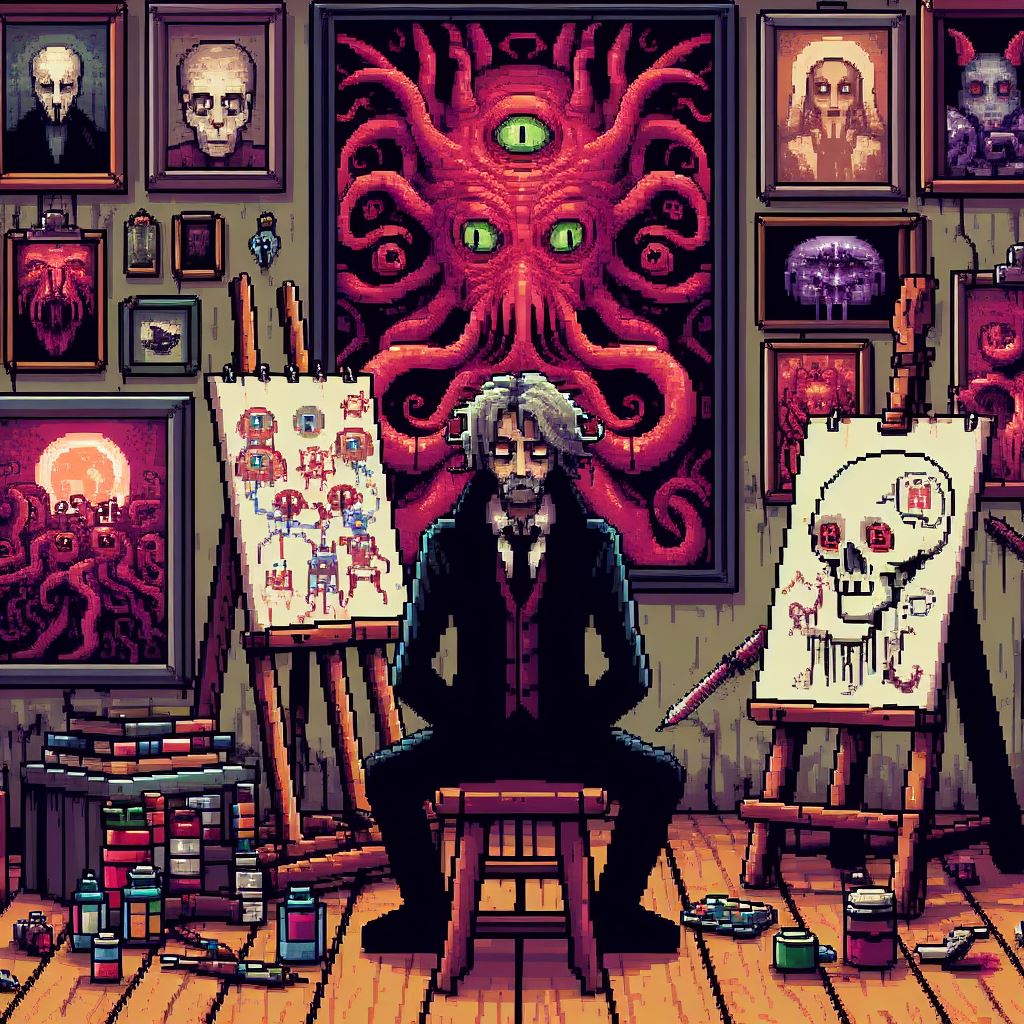





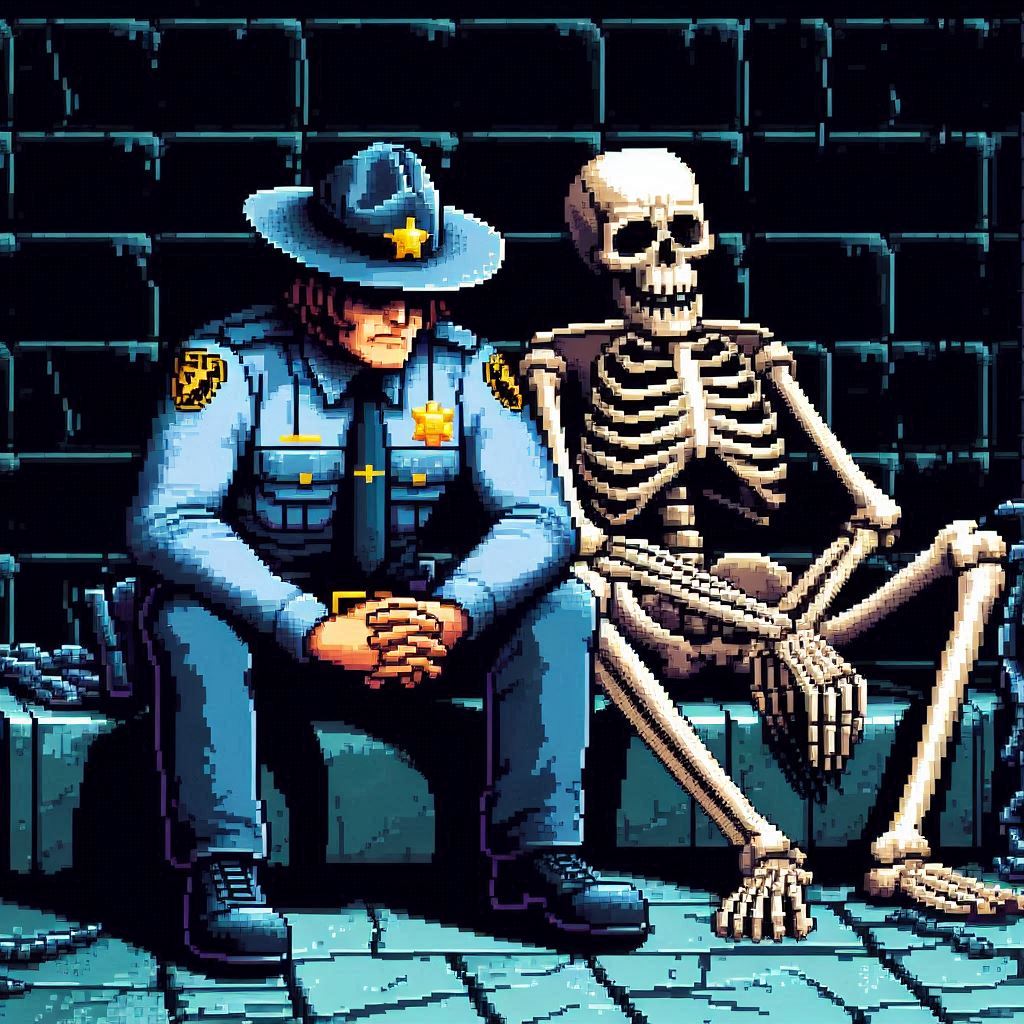


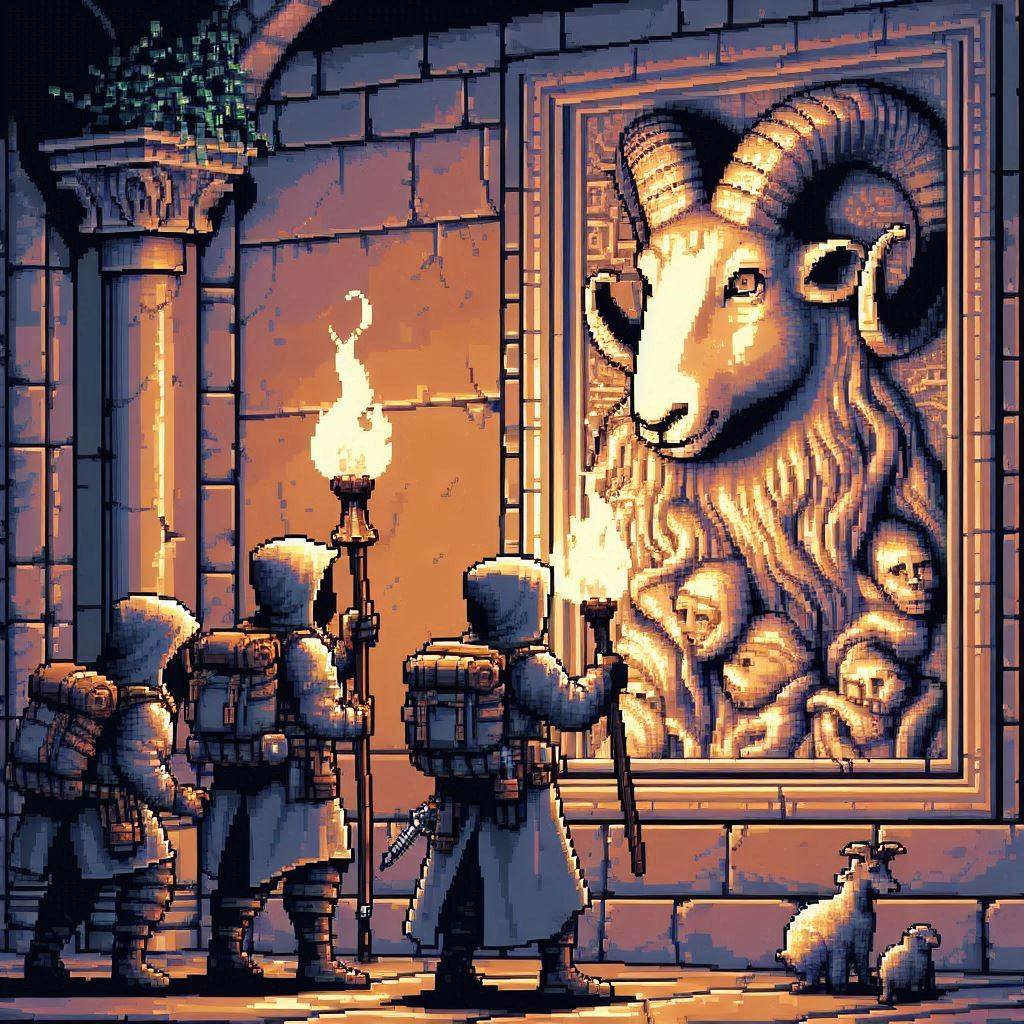


















 The Trickster's Guide to Geopolitics