In a poll that should surprise absolutely no one, most republicans support the right to protest- unless it is Israel. Claims from the party of Freedom Fries that they were now the defenders of free speech were obviously idiotic of course, but the clash of the idea of American First with the reality of Israel First has to be the most jarring, if hardly unexpected.
While the neo-McCarthyism of Russiagate was the most famous aspect of that odious and deeply stupid era, I think the worst aspect about it is that there was in fact a foreign nation that pupeteered the GOP all along- it just wasn’t Russia. But the Democrats are almost as compromised by the Israel Lobby as the Republicans are, meaning they could not have brought this up without facing a similar scrutiny themselves.
Strategic rivals have very little influence over a (powerful) states’ domestic politics. Recognized as a threat, their agents are monitored and tracked. This is not so with allied states, who are the true media savvy juggernauts of foreign policy discourse. Rivals may spend as much or more, but their payoff is far less. Closely interlinked nations on the other hand get away with almost anything. Alliances themselves become lucrative intuitions and develop a certain existence independent of their constituent countries. One of the reasons that George Washington warned against overly close attachments with foreign nations is because people tend to romanticize and become too invested in their destinies to the point where it overrides their interest in their own country, creating dangerous commitments and contradictions.
This brings us to another and seemingly unrelated phenomenon of the post-Cold War Era: the Dittoheads. The term is now hopelessly archaic, to the point where I’m surprised I even know of it. It was on the way out before I was even conscious of anything on the news that wasn’t related to Joe Lieberman trying to cancel my beloved games. It described the average Rush Limbaugh listener. A mindless compliant who would call in to agree with everything The Pig and his previous callers had spouted out beforehand. Limbaugh was a product, and his audience mindlessly consumed it.
I think one of the reasons we no longer use the term ‘dittohead’ is because it is so specifically linked with Limbaugh, but he really was a pioneer for the entire media’s eventual fate in the 21st Century. This style of mindless repetition in service of narrative creation rather than critical thought went mainstream with Fox News, and then was copied by the other cable news networks and even what was once (painfully) called the ‘blog-o-sphere’ until it became the messaging apparatus of a two party system in general. The explosion of social media’s popularity in the 2010s at first broke this partisan monopoly but then would go on to reaffirm it in stranger and more unhinged ways. This would culminate in nakedly gamed and astroturfed platforms such as reddit and increasingly ””””””’X””””””’.
Now we live in the postmodern utopia all of the most naïve people I went to grad school with so badly wanted to come true. People choose their own truth out of brand loyalty rather than critical thought. Its called being a good fucking person, you Islamosexual Communazi. It basically doesn’t even matter anymore which of these self-contained echo chambers someone is in, they are all dittoheads. They signal group loyalty and wear their inability to engage in nuanced thought as a point of pride. If you disagree with them, you are assumed to be a diametric opposite of all they hold dear, even if that is far from true.
These are the easiest people in the world to manipulate. Now, who do you think realizes that aside from the usual suspects of political culture warriors and profit maximizing corporations?
I would hazard to guess foreign lobbies. Specifically allied foreign lobbies with media connections and cultural cache. Israel is the big one, but I also (to bring it back to Russiagate) suspect Britain, and possibly in the future a South African diaspora trying to pull a Miami Cuba 2.0. And this isn’t even to bring up the entire mess that is the western-based Ukraine fanboys.
This isn’t new. The pro-France contingent of American politics in the 1790s was so strong it took a major diplomatic incident, an undeclared naval war, and an invasion scare to remove their influence from policy. But I will refrain from talking too much about that now as I will have multiple future publications that go into great detail into the topic, both in book chapter and article form, so stay tuned.
The dittoheads are waiting to be sent their instructions, and as many foreign as domestic actors know of their pliability and narrative shaping abilities. They will advocate against civil liberties at home to protect their beloved proxy-countries abroad. They are fools who vicariously fight battles for a sense of meaning in their little plebian lives. If they are catered to they will drag us all down with them.
You do not have to be the biggest fan of how the Trump Administration negotiates. You can, like myself, see the blustering towards Canada and Mexico in particular as extremely counter-productive, to say nothing of the clownish (and possibly dangerous) Gaza proposal. But the Europe stuff…come on, that’s fucking hilarious.
Vance scolding them in both just and right ways as well as ways reminiscent of the liberal internationalists he rightly despises served as a wakeup call that the End of History was over. It had never really begun, of course, but certain parts of the planet (Canada, Northern Europe, American media liberals) had bought into this self-flattering fiction because it centered the deindustrializing parts of the world as still, somehow, the primary drivers- perhaps even protagonists- of history. But when someone finally said this was not true out loud, the self-vassalized classes of Europe publicly wept. The American elite may be a cynical, fractious, and even ignorant bunch, but they have a theory of governance and diplomacy. Europe, so used to being a satrapy, has seen its once more accomplished elite become complete colonial recruit subalterns. Their best and brightest, the people allowed into power, genuinely believe this post-power politics shit. They weep when the mirage crumbles.
Frankly, its pathetic.
Were I European I would find this both funny and disturbing. I would immediately demand people who actually know about how the world works represent me, and appoint people to the foreign policy apparatus accordingly. I would castigate all the trendy postmodernists (closet liberal ideologues) and hard-constructivists (also closet liberal ideologues) for what dogs to America they really are and their role is gutting training for actual honest and forthright policy makers. The failure to prioritize a regional Europe over global ideological crusades has harmed EU countries at least as much as it has the US. Arguably more considering the backwash of the refugee crisis from Libya, Iraq, and Syria.
But since I am not European I merely need to sit back and watch, appraising how fast a society high on 30 years of pure ideology goes through the stages of withdrawal and grief.
I previously mentioned how (northern) Europeans in particular have a strange smug entitlement and unearned sense of self-importance when their only real impact on the 21rst Century seems to be outliers of enshittification to domestic political realignments. This might be worse than that, though. The pathetic Chamberlain-at-Munich analogies and blind faith in a bill of goods the US is (thankfully) no longer selling reflects an inability to even think of a future, only a romanticized and ahistorical past. Statecraft isn’t about bringing into being the hideous undulating many-tentacled beast of German Idealist philosophy, where human thought creates reality through a mystical immaterial process yet to be explained, it is about medium term solutions to immediate problems while understanding permanency is fleeting. It cannot be a playground for navel gazing. People have clashing interests. Always have, always will.
The Age of Discovery and the subsequent Age of Victorian imperialism is long since over. Coasting along as ducklings in America’s wake somehow enabled many in Europe to believe that they had transcended history and were still vital global actors. But the unlearning of statecraft actually meant they were stumbling in to being its victims.
The world today resembles not the dreams of the 90s, but the pre-Discovery balance of power. The great civilization-states of the east are back and growing their influence. Europe, meanwhile, has reverted to its older position of being the western peninsula of Asia. The faster the Europeans can grow up, the faster they can adapt to this new reality.
One of the things that initially surprised me after I wrote Woke Imperium, was that so many more left wing people wanted to engage affirmatively with it than right wing people. A big part of it was because it was they who had first seen their causes taken over by the easily manipulatable moral panic-types. The easiest people to drive to support needlessly aggressive policies around the world are human rights activists, after all. But another element of it, I think, was that many right wing people read it and correctly had their warning bells go off. I compared The Great Awokening to the Reformation to start, particularly the Puritan experience in early American and 17th Century British history (an analogy I am quite fond of), declared it to be a direct successor of the Reagan-Bush Jr Era Moral Majority, and implied that such moralistic impetuses to sell imperial expansion would likely evolve into a post-woke and possibly even anti-woke sequel.
Regular readers of this site know I have been a constant critic of postmodernist social justice since the start and long before it became the cool thing to do. This even predates the blog itself, dating back at least to Kony 2012 if not even before, with my teenage undergraduate disdain for what is incorrectly called ‘critical theory’ and elaborate and obfuscatory language used to ’empower’ (make the writer sound smarter than they are) that did anything but. They will also know that none of this collective cultural insanity of the past decade plus has ever once tempted me to become conservative or to throw my left-populist economic views under the bus. In fact one of my persistent critiques of wokery was that the longer it went on the more obnoxious the inevitable right wing backlash to it would be. People with a progressive/whiggish view of history seem incapable of understanding that all things come in cycles rather than ascend some linear path.
The desire to become a moral majority is hardwired into American culture, be it left, right, or center. And all present in effect the same danger. The triumph of slave morality in the service of the suppression of dissent. The sterilization of public space to avoid psychological discomfort. The fear, quivering in the shadows, that ones own faction does not have a monopoly on ethics. ‘Just Be a Good Person,’ can be easily swapped out for ‘Just Be a Normal Person,’ etc.
One can simply disavow moralism, adopt an amoral power-based view of the world that reflects polycentric reality, and be done with such fears entirely, but I digress.
Currently, I am busy with other longer-term projects, but I am also on the side paying attention to certain trends with the assumption that I will in the future be writing another examination of moralism in the service of neconservatism. This time, I suspect, it will be about the right. We have also seen a discussion, if one can call it that, online of what the ‘Woke Right’ is. Usually and laughably this entails a conservative old guard lashing out at younger conservatives who take a dim view of Israel and are increasingly interested in class politics. This is some opposite-world territory, as it comes from the faction attached to a sentimental and identity/grievance politics based world view where the U.S.-Israel security arrangement is viewed as a positive and even necessary feature of global stability. This is also a faction that believes that identity (in the form of Christianity, ‘based-ness’ or whatever) is more important than class and logistics. That is quite literally a copy/paste of left-wokeisms priorities, if for ostensibly different purposes. It is the Republican Boomer establishment that is actually the Woke Right here. The difference now is that the evangelical phase of the 80s-2000s was so loathed and backfired so badly once it went down with the Bush Ship that it will be quite some time, if ever, that Jimmy Reptile and all his friends are back in the driver’s seat.
This leads me to begin (without yet coming to firm conclusions) to speculate as to what exactly the right-wokeness will be. I can tell you this much, it will be a compromised merger of multiple trend, as no single one of the following has anything remotely approximating popular or institutional support. The goal of the right-moralists will be to create what they will inevitably and pretentiously refer to as a ‘Hegelian Synthesis’ out of a variety of these trends. They will most likely fail to establish this as official policy, but they will absolutely create a kind of virtue-signaling side economy of Crusader Pepe profile pic approved ‘alternative’ media that people are expected to show deference to if they want to be in the club.
The Catholic Convert Inquisition
For many Millennials and Zoomers, and especially that most cursed demographic of those between the two, converting to Catholicism is all the rage. All hipsters become Catholic, after all. That need to moralize while also being part of a community is creating a seething underbelly of young fogies ready to RETVRN to before Vatican II. Seemingly utterly oblivious to the contradictions of joining a ‘universal church’ that is meant to spread across all the cultures of the Earth while simultaneously railing against globalism is a self-contradictory position, but it is no different from the woke left’s fantasies that one day they would take power (Ha!) and replace the bad rapacious capitalist American Empire with Socialism’s True Children.
This cannot become a dominant faction on its own because the majority of Catholics (i.e. not recent converts) do not share any of the bizarre fixations this new group has and largely sees them as an unwelcome imposition.
Anti-Woke Media Kulturkampf
Because wokeness was so obnoxious and invasive, and embraced by so many corporate and government actors, it made a very easy target. An entire right wing griftosphere arose where some of the dumbest midwits on this planet were able to make bank embodying the principle that a stopped clock can be right twice a day. They infest social media and youtube, giving the most superficial and warmed over takes possible and whining that they are somehow an opressed class because the establishment that once courted them hates them now. Even as our Silicon Douche overlords pivot away into courting the right, they will still trot out this talking point for a year or two to come.
This cannot become a dominant faction because they are utterly dependent on those they criticize to even exist. As wokeness continuous to decline back into its pre-Tumblr migration status as a holding tank for mentally ill shut-ins and losers, all of its cultural cache and any pretense of punching up against the establishment is gone. Big tech kissed the ring. The era of the coding pronouns-in-email gendergoblin is over, the new era of the neofeudal techno-popes has arrived. Thus, in time, the anti-woke will be seen as the woke content creators are, tools of an establishment and dupes of fashionable trend chasing.
Israel
While Israel is hemorrhaging support across the public’s ideological spectrum, the fact that left wingers mostly come out hard for Palestine means that the reflexively anti-woke knee-jerkers often have to double down into a Boomer-style love of Israel and performative philosemetism. North Atlantic Jewish communities become a kind of pet cause of such people in the way that (a monodimentional image of) African-Americans became The Elect of the left. Censorship and cancelling have been perfected by AIPAC-aligned actors in a way the cultural left could only dream of achieving anywhere outside of Reddit and Bluesky.
This cannot become a dominant faction because the younger people are, the less infatuated they tend to be this foreign state whose interests, we are constantly told, must be placed before our own. But the bipartisan support for treating this strip of land in the Levant as sacrosanct is strong enough that The Olds will hang on as long as possible, and make their funding contingent on continuing such policies.
Zoomer Moral Panic
I have talked about this one before so I will keep it brief. If there is one thing Gen Z loves, its setting up arbitrary guard rails to creative expression, public policy debate, and cultural output. When their brood mother, Tipper Gore, shat them out her foetid womb she began to suckle them from the Teet of Cancellation, whispering in their ear all the while that to be made psychologically uncomfortable was literal violence and stochastic terrorism. This attitude is not simply a left-wing and female coded affect, as it is in the (equally cringe but for different reasons) Millennial generation, but pretty standard across the ideological and gender spectrum of Gen Z.
This cannot become the dominant faction because Zoomers are a smaller and poorer generation than any other. They won’t be buying their way to the heights of lobbying without help. But they are pulling from a long and recurring American tradition here, so they will find help if they seek it.
…
I believe the key to predicting the longer-term trends of the Right Wing Turn will be found in a merger point between the above factors. It is too early in this process for precise soothsaying, but for now I will venture this: the common point that all of the above factors share is moral sanctimony and virtue signaling in service not of social justice and equity as we are so used to these days, but for a nostalgic dream-cosmos of ‘normality’, which truly meets the definition of Nostalgia For an Age That Never Existed. It is an attempt to force a type of cultural conformity which has given up actually appealing to the masses but rather seeks to dictate the terms of public expression in the vain and ultimately doomed hope that politics is downstream of culture, rather than the opposite. It will appear to succeed for a few years as the hangover of the Woke Dark Age still lingers and we all settle our scores with the cancelers of yesteryear, but will inevitably inspire rebellion and became an equally poorly dating experiment as the one it sought to replace.
In this way I view it as The Hays Code 2.0. When Will H. Hays took on the job to ‘clean up’ film for the sake of 1920s WASP America he saw himself as fixing a problem that was existential. He succeeded to an immense degree, with interracial couples and foreign cultural practices heavily censored, and even married couples being forced to be depicted as sleeping in separate beds. Jokes about the clergy were haram, as was fictional violence towards children. One could state that film in this era still had some bangers, and it did. But compared the experimental breakouts of the early 20s and the true golden age of cinema (so far as I am concerned) in the 70s and 80s, its pretty weak stuff on the whole. Most of the best films from the Hays Era came from outside of America for a reason.
Despite this apparent success, in the end, Hays was directing all his energies towards a non-issue while the totally unrelated structural forces of the economy were barreling towards an unprecedented collapse. So too will the right wing culture warriors of today ignore environmental devastation, rising inequality, and the dangers of elite overproduction in order to score some cheap points and easy clicks. The future they are building is one of spectacle and distraction, not of serious policy. A set of priorities that unites all culture warriors in a poststructuralist consensus moderated through clickbait Catholicism. The modern right may be in denial about this, but it is every bit as postmodern as the post 1968 left became. And therefore every bit the useful idiot of establishment tastemakers, surveillance advocates, and warmongers.
As for when the Hays Wokes and their Postmodern Right turn their glowing eyes towards actual hard policy- especially foreign policy? This may well be a topic for something more serious, professional, and substantial in the future. I certainly have some ideas. If you come across any especially interesting examples, feel free to send them my way. I am starting a collection. I suspect that ‘defending Christendom from the Muslamic Hordes’ will be a big part of it.
Those who are easily scandalized, regardless of their ideology, are the easiest to manipulate and build consensus around. What could be of more use for an increasingly neofeudal society than to keep neighbors at each others throats rather than teaming up against their lords? The more things appear to change, the more they actually stay the same.
In 2018, Angela Nagle, a public intellectual who had released the book ‘Kill All Normies’, and once had been a fixture of left-commentary, was cancelled. She was labelled a cryptofascist, a Trojan Horse out to poison the purity of a supposedly ascendant left, and the usual formulaic denouncement of a political faction ruled by a puritanical mob. The reason for her cancellation? She made a left-wing case against open borders, pointing out, rightly, that mass immigration undercuts workers’ wages, the social stability of working class neighborhoods, and, is in fact, a libertarian proposal to unleash capital over state and local community sovereignty. She also had the gall to appear on Tucker Carlson (the man who might have helped stop a war with Iran– quelle horreur!) to not only promote this argument, but also, later, to mock the most pathetic display of political activism ever seen in the 21rst Century. Yikes sweaty, abelist. Cancelled.
Leaving beside the obvious point that no socialist or even social democrat government that ever survived for more than 3 months ever abolished prisons, the police, the army, borders, or, most importantly, its own geographically rooted sense of sovereignty, Nagle’s point then was correct. Bernie Sanders, before the AOC-human resourcesification of his second campaign, spent decades making this point. It was once considered a standard talking point of unions and the hard left that open borders was a neoliberal scam. Woke NAFTA. These days, as we emerge from one dark age of histrionics and reactive moralism into what could be its inverse mirror, more and more people are coming around to Nagle’s point. Canada, under the Trudeau government, has proven her tragically correct. The current fight on the American right over H1B visas shows how pertinent the issue is. Even the Democrats, finally, are starting to realize that a criticism of mass immigration policies is not automatically something rooted in racism and may, in fact, have many solid economic roots. Trump won every demographic except for more affluent college degree holders in the last election, with a more and more diverse group of people which includes the foreign born turning against open border policies. It can be very unpopular to be right before the tides shift. The tides always end up shifting eventually, though.
How could so much of commentary gotten so many issues so wrong for so long? I would contend a major part of the moralism-censorship complex is tied up with a specific world view, that of Current Year.
The ruminations of what would become Current Year arguably date back to the early 2010s, when a formerly esoteric and countercultural internet became more and more gentrified by the increased arrival of smartphones and ‘normies’ going online and becoming offended by things outside their previously cable news defined parameters of existence. These trends would later become hyper-intensified under Covid lockdowns and the general Great Awokening of 2020. Agoraphobic shut-ins became a part of discourse, leading to an adverse socialization that poisoned everything it touched and was hostile to nuance or even conceptualizing civil society as anything aside from some kind of cosmic battlefield of the forces of light and darkness. Revenge of the nerds, the left-evangelical edition. While far past peak now, this process still continues in many communities like a circular firing squad operating on inertia.
But the best summary of this blinkered and ahistoric world view comes from 2015. Specifically it was people noticing that all of progressive-beloved John Oliver’s arguments seemed to boil down to stating what the date was. Don’t you know it’s the Current Year? We have certain opinions in the Current Year? What are you, living in a past year?
Everything wrong with both complacent liberal centrism and activist left world views can be so perfectly summed up by this attitude. There is the assumption that history is linear, rather than cyclic. That newer ideas must be automatically better than older ones by virtue of novelty, that a great End-of-History style convergence is upon us. Fukuyama no longer as a ‘science’ but as a desperate declaration of faith. The Elect speaking in tongues before the promise of a moral universe. But, as I have gone into detail about before, there is no right side of history, nor an end to history. There is only competing interests, often moving in totally divergent directions. Gains are rarely permanent, and when one region or field gains often another loses. People gain strength by opposing trends as often as they do supporting them.
Think of the Current Year argument used in other historical contexts to see how foolish it really is. “Got brain problems, time for a lobotomy! What do you mean its dangerous? The experts agree that’s misinformation. Its the Current Year!” “In the Current Year we practice progressive hygiene via the proven science of eugenics.” “Don’t you know the South Vietnamese yearn for our protection, they are literally dying! Its a global battle out there in Current Year, not some halcyon day of isolationism!” “Globalization will lift all boats, stop stalling and pass NAFTA- its the Current Year!”“How dare you oppose our glorious Pharaoh Akhenaten’s war on the Old Gods and singular devotion to the sun, its the Current Year!”
It goes without saying that all this Current Year stuff has done in the long run is lead to unprecedented gains for the right across the developed world while a once surging left now seems to be a pathetic punchline, all while the liberal center continues its long slow entropic decline. Whose inevitable right side of history is this anyway?
I won’t dispute that the conservative tendency of waxing nostalgic for the past and trying to resuscitate dead and dying worlds is a doomed and misguided enterprise, but a blind faith in the present or future is just as reactive and prone to thought-terminating clichés. It is this dedication to presentism that poisons so much of discourse, prevents people from engaging in proper policy critique, and attacks cogent critics such as Nagle and countless others for doing the important work of daring to question whatever the fad of the day might be.
Now that we seem to be entering the twilight phase of this form of Current Year, it might be easier for more people to say this. But this too shows the danger of Current Year Thought. A new Current Year could arise at any time, probably right-coded now, waiting to corral critical thought into a herd mentality. “Its 2025! Time to make Curtis Yarvin National Thought Leader. Come on, aren’t you aware the Current Year?”“Ramaswamy says in Current Year we’re reconstituting feudalism and banning fun, time to get with the times!”
If you want a solid simple argument for why the humanities are important it is this: Every generation has an idiot cohort that thinks they are the protagonist of the human experience. This group of mid-wits is often over-represented in established commentary. They are always, without fail, proven wrong time and time again in their presentism assertions. Sometimes, their moral certainty in teleology damages greater society as a whole. It often leads to attacks on what turn out to be prescient critics of its blind spots. Even a little historical knowledge can prevent more people from falling into the destructive cult known as Current Year. Perhaps this is why academia was the first to be targeted and gravely wounded by the Prophets of the Present.
Garni Temple, for the cult of Mithra, built by Tiridates I in the 1rst Century CE. During this period Armenia was a mostly neutral buffer state precariously balanced between Rome and Parthia. The royal family came from the Parthian Dynasty but the succession had to be approved by Rome.
I just came back from a trip to Armenia to present at the Yerevan Dialogues, a conference about the changing nature of foreign policy in a post-unipolar moment. I had prepared these following remarks, which I ended up not using because they overlapped too much with another presenters topic. Rather than force everyone through repeats, I elected to just wing something else instead. But I am going to put my original prepared remarks here anyway so they don’t go to waste.
The general trend of our work at The Institute for Peace and Diplomacy has been to prepare people for the inevitable reality of the return of the multipolar world. This world is a return to normality to over 99% of human history, so why does it require so much effort to conceptualize?
The answer is that it does not- for most people around the world, who have lived in a reality of hard-nosed great power politics continuously. Nearer the imperial core of the North Atlantic, however, those of us who still see this reality remain a minority, however, albeit a growing one.
This creates a disconnect with many weighty states on the world stage living in a nostalgic fever-dream, albeit one they seem to be ever-so-fitfully awakening from. In the meanwhile, we are constantly subjected to narratives about the ‘New Cold War’ or other obsolete reference points to periods of history irrelevant to the current realignment.
One of the largest trends which we at IPD have identified has been the rise of the Middle Powers. In a world where there are basically three global powers of diminished capacity and increasing capability for regionally anchored middle-tier nations, the name of the game is polycentrism. This is the opposite of hegemony and far from anything resembling the Cold War. Stronger countries with regional-but not fully global- ambitions will become the equals of the superpowers within the realm of their own near-abroad. This restricts the sway of the global powers, locking them out of regional domination
To many around the world who tire of American hubris or the globalization of conflict, this sounds like a welcome improvement. It will be- for some. But the smaller states located in less geopolitically stable regions now face possibly heightened dangers. A regionally dominant middle power, or even worse, multiple regionally potent countries vying for dominance over their near abroad, could spell an increase in danger for these smaller countries whose core imperative is to survive before any other concern.
This is especially true in West Asia, a region prone to so much conflict and great power rivalry. What possible path could the more vulnerable countries of this region take in order to maximalize their chances of avoiding conflict with their sovereignty intact? I would argue that while we are far away from it right now, the only direction with any long term feasibility is one of neutrality and nonalignment between regional and global powers alike, where the declining influence of the globals is leveraged against the rising influence of the locals. The superpowers may yet have a constructive role to play in the saga of small states- and in doing so they can retain some credibility in a world of resurgent middle powers.
Balance of Threat for the smaller states
This brings me to the other side of the polycentric world, the one that both accepts the reality of the rise of the Middle Powers while also understanding the security concerns of the smaller states around them. What path forward is there for states who fear the growing influence of their regional powers? One path stands out to me, a neutralist accommodation occupying a guaranteed space between both the regional and the global powers.
Global powers might be consumed with concerns over the Balance of Power, but the smaller a nation’s world profile it is, the less relevant this concern becomes. What matters more to the smaller nations of the world is Balance of Threat. Rather than looking at a state’s overall potential for danger, balance of threat theory dictates that a country will seek to balance its security against other nations whose potential for revisionist behavior directly affects them, regardless of how powerful those nations may or may not be on the world stage. With the declining ability for great powers to directly intervene, smaller states should not plan on being able to rely on alliance style security guarantees from outside nations, however. This poses the question of what kind of policy to pursue.
The global powers may no longer have hegemony over entire regions outside of their neighborhood, but they are still the world’s most important actors. Smaller states now have an opportunity to engage in sovereignty-affirming balancing behavior. The idea should be to become useful business partners in a way that does not threaten the regional powers nor requires the traditional subordination of smaller states to the great powers.
A hypothetical example of how this would work would be as follows:
1. A small state in a region of high competition between regional powers makes clear its intention to seek neutrality between all parties. It does this by simultaneously appealing to the region and the relevant global powers.
2. In order to gain the regional leverage needed to have its position respected, the smaller state prioritizes the global power’s recognition for this new stance. It can do this by appealing to the global power as being a secure and reliable trade, regional resource, or finance hub partner that would be politically oblivious to regional-power-imposed sanctions and hardened against external disruptions. A country that is always open for business is a country that can maintain relationships with distant nations.
3. The smaller country’s military is only for defense, and it disavows joining large global alliance networks. It does, however, maintain a strong enough military to serve as deterrence to conventional attack by revisionist regional powers. By maintaining friendly if unaligned relations with the great powers, it also increases its options to introduce qualitative advantages to its forces. This can be done without formal security arrangements.
4. Should a country be successful in achieving the above deterrence, its odds of having its desired status of achieving neutrality greatly increase. Should this happen, the ability to attract investment from multiple regional powers could further bolster the country’s status and security.
Neutral and Buffer States
Buffer states are often famous for when they fail, such as Belgium in 1914, but there are many success stories too, including Belgium itself for generations before that fateful date. Some other examples exploited natural geography to further reinforce the natural borders already in place. Nepal, between the British and Qing empires and now modern China and India, is an example of this. Austria in the Cold War, with the victorious powers of World War II all agreeing to a mutual military withdrawal, is another. Perhaps the longest and most surprising of such states to modern observers is that of late-nineteenth through mid-twentieth-century Afghanistan. Not wanting to rule the unprofitable and warlike territory itself, the British Raj nevertheless was consumed by the specter of a Russian invasion through the territory during the height of Anglo-Russian rivalry in Central Asia, often referred to as “The Great Game.” After a succession of fruitless wars there, it was agreed to draw the boundaries of Afghanistan in such a way that Russian and British imperial interests would not directly collide with each other. The arrangement would bring a surprising amount of stability for the tribalistic nation, and only collapse when a series of coups and internal upheavals opened the way for a Soviet invasion in 1979 and subsequent Pakistani and U.S. intervention.
Lest it be assumed that a long-term successful stint as a buffer nation can only come about from circumstances of comparative stability, the experience of Uruguay offers one of the more remarkable transformations from instability to long-term success. Contested for centuries between the Portuguese and Spanish empires, the early independence of Uruguay was rocked with trouble. Both Argentina and Brazil attempted to dominate the country, and internal factions fought each other on the domestic front, sometimes in open civil war. These contests even helped spark South America’s deadliest war, the War of the Triple Alliance, which further seemed to relegate the region’s smaller countries to domination by their larger neighbors. And yet it was the cost of that war, coupled with the desire to maintain some kind of balance in the region, that ensured Uruguay would be able to harness its natural agrarian bounty and access to ports in order to become one of the most developed and, eventually, peaceful Latin American countries. When Brazil and Argentina could both openly admit that they feared the space between them being dominated by the other, it became possible for them to mutually agree that neither would absorb the country into its security arrangements.
The Two Big Boys of Western Asia
Now let’s look a bit closer in space to where we presently occupy, West Asia. Ever since the fall of the Achaemenid Persian Empire and the subsequent collapse of the Alexandrian and Seleucid Empires that toppled it, the region’s history has been dominated by perpetual great power rivalry from a state based in Anatolia and a state based in the Iranian plateau. Rome and Parthia, Rome and Sassanids, Rome and the Caliphate. The subdivision of the Seljuks of Rum with the rest of their empire, the Ak Qoyunlu and Qara Qoyunlu Empires, Ottomans vs Timurids, Safavids, and Nader Shah. And today, Turkey and Iran.
Then a third player entered the game. The political falling out of the Golden Horde with the Ilkhanate in the late 13th Century in a battle over grazing lands in modern day Azerbaijan was a precursor to Russia’s entry into regions south of its homeland. It would eventually be this new player, starting in the 18th Century and culminating in the global power projection of the Soviet Union, that would turn a two player game into a three player one. For a time, Russia was by far the biggest player of all of these, but what we are seeing now is a proportional reversion back to the traditional Anatolian and Iranian regional powerhouses- just with the addition of Russia. Moscow as a global power, Ankara and Tehran as growing regional powers.
For now, the dynamic is that Turkey is allied to the NATO bloc and Iran is allied to Russia. This seems to replicate the traditional Cold War alliance structure that I spoke of as obsolete before…but we are in a time of rapid transition. Russia and Iran share mutual enemies, but not many constructive interests outside of Syria and some defense cooperation. Russia still has many dealings with Israel and across the Gulf region. Turkey, meanwhile, has taken the most independent of NATO course possible in regard to both Ukraine and the Red Sea, positioning itself as a pivot power that has the protection of the North Atlantic alliance while also acting blatantly in its own interests.
There is thus no inevitability to smaller nations being perpetually subordinated in this fluid situation, but I do think there are a few different factors at play today that could bode well for attempts to move in a neutralist direction. Colonialism is out these days, and not primarily because it is ‘wrong from a moral perspective’ but rather because it no longer pays. An intractable occupation of a people with their own culture and loyalties is expensive and inefficient. Trade can be a much better and cheaper method of achieving similar goals. Most importantly, great power allies can no longer trust the subservience of their regional power partnerships, and so need to diversify their investments. Smaller countries provide this failsafe.
Regional and great powers alike fear more relative loss to other powers, rather than the autonomy of smaller states. A small state, using the Westphalian system of sovereignty that we have decided to conduct most international relations within the present is much better at keeping foreign domination at bay so long as it can balance the regional powers enough that all except the neutral country as a buffer and reliable nonpartisan meeting point. Due to the variety of deeply held territorial disputes and grievances in this region, especially those held between smaller neighbors, the odds of being sucked into a regional power alliance network are high. But all this just means to me that if there is any region that needs to explore small state neutrality and the potential windfall it can offer, it is here. If it can work in this region, it can work anywhere.
The danger I see here is not that the smaller countries won’t see this opportunity, I am sure most do. Nor is it even so much the inevitability of power politics between Ankara and Tehran over places like Lebanon, Syria, and other parts of their near-abroad. No, what I see as the first problem comes from my side of the ocean- the inability of Washington DC and perhaps also Moscow to recognize that neutral buffer states are in its own interests. Failed attempts to enact regime change in Syria and Libya have greatly destabilized the region, while the flexible nonalignment of many members of the Gulf Cooperation Council show the first stirrings of moving away from global binaries (and perhaps global oil price stabilization). Should the opportunity ever arise for Lebanon to become a fully sovereign and neutral state, it would be better for everyone save perhaps Israel if it did so. Iranian and Russian influence over countries like Syria and Iraq has only grown due to the aggressive and Manichean nature of US policy towards those countries. Meanwhile, false narratives of ‘the west’ vs the rest, or ‘axis of authoritarianism’ prevent North Atlantic policymakers from recognizing that rather than supporting maximization of their own influence in each and ever country, they should be working towards helping countries opt out of alliance networks entirely, creating a far more stable web of non-aligned nations whose business is open to all and whose sovereignty is open to none.
The interesting thing is that China seems to get this on a level the other world powers do not. There is no political engineering there so far, only a desire to do business. As of this moment, they have the advantage in courting the smaller states. They would be wise to keep up this approach, as it is the sober statecraft of the polycentric future.
The middle powers, likewise, must recognize that they are in a bidding war, and will be looked at more favorably by their neighbors if they can reign in the revisionism towards smaller countries. The first middle power to offer a more benevolent offer to its near abroad is the one who receives more trade opportunities and constructive engagement in turn.
So we have two dynamics here: the middle power who can get along with smaller countries makes more friends at home, and the great power who in turn can tolerate the rise of the middle power prevents the unchecked growth of other rival great powers abroad. This is a model for potential future stability, and it could start in regions where the smaller countries are looking for opportunities in a dangerous multipolar world. While distant from today’s immediate reality, it also represents a possibility for greater regional stability in West Asia.
Look, I know there is a deluge of unthought pieces all jumping on the post-election fallout train. So out of respect for your time and mine I will keep this extremely short and to the point. There will be no flowery exhortations or attempts to make some greater point about existentialism or transformative moments or whatever.
German style fascism or 19th Century American eugenics this is not. I have my concerns with another Trump administration and will vocalize them when they become relevant, but racial and identity politics is over for the left and liberals alike. They are hemorrhaging everyone demographically. No one likes to be constantly lectured by an upper class of HR managers. Trump is making gains across the board with minorities, Democrats lose everyone without a college education. The PMC doubles down while everyone else jumps ship.
Stemming from that point: Harris didn’t lose because she was a racially diverse female. She lost because she was a terrible candidate untested by a primary in this cycle, who had badly lost an amazingly well funded primary last cycle. She, along with being unable to to see American interests as distinct from Israeli ones, will go down as Biden’s biggest mistake. Harris could have differentiated herself from Biden’s ever more unpopular administration once she had it in the bag too, and refused to do so. A primary would have likely removed her and had someone more capable of running at the national election.
Ilhan Omar and Rashida Tlaib won their reelections by a comfortable margin. The largest concertation of Arab Americans in Dearborn Michigan voted for Trump and heavily for Stein. While I am not going to say most elections are foreign policy elections, it plays a much larger role than the chattering classes think. It may have been the geographically decisive element of the 2016 election when considering that counties in swing states with high War on Terror casualty rates broke for Trump even when they had been for Obama before, and absolutely underlined the 2008 blowout. Candidates perceived as more hawkish have lost continuously since 2008 onwards.
Before the 2016 election Chuck Schumer said: “For every blue-collar Democrat we lose in western Pennsylvania, we will pick up two moderate Republicans in the suburbs in Philadelphia, and you can repeat that in Ohio and Illinois and Wisconsin.” The party has never moved on from this mindset. Which is insane considering how much it has already cost them. When Bill Clinton killed the party of FDR in 1992 he replaced it with a party of Patrick Batemans and the cast of The View. This meant no one was looking out for working class interests. Are the Republicans going to? Of course not. But they can signal that they are and embrace some trade protectionism to help domestic industry, and this tiny rhetorical concession comes across as preferable to many than Democratic waffle and outright disdain for everyone who doesn’t live in a media-saturated metro area. Meanwhile, many popular poverty-alleviating policies were phased out recently, leading to a massive increase in child poverty. All while defense budgets continued to balloon and Harris not only received the endorsement of Dick and Liz Cheney but actively touted and campaigned with it. This was a promise of more stupid wars of choice, funded possibly by austerity at home. We might still get that with Trump, but he didn’t promise it on the campaign trail.
The American elite desperately needs a foreign policy reality check. Elections and parties pale in comparison to diminishing industrial and economic capacity compared to so many proportionally growing states around the world. The age of liberal hegemony is over. Its legacy is ruined lives at home and abroad, a massive privacy breaching surveillance state, offshoring of industry, global instability, and a Pentagon that can not even be audited. The more one runs to defend this rotting system, the more one will be punished for it electorally. Voters may not know what to do about the problems, but they know they are there. This puts them ahead of most of the media and financial elite. The more centrist candidate has lost every Presidential election in the 21rst Century with the possible exception of 2020 (and that one had Biden tied in with unions at least in a break from typical Clintonian trends).
Who even was the President the last few years? In actuality? It was obvious to everyone outside the lib-media bubble that Biden’s brain was not functioning as early as the last election. The rapidity of the decline only grew. Up until it became undeniable in the most impactful Presidential debate in history the media denied this was the case before suddenly about facing and saying it was obvious there was a problem. Has Jake Sullivan been ruling us the entire time? Or has the system just been chugging along on auto pilot?
All of these points save the last one were made in the aftermath of 2016, including by myself. Libs refused to listen. Their media echo chambers cast all contradictory information as either false or simply deny it exists. And they have the gall to still pretend they are the most informed and best educated people in society. They are in fact as indoctrinated as any megachurch parishioner. The American people and the world at large may deserve better than Republican chauvinism, but the Democratic coalition is not better overall and significantly more out of touch with people outside of their immediate social circle. They have shown, time and time again, an utter inability to learn and adapt. I am already expecting a doubling down of everything they did before. Blaming voters, blaming minorities, blaming foreign countries. Everyone but themselves. But they have only themselves to blame.
And you know what? It works for a lot of them. NGOs fundraise more when Trump is on office. The media secretly loves him as more people watch dying legacy networks and consume legacy print when he is their bogeyman. They profit directly from ‘resisting’ him. Every bit the reality show actors that Trump is, the loyal opposition has an opportunity to fundraise like never before. I’m sure there are some of them who even like losing, it being so lucrative and without the dangers of having to take responsibility for policy failures.
Just remember that politics is local before its national, and systemic before it is partisan. You can work with your neighbors to make life better near you more effectively than voting at the national level will ever deliver something. And in international politics America’s fading protagonist syndrome should not blind us that systemic trends continue onwards independently of what voters think. In my own small way I remain working towards envisioning a foreign policy of realism and restraint which can benefit the average citizen and reign in an out of control establishment. I have and will work towards that goal regardless of the figurehead party in power.
My somewhat controversial take in realism and restraint circles was that Harris would be better for us, as her inevitable failures would drag both the Democratic establishment and the neoconservative Republicans down with her, whereas a Trump Administration causes opposition to further rally around neoconservatism, and while it might adopt our rhetoric but escalate in the Middle East, making us look like fools. I trust none of these people and you shouldn’t either. So this is not ideal for me. I can only hope Vance influences Trump to keep Lina Khan in the government. She is the one genuinely good thing in American administrative governance in the past decade. If she ran for high office I would support her.
Anyway, I never had a strong read on this election or how it would go. Under duress I made a prediction: Harris wins electoral, Trump wins popular. If my prediction was wrong I had to post some 2016-2020 lib cringe. So here, my penance:
P.S.
Deep down inside you know Hillary is secretly happy, and Meatball Ron is utterly devastated. If politicians can be cynically calculating, why can’t voters? Play the long game everyone, opportunities always abound. Look for them wherever they may arise in the chaos of events
“”To know itself the universe must drink the blood of its children.” Her voice cracked like an ice shelf collapsing; it roared across an improbable expanse of inches. The talon pressed against my pupil. It went in and in.” ~Laird Barron, ‘Swift to Chase.’
“The foxes run. The foxes die. I mourn them, but I understand that there is a danger in mourning for those who would not mourn you in return. Empathy is for those who can afford it. Empathy is for the privileged. Empathy is not for nature.” ~Tanya Tagaq, ‘Split Tooth.’
Happy October. The best month is upon us so it is time to be thematic.
As of the time of this writing, I am one story away from closing out Not a Speck of Light, Laird Barron’s latest collection of short stories. I imagine that reviews of this specific work will be rapidly proliferating, so I am more interested in examining the overall themes of his oeuvre. All I will say about the latest publication is that it is excellent- as much so as his last collection Swift to Chase. As is normal, there are three or so stories on average from each work that really stick with me, a whole lot I enjoy thoroughly, and one or two that I am simply (but not negatively) baffled by.
Barron’s publicly available biography is well known because it is so interesting. Born and raised in Alaska, he worked in fishing and dog sledding, and spent some time in Washington State before moving to upstate New York. These three locations are extremely present in his works. Interestingly, he seems to be working backwards, with more recent stories being more likely to be set in Alaska. His earlier work was Washington-focused. There is also a novel series set in New York State, which retains the weirdness of his shorter fiction if more indirectly but is more focused on two fisted mystery and action.
Most of Barron’s stories are readable as self-contained and stand alone entries. Yet there is a clear overlap and greater cosmos going on here. Characters reappear, as do cults and monsters. Old Leech, an eldritch being who loves humanity “in his own way”, enjoys feasting on our suffering to sustain either his power or perhaps merely to slake his boredom. The world is animalistic and very much alive. But it is not a Live, Laugh, Love world- although you can do all of those things in it if you like.
Something that brings all of Barron’s work together, at least from my own perspective, is the same thing that has attracted me to for eleven years now: Its ruthless paganism. Barron’s protagonists are like Robert E Howard’s in the sense that they are tough and fight back no matter the odds. Unlike Howard, however, who was very much on Team Humanity, human supremacy never exists in Barron’s world. No one wins out over entropy. The food chain, like in Lovecraft of Clark Ashton Smith, is not stacked in favor of man. People fight back, but they often go down fighting. Specific underlings and odious toadies can get their comeuppance, but the protagonists don’t really win either in the long run. I have long maintained that Barron is really a modern Sword and Sorcery author more than even a horror author. That older and better form of fantasy was rooted in an earthy defiance of established order combined with naturalistic sensibilities. Horror was everywhere, but so was adventure. The world was predatory and so were its heroes.
A film example of sword and sorcery in the modern day which also goes unrecognized is the film Mandy, a movie I suspect Barron has seen, especially considering the direction some of his newer stories have taken in the past few years. In this way it takes one to know one as that film also influenced my own writing.
What you get with Barron is a kind of beautifully sparse and atmospheric writing style. Cormac McCarthy doing the pulps. But to say this is pulp is not to deny its literary value. In a culture where we are expected to be awash in Platonic idealism and a mandatory public moralism, it is of cultural value to take the human glasses off from time to time and see the surging tide of instinct and feeding that undergirds our experience. Life is visceral, and above such notions as good and evil. Suffering is everywhere, but so is the joy of combatting it. The pulps understood this drive, to see the awe in horror. Mysterium Tremendum made manifest. To choose life is to choose confronting, perhaps embracing, horror. Personally, I think these kinds of outlooks are extremely useful to meet many present challenges.
Barron shows us a world where everything eats everything else. An endless cycle of predation and consumption. It is perfectly in line with the view of the surviving shamanistic traditions or the old gods. This is the shamanic journey, where one is devoured by monstrous animals before being reborn with the devouring beast as a personal guide. One lives, laughs, and loves with a bloodstained mouth. As the musician and author Tanya Tagaq once put it while complaining about PETA’s demonization of traditional indigenous communities continuing to hunt: “We’re animals! We’re meat! We’re so stupid to think we are not.”
I am not one to become personally invested in people I do not know directly. When famous people I respect become ill or die it does not impact me like it does others. One very big exception to this, I found out, was when it was announced not too long ago that Laird Barron had a sudden and major medical emergency. A jolt passed through me fearing the worst. It was the fear that we would lose one of our best living authors. Someone who spoke to a reality lost in the endless publications of mainstream literary fiction with its endless focus on human subjectivity. Someone who had been one of the main reasons I had gotten back into writing fiction after years of inactivity on that hobby. Thankfully, he pulled through. Old Leech isn’t done digesting us yet. Here is to many more- both years and publications.
I experienced Hurricane Ida directly and assisted in cleanup which has left me with some health problems to this day due to heavy lifting and mold from flooded basements. I don’t regret it.
What I do regret is that my government will prioritize the burdensome Israel and unnecessary Ukraine over its own citizens in need now from Helene.
The stenographers of our corrupt empire, the journoids, follow suit and give more sympathetic coverage to Israel than they do their own backyard. Fearing how critical coverage of the government would look in an election season, many of them seem bent on absolving themselves from anything that could compromise the message of competence.
There are policy ‘wonks’ and journalists alike who, as a class, desperately need to be subjected to a ‘Down to the Countryside’ type policy. Disaster cleanup is a great place to start.
The pace of environmental disasters is accelerating. The empire is over-extended and has become more of a danger than a benefit to its own host country. At some point we are going to have to choose: readiness for disaster at home with a sustainable force posture abroad, or perpetual war and a hollowed out homeland? We cannot afford both.
The government cannot be trusted on these issues. They have deployed elements of the national guard from the effected states to the Middle East during Hurricane season. Communities must harden themselves. They cannot expect timely and effective assistance from a state which no longer sees itself as a society rooted in place but rather as a global edifice of abstract ideas and market fundamentalism.
In this way there is another overlap between lackluster disaster response at home and fueling disasters abroad: both are profitable. Disaster capitalism thrives in war and postwar construction. It also thrives domestically when communities are uprooted. Both are connected to a world vision that sees corporate profit and its lobbyists as the central goal of the state.
I cannot be surprised anymore, but there is no bottom to my disappointment. For the time being more people should look into pursuing policies that learn from the Defend the Guard act.
Since the run up to the 2016 primaries, when it was obvious that the neoconservative movement was beginning to gradually migrate (back) to the Democratic Party in preparation for what they saw as an inevitable Hillary Clinton presidency, I have been constantly making a joke to describe the process: ‘Dick Cheney, next key note speaker at the DNC!’ Well, with Cheney endorsing Harris in the current presidential race we are ever closer to that eventuality. Bill Kristol, welcome to The Resistance™, John Bolton, welcome to The Resistance™, Perpetually Screaming Two-Headed Alfredo Stroessner Clone with Mouths for Eyes, welcome to The Resistance™.
Cheney’s endorsement could have (should have) been ignored by Harris for purely electoral reasons, but it was met with mutual praise instead. Dick Cheney, one of the primary architects of the Patriot Act, the Iraq War, a global torture program, extraordinary rendition, Haliburton shortchanging and grifting the U.S. military, and fan of the unitary executive theory of governance, is apparently worried about our democracy and civic health. But it was Cheney who did more to harm these things than even the odious Trump which he fears. Worse yet, everything he did he did incompetently. No respectable supervillain, this perpetual master of failing upwards makes everything worse but for little demonstrable gain for anyone who isn’t some kind of government contract speculator.
And the liberals who once quite literally called him a Hitler-like figure now seek his praise. It makes you wonder what they will be saying about Trump in 15 years. “Former President Trump really took a strong stand against President Incel_Sniper1488 today! Sanity and decorum prevails!”
There are many reasons we are in the sad state of decline we currently find ourselves in today. In applying blame, The George W Bush Administration holds the largest single share.
It makes me think of the ‘Hope and Change’ of 2008. A major flaw in the Obama Administration’s philosophy of governance (itself largely cribbed from the ridiculous farce that was Sorkin’s West Wing) was unity and togetherness. That is the mantra of someone who barely squeaked into power, not someone who won a huge blowout election and came with a de facto mandate for change. Obama, of course, went on to serve as effectively Bush’s third and fourth terms. But respectably.
More importantly, that tone of unity, moving forward, and just moving out of the divisive culture war and endless conflict of the Bush years had the opposite effect. All of these things doubled down. They were made worse, I would contend, because we (collectively) never punished anyone from the Bush Administration. We forgave them. And in so doing, we made a cabal of people who left office with a 25% approval rating look like elder statesmen.
There is a lesson here about not listening to any sanctimonious ideology about forgiveness or ‘rising above vengeance’. That is for very specific situations and long term settlements, it is not for enacting a break with failure or an internal housecleaning. The failure of so many to actively punish people like Cheney, to show them and their reputations no mercy, simply means that such people must be continuously inflicted upon us like repeated outbreaks of herpes. Cheney should have been purged, his family driven into exile. His reputation blackened to the extent that he could never return to relevance. Failure to seize that opportunity means that not only is he back, his policies are too.
Forgiveness is bandied about like a virtue, but I feel like just as often it is a vice. A psychological coping mechanism meant to bring closure, which can be understandable, but the act is often selfishness masquerading as the opposite. The assumption that one must forgive those who wrong them is ridiculous moralism. You only do so if they have done something meaningful to undo the wrong. Without reciprocity, forgiveness means nothing but a virtue signal. It fails even as a necessity for ‘self-help’, for if one moves on from something one surely does not need to forgive, but rather merely to move on in silence. To even do this would, of course, require that the threat dissipates. But in the case of the neocons the threat is always there, learning nothing and seeking to drive its host country and who knows how many others into a maelstrom of ruin.
Too much forgiveness, like too much of anything, becomes an idealist Platonic principle onto itself rather than just one tool out of many to navigate the chaos of life. A good balance contains the right combination of all things, proportions adjusted for circumstance. Wrath and vindictiveness, viewed by so many as uniformly negative, is a positive in situations when you need to be ruthless to spare problems later down the line. Like how an effective immune response, it kicks into overdrive now to spare you more problems later.
Wrath, not forgiveness, should have been the order of the day back in 2008. A refusal to forgive the likes of Cheney could have spared us from the rehabilitation of his policies in the minds of his former opponents today. Its why I am glad I never forgave people like him, and why I know I never will. Hate, as Boyd Rice has put it, is inspiring. It forces you to be better than your enemies by giving you a standard to surpass. I would never want to ruin my clarity of mind by watering down such a tool with something so banal as forgiveness.
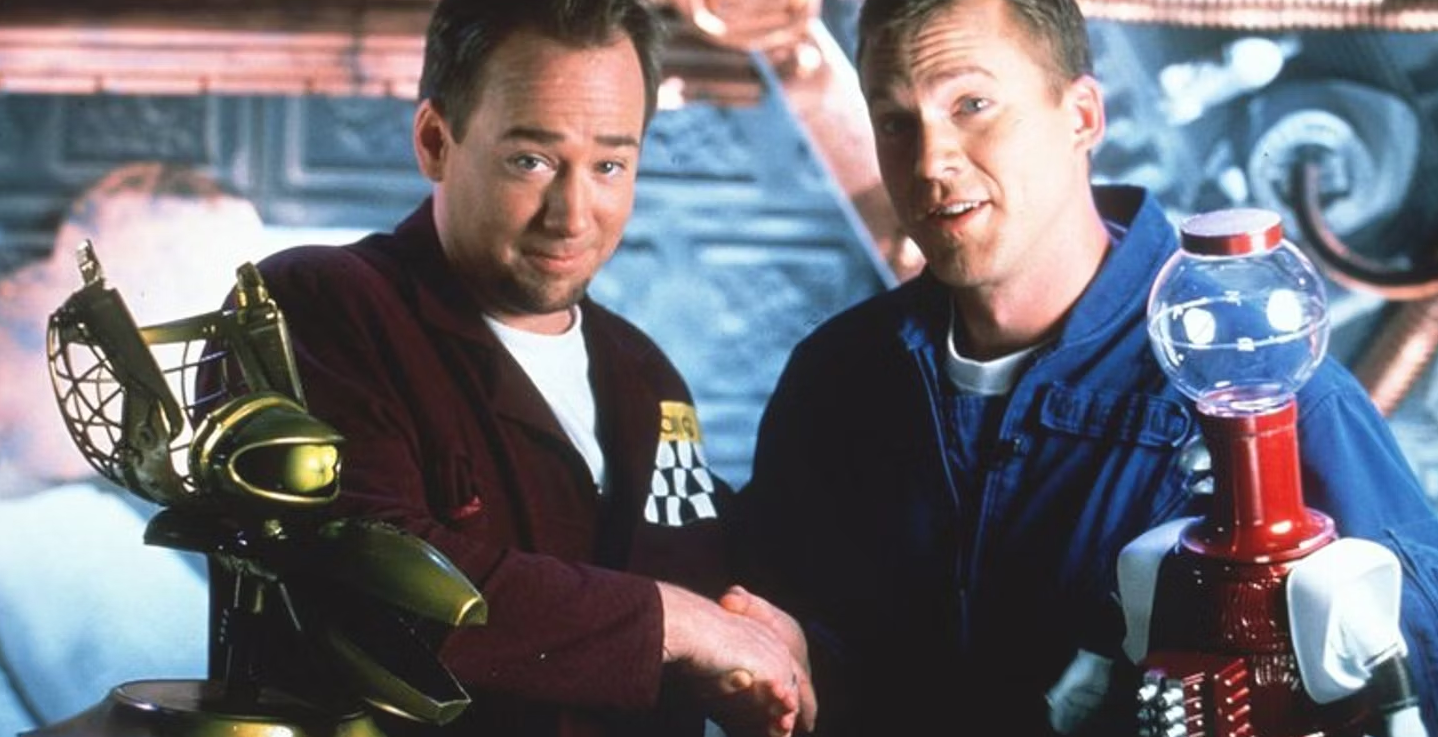
Mystery Science Theater 3000: A Cultural History is Matt Foy and Christopher Olson’s overview of the show that coined the term ‘riffing’ and launched a strange sub-genre of media made to parody other media. The idea of following people online or on television while they make fun of an old piece of media may no longer be quite the novelty it was when this former titan of comedy was at its peak in the 1990s, but I suspect the authors (as well as myself) feel the format has not yet surpassed its original incarnation.
MST3K was the creation of prop and occasional stand-up comedian Joel Hodgeson paired with producer Jim Mallon. Coming from a do-it-yourself first run in Minnesota public access television, the show’s premise was as ridiculous as the movies it would become famous for clowning on. A mad scientist (or more accurately over the course of the show, a series of mad scientists) imprisons a hapless janitor in an orbiting satellite and forces him to watch bad movies in order to research his deteriorating brain. To help him get through this trial, Joel builds sentient robots to serve as his compatriots in trashing some of the worst films ever made. Oh whatever, the show’s intro explains the whole thing in under a minute anyway.
Foy and Olson’s book does two things concurrently in its narrative: First, it narrates a straightforward history of the program from local Minnesota, to Comedy Central, to Sci-Fi Channel, to long hiatus and internet spin off projects, then a two season run in Netflix 20 years later and its return to independent creator control with today’s Gizmoplex. As it does this, the text singles out specific episodes of particular relevance to the show and its growing mythos (the show would come to riff itself too, drawing on jokes that referenced previous episodes more as time went on). Additionally, the book also intersperses commentary on the cultural effect of the show as it evolved and by midwifing the riffing genre which is placed between these historical sections. The fact that these two different sections are not separated from each other and are melded together within chapters dedicated to specific time frames is an odd organizational choice. While it takes some getting used to, it soon comes to make sense as the legacy and nature of the show is analyzed in time with its past evolution as a program.
A straightforward history of the program was needed, as most other books on this topic seem to be anthology series that primarily look at the cultural dimensions. Here, Foy and Olson have delivered something valuable. But their own cultural analysis is also worth reading on its own as well. Defining riffing as not just an audience interacting with media, but rather a triangulation of found media, intermediary comedy, and an audience, the book makes the case that the art form popularized by the show becomes intrinsically interactive in a way few things are. And, in one of the most insightful passages, the riff of a film becomes a subversion of not just the media itself, but how media is to be consumed in general:
‘MST3K demonstrates that movie riffing empowers riffers to reject or modify a film’s constructed binaries of good and evil. Villains can become laughable, just as heroes can become loathsome or ineffective. This deconstruction of heroic mythologies becomes useful when reading problematic films such as Space Mutiny or Mitchell, which glorify mindless aggression and violence as world-saving strategies. MST3K’s rejection of simple yet seductive binaries of good vs evil keeps the film and its characters open to reevaluation and audience self-reflection.’
This is followed up soon after with another passage referencing the cheap quality of many of the mocked movies in this vein:
‘On the surface, riffing on a movie’s gaffes and choices may come across as shallow mockery rather than critique. However, riffing on botched elements of a text’s craft should not be dismissed as mean-spirited because it fulfills a crucial and underappreciated function in active media consumption by keeping the constructed nature of cinematic storytelling in the foreground. Such riffs reveal that a movie (or whatever if being riffed) is a product crafted by artists and producers with a purpose. Films are generally engineered to immerse viewers into a manufactured universe, one crafted intentionally in the service of art, profit, or both.[…] Isolating and magnifying any element of film- obvious or subtle goofs produced by stress, indifference, or lack of skill- draws the audience’s attention to a film’s construction invites audiences to question not only how it was made but why.’
This perspective has obvious value outside of cheesy entertainment criticism. We do, after all, live in an era where established narratives have become so complacent and lazy that the wheels fall off of them constantly. A large media edifice exists to castigate anyone who notices these goofs, and in so doing often shows its own hand. This prompts us, the viewers of, say, world affairs, to ask ‘do you know what you are doing?’ and ‘what is this narrative even for?’
But I don’t want to over-intellectualize this too much, even if that is the point of the book and my review of it. The show’s motto is, after all, ‘Remember it’s just a show…I should really just relax.’ So let’s close out with something more personal.
I can’t deny that my own relationship to the show is almost as related to childhood nostalgia as it is to its role in comedy. I first came to the show when I was around 9 or 10 years old, having been told about it by an art teacher, and (thanks to catching re-runs of the original 60s Star Trek) in love with old B-grade sci fi jank. My family did not have cable, and so I saw one year later rebroadcasts of MST on a local public channel based out of Philly, perhaps fitting given the show’s roots (weirdly, I have a distinct memory of every single commercial break of the show running this Dining A La Card spot).
Naturally, I did not understand most of the jokes being made. It was funny robots making fun of a funny movie. My first episodes were Giant Gila Monster and Teenagers From Outer Space and the flimsy effects and forced acting of those offerings were good enough. The novelty of being in a ‘simulated’ dark theater with people more clever than one’s own friends gave the humor a strangely comforting vibe. Perhaps this was further enhanced by the fact that I tended to watch the show close up with low volume in the dark as its broadcast hours were late and therefore past my bedtime.
By the time the show went to Sci-Fi Channel I was old enough to watch it whenever I wanted (and had access to cable). This was also, in my opinion, when the show was at its height with Mike Nelson’s new hosting (which I originally viewed as a downgrade but eventually came to see as positive) bringing a cutting edge that really appealed to my tweenage self. Also by this point I had many friends who also enjoyed the show and we often watched it together at sleepovers, being especially fond of Japan-schlock episodes such as Prince of Space where the goofy chicken-man villain warlord could honestly carry the entire thing without the riffing.
Upon hitting some time in high school I just stopped watching. Probably because the show had ceased to exist. I never even came back to it, except as occasional joke references, until the Netflix reboot almost 20 years later inspired me to re-watch some favorites before moving on to the newer episodes. (I do like the newer three seasons, though I feel this guy sums up pretty well why they aren’t quite as good as the 90s run). Coming back to it as an adult actually made the show entirely fresh. No longer just some funny robots mocking funny movies show, I was now getting most of the jokes and commentary too!
I also re-appraised what my favorite episode is. It is now Mitchell. ‘Enjoy’ my ‘fan art’ of our moist 70s Slob-King.
This made me really appreciate the design philosophy of much of the humor to a much greater level. The creators of the show often said they were proud of how obscure many of their jokes were, knowing few would get them…but that the ones that did would really get them to the point where they would feel it was written for them. This ties into a theme that comes up in MST3K: A Cultural History frequently: something is strengthened by particularity. It is not for everyone. If it was, it would be diluted, ineffective, overly safe. Whedon-Reddit-Marvelized. The authors are right to constantly point out that the rootedness of the show in midwestern culture, regional in-jokes, and keeping its strange characters consistent around certain themes is an enormous strength. It is from a specific place, from a specific kind of person doing a non-typical form of humor, and this is what makes it work in a way that those seeking as large and non-specific an audience as possible can not.
I spent another few years not thinking much about the show until two months ago when I decided on a whim to watch as many of the 90s episodes as I could. Somehow, there were even a few I had never seen before. I had no idea this book was coming out when I began, but found out soon after and thus planned to read it once it dropped.
All of this re-engagement has been running concurrently with my re-reading of many of Thomas Ligotti’s stories. I have spoken at length on Ligotti before, but needless to say I see a hilarious halfway point that I believe I personally occupy between MST’s joyful good natured mockery and Ligotti’s treatment of the universe as built for horrific entropy and nothing else. Imagine that the universe and all its iniquities and miseries is really just the equivalent of a poorly put together B movie. Coleman Francis is a type of Gnostic Archon or mad creator. All of it built out of malice or incompetence or both. And yet out there in the cosmos there reverberates a cackling from the creatures who have found this B-move, and at least are having fun laughing at it- at all of us- and reveling in just how awesomely bad the whole production is.
Because, when you look at things that way, sometimes even the worst the Earth has to offer can be pretty funny. So long as you have a distant enough theater to watch the spectacle from, at least.
The whole experience also has got me thinking we are long overdue for a series of anti-establishment analysts riffing on The West Wing and Newsroom. Sorkin is owed his ‘due’. Perhaps the set up is that we are imprisoned in a Hungarian bunker, being experimented on by the hammy Mad Scientist Supervillain Seb’astyon Gor’Ka. Played of course by James Adomian.






 The Trickster's Guide to Geopolitics