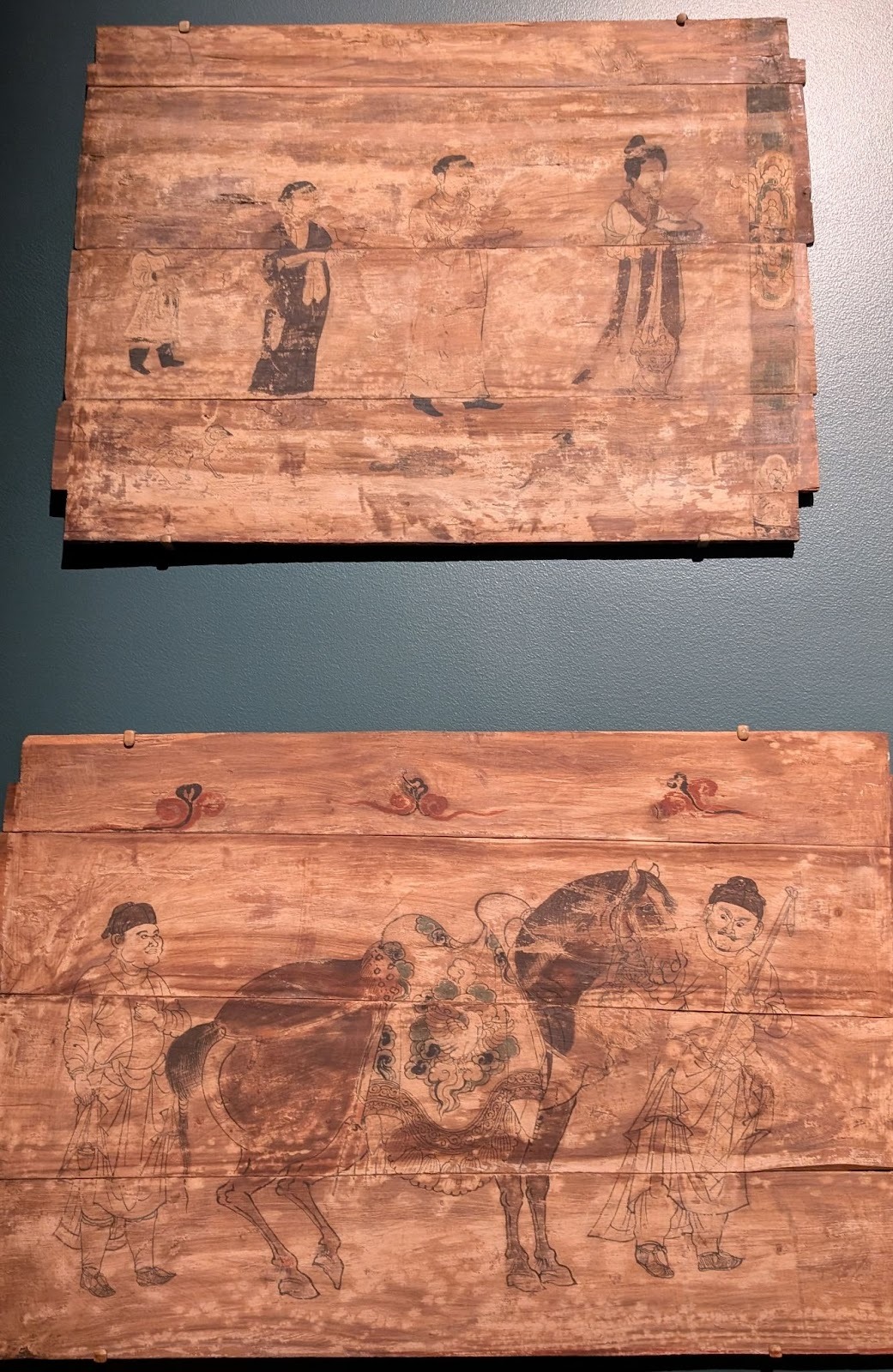
If you don’t know me personally or have never read my book you probably would never guess that my favorite state(s) in history are the two successive Khitan empires. The Liao Dynasty and its differently located sequel the Kara-Khitai Khanate are to me the most fascinating combination of nomadic frontier and settled agrarian statehood. Their practical and flexible government system even survived full state collapse, being taken on horseback west after an unexpected fall caused by a Jurchen rebellion, and set up all over again in majority Turkic and Tajik Central Asia where it would survive for another century until annexed by the rising Mongol Empire.
Founded by a tribe of perpetual peripherals, the Khitans were a nomadic proto-Mongolian people who spent centuries hanging around the northeastern frontiers of the Tang Dynasty as sometime vassals and sometime foes of said government. Nothing was particularly noteworthy about them even as they began confederating into proto-statehood save that they generally got the worst of many of their contests with other powers.
That was until the Tang collapsed. The Khitans, having much experience with great powers, stepped into the role well. Yelu Abaoji unified the tribes and drove south, conquering new territories to provide tax revenue and manufactured goods from areas primarily settled by Chinese farmers. While China was divided, the Khitans built the Liao Dynasty. A unique government that sought the best of both worlds by governing settled and nomad differently. Nomads were ruled by a Khan, settled farmers an Emperor. They were, of course, both the same person. There was a courtly bureaucracy and a migrating capital, the elite grew up in the saddle but learned poetry and the arts too. Powerful dowager Empress’ served as guardians of tradition against the temptations of Sinicization.
And, in a rarity for large imperial nomadic states, it was an empire of restraint, with a comparatively minimal appetite for foreign interventionism once it was established. There was no sustained drive to fully dominate China, only to balance factions in that country so that none could conquer the Liao. The Khitan elite understood that too many Chinese subjects would bring about assimilation, just as they understood that alienating or losing what Han subjects they had risked a large hit to their tax and administrative base.
Khitan “Inshore Balancing” (see my book) tactics only worked so long however, for the Song Dynasty would eventually come to reunify the country south of their borders in time. That left only the Tangut Xi Xia Kingdom to the west and the Liao to the north. The Liao and Song entered into decades of an again off again warfare over a contested border zone. During a climactic-in-scale campaign in 1004-5, the two powers realized neither could achieve decisive victory over the other.
The build up to this peace treaty and its aftermath can be found in many books on Chinese history, my personal favorite being FW Mote’s Imperial China 900-1800. What came after is harder to find in English. There are a few books on this subject, and I own almost all of them, but one that I only just came into possession of after a long time of coveting is “From War to Diplomatic Parity in Eleventh Century China” by David Curtis Wright. This is a book intended for the longtime fan of this place and time, as it doesn’t even have much of a prelude about pre-Liao origins of the Khitans. What it does have, however, is all the gritty details about why the two parties agreed to settle in a century long peace, how this was justified to the Song, and what the nature of their rivalry was once it had become one of diplomatic, rather than military, games.
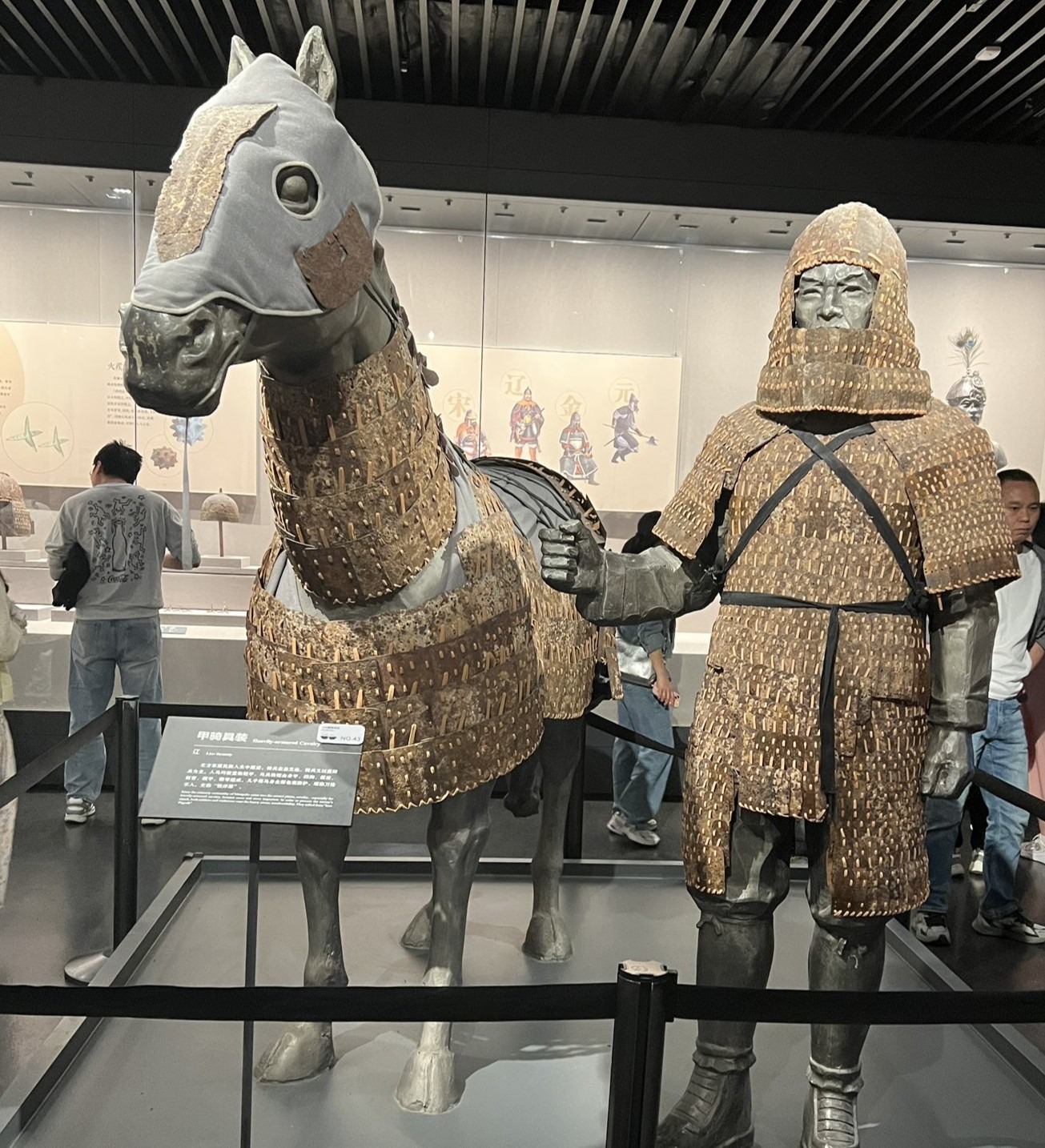
The Song were a ‘unified’ dynasty, and back then the fiction that China’s natural state was one of perpetual unity was almost as strong as it is today. The Song, having to forgo reconquering the parts of northern China ruled by the Liao, had to excuse being part of a bipolar system of legal equals where a “Northern Court” and a “Southern Court” managed affairs as peers.
Reliant as it is on Song sources more than Liao (understandible given subsequent historical events and the different nature of the Khitan script) the book gives us endless examples of SinoCope. Elaborate excuses as to how the Khitans won their place as a civilized peer while still trying to get away with sending junior level diplomats in a passive-aggressive way to not quite admit it. Song annual tribute payments to the Liao were written off as investments in a secure border. Song diplomats moaned about the climate and reacted in horror when diplomatic meals with the nomads degenerated into drinking contests or when the primary course was just a pile of grilled meats from various unspecified animals. Oftentimes, the Song envoys would write emo-ish poetry about the hardships of the journey but it was mixed with pride in the necessity of keeping the peace, for example the diplomat Wang An-shih wrote:
His majesty issues a royal appointment;
The Son of Heaven indulges the Xiongnu.
Though you reply that the ways of the barbarian are vile,
You understand the distinction of being an envoy for the Han.
At night the border signal towers have long been unused;
In autumn the watchmen are still and free of worry.
What need is there to be cruel like swallows
And smear the livers and brains of living beings on the battlefield?
The primary source detail in the book is great, and being about the neglected side of this relationship- the one of a long standing peace- becomes all the more interesting. Also of interest is the chapter on the ‘Mid-Century Crisis’, when there was a war scare between the two powers 40 years after the treaty. This was due to the rising power of the Tangut state. Far from as powerful as the other two, the Xi Xia kingdom nevertheless had a potent military capable of inflicting massive defeats on Song frontier forces. The Liao used this to threaten intervention on the side of the Tanguts unless they received an increase in the annual tribute payments. After much wrangling, the proposal was accepted.
The Song would have their revenge over a half century later when the Jurchens rose in revolt. Collaborating with them, the Song thought the Jurchens would be easier to deal with than an integrated peer power. Instead, the Jurchens attacked them much more relentlessly than the Khitan ever had, causing the loss of yet further territory and a perpetually simmering state of war for the next century (and beyond when counting the Mongol conquest of the Jurchen Jin Dynasty). Oops! Probably would have been better off keeping the balance.
Sure, this is a topic I appreciate solely on its own terms. But it is hard not to think of other examples of a domineering major power really struggling to adapt to the return of natural multipolarity. The U.S. replicates Song passive-aggressiveness by referring to modern day China as a “Near-peer” rather than peer. The British after World War I badly underestimated how much relative power they had lost to the U.S. and Japan on the world stage, and of course the Qing Dynasty’s inheritance of Middle Kingdom syndrome made it woefully unprepared for the arrival of the European expansion on their own shores.
Perhaps more importantly, sometimes it’s just better to leave a good enough situation as is, even if you have to eat from the randomly assorted meat pile from time to time. I always like a culinary adventure, myself. It usually beats a geopolitical one.
 The Trickster's Guide to Geopolitics